AWS Contributors Engage Open Source Communities at Open Source Summit Korea and MCP DevSummit Seoul 2026

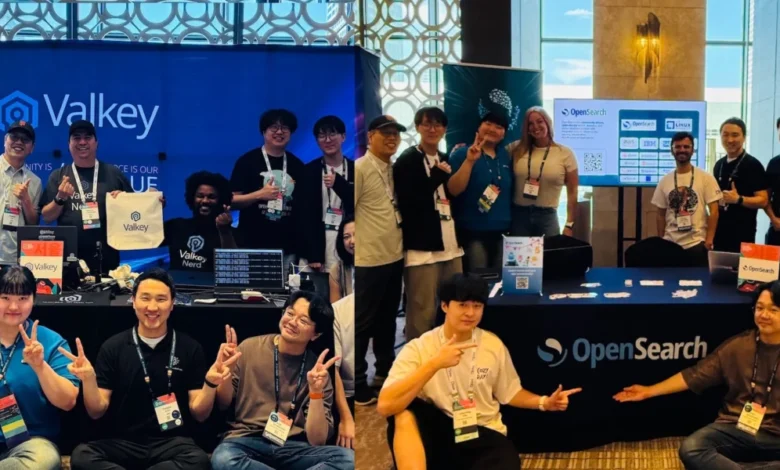
The intersection of enterprise cloud computing and grassroots developer collaboration took center stage last week as Amazon Web Services (AWS) contributors converged on South Korea for two major industry gatherings: the Open Source Summit Korea 2026 and the MCP DevSummit Seoul 2026. Over the course of four intensive days, software engineers, project maintainers, and community leaders from the Linux Foundation ecosystem assembled to exchange technical knowledge, strategize future developments, and showcase the latest iterations of prominent open-source data infrastructure projects.
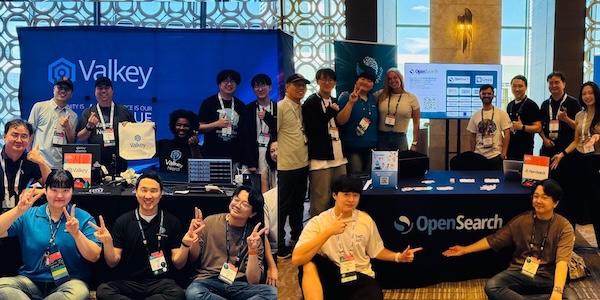
Among the focal points of the AWS delegation were OpenSearch and Valkey, two widely adopted open-source projects that have become foundational pillars for modern, high-performance distributed architectures. The event provided a physical nexus for local Korean OpenSearch community leaders, who volunteered extensively at the project booths, engaged in peer-to-peer networking, and hosted a dedicated user group meetup to discuss real-world implementation challenges and success stories.
Chronology and Event Background
The presence of AWS engineers at the Linux Foundation-backed events in Seoul underscores a broader, long-term industry shift toward open-source governance and collaborative development models. Open Source Summit Korea has historically served as a critical meeting ground for Asia-Pacific developers to align on cloud-native technologies, Linux kernel contributions, and distributed systems architecture. By pairing this with the specialized focus of the MCP DevSummit Seoul 2026, attendees were offered a dual track addressing both macro-level open-source sustainability and granular, developer-centric tooling.
Throughout the four-day engagement, AWS representatives participated in technical panels, interactive workshops, and informal mentoring sessions. These interactions allowed cloud architects and infrastructure operators to interface directly with the upstream contributors of OpenSearch and Valkey, bridging the gap between corporate cloud adoption and community-driven innovation. The localized user group meetup, organized in tandem with the summit, drew substantial attendance from regional enterprises looking to optimize their search, observability, and caching pipelines.
Technological Evolution: OpenSearch 3.7 and Amazon Integration
At the heart of the enterprise observability and search discussions was OpenSearch, an enterprise-grade suite engineered to ingest, aggregate, and analyze unstructured data at massive scale. The technological backdrop for the discussions was heavily influenced by the June 9, 2026, release of OpenSearch 3.7.
OpenSearch 3.7 introduced several architectural enhancements aimed at unifying telemetry and boosting computational efficiency. Most notably, the release brought forward comprehensive tools designed to query, alert, and track Service Level Objectives (SLOs) across logs, traces, and metrics through a single, cohesive user interface. This unified observability paradigm addresses a long-standing operational pain point for DevOps teams: the fragmentation of monitoring data across disparate silos.
Furthermore, OpenSearch 3.7 delivered significant performance gains for modern machine learning and semantic search workflows, achieving vector retrieval speeds up to 5.5 times faster than previous iterations. These algorithmic optimizations allow organizations to execute complex similarity searches over high-dimensional embeddings with reduced latency.
Enterprise adoption of these capabilities was further streamlined on July 30, 2026, when AWS announced the general availability of OpenSearch version 3.7 on Amazon OpenSearch Service. This managed service integration brought the upstream performance improvements directly to cloud environments, offering customers enhanced vector search performance, superior search relevance, and advanced Query Insights without the administrative overhead of managing underlying hardware clusters.
High-Performance Caching and Valkey 9.1
In parallel with search and observability discussions, the summit highlighted rapid advancements in distributed caching and in-memory data management through Valkey, an open-source, high-performance key-value datastore optimized for caching, message queuing, and primary database workloads.
The technical discourse surrounding Valkey centered on the May 19, 2026, rollout of Valkey 9.1. This major update introduced a redesigned input/output (I/O) threading model that fundamentally alters how the datastore handles network concurrency, yielding a throughput increase of up to 17%. Additionally, Valkey 9.1 addressed memory footprint optimization by reducing memory consumption for string data types under 128 bytes by up to 20%. For high-density, multi-tenant environments handling millions of small keys per second, these memory savings translate directly into reduced infrastructure costs and improved resource utilization.
Building on these upstream advancements, AWS expanded its managed offerings on June 23, 2026, by introducing support for Valkey 9.1 in Amazon ElastiCache. Designed specifically for node-based clusters, the managed Valkey 9.1 integration delivers heightened throughput, superior memory efficiency, and robust access control mechanisms tailored for complex multi-tenant enterprise workloads. During the Seoul summits, community discussions frequently referenced these managed integrations as prime examples of how upstream open-source projects can be scaled safely within commercial cloud ecosystems.

Broader Industry Implications and Future Outlook
The active participation of hyperscale cloud providers in community-led open-source events reflects a maturation of the software industry’s approach to intellectual property and collaborative engineering. Rather than operating in isolated silos, enterprises increasingly recognize that the longevity and security of mission-critical software depend on transparent, community-driven governance models managed by foundations such as the Linux Foundation.
Analysts note that as organizations face mounting pressure to modernize data infrastructure while controlling cloud expenditures, the adoption of optimized open-source engines like OpenSearch and Valkey offers a compelling path forward. The performance efficiencies introduced in recent software releases—such as Valkey 9.1’s reduced memory footprint and OpenSearch 3.7’s accelerated vector retrieval—directly mitigate the resource consumption penalties traditionally associated with scaling distributed systems.
Moreover, regional developer ecosystems, particularly in South Korea, continue to play an increasingly vital role in global software supply chains. By fostering localized engagement through events like Open Source Summit Korea and specialized DevSummits, technology leaders ensure that architectural feedback loops incorporate the diverse needs of global enterprises, ranging from hyper-growth digital natives to established financial institutions.
As the open-source community looks ahead, AWS contributors have confirmed plans to continue their presence at upcoming global and regional events. Developers and enterprise architects interested in tracking project milestones, contributing to upstream codebases, or participating in future community meetups can monitor the official OpenSearch and Valkey event schedules for upcoming announcements. Meanwhile, organizations seeking to deploy these technologies in production environments can consult the AWS What’s New and AWS Blogs portals for continuous updates on managed service capabilities, security patches, and architectural best practices.