Facebook ad costs fall as traffic and lead performance improves: Report

The 2026 Performance Landscape
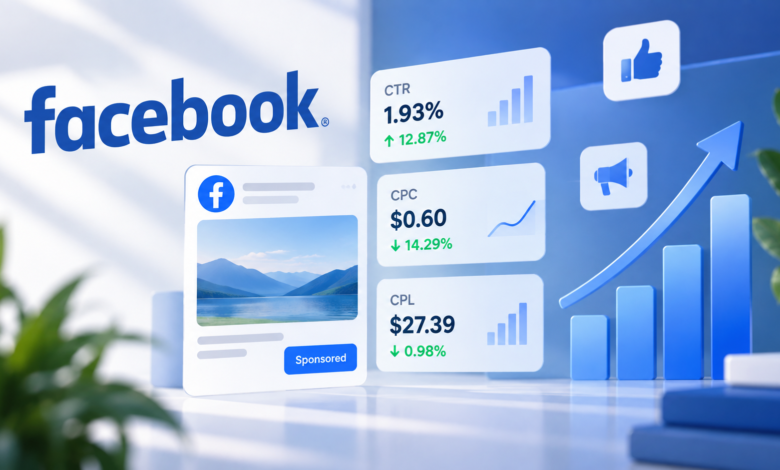
The current digital advertising climate is defined by a notable shift in how brands interact with audiences on Facebook. As digital marketing budgets tighten, the efficiency of social media ad spend has come under intense scrutiny. The 2026 data indicates that Facebook has successfully managed to lower the barrier to entry for many advertisers by reducing the cost per click (CPC) while simultaneously increasing user engagement.
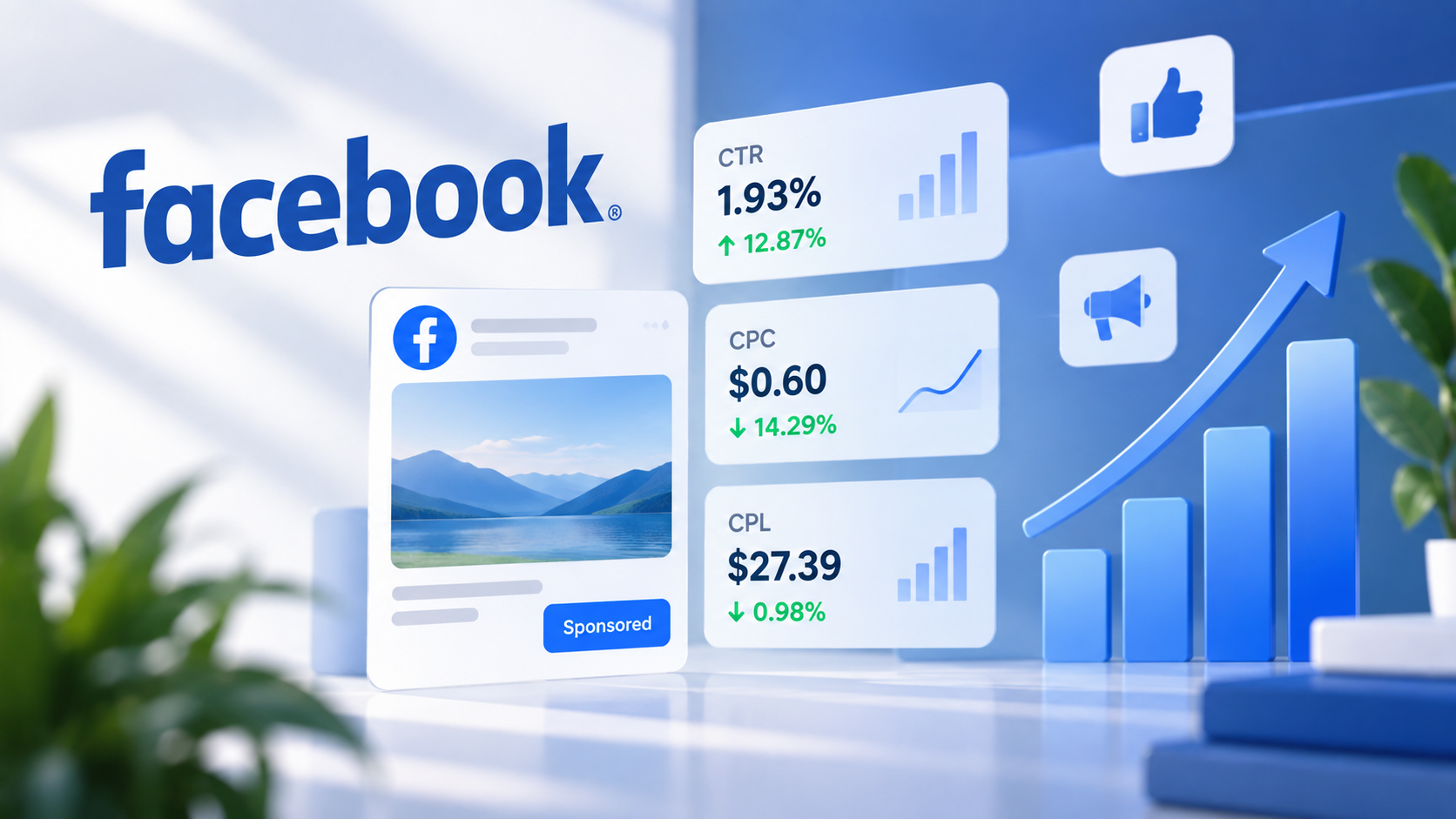
For traffic-focused campaigns—those designed to funnel users from the Meta ecosystem to external websites—the results are particularly favorable. Advertisers are observing a 14% decrease in the average cost per click compared to previous cycles, paired with an impressive 13% improvement in click-through rates (CTR). This combination suggests that Meta’s machine-learning algorithms are becoming more adept at placing ads in front of users who are not only likely to click but are genuinely interested in the content provided.
Chronology and Contextual Shifts
The evolution of Facebook’s advertising performance has been a multi-year trajectory characterized by intense platform updates. Following the privacy-focused changes initiated in 2021 and 2022, which disrupted traditional tracking and attribution, Meta invested heavily in artificial intelligence and automated bidding strategies.
By 2024, the platform had stabilized, with advertisers learning to rely on Advantage+ campaigns and broad targeting. Entering 2026, these automated systems have reached a level of maturity where they can optimize for conversions with significantly less manual intervention. The current data reflects a market that has fully adapted to the post-tracking-pixel era, where the platform’s internal signals are now more predictive than ever. This transition from granular manual targeting to AI-driven audience discovery is widely credited for the efficiency gains observed this year.
Sector-Specific Analysis: Traffic Campaigns
Not every industry experienced the same downward trend in costs, highlighting the fragmented nature of the digital marketplace. The report identifies that while the majority of sectors saw a relief in CPC, two notable outliers experienced significant cost increases. The "Shopping, Collectibles and Gifts" sector saw CPCs surge by 73.53%, likely driven by increased competition and the seasonal volatility inherent in retail. Similarly, "Sports and Recreation" saw a 43.90% increase, potentially reflecting the high demand for outdoor and fitness-related products in the current social climate.
Conversely, some industries benefited from substantial cost reductions. Real Estate developers and brokers saw the most significant improvement, with CPCs dropping by 39.56%. This is a critical development for the industry, as it allows firms to reach potential home buyers at a significantly lower cost than in previous years. Other notable winners include the "Restaurants and Food" industry, which saw a 37.50% decrease, and the "Industrial and Commercial" sector, which enjoyed a 37.21% drop in costs.
Lead Generation: A Study in Stability
For businesses prioritizing lead generation—capturing contact information rather than just driving site traffic—the 2026 data tells a story of consistent value. While traffic costs fluctuated wildly, the cost per lead (CPL) remained largely flat across the board. This stability is viewed as a positive indicator of market maturity; advertisers are neither seeing their leads become prohibitively expensive nor experiencing a sudden, unsustainable collapse in prices.

The automotive sector, specifically the "Automotive – For Sale" category, stood out by recording a massive 44.17% decline in CPC for lead campaigns. Dentists and dental service providers followed closely, with a 41.72% drop, while health and fitness services saw a 30.30% decline. These shifts suggest that Meta’s lead-form ads are becoming more user-friendly and effective at capturing high-intent data without forcing the user to leave the Facebook app, thereby reducing friction and increasing conversion volume.
Understanding the Cost-Per-Lead (CPL) Spectrum
While CPL averages remained stable, the disparity between industries remains pronounced. High-value services continue to command higher lead costs, as the lifetime value of a customer in these fields justifies the investment. For instance, industries such as finance and legal services continue to occupy the higher end of the CPL spectrum, reflecting the intense competition for high-value leads. In contrast, sectors with lower barriers to entry or higher purchase frequencies consistently report lower CPLs.
This variance is essential for marketers to understand when allocating their social media budgets. A low CPL is not always a sign of a "better" campaign; rather, it is a reflection of the industry’s typical sales cycle and the inherent value of the conversion. Advertisers should view these benchmarks not as universal targets, but as regional markers within their specific competitive landscapes.
Broader Implications for Paid Search vs. Paid Social
The findings carry significant weight for marketers balancing their presence across Google Ads and Facebook Ads. For years, Google Search has been the gold standard for high-intent traffic, where users explicitly search for products or services. However, the 2026 data shows that Google Ads CPC is now more than double that of Meta’s average CPC.

This widening gap in pricing forces a strategic re-evaluation of marketing portfolios. While Google Search is excellent at capturing existing demand, Facebook’s increased efficiency suggests it is becoming a superior channel for creating demand. Advertisers are finding that they can reach broad audiences and drive engagement at a price point that makes social media a vital component of the full-funnel strategy. The fact that Facebook is delivering better results for less money—all while improving engagement metrics—places it in a highly competitive position relative to search engines.
Why Efficiency is Improving
The primary driver behind these performance gains appears to be Meta’s internal optimization algorithms. As the platform has moved further away from third-party data reliance, its internal "black box" of predictive modeling has become more efficient. The improvements to bidding automation allow the platform to find the most cost-effective path to a conversion, whether that is a website visit or a lead form submission.
Furthermore, the data suggests that advertisers have become more sophisticated. The trend toward using creative-first strategies—where high-quality video and interactive content are the primary drivers of performance—complements Meta’s algorithm. When the algorithm is fed high-performing creative, the platform is better able to deliver that content to the right people, which lowers the cost of engagement and increases the CTR.
Bottom Line for Marketers
The takeaway from the 2026 benchmarks is clear: the environment for Facebook advertising is more hospitable to the budget-conscious marketer than it has been in recent years. By leveraging the platform’s automated bidding and focusing on high-intent creative, businesses can achieve lower CPCs without sacrificing the quality of their leads.
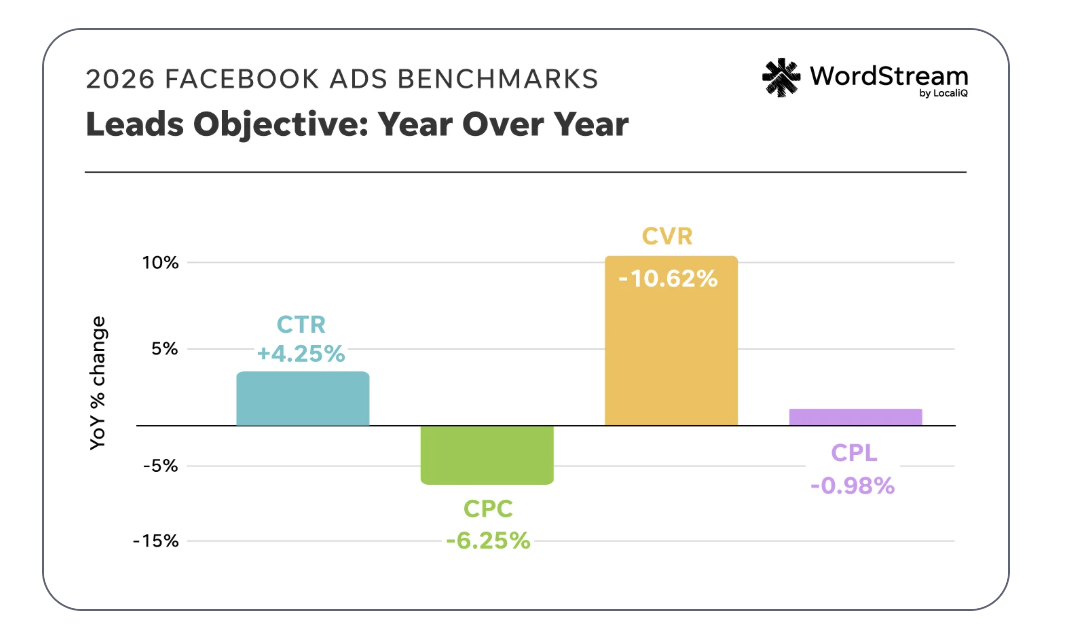
As we move toward the final quarters of 2026, the focus for marketers should be on testing these new benchmarks against their own internal data. While the platform is undeniably more efficient, the key to success remains the ability to craft compelling narratives that resonate with the audience. With clicks becoming cheaper and lead costs remaining steady, there is a tangible opportunity for brands to scale their social media presence and capture a larger share of voice without necessarily increasing their overall advertising expenditures. The data confirms that in the current digital landscape, strategic efficiency is not only possible but is currently the defining characteristic of successful Facebook ad campaigns.
Related posts: