India’s Open Network for Digital Commerce: A Game-Changer for Small Businesses and Foreign Sellers Amidst a Booming E-commerce Landscape

India, now the world’s most populous nation, stands at the cusp of an e-commerce revolution. While its digital commerce penetration remains nascent compared to established markets like China and the United States, the demographic landscape is primed for explosive growth. With over half of its population under the age of 25 and a staggering 840 million smartphone users, the nation presents an unparalleled opportunity for online retail. However, this digital awakening is unfolding against a complex backdrop: the Indian government’s commitment to fostering digital transformation is intertwined with the imperative to safeguard the millions of small, independent "kirana" merchants, who currently account for a dominant 75% of national consumer goods sales.
This delicate balancing act has birthed innovative government initiatives, most notably the wildly popular United Payments Interface (UPI), a government-backed peer-to-peer digital payment infrastructure. Complementing UPI, and directly addressing the needs of local businesses, is the Open Network for Digital Commerce (ONDC). Launched in 2021, ONDC is a groundbreaking, open-source e-commerce framework designed to democratize online selling and empower small and medium-sized enterprises (SMEs), including the ubiquitous kirana stores, to establish a digital footprint.
The Genesis of ONDC: Democratizing E-commerce
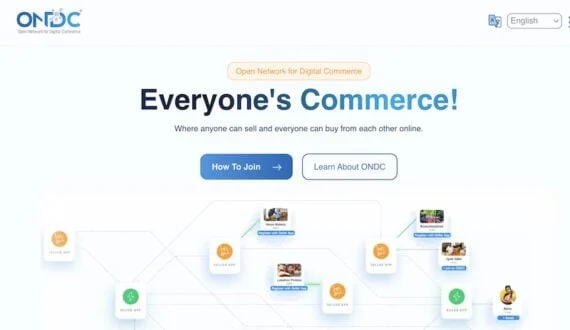
The impetus behind ONDC stems from a recognition of the limitations imposed by existing e-commerce marketplaces. Platforms like Amazon India and Flipkart, while instrumental in the growth of online retail, often operate as walled gardens, dictating terms and fees to sellers. ONDC, in contrast, operates on a fundamentally different philosophy: it is not a marketplace itself, but rather a network that connects various e-commerce applications, payment providers, and logistics companies through open standards and transparent rules.
The core objective of ONDC is to provide kirana owners and independent merchants with the ability to participate in online commerce without being beholden to a single dominant platform. This "network effect" allows sellers to list their products and reach customers through a multitude of buyer applications, fostering greater choice and reducing dependency. While the adoption of ONDC, though significant, has not yet reached the ubiquitous status of UPI, it is steadily gaining traction across the nation.
Beyond its primary target audience of small businesses, ONDC is also proving to be a valuable tool for local brands seeking to expand their distribution channels. Instead of viewing it as a replacement for their existing e-commerce strategies, many brands are leveraging ONDC as an additive channel to reach a broader customer base. Crucially, foreign companies that adhere to India’s regulatory framework can also access the ONDC seller app ecosystem, opening new avenues for market entry and expansion.
Functionality and Key Players within the ONDC Ecosystem
The ONDC network is structured around distinct seller and buyer applications. Seller applications serve as the primary interface for merchants, enabling them to manage product listings, control inventory, and process orders efficiently. Prominent seller applications within the ONDC network include Mystore, CostBo, and GoFrugal, each offering a suite of tools tailored to the needs of diverse businesses.
On the consumer side, buyer applications allow shoppers to browse products from various sellers and complete their purchases. Popular buyer applications that integrate with ONDC include Paytm, Bajaj Finserve, and Magicpin. This interoperability ensures that a customer using one buyer app can seamlessly purchase goods from a seller registered on a different seller app within the ONDC network.
A significant advantage offered by ONDC is its competitive fee structure. Selling fees on the network typically range from 3% to 10%, a stark contrast to the 18% to 40% commission rates often charged by traditional marketplaces. This cost-effectiveness can be a game-changer for small businesses operating on thin margins. Furthermore, ONDC champions transparency and seller autonomy. Its algorithm-driven sorting ensures non-discriminatory product visibility, and sellers benefit from portable ratings, meaning customer feedback is associated with the seller, not just a specific marketplace.
The onboarding process for brands on ONDC is designed for accessibility. Companies register with a chosen seller app, and their product catalog is then immediately discoverable across the network. This immediate exposure to a wider audience is a key draw for businesses looking to scale their online presence.
Expanding Horizons: Categories and Foreign Brand Engagement
The ONDC network’s reach is extensive, encompassing a wide array of categories. It facilitates commerce for retailers, logistics service providers, restaurants, and even hotels. Sectors experiencing rapid growth on the platform include groceries, food delivery, and home and kitchen items, largely due to their higher order frequency. While fashion, pharmaceuticals, and hospitality are also present, their growth trajectory is generally less steep.
The platform has already attracted a roster of prominent global brands, including Red Bull, Unilever, Nestle, PepsiCo, Procter & Gamble, L’Oréal, and Johnson & Johnson. Many of these international players are leveraging ONDC to access India’s rapidly growing quick commerce market, integrating with platforms like Blinkit, Swiggy Instamart, and Zepto at minimal cost. This allows them to efficiently deliver their products to Indian consumers, capitalizing on the burgeoning demand for instant gratification in online shopping.
For foreign brands contemplating entry into the Indian market, navigating the regulatory landscape remains a critical first step. As previously detailed, the available selling options are diverse, ranging from established marketplaces and traditional distributors to direct-to-consumer (D2C) websites and cross-border e-commerce models. ONDC presents a compelling new pathway, particularly for those seeking to establish a localized presence without the high overheads often associated with traditional market entry strategies.
Implications for India’s Digital Economy
The emergence and growth of ONDC carry significant implications for India’s digital economy.
-
Empowerment of SMEs: By providing an affordable and accessible digital sales channel, ONDC has the potential to transform the livelihoods of millions of small business owners. It democratizes e-commerce, allowing them to compete with larger players and tap into a national customer base. This could lead to increased economic activity in smaller towns and rural areas, fostering more inclusive growth.
-
Increased Competition and Consumer Choice: ONDC’s open network model fosters greater competition among e-commerce platforms and sellers. This benefits consumers by offering a wider selection of products, potentially lower prices, and improved service quality as businesses vie for their attention. The portability of seller ratings also encourages businesses to focus on consistent customer satisfaction.
-
Catalyst for Digital Transformation: The initiative acts as a powerful catalyst for digital adoption among traditional businesses. The need to integrate with ONDC may encourage kirana stores and other SMEs to embrace digital payment solutions, inventory management software, and online marketing strategies, accelerating their overall digital transformation.
-
Regulatory Framework Evolution: The success of ONDC highlights the Indian government’s proactive approach to shaping its digital economy. The dual focus on fostering innovation while protecting domestic businesses suggests a carefully calibrated policy approach. This could serve as a model for other developing nations seeking to balance economic liberalization with social equity in the digital age.
-
Attracting Foreign Investment: While ONDC is primarily designed to benefit local businesses, its accessibility to foreign companies that comply with regulations can serve as an attractive proposition. It offers a structured and regulated environment for foreign brands to enter the Indian market, potentially leading to increased foreign direct investment in the e-commerce and retail sectors.
-
Data Localization and Consumer Protection: The open nature of ONDC, coupled with existing regulations, will likely spur further discussions and developments around data localization, privacy, and consumer protection in the digital space. Ensuring fair competition and safeguarding consumer interests will be paramount as the network expands.
Future Outlook and Challenges
The trajectory of ONDC appears promising, with its innovative approach to democratizing e-commerce. However, several factors will influence its long-term success. Continued government support and policy clarity will be crucial. Efforts to further simplify the onboarding process for merchants and enhance user experience on both seller and buyer applications will be vital for widespread adoption.
Education and awareness campaigns targeting small businesses about the benefits and operational aspects of ONDC will also play a significant role. Furthermore, as the network grows, robust mechanisms for dispute resolution, fraud prevention, and ensuring the quality of goods and services will need to be in place to maintain consumer trust.
The integration of logistics and supply chain solutions within the ONDC framework will also be a key area of development. Efficient and cost-effective last-mile delivery is critical for the success of any e-commerce venture, and ONDC’s ability to foster collaboration among logistics providers will be a determining factor.
In conclusion, India’s Open Network for Digital Commerce represents a bold and ambitious initiative to reshape the country’s e-commerce landscape. By empowering small businesses, fostering competition, and providing a regulated pathway for foreign investment, ONDC is poised to play a pivotal role in India’s journey towards becoming a global digital commerce powerhouse, while simultaneously ensuring that its burgeoning digital economy remains inclusive and beneficial for all its citizens. The coming years will undoubtedly be a fascinating period to observe the unfolding impact of this transformative network.
Related posts: