In today’s hyper-competitive digital economy, the cost of friction within a user interface extends far beyond a few lost clicks. It translates into significant engineering expenditure, diminished business value, and missed opportunities for sustained growth. As a seasoned UX designer with experience spanning the evolution of digital products from the early mobile-first era, I’ve witnessed a profound shift in executive perception. Design has moved from being a mere aesthetic consideration to being recognized as the fundamental engine of business survival and prosperity.
A critical aspect of the UX design discipline lies in its foundation of rigorous research and meticulous analytics, complementing the visual aspects of product development. I firmly believe that empirical data serves as the most potent tool for bridging the gap between design principles and strategic business decisions. These data-driven insights not only champion the user’s needs but also definitively prove that a superior user experience is an indispensable requirement for a healthy bottom line. Even within boardrooms, UX is sometimes still relegated to a perceived "visual" role. My experience has shown that the most effective strategy to dismantle this misconception is through the compelling presentation of irrefutable data.
The following ten insights represent the current reality of the digital landscape. These are not simply design suggestions; they are the clinical, data-substantiated pillars that support financial growth in an increasingly saturated market. Many of these principles are already recognized as best practices by experienced designers.
Consider a personal case study: I once led a B2C mobile design project where, through a focused effort to reduce and optimize visual assets, we managed to shave 1.2 seconds off the mobile load time. The immediate consequence was a significant 12% increase in completed transactions. This outcome unequivocally demonstrated that in the realm of user experience, every fraction of a second is a direct determinant of revenue.
The strategic importance of User Experience (UX) design is no longer a matter of conjecture but a demonstrably quantifiable factor in business success. The prevailing economic climate underscores the fact that a clunky or inefficient digital interface carries a substantial financial burden. This burden manifests not only as lost revenue but also as wasted engineering resources and a tangible erosion of business value. My career, spanning the formative years of mobile-first design, has provided a unique vantage point from which to observe the evolution of how businesses perceive design. It has transitioned from a secondary aesthetic consideration to a primary driver of digital product viability and market competitiveness.
The role of a UX designer is inherently multidisciplinary, requiring a robust skillset in research and analytics alongside aesthetic and functional design. I firmly advocate that concrete data is the most effective means of translating design considerations into actionable business strategies. These data points serve a dual purpose: they advocate for the user and, crucially, they validate UX as a non-negotiable element for financial health. Despite its growing recognition, UX is often undervalued in decision-making circles, frequently being mischaracterized as a purely visual discipline. My approach has consistently been to leverage hard data to dismantle this perception and highlight UX’s critical business impact.
The subsequent ten facts are not abstract design theories; they are the empirically validated cornerstones of financial success in today’s competitive digital marketplace. These principles are frequently integrated into the workflow of leading UX professionals as essential best practices.
As a practical illustration, during a B2C mobile design initiative, our team identified an opportunity to significantly improve performance. By meticulously analyzing and reducing extraneous visual assets, we successfully decreased the average mobile page load time by 1.2 seconds. The direct and immediate impact of this optimization was a 12% uplift in completed transactions, reinforcing the fundamental principle that in UX, even incremental improvements in speed translate directly into tangible revenue gains.
1. The 1:100 Rule: Proactive Design Saves Substantial Costs
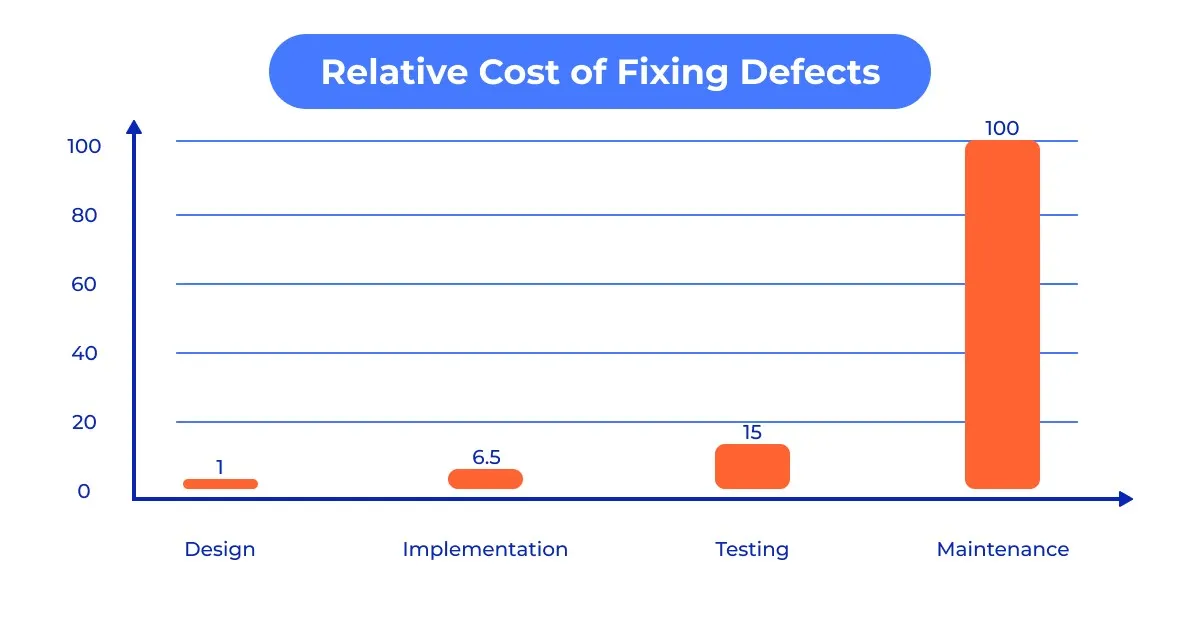
One of the most compelling financial arguments for prioritizing UX design lies in the widely recognized "1:100 rule." Extensive research from reputable institutions, including the IBM Systems Institute and Sugue Technologies, consistently demonstrates that rectifying an error discovered after a product has been developed and launched can be up to 100 times more expensive than addressing it during the initial design and prototyping phases.
This principle underscores the value of UX as a form of "engineering insurance." By the time code is written and development is underway, every user interaction should have undergone thorough validation. If a fundamental navigation flaw is identified post-launch, the cost extends far beyond the immediate fix. It encompasses the accumulation of technical debt, the considerable loss of valuable developer time, and the revenue lost as users encounter difficulties navigating a flawed user flow. This proactive approach to design validation is paramount in mitigating significant financial risks.
A visual representation of the escalating costs associated with bug resolution at various development stages. (Image source: QATestLab) (Large preview)
2. Performance as a Cornerstone: The Economic Impact of Speed
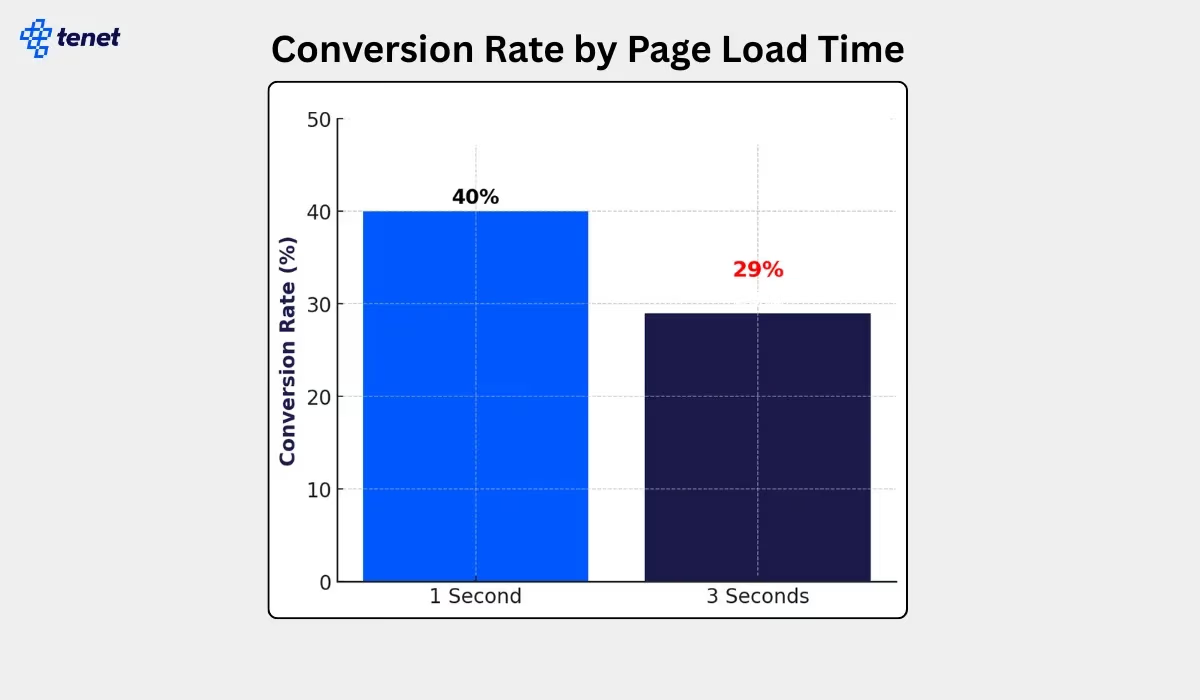
In the contemporary digital arena, website and application performance is not merely a desirable attribute but the fundamental bedrock of a positive user experience. A visually stunning interface is rendered moot if users abandon the platform before it even loads. The data is unequivocal: a substantial 47% of users expect a web page to load within two seconds. Failing to meet this expectation represents a significant financial detriment. A delay of just one second can result in a 20% reduction in conversions and a 16% decline in user satisfaction. For retail businesses, slow load times are estimated to cost approximately $2.6 billion annually. When mobile load times increase from one to three seconds, the bounce rate escalates by a striking 32%. Consequently, conversion rates typically plummet from an average of 40% to a mere 29% by the third second.
However, this sensitivity to performance also presents a substantial opportunity for growth. Even minute improvements, such as a 0.1-second reduction in load time, can lead to an 8.4% increase in retail conversions and a 10.1% rise in conversions for travel websites. Optimizing the Largest Contentful Paint (LCP), a key performance metric, by 31% – a benchmark achieved by 67% of websites as of June 2025 – can directly boost sales by 8%. From a designer’s perspective, speed is treated as an integral design element, as critical as color or typography.
"If the site isn’t instantaneous, the design hasn’t just failed – it effectively doesn’t exist."
Conversion rates are significantly higher when pages load within one second, often reaching approximately 40%. (Image source: Tenet) (Large preview)
3. The 50 Millisecond Threshold: The Criticality of First Impressions
First impressions are formed with remarkable speed, operating on both visceral and aesthetic levels. Research indicates that users form an initial opinion about a website’s visual appeal in approximately 50 milliseconds (0.05 seconds). This incredibly brief window is a crucial determinant of user engagement. It acts as a subconscious filter, dictating whether a visitor will invest further time in exploring the platform’s value proposition or immediately depart.
In the current market, an overwhelming 94% of these initial impressions are strictly design-related. If an interface appears dated, unappealing, or poorly executed, users subconsciously project this perceived lack of quality onto the entire product or service. Effectively, the content on a page becomes invisible if the design fails to capture the user’s attention within the few seconds required to process it.
4. Hick’s Law and Cognitive Load: Simplifying Choices for Better Outcomes
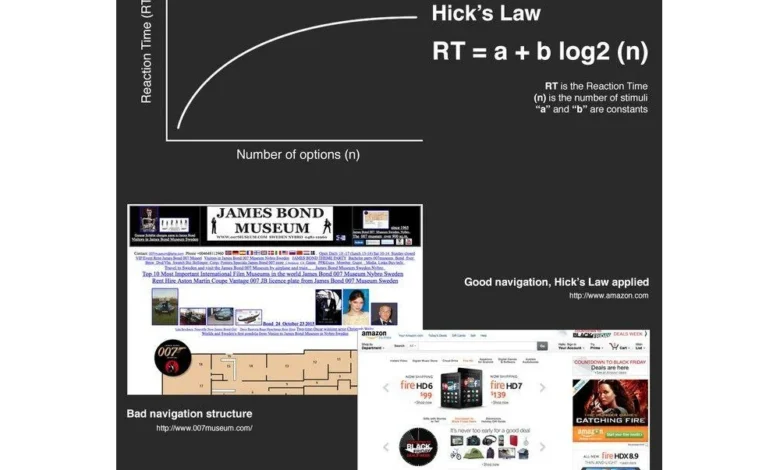
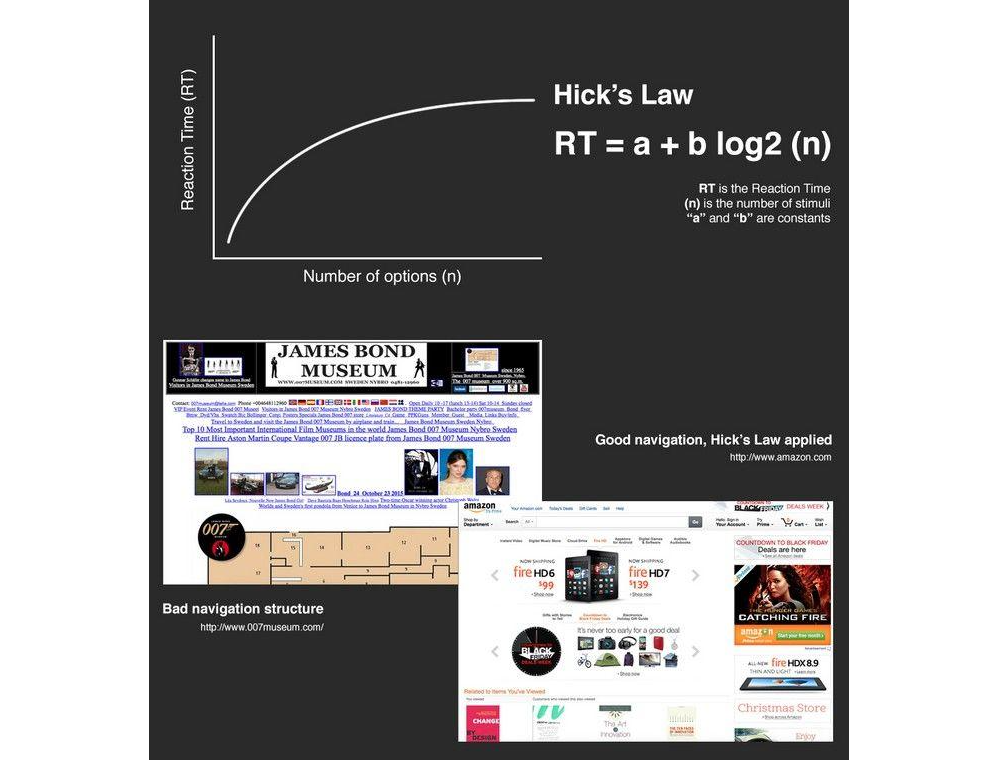
A common misconception among stakeholders is that offering more options equates to greater value for the user. However, psychological principles, notably Hick’s Law, demonstrate the inverse relationship: the time required to make a decision increases proportionally with the number of available choices.
Each additional menu item, form field, or option presented to a user introduces a "tax" on their cognitive processing. Analysis of high-performing websites reveals conversion rates exceeding 11%, a stark contrast to the sub-3% rates often seen on average performers. The leading sites achieve this by implementing personalization and optimization strategies that significantly simplify the user journey.
"If you want to increase your revenue by tomorrow, find one field to delete from your checkout flow today."
An illustration contrasting the impact of overwhelming choices versus streamlined decision-making processes. (Image source: Mads Soegaard) (Large preview)
5. The Strategic Advantage of White Space: Enhancing Comprehension and Focus
Often dismissed as "wasted real estate" by those unfamiliar with design principles, white space, or negative space, is a powerful tool for enhancing user focus and comprehension. Its strategic application can increase a user’s ability to understand content by up to 20%.
White space effectively prevents cognitive overload by providing visual respite. By offering areas for the user’s eyes to rest, it subtly guides their attention toward the most critical elements, such as prominent "Buy" or "Sign Up" buttons. In an era where attention spans are reportedly as short as 8 seconds, simplicity, facilitated by ample white space, becomes a significant driver of engagement.
For instance, in a fintech dashboard project, analyst users reported feeling overwhelmed by dense layouts of data. By strategically introducing more white space around the data elements, thereby reducing cognitive load, we observed a 25% decrease in time-on-task and a substantial improvement in trial-to-paid conversion rates.
6. Leveraging the Goal Gradient Effect: The Psychology of Perceived Progress
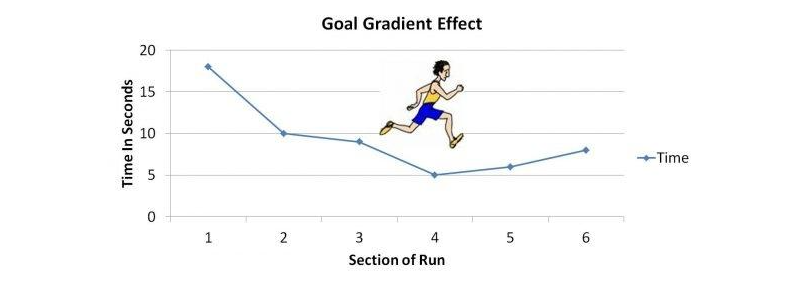
One of the more surprising yet effective psychological mechanisms in UX is the Goal Gradient Effect, which leverages the user’s perception of progress. Studies have demonstrated that users tend to complete tasks more rapidly when they believe they have already achieved a certain level of advancement.
A classic experiment illustrated this by showing that a 10-stamp coffee card with two stamps pre-filled was completed significantly faster than an identical 10-stamp card with no pre-filled stamps, despite the total expenditure being the same. In digital design, implementing a progress bar for account creation that begins at 15% can increase onboarding completion rates by over 40%. This highlights that UX design involves not just arranging interface elements but also skillfully managing user psychology, specifically their sense of momentum and dopamine release.
The Goal Gradient Effect illustrates how perceived progress can significantly increase motivation to reach a final objective. (Image source: Conversion Uplift) (Large preview)
7. The Power of Legibility: Ensuring Content is Easily Consumed
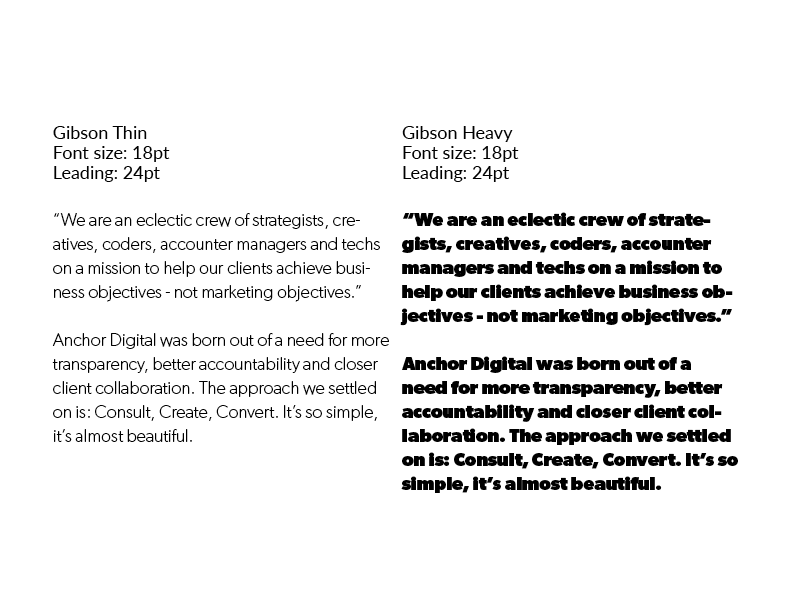
A common, albeit flawed, belief among some stakeholders is that maximizing the amount of text displayed "above the fold" inherently increases a page’s value. Empirical data strongly contradicts this notion. Proper typographic treatments, specifically the use of adequate line spacing (leading) and appropriate paragraph widths, can enhance content comprehension and reading speed by up to 20%.
An optimal line height, generally considered to be 1.5 times the font size, effectively reduces visual clutter, enabling the user’s brain to process information with less cognitive effort. When users struggle to read text due to cramped spacing or excessively small fonts, their perceived effort increases, leading to a higher probability of them abandoning the page. Legibility is, therefore, a critical conversion tool; if content is difficult to read, it is inherently difficult for users to engage with and ultimately convert.
There are numerous approaches to ensuring legible text. For instance, insufficient line spacing or overly heavy font weights can significantly impede readability.
This visual comparison highlights the significant difference in readability achieved through appropriate font weights and line spacing. (Image source: Anchor) (Large preview)
8. The 20% Rule: Designing for Scannability, Not Just Reading
Contrary to the intuition that users will meticulously read all provided content, data indicates that on an average web page, users engage with only about 20% to 28% of the text. This behavior stems from the way modern users interact with digital content: they scan it, rather than reading it comprehensively.
This scanning behavior typically follows an F-pattern or a spotted pattern. Consequently, designing primarily for linear reading is often an ineffective strategy. The focus must shift to designing for scannability. This necessitates the strategic use of:
Clear headings and subheadings: To break up content and allow users to quickly identify relevant sections.
Concise paragraphs: Shorter paragraphs are easier to digest during a scan.
Bullet points and numbered lists: To present information in easily digestible chunks.
Bold text and emphasis: To highlight key terms and phrases.
White space: As previously discussed, to create visual breathing room and improve focus.
By acknowledging and designing for this scanning behavior, businesses can ensure their most crucial messages are effectively communicated and acted upon, even with limited user attention.
9. The "Magic Number" of User Testing: Uncovering Insights with Minimal Resources
The notion that extensive user studies with large participant numbers are necessary for identifying usability issues is often a misconception. Empirical evidence suggests that testing with just five users typically uncovers approximately 85% of critical usability problems. This number represents a mathematical sweet spot, beyond which the cost of recruiting additional participants yields diminishing returns in terms of discovering new issues.
This principle favors iterative testing: conduct a small-scale test with five users, analyze the findings, implement necessary design changes, and then repeat the process with another group of five users. This approach is demonstrably the most cost-effective method for building a robust and user-friendly product. My personal experience in conducting numerous user testing sessions has consistently validated that testing with five participants provides a comprehensive overview of the most significant design challenges. This data-driven approach allows for efficient allocation of resources and a faster path to product improvement.
10. The Staggering ROI of 9,900%: Quantifying the Financial Returns of UX
The most remarkable statistic concerning UX investment remains consistent: for every dollar invested in user experience, there is an average return of $100. This impressive 9,900% return on investment is not a matter of chance but a direct consequence of several factors, primarily increased conversion rates and reduced customer support costs.
A meticulously optimized UX design can elevate conversion rates by as much as 400%. Furthermore, an intuitive and user-friendly product significantly diminishes the need for extensive customer support. When a product is self-explanatory and easy to navigate, the demand for call centers and help desks to guide users through its functionality is substantially reduced. This translates into significant operational cost savings, further amplifying the financial benefits of a strong UX strategy.
The Deeper Impact of UX Investment: Beyond Transactional Gains
Beyond these individual data points, it is crucial to consider the cumulative and transformative effect of cultivating a mature UX practice within an organization. My observations over many years in the field consistently reveal that the most successful companies are those that embed UX as a continuous improvement loop, rather than treating it as a one-off project. Research from leading consultancies, such as McKinsey, highlights that companies demonstrating high design maturity experience significantly higher revenue growth (32% higher) and achieve greater total shareholder returns (56% higher) compared to their less design-centric counterparts.
This disparity arises because mature UX organizations evolve beyond merely aiming for "user delight" to prioritizing "user efficiency." When a workflow is streamlined, shaving even 30 seconds off a task for a team of 1,000 employees, the impact transcends mere user satisfaction. It translates into reclaiming hundreds of thousands of dollars in annual productivity. This internal ROI, though often overlooked, is as vital as consumer-facing conversion rates.
Moreover, the "experience gap" between what companies believe they offer and what customers perceive is a significant reality. A substantial 80% of companies report delivering a "superior experience," yet only a meager 8% of their customers concur. This profound disconnect represents a substantial market opportunity for agile organizations willing to embrace hard data. By bridging this gap through continuous user testing and performance optimization, businesses can not only enhance their products but also capture market share that competitors are inadvertently leaving on the table.
The Evolving Landscape: AI and the Future of UX
In the current technological discourse, any discussion of UX would be incomplete without acknowledging the burgeoning impact of Artificial Intelligence (AI). While AI has not rendered the fundamental principles outlined above obsolete, it has significantly accelerated the development and deployment of solutions related to many of these facts. AI is transforming UX from a static blueprint into a dynamic, responsive guide for users. However, the core tenets of human psychology that underpin effective UX, such as our rapid initial judgments and our need for clarity and space, remain constant. AI serves as a powerful enabler, enhancing our ability to deliver superior user experiences, but it does not replace the foundational understanding of human behavior.
Conclusion: Embracing Data-Driven Design for Competitive Advantage
In summation, the following are the key data-backed truths that underscore the indispensable role of user experience in modern business strategy:
Proactive Design Savings: Fixing issues in the design phase is up to 100 times cheaper than post-launch fixes.
Performance is Paramount: Even minor improvements in load times yield significant conversion rate increases.
First Impressions Matter: Users form opinions within 50 milliseconds, driven by visual design.
Simplicity Drives Decisions: Hick’s Law demonstrates that fewer choices lead to faster decision-making.
White Space Enhances Clarity: Strategic use of white space improves content comprehension by up to 20%.
Perceived Progress Boosts Completion: The Goal Gradient Effect can increase task completion rates by over 40%.
Legibility is Key: Proper typography enhances comprehension and reduces bounce rates.
Users Scan, Not Read: Designing for scannability is crucial for conveying information effectively.
Five Users Uncover 85% of Issues: Iterative user testing with small groups is highly efficient.
Exceptional ROI: Every dollar invested in UX yields an average return of $100.
As we navigate the latter half of the 2020s, the distinction between "design" and "business strategy" has effectively dissolved. The data is conclusive: companies that lead in design maturity demonstrably outperform their competitors, exhibiting revenue growth 1.7 times higher than their peers.
UX design is no longer a team you hire to “make things look nice.” It is the research-driven, data-backed discipline that ensures your digital product isn’t just a cost centre, but a revenue-generating machine.
While this has always been the underlying reality, the intention behind presenting these empirical truths is to solidify this understanding within business operations. My extensive experience has consistently shown that implementing factual design improvements yields results that subjective intuition alone cannot replicate. We have moved beyond the era of opinion-based decision-making. The data is clear, the psychological principles are proven, and the return on investment is undeniable. The pertinent question now is whether your organization is prepared to let these facts guide its design strategy, or if it will cede this advantage to competitors who are already doing so.