The Architecture of Inquiry: Why Machines Lack Curiosity and How Humans Can Reclaim Their Cognitive Agency

Curiosity is one thing machines do not have. While advanced artificial intelligence systems are engineered to answer complex questions, synthesize vast datasets, and predict user behavior, they remain fundamentally incapable of initiating their own inquiries. A machine does not lie awake at night haunted by the need to understand a phenomenon; it does not experience the restlessness of the human intellect. Yet, in an era defined by algorithmic curation and the rapid expansion of digital information, this uniquely human trait—the innate drive to seek out knowledge—is being systematically eroded by the very tools designed to facilitate it.
The contemporary struggle for cognitive autonomy lies in the tension between human curiosity and the passive consumption incentivized by digital platforms. By examining the mechanics of how information is consumed, the neurological rewards of learning, and the strategic importance of multidisciplinary study, it becomes clear that the path to innovation requires a departure from algorithmic dependency.

The Evolution of the Information Loop
For centuries, the human impulse to learn was constrained by physical and social limitations. Libraries had closing times, mentors had finite patience, and the acquisition of knowledge required a deliberate investment of time and resources. These obstacles served as natural "brakes" on curiosity, forcing individuals to be selective and intentional with their intellectual pursuits.
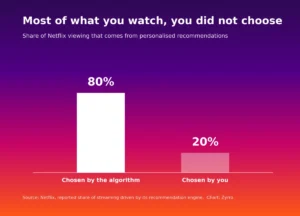
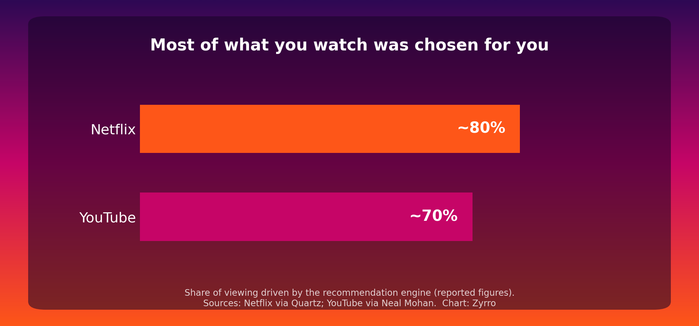
In the digital age, those brakes have been removed. Modern recommendation engines, such as those utilized by Netflix, YouTube, and various social media platforms, are designed for "endless" engagement. Data from recent industry reports indicates that as much as 80% of content consumption on major streaming platforms is driven by algorithmic recommendations rather than intentional user searches. This shift has replaced the active, "specific" curiosity of the past with a passive, "diversive" state of scanning.
Defining the Two Modes of Human Inquiry
In the 1950s, psychologist Daniel Berlyne established a framework for understanding human inquisitiveness, a model that remains highly relevant in today’s attention economy. Berlyne categorized curiosity into two distinct types:
- Diversive Curiosity: This is the restless, wide-ranging state of searching for novelty. It is the psychological engine behind social media scrolling and casual web browsing. While it serves as a necessary starting point for discovery, it is inherently shallow.
- Specific Curiosity: This occurs when an individual identifies a clear gap between their existing knowledge and a desired outcome, subsequently pursuing that information with focus.
The danger of modern algorithmic feeds is that they are optimized to maximize the former while suppressing the latter. Because a "session" is deemed successful by platforms when it is prolonged, these systems prioritize keeping users in a state of continuous scanning. To reclaim cognitive agency, users must recognize the transition from scanning to digging. The objective is not to abandon exploration, but to ensure that a session of scanning is consistently followed by a session of deep, specific investigation.
The Neuroscience of Reward and Retention
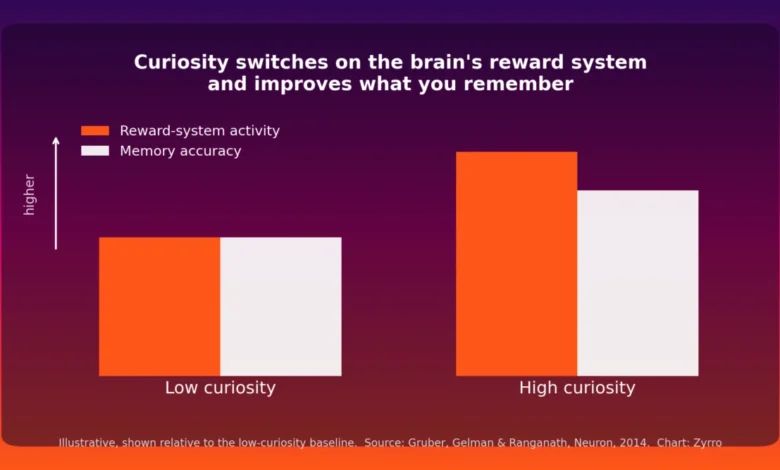
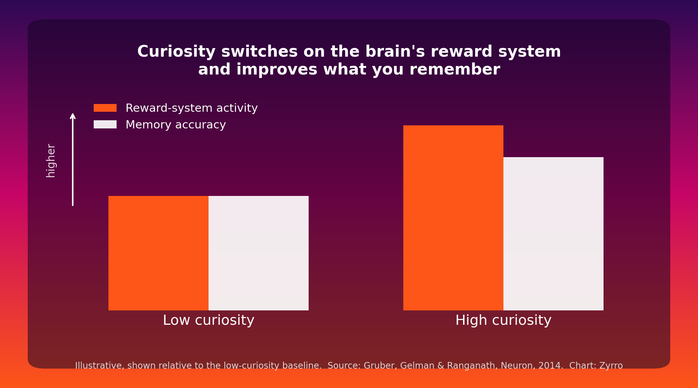
The biological imperative for curiosity is supported by empirical research from the University of California, Davis. Researchers Matthias Gruber, Bernard Gelman, and Charan Ranganath conducted studies demonstrating that when subjects are curious, the brain’s dopaminergic reward system—the same network activated by food and financial incentives—is triggered.
The implications for learning are profound. The study revealed that not only were participants more likely to retain information they were actively curious about, but their brains were also primed to absorb incidental, unrelated information presented during that state. This suggests that curiosity is not merely a transient feeling; it is a physiological state that enhances overall cognitive plasticity.
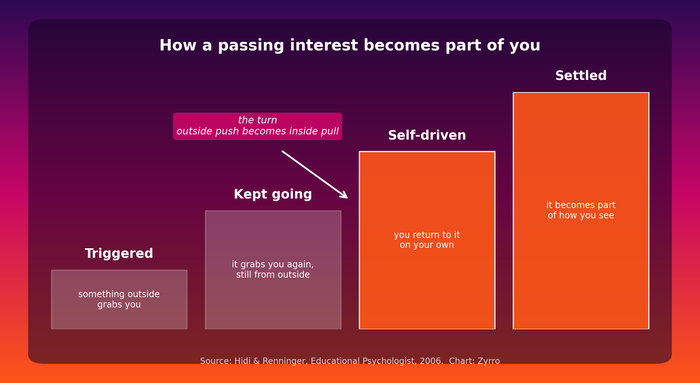
This research challenges conventional wisdom regarding motivation. While many productivity frameworks suggest that discipline must precede motivation, the neurological evidence suggests a reciprocal relationship: curiosity acts as the initial spark, and consistent engagement in a pursuit generates the motivation necessary to sustain it.
The Impact of Disengagement and Algorithmic Bias
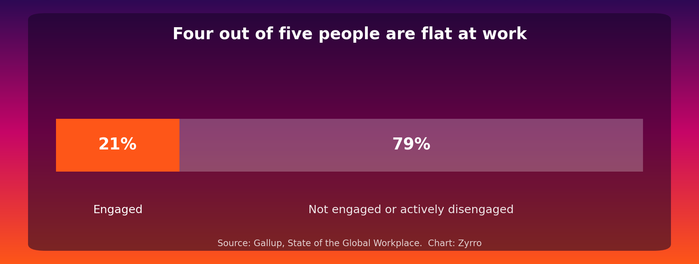
The economic and professional consequences of suppressed curiosity are significant. Annual surveys conducted by Gallup consistently reveal that approximately 80% of the global workforce reports feeling disengaged in their professional roles. While often attributed to individual lack of ambition, analysts suggest this is a systemic "fit" problem. When individuals spend the majority of their waking hours in environments where their innate intellectual curiosity is not utilized, engagement inevitably declines.
Furthermore, the "mirror effect" of algorithmic feeds poses a long-term risk to professional development. By consistently providing users with content that mirrors their existing preferences, these systems create intellectual echo chambers. While this provides a sense of comfort, it denies the user the "window" required for cross-pollination of ideas.
The Multidisciplinary Advantage: Lessons from Research
A study conducted at Northwestern University involving the analysis of 17.9 million research papers over a fifty-year period provides a compelling argument for the importance of "out-of-field" exploration. The study found that the most influential papers were rarely the result of radical, unprecedented innovation within a single niche. Instead, they were characterized by a foundation of solid, familiar expertise combined with a "strange ingredient"—a concept or methodology imported from an entirely different field.
These multidisciplinary papers were found to be twice as likely to reach the top tier of citations. This suggests that while deep, domain-specific knowledge is the foundation of a successful career, the "multiplier" effect comes from curiosity that wanders outside of one’s primary lane.
Strategic Framework for Cognitive Renewal
To leverage curiosity effectively, individuals must move away from the assumption that the "wandering" phase is wasted time. Instead, the process of inquiry should be structured into two phases: the wide search and the narrow review.
- Wander Wide: Allow for periods of intellectual exploration that do not immediately relate to current projects. This includes engaging with books, media, or individuals from outside one’s professional industry.
- Review Narrow: The critical failure in modern knowledge management is the lack of a synthesis step. By scheduling a regular review—monthly or quarterly—to look back at the patterns of one’s interests, an individual can identify latent themes that were previously invisible.
The use of modern tools, such as AI-driven note-taking or pattern-recognition systems, can assist in this review process. By inputting stray thoughts, articles, and observations into a centralized system, individuals can eventually ask the machine to identify the patterns they have been unknowingly building. This transforms the "rabbit hole" from a distraction into a data set of personal intellectual trajectory.
Conclusion: The Future of Intellectual Agency
The shift from being a passive consumer of information to an active architect of one’s own knowledge is the defining challenge of the current decade. As artificial intelligence continues to handle the heavy lifting of data retrieval and synthesis, the value of the human input—the ability to ask the right questions and connect disparate ideas—will only increase.
A curriculum vitae provides a retrospective record of where an individual has been, but their curiosity is a forward-looking indicator of where they are going. By treating curiosity not as a soft skill, but as a rigorous, disciplined practice of exploration and periodic synthesis, professionals can ensure that they remain relevant in an increasingly automated world. The ultimate goal is to move beyond the pre-programmed feed and toward a self-directed intellectual life, where the questions asked are as significant as the answers received.