The Evolution of Holiday Retail: How Social Media is Redefining Consumer Behavior for the 2026 Shopping Season

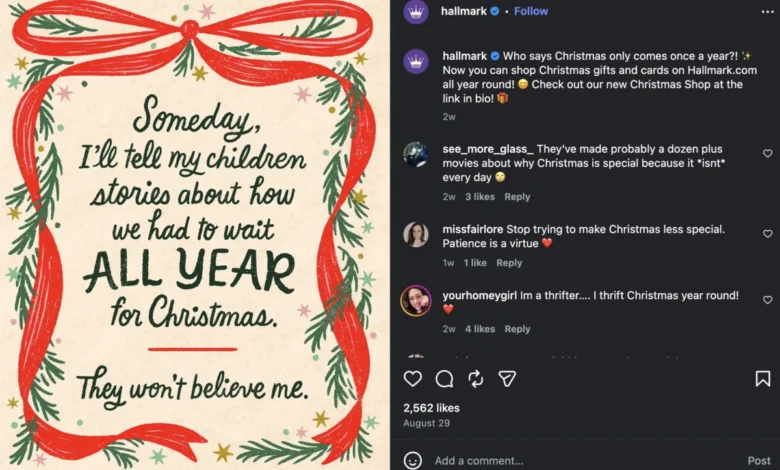
As the calendar turns toward the final quarter of the year, the landscape of retail is undergoing a structural transformation driven by the integration of social media into the core of the consumer journey. According to the Q3 2026 Sprout Social Pulse Survey, which analyzed the habits of 2,286 consumers across the United States, the United Kingdom, and Australia, 78% of shoppers intend to utilize social platforms as a primary or secondary tool for gift discovery this year. This shift represents more than a trend; it signals a permanent change in how brands must engage with their audiences during the most critical fiscal period of the year.

The traditional "holiday season," once defined by a frantic rush between Thanksgiving and Christmas, has been replaced by a fragmented, multi-month cycle. This evolution is necessitated by a complex confluence of economic pressures, including inflationary concerns and the anticipated impact of international trade tariffs on consumer goods.
The Shifting Timeline of Holiday Marketing
The chronology of holiday marketing has historically seen a "creep" toward earlier months. Retailers, eager to capture market share, have increasingly pushed holiday messaging into August and September. However, the data for 2026 suggests a widening gap between corporate strategy and consumer preference.
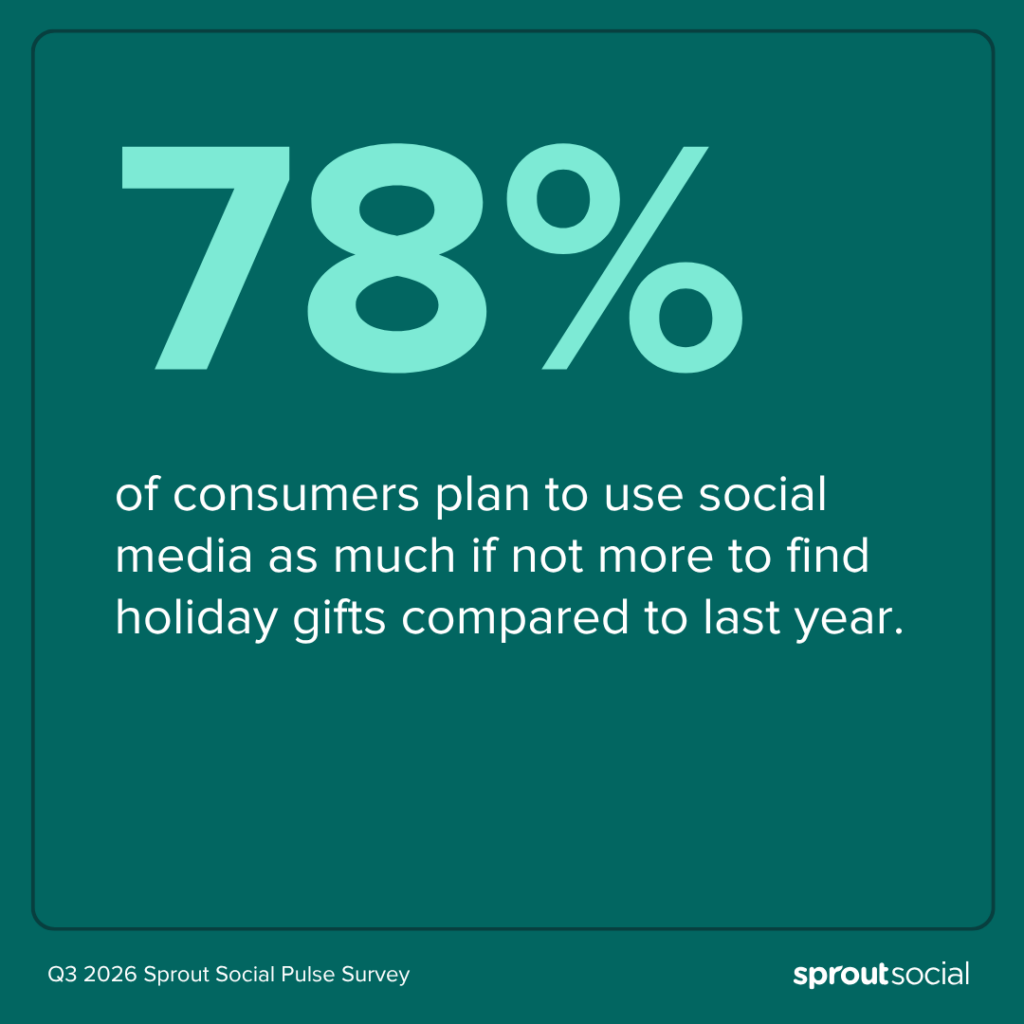
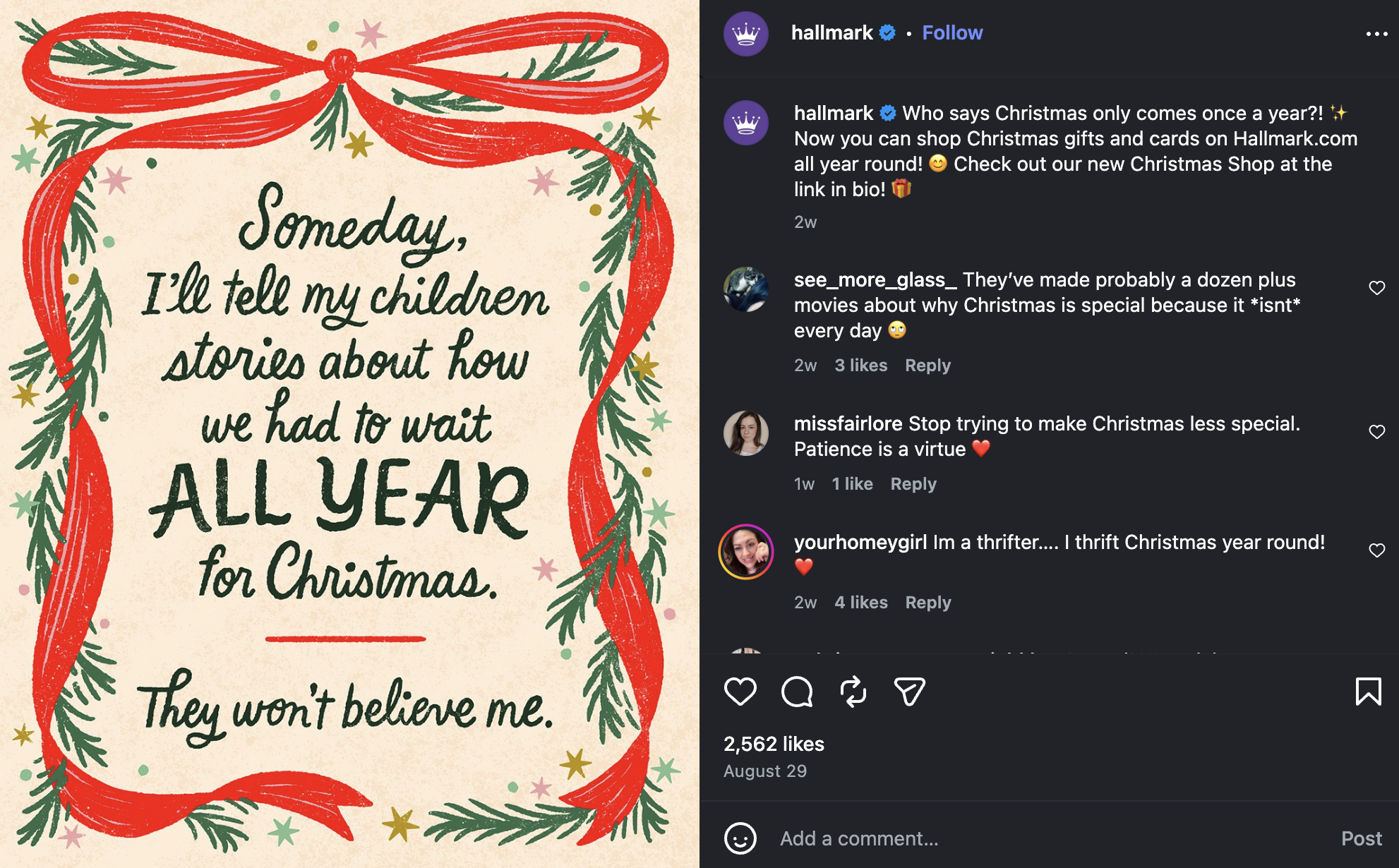
While brands like Hallmark and major coffee chains have initiated holiday-themed promotions as early as August, 50% of consumers surveyed stated that they prefer for brands to wait until October to begin their holiday advertising campaigns. This represents a significant pivot from 2025, where August and September were widely accepted as the appropriate windows for the industry to transition into holiday mode.
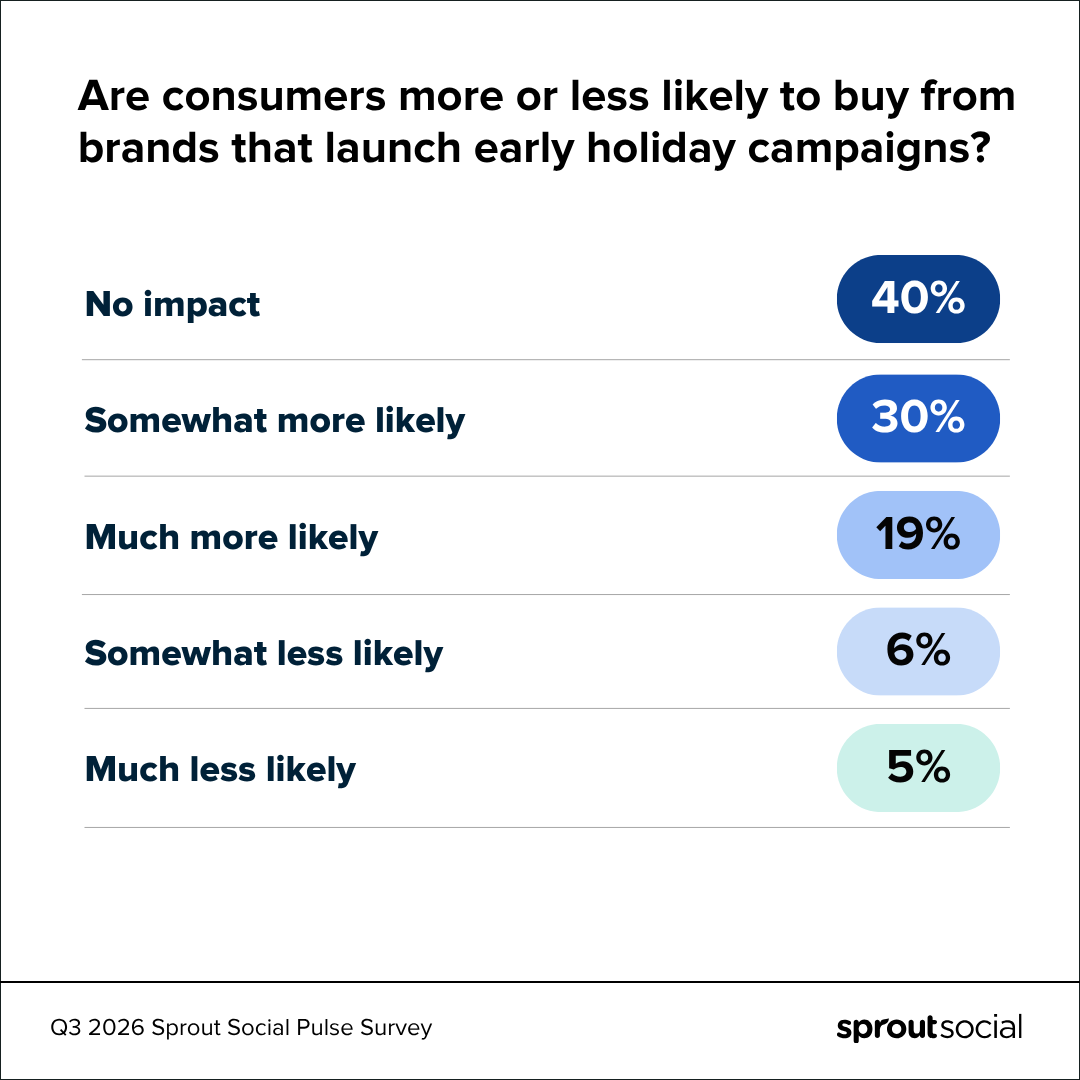
Despite this preference for a later start, the data reveals a paradoxical reality: consumer purchasing behavior remains largely decoupled from their stated feelings about marketing timing. Approximately 40% of shoppers indicated that early August campaigns have no impact on their decision-making process, while nearly 50% reported that such early advertisements actually increased their likelihood of making a purchase. This indicates that while consumers may express "holiday fatigue" in surveys, their wallets respond to the presence of promotions, regardless of the season.
Economic Headwinds and the Tariff Factor
The 2026 holiday shopping season is defined by high sensitivity to pricing. The specter of new tariffs has created a palpable sense of anxiety among the global consumer base. Survey findings highlight that 69% of consumers are actively concerned about price hikes resulting from current trade policies, while 56% explicitly stated they plan to reduce their overall holiday spending compared to previous years.
This economic caution has triggered a proactive shopping strategy. Roughly 36% of consumers reported that they intend to begin their holiday shopping earlier than usual to circumvent the threat of future price increases. This defensive shopping behavior is a direct response to the volatility of the current market, forcing brands to pivot their messaging from "aspirational" to "value-driven."
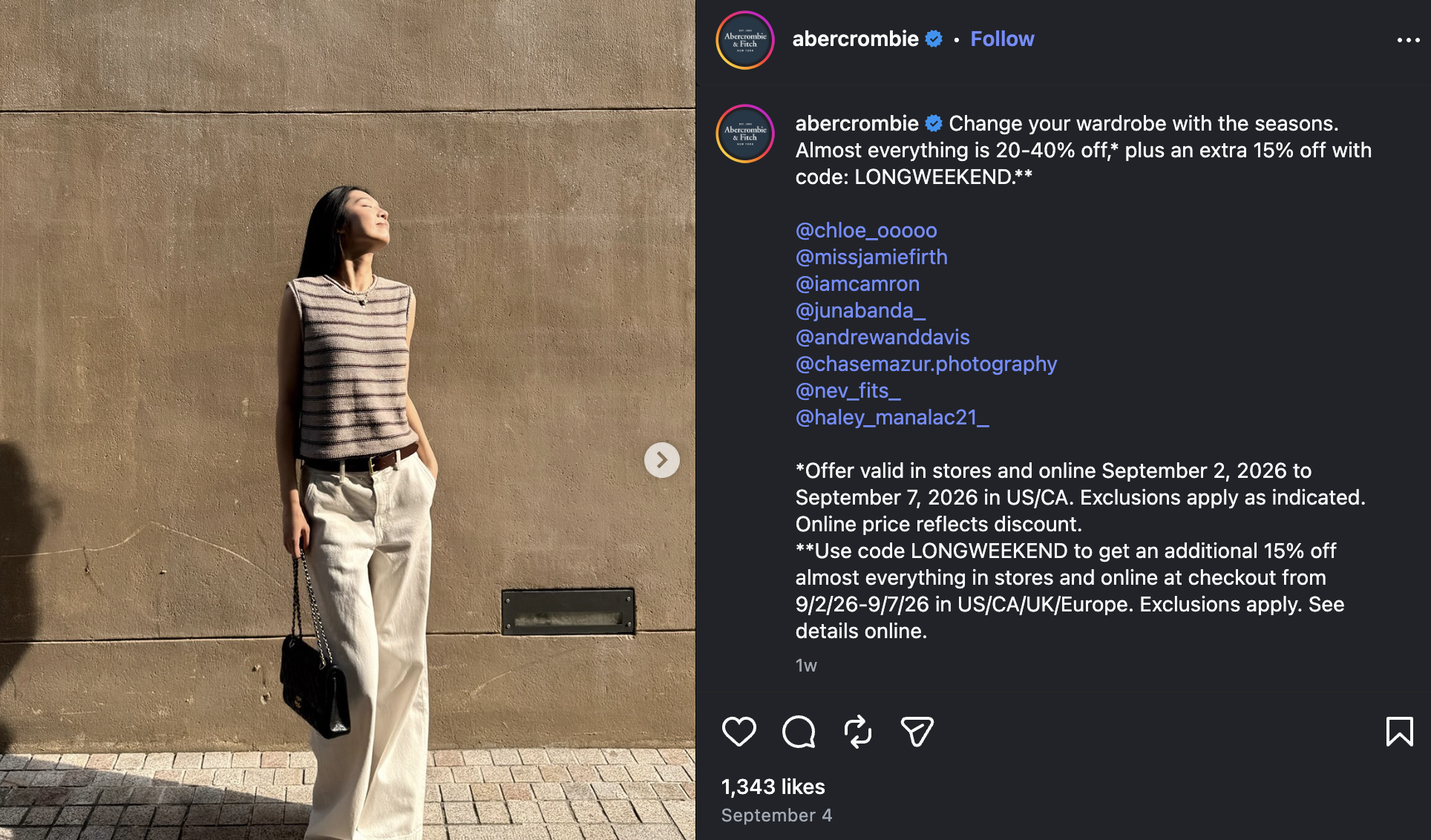
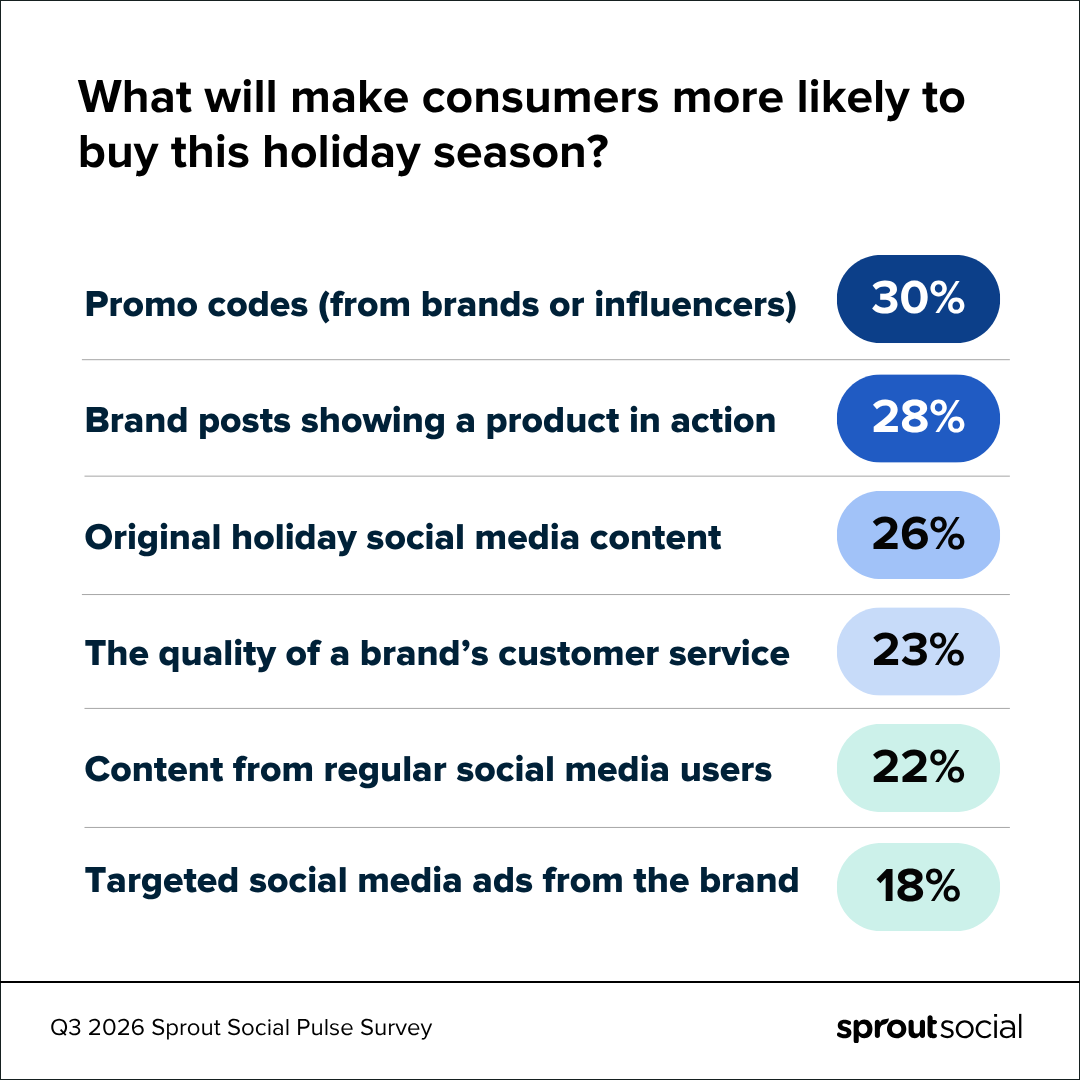
To maintain conversion rates in this climate, brands are finding that traditional marketing tactics are less effective than direct incentives. Promo codes and discounts have emerged as the primary drivers of purchase intent, with 30% of consumers identifying these as the most persuasive factor in their decision-making. Furthermore, demonstrating product functionality through visual content—specifically through short-form video and influencer partnerships—has become a critical component of the sales funnel, outweighing the influence of static advertising or general brand awareness campaigns.
Social Media as the Modern Search Engine
The role of social media has expanded beyond networking and entertainment to serve as a primary search engine for the modern shopper. For Gen Z and Millennials, the traditional search engine is frequently bypassed in favor of social platforms, particularly for experiential and visual discovery.
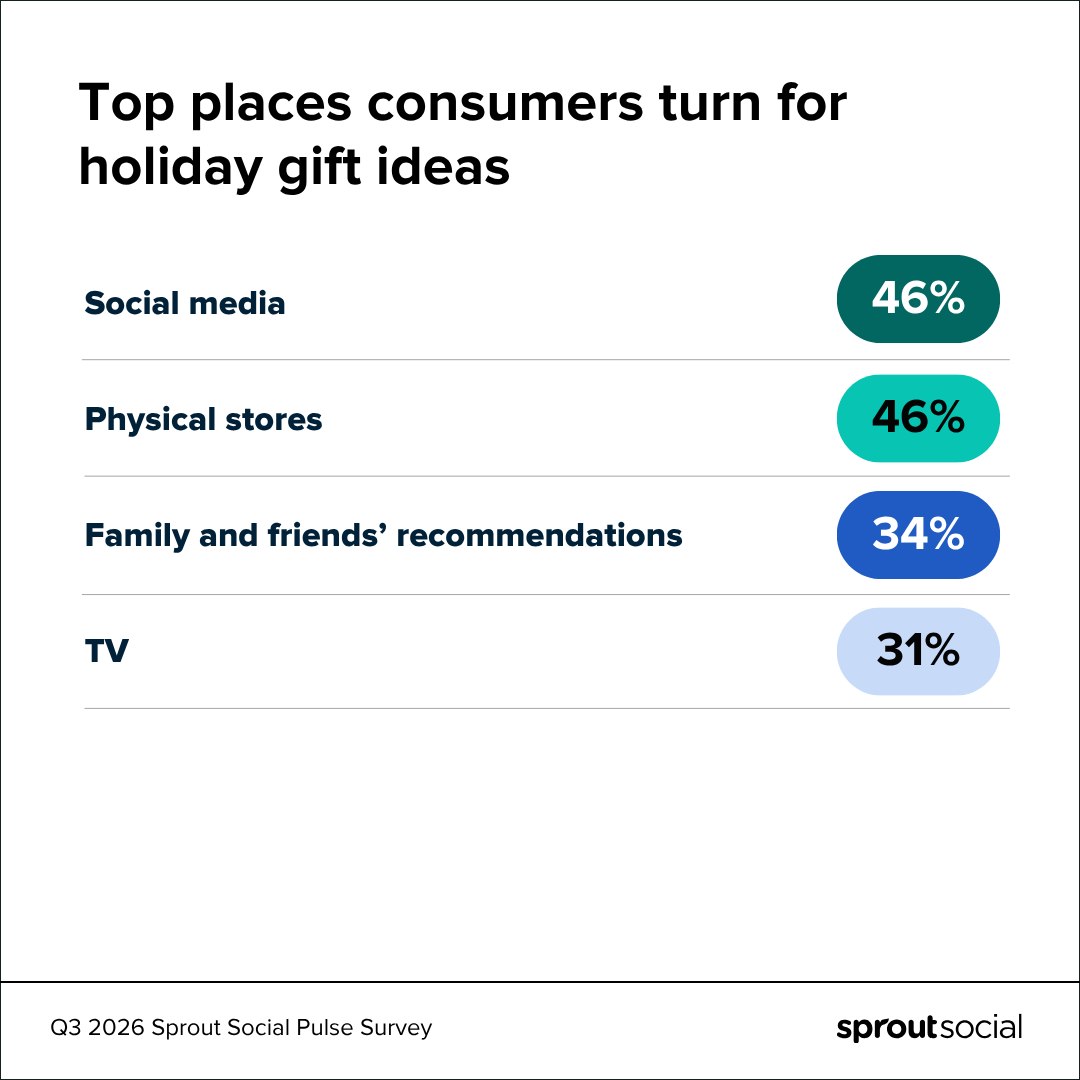
The data indicates that 46% of consumers now look to social media to discover gift ideas, a figure that places social platforms on par with physical retail stores. This parity is even more pronounced among younger demographics, where social media serves as the primary destination for holiday research. The integration of social commerce features, such as TikTok Shop and Instagram Checkout, has shortened the path from discovery to acquisition. With over 50% of consumers expressing comfort in making purchases directly within a social app, the friction that previously characterized online shopping is rapidly disappearing.
The New Standard for Customer Experience
As social media becomes the primary venue for shopping, it has simultaneously become the frontline for customer service. The expectation for brands to manage inquiries, complaints, and requests on social platforms is at an all-time high, with 86% of users planning to use these channels for support as much or more than they did in 2025.
Speed and accessibility are the currencies of this new customer service model. Seventy percent of consumers expect a response from a brand within 24 hours of reaching out on social media. The public nature of these platforms, where comments sections are increasingly used for support queries, creates both a challenge and an opportunity for brand reputation management. A single unresolved complaint in a public comment thread can have a broader impact on brand perception than a private email ever could.
To meet this demand, companies are increasingly turning to Artificial Intelligence. The survey results show that 70% of consumers are comfortable with brands utilizing AI to manage or expedite customer service tasks. This acceptance is even higher among Gen Z, at 77%. However, the consensus among industry experts is that AI should act as a force multiplier for human agents rather than a replacement. The most effective strategy involves using AI to triage messages, analyze sentiment, and provide draft responses, while keeping a human "in the loop" to ensure empathy and accuracy.
Strategic Implications for Retailers
For brands navigating the 2026 season, the overarching takeaway is the necessity of an integrated, trust-based approach. The data makes it clear that while consumers are price-conscious, they remain highly susceptible to brands that can provide value, transparency, and a frictionless experience.
The successful retailer in 2026 will be one that treats social media not as an advertising billboard, but as a holistic ecosystem. This includes:
- Value-Centric Content: Shifting influencer partnerships and ad spend toward demonstrating value and utility.
- Strategic Timing: Acknowledging that while early campaigns are often criticized, they remain effective; therefore, balancing the "start date" with high-value, promotional content is essential.
- Customer Service Readiness: Investing in AI tools that enable rapid, personalized responses to the inevitable influx of social-based inquiries.
- Social Search Optimization: Recognizing that consumers are searching on social platforms and ensuring that content is discoverable through optimized keywords and visual tagging.
As the retail sector moves through the final months of the year, the reliance on social media is unlikely to wane. On the contrary, it is poised to become the bedrock of the consumer experience. Brands that can successfully blend the agility of digital commerce with the responsiveness required by today’s discerning, budget-conscious shopper will be the ones to define the success of the 2026 holiday season. The digital marketplace has evolved, and for the savvy retailer, the transition represents a clear roadmap for driving growth in an increasingly complex economic environment.