Paul Boag Announces Launch of UX Insiders Community to Support In-House Design Professionals

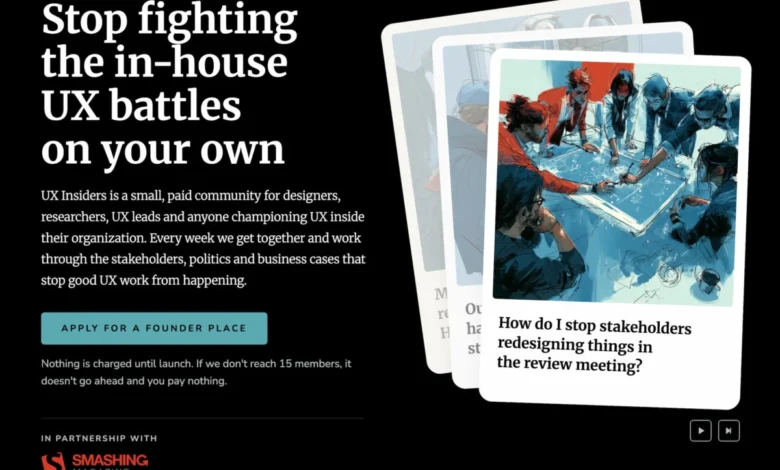
The landscape of professional user experience (UX) design is undergoing a significant transformation, moving away from agency-led projects toward deeply integrated, in-house roles. As organizations increasingly rely on internal teams to drive product development, a new challenge has emerged: the isolation of the "in-house" practitioner. Addressing this, veteran UX consultant and Smashing Magazine advisory board member Paul Boag has announced the launch of UX Insiders, a specialized professional community designed to provide peer support, strategic templates, and collaborative problem-solving for those navigating the complexities of organizational UX.
The Evolution of the In-House UX Role
For over two decades, the UX profession was primarily defined by agency environments where practitioners collaborated on diverse client projects. Today, industry data indicates a marked shift toward internal staffing. According to recent surveys by the Nielsen Norman Group, over 70% of UX professionals are now employed directly within organizations rather than in external design agencies.
While this shift offers designers greater product ownership, it often results in professional silos. In-house UX practitioners frequently find themselves as "teams of one" or members of small, isolated units. This isolation is compounded by a lack of institutional knowledge regarding how to handle corporate bureaucracy, stakeholder management, and the rapid integration of artificial intelligence into research workflows. Unlike agency professionals, who can rely on a network of peers across various firms, in-house designers often lack an external sounding board to validate their strategic decisions.
Chronology and Launch Strategy
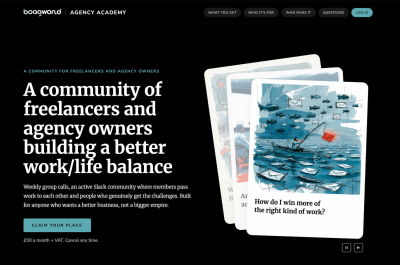
The development of UX Insiders follows the successful implementation of the Agency Academy, a parallel community for freelancers and agency owners established in July 2024. Observing the high engagement levels within the agency-focused group—where weekly peer-to-peer calls and real-time knowledge sharing became central to member retention—Boag identified a clear gap for the in-house market.

The rollout for UX Insiders is structured around a tiered launch phase:
- November 2024: Commencement of the application period for "Founder Members."
- December 11, 2024: The "Go/No-Go" threshold date. A minimum of 15 confirmed sign-ups is required to proceed with the initiative.
- January 5, 2027: Official launch date for the community platform.
By utilizing a founder-pricing model, early adopters are incentivized to join, effectively locking in a reduced annual or monthly rate for the duration of their membership. This structure serves as a risk-mitigation strategy for the organizers, ensuring the community has a viable base of engaged professionals before resources are committed.
The Complexity of Modern Stakeholder Management
Beyond technical design skills, the primary friction point for modern UX professionals is the "bit of the job nobody talks about": organizational politics. Industry reports from the Design Management Institute suggest that design-led companies outperform the S&P 500 by over 200%. However, the path to achieving this organizational maturity is rarely linear.
In-house designers are currently grappling with three primary obstacles:
- Stakeholder Friction: The difficulty of aligning cross-functional teams, particularly when redesigns are subject to arbitrary modifications during the review process.
- Resource Stagnation: The prevalence of projects that remain in a perpetual state of "pre-launch" due to internal budgetary or strategic delays.
- The AI Paradigm Shift: The rise of AI-driven research tools has created a misconception among senior management that user research can be completed in an afternoon. This often leads to the devaluation of professional, evidence-based UX methodologies.
UX Insiders intends to address these hurdles by providing a repository of tested business cases, research templates, and project plans. By creating a closed environment, members can discuss sensitive organizational challenges without the risk of external exposure or solicitation from third-party service providers.
Strategic Implications for the Design Industry
The introduction of this community highlights a broader trend: the "professionalization" of the internal design function. As companies like Google, Airbnb, and Amazon have set high bars for UX maturity, mid-sized organizations are struggling to bridge the gap between design-thinking theory and internal execution.
Analysts suggest that peer-to-peer professional networks are becoming the primary mechanism for knowledge transfer, replacing traditional, static training seminars. By facilitating a space where practitioners can share what has "actually worked" within their specific corporate environments, UX Insiders acts as a form of informal, industry-specific consultancy.
Furthermore, the requirement that all members must work "in-house" is a strategic gatekeeping measure. By excluding vendors, agencies, and freelancers, the community creates a "safe harbor" where designers can discuss the internal mechanics of their companies—such as budgeting cycles and management restructuring—without the fear of violating non-disclosure agreements or attracting unwanted sales outreach.
Economic Structure and Accessibility
The platform operates on a subscription-based model. For the first 25 members, a "founder rate" of £49 per month (billed annually) is available, with a standard monthly option at £59. A significant component of this pricing strategy is the recognition of corporate training budgets. By providing invoices suitable for corporate accounting departments, the initiative positions itself as a legitimate professional development expense rather than a personal luxury.
This approach aligns with the growing demand for continuous professional development (CPD) in the tech sector. As the shelf-life of technical skills decreases, the value of "soft" organizational skills—such as negotiation, advocacy, and strategic alignment—has increased.
Looking Ahead
The decision to partner with Smashing Magazine for the promotion of this community provides it with an immediate, high-trust distribution channel. For the wider design community, the success of UX Insiders will serve as a bellwether for the demand for niche, highly curated professional networks.
If the initiative reaches its target threshold by December 2024, it will signal that the industry is ready to move beyond generic design advice toward hyper-specific, peer-supported career development. As the boundaries between design and business continue to blur, the ability of in-house teams to articulate the value of UX to non-technical stakeholders will likely become the most critical skill for design professionals in the coming decade.
For those considering membership, the emphasis remains on transparency and peer accountability. By requiring an application, the community ensures that the group remains focused on the unique challenges of internal UX practitioners, maintaining a high signal-to-noise ratio in discussions. Whether this model will redefine how in-house designers access mentorship and resources remains to be seen, but the structured approach to community building suggests a move toward more sustainable, long-term professional support systems within the digital economy.