Paul Boag Announces Launch of UX Insiders Community to Support In-House Design Professionals

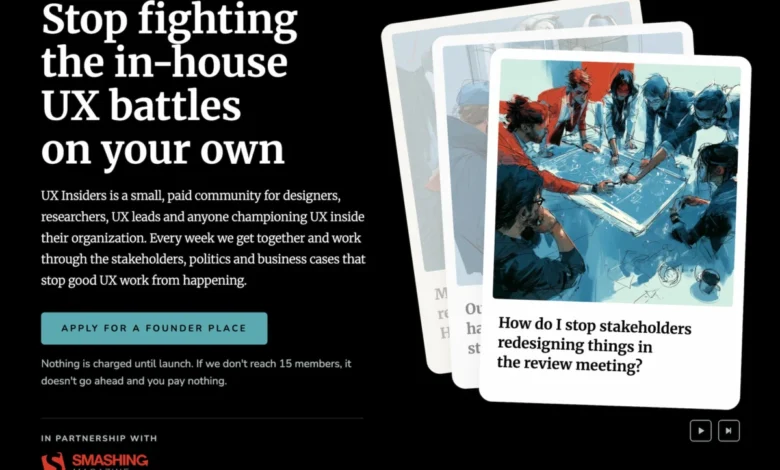
The landscape for in-house user experience (UX) professionals is undergoing a period of significant transformation, driven by shifting corporate expectations and the rapid integration of artificial intelligence into design workflows. Recognizing the isolation often felt by practitioners working within large organizations, veteran UX consultant and Smashing Magazine advisory board member Paul Boag has announced the launch of UX Insiders, a specialized professional community designed to provide peer support, strategic resources, and collaborative problem-solving. The initiative, slated for an official launch on January 5, 2027, aims to address the non-design challenges—such as stakeholder management and navigating organizational politics—that frequently impede the effectiveness of in-house UX teams.
The Professional Challenges of In-House UX
For many designers and researchers, the primary hurdles to successful project delivery are rarely technical. Instead, industry feedback suggests that the most significant obstacles are systemic: navigating internal bureaucracy, justifying the business value of research to skeptical leadership, and managing shifting project timelines. According to industry surveys, in-house UX practitioners often operate as "teams of one," lacking the immediate mentorship found in agency environments.
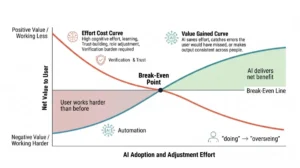
The rise of generative AI has added a new layer of complexity to these roles. Many managers, influenced by marketing narratives suggesting that AI can fully automate user research and design processes in mere hours, are increasingly pressuring internal teams to accelerate timelines at the expense of qualitative rigor. This has left many professionals without a clear roadmap for balancing efficiency with quality, forcing them to navigate these paradigm shifts in professional silos.
Project Timeline and Launch Logistics
The development of UX Insiders follows a structured timeline designed to ensure sustainability and community engagement. The enrollment phase is currently open, with a firm deadline of December 11, 2026. This threshold date serves as a viability check; if fewer than 15 members commit to the platform by this time, the project will not proceed, ensuring that the community begins with a baseline of active participation.

Prospective members are required to go through an application process. This gatekeeping mechanism is designed to restrict the community to in-house practitioners only, excluding agency owners or external vendors who might use the space for business development or lead generation. This deliberate curation is intended to foster an environment where members can speak candidly about internal organizational dynamics, intellectual property, and specific stakeholder challenges without the risk of external exposure.
The financial structure of the community includes "founder pricing" for the first 25 members, providing a locked-in rate for as long as they maintain their membership. This model acknowledges that many professionals will utilize corporate professional development budgets to fund their participation, allowing for payment via official invoices.
Comparative Analysis: Agency Academy
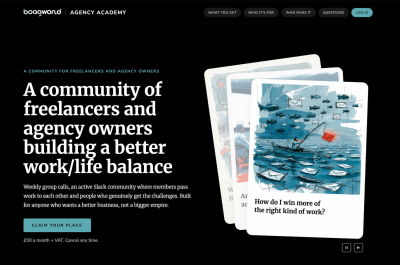
The launch of UX Insiders mirrors the operational framework of Boag’s existing project, the Agency Academy. Launched in July 2024, the Agency Academy serves as a blueprint for peer-to-peer professional development. Data from the first 18 months of that initiative suggests that the most valuable aspect of such communities is not the instructor-led content, but the collective intelligence of the membership base.
While the Agency Academy caters to the unique pressures of business ownership—such as lead generation, client retention, and financial forecasting—UX Insiders shifts the focus to the institutional challenges of the corporate employee. Both platforms leverage weekly synchronized calls and asynchronous communication via platforms like Slack, ensuring that members have access to a support network regardless of their time zone or geographical location.
Industry Implications and Strategic Value
The creation of specialized, closed-network communities for UX professionals signals a broader trend in professional development. As digital maturity increases within large organizations, the "generalist" approach to UX education is being superseded by a need for "soft-skill" mastery—specifically, the ability to act as an internal consultant or change agent.
From a strategic perspective, the impact of such communities on retention and professional growth is notable. By providing a safe space to share anonymized case studies, templates, and successful research methodologies, practitioners can bypass the "learning by trial and error" phase that characterizes much of the in-house experience. For organizations, supporting employees in such communities may yield dividends in the form of increased project velocity and more effective advocacy for user-centered design practices.
The Role of Mentorship and Peer Support
The pedagogical philosophy behind the new community centers on the "outside view." When a designer is struggling with a specific stakeholder or an stalled project, the advice from a peer in a different industry—who has nonetheless faced a similar psychological or bureaucratic barrier—can be more effective than generic training courses.
The inclusion of a shared library of research plans and business cases provides a pragmatic, evidence-based repository. In an era where "design-led growth" is a frequently cited business metric, the ability to point to successful internal case studies from other organizations provides a powerful mandate for practitioners to justify their resources and methodologies to senior management.
Official Stance and Future Outlook
Boag, who has contributed 77 articles to Smashing Magazine and authored three books on the subject, emphasizes that the community is intended to be a collaborative effort rather than a top-down lecture series. The integration of the Smashing Magazine advisory board’s expertise ensures that the content remains aligned with industry best practices, while the "in-house only" requirement protects the integrity of the discussions.
As of late 2026, the industry is closely monitoring the transition toward more modular, community-driven education. If successful, the UX Insiders model could serve as a prototype for similar professional interest groups across other technical sectors, moving away from large-scale conferences toward smaller, high-engagement networks.
For professionals considering membership, the value proposition is clear: access to a verified network of peers to help mitigate the isolation of in-house work. As the digital landscape continues to evolve, the ability to share, troubleshoot, and adapt within a trusted, confidential environment may become a critical component of career resilience for those working at the intersection of business, design, and technology.
Those interested in further details or who wish to apply for a founder spot are encouraged to visit the official portal. By prioritizing quality of interaction over quantity of members, the initiative aims to establish a sustainable ecosystem that directly addresses the real-world friction points of modern UX design. As the January 2027 launch date approaches, the focus remains on securing the initial cohort of members who are prepared to contribute to, and benefit from, a shared pool of professional expertise.