Digital marketing professionals and social media managers frequently encounter the challenge of deploying visual assets that fail to meet platform-specific dimension standards. Uploading a misconfigured image or a low-resolution video is a common operational error, yet the economic consequences for modern ad campaigns can be severe. Suboptimal asset sizing often triggers diminished engagement rates, elevated cost-per-click metrics, and poor overall return on investment (ROI). Because Meta and its flagship platform, Facebook, frequently update their interface parameters, aesthetic guidelines, and sizing frameworks, maintaining institutional compliance requires continuous oversight.
The evolution of digital advertising architecture demands that media buyers remain vigilant regarding technical parameters. Historically, social media platforms maintained rigid boundaries regarding pixel dimensions and aspect ratios. However, as mobile-first consumption patterns accelerated throughout the late 2010s and early 2020s, Meta introduced dynamic multi-placement formats designed to automatically adapt across various screen sizes. Despite these automated adjustments, supplying master creative assets that adhere strictly to platform recommendations remains the gold standard for campaign optimization. Digital agencies and in-house marketing departments routinely invest significant billable hours into auditing asset libraries to prevent pixelation, cropping errors, and unnatural aspect ratios that degrade brand perception.

Understanding the foundational rationale behind precise ad sizing involves analyzing user behavior within high-velocity digital feeds. Modern consumers process mobile content rapidly, often spending less than two seconds evaluating sponsored media before deciding to scroll past or engage. When an ad features distorted imagery or truncated headlines due to improper scaling, the psychological friction discourages interaction and signals a lack of professional execution. Conversely, high-resolution assets optimized for specific placements capture visual attention, reduce bounce rates, and establish immediate credibility with prospective customers. Furthermore, ad delivery algorithms favor high-quality assets that generate positive early engagement, rewarding compliant advertisers with preferential placement and lower cost thresholds.
To systematically address these creative requirements, marketing operations teams must segment their strategies by placement architecture. Facebook’s ecosystem offers a diverse array of ad environments, each governed by unique technical constraints.
Facebook In-Feed Ad Specifications and Best Practices
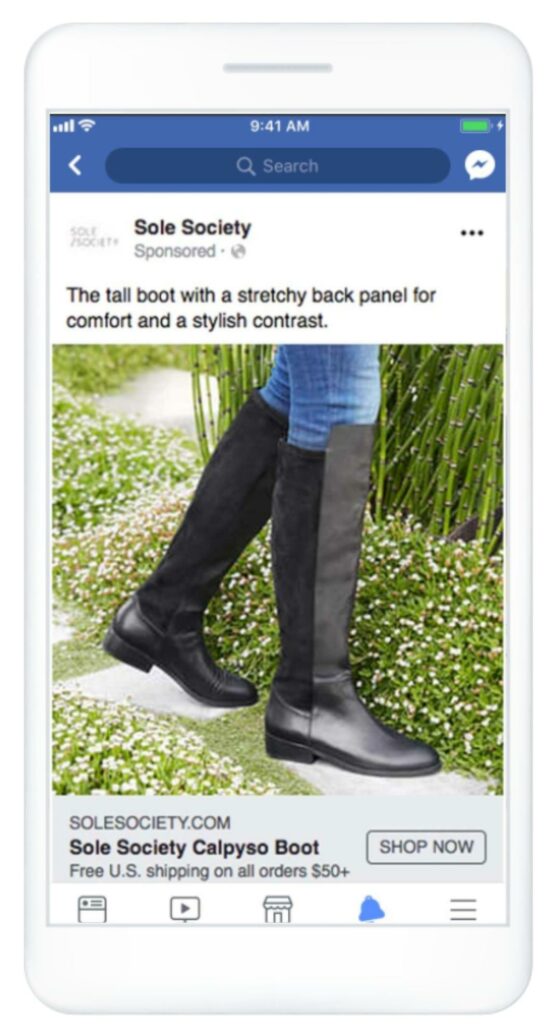
In-feed advertisements represent the cornerstone of direct-response and brand-awareness campaigns on the platform. Positioned natively within user news feeds alongside organic posts from family, friends, and followed pages, these ads support single images, dynamic carousels, short-form video loops, and GIFs. To maximize organic reach and engagement, advertisers frequently utilize panoramic images or specialized 360-degree photography while adhering to strict rules regarding overlaid textual elements.
For standard single-image in-feed placements, technical compliance dictates the use of JPG or PNG file formats with a maximum file size of 30 megabytes. While the minimum required dimension is 600 by 600 pixels, industry best practice mandates uploading files at a resolution of at least 1080 by 1080 pixels to accommodate high-density Retina displays. Aspect ratios may range from 1.91:1 to a square 1:1 format. Textual recommendations for in-feed images advise keeping primary text concise at approximately 125 characters, while headlines and descriptions perform best when restricted to 27 characters.
When deploying video assets within the news feed, advertisers may utilize MP4, MOV, or GIF containers up to 4 gigabytes in size. Supported aspect ratios include a standard 1:1 square format for both desktop and mobile viewing, or a vertically oriented 4:5 ratio optimized strictly for mobile devices. Minimum resolution requirements stand at 1080 by 1080 pixels, with video durations spanning from a minimum of one second to a maximum of 241 minutes, accommodating everything from punchy bumpers to long-form brand documentaries.

Optimizing In-Stream Video Ads for Conversion Performance
In-stream video advertisements are specifically engineered for brands seeking to capture and retain the prolonged attention of prospective consumers, making them an ideal choice for traffic-generation and conversion-focused campaigns. These placements occur naturally before, during, or after video content consumed on the platform, as well as within live-streaming environments.
Meta supports two distinct formats for in-stream placements: single-video configurations and carousel-style ads that activate during Facebook Live broadcasts after a viewer has maintained engagement for at least 60 seconds. Notably, in-stream video ads are delivered exclusively to mobile device users, reflecting the dominant consumption habits of the platform’s active user base.

Technical parameters for in-stream static image components require JPG or PNG files adhering to a 1.91:1 or 1:1 ratio, a minimum size of 600 by 600 pixels, and a recommended resolution of 1080 by 1080 pixels with an aspect ratio tolerance of 3 percent. Text recommendations mirror standard feed ads with 125 characters for primary text and 40 characters for headlines, with a strict advisory against embedding redundant text directly into the master image file. Video specifications permit MP4, MOV, or GIF formats up to 4 gigabytes, configured in 16:9 or 1:1 ratios, with run times ranging from 5 seconds to 10 minutes.
Leveraging Carousel and Collection Formats for E-Commerce Growth
E-commerce enterprises frequently require ad structures capable of displaying multiple SKUs or breaking down complex product features without overwhelming the consumer. Facebook’s in-feed carousel ads address this need by allowing brands to sequence between two and 10 interactive cards containing images or videos. Each card can direct traffic to a unique landing page URL, enabling multi-product merchandising within a single ad unit. Carousel image and video files must maintain a strict 1:1 square ratio, with image files capped at 30 megabytes and video files capped at 4 gigabytes. Recommended character limits for carousels include 125 characters for primary text, 32 characters for headlines, and 18 characters for descriptions.

For broader product catalog promotion, collection ads offer an immersive mobile shopping experience. Typically structured with a hero video or primary image positioned above a grid of three complementary product images, collection ads direct users upon interaction to a full-screen Facebook Instant Experience. This native in-app landing page allows consumers to browse inventory and finalize purchases without experiencing the friction of loading an external browser. Collection assets require a 1:1 aspect ratio, high-resolution imagery of at least 1080 by 1080 pixels, and mandatory integration with a designated landing page URL or Instant Experience framework.
Instant Articles, Marketplace, and Right Column Ad Deployments
As publishing models shift toward mobile-optimized reading environments, Facebook Instant Articles provide media outlets and content marketers with fast-loading, article-style ad placements. These units utilize 1:1 square images and 16:9 video assets conforming to standard file size limitations, designed to blend seamlessly into premium editorial content while maintaining high engagement rates.

Similarly, Facebook Marketplace ads allow businesses to target consumers who are actively in a transactional mindset. Positioned within the platform’s peer-to-peer commerce hub, Marketplace ads support both high-resolution square imagery and dynamic video files. Because users visit the Marketplace with explicit purchasing intent, maintaining strict adherence to the required 1080 by 1080 pixel minimum resolution is critical for preserving brand authority.
Conversely, Facebook right column ads represent a legacy desktop-only placement. Although mobile consumption has reduced the overall market demand for right column units, performance marketers continue to utilize them for retargeting campaigns. Because these ads render in a smaller landscape format on the right side of the desktop browser interface, assets must be carefully cropped to ensure core messaging remains legible at reduced viewing scales.
Vertical Formats: Stories and Messenger Placements

The proliferation of vertical storytelling formats across social media ecosystems has established vertical video and imagery as vital components of any comprehensive media plan. Facebook Stories, Messenger Stories, and the Facebook Audience Network utilize a 9:16 vertical aspect ratio designed to occupy the entirety of a mobile user’s screen.
For Stories placements across Facebook and Messenger, static image and video assets must be produced at a minimum resolution of 1080 by 1080 pixels, with professional standards recommending a full 1080 by 1920 vertical canvas. A critical technical consideration for vertical story ads involves safety zones: designers must leave approximately 14 percent—or roughly 250 pixels—free of critical text, logos, or UI elements at both the top and bottom of the frame to prevent native platform overlays from obscuring the message. Video durations for Stories range from 1 second up to 2 minutes for Messenger and 241 minutes for Facebook, though concise, high-impact creative loops consistently outperform extended run times.
Audience Network and Cross-Channel Strategic Implications

The Facebook Audience Network extends campaign reach beyond the walled garden of the primary social platform, delivering native, banner, interstitial, and rewarded video ads across vetted third-party mobile applications and external websites. Leveraging Facebook’s advanced algorithmic targeting within the Audience Network allows advertisers to scale impression volume efficiently while maintaining stringent brand safety controls through Meta Business Manager.
Maximizing Return on Investment Through Strategic Placement Selection
Achieving optimal return on investment requires deliberate alignment between chosen campaign objectives, creative formats, and technical placements. Advertisers must evaluate the unique behavioral patterns associated with each ecosystem environment—balancing the passive consumption of news feed scrollers with the high-intent mindset of Marketplace shoppers and the immersive engagement of vertical story viewers.

By systematically adhering to these standardized specifications, digital marketing professionals can eliminate costly production errors, streamline campaign deployment workflows, and ensure their visual assets achieve maximum creative impact across every consumer touchpoint within the Meta ecosystem.