Amazon S3 Tables Introduces Managed Migration Pathways to Transition Apache Hive Datasets Directly to Apache Iceberg Without Operational Friction

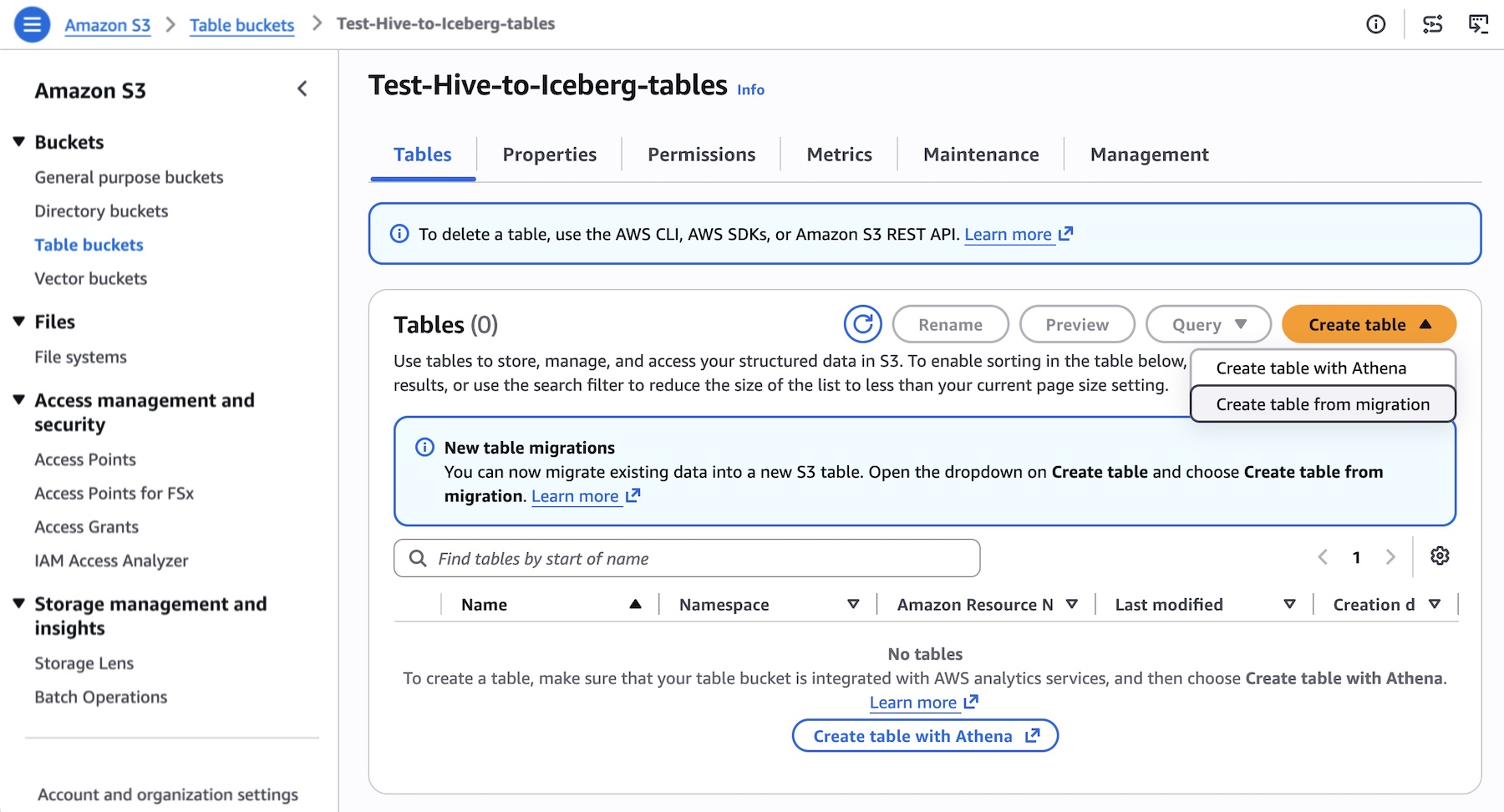
The landscape of modern data architecture underwent a significant shift today with the official rollout of a managed migration feature for Amazon S3 Tables, empowering enterprise data teams to transition legacy Apache Hive datasets directly to Apache Iceberg. Historically, this migration process required weeks or even months of intensive engineering effort, involving the custom construction of data pipelines, meticulous schema mapping, type conversions, and the provisioning of temporary compute clusters. The new capability eliminates these operational bottlenecks, providing a streamlined, API-driven pathway that executes conversions natively within the cloud infrastructure while live production workloads continue uninterrupted.
Apache Iceberg has rapidly solidified its position as the premier open-source standard for large-scale analytical datasets. By abstracting how data is organized physically, Iceberg allows organizations to manage petabyte-scale tables efficiently while introducing advanced features such as schema evolution, hidden partitioning, and time-travel queries. Despite these clear advantages, legacy architectures built on Apache Hive have remained deeply embedded within many enterprise environments due to the sheer complexity and risk associated with migrating vast amounts of historical data. The introduction of managed migration by Amazon Web Services (AWS) directly addresses this friction, offering an automated bridge between legacy storage formats and modern, high-performance open table formats.

Mechanics of the Managed Migration Workflow
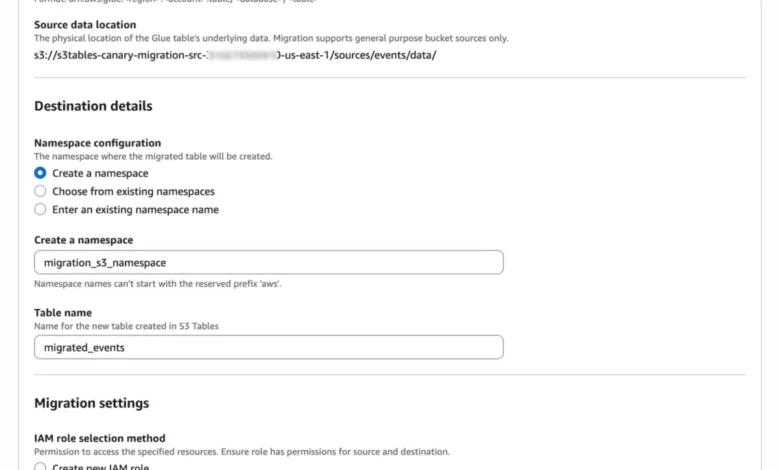
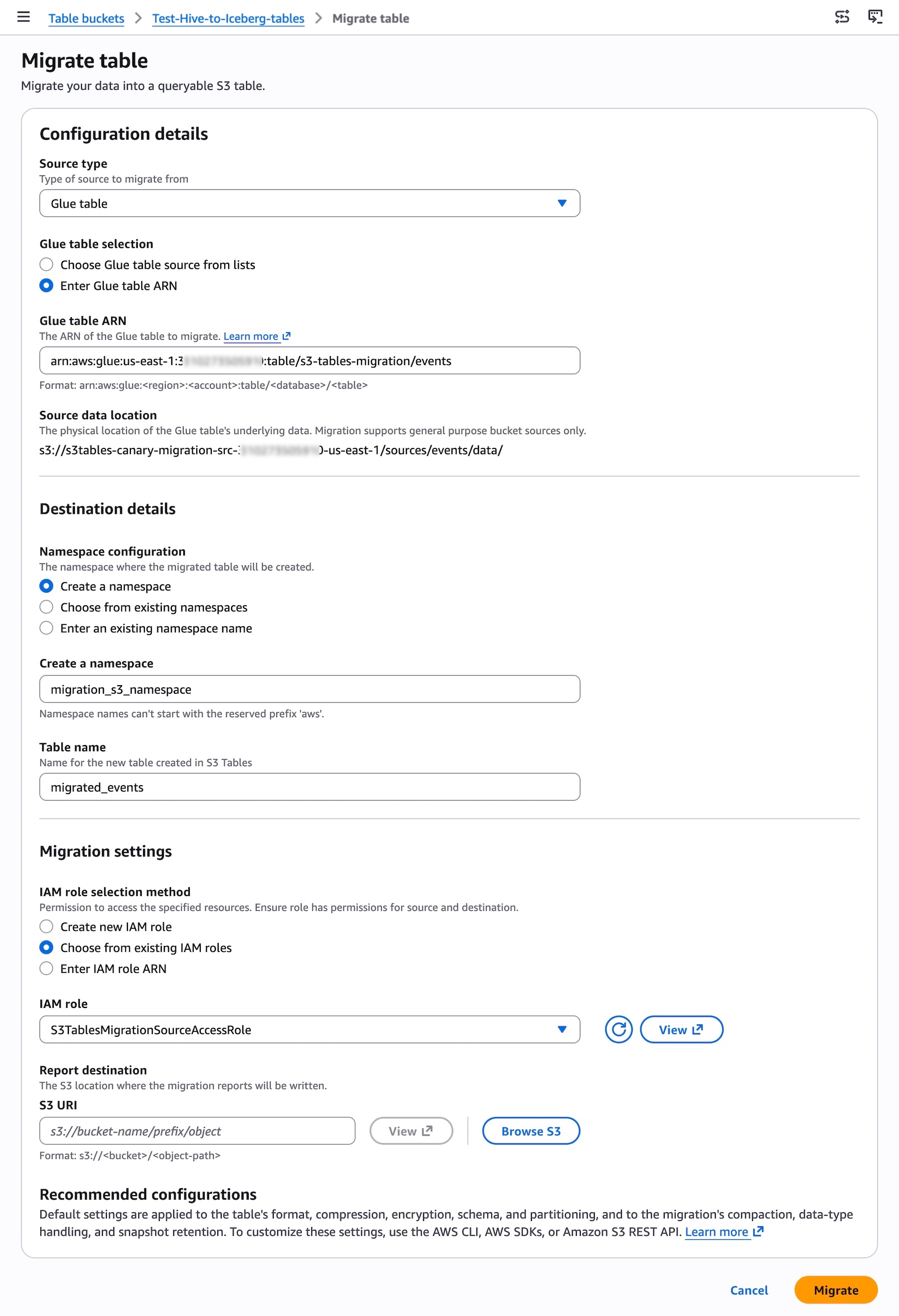
At its core, the newly introduced feature automates the entire lifecycle of table transformation. When initiated via the Amazon S3 console, the AWS Command Line Interface (AWS SDKs), or through automation toolkits, S3 Tables begin by conducting comprehensive validation checks on the source dataset registered within the AWS Glue Data Catalog. Unlike traditional manual scripts that risk breaking downstream dependencies, S3 Tables automatically generate a thorough pre-migration compatibility report prior to copying any data. This diagnostic phase identifies potential anomalies, validates data types, and ensures that the target schema aligns correctly with the specifications required by Apache Iceberg.
Once validation is complete, S3 Tables handle the complex underlying transformations natively. This includes data type conversions, file recompression using modern codecs such as zstd, and routine compaction to optimize file sizes for future analytical queries. A particularly vital attribute of this architecture is its continuous synchronization capability. Data engineering teams can execute incremental synchronization routines as many times as necessary while the source table remains active and accepting new writes. Production applications can continue to interact with the legacy table up until the final cutover phase, which requires only a brief, minutes-long read-only window to finalize the promotion of the destination Iceberg table to full read-write status.
Financial efficiency has also been a primary consideration in the design of the migration architecture. Organizations utilizing self-managed migration scripts frequently incur hidden costs related to auxiliary compute resources, intermediary staging storage, and disrupted access tiers. Under the new Amazon S3 Tables framework, customers are billed solely for the direct data copied during the transition. The conversion process itself carries no additional processing fees, and source objects already residing in storage tiers such as S3 Intelligent-Tiering retain their current access tier without forced repatriation or unexpected cost spikes.

Background Context and the Rise of Open Table Formats
The push toward managed migration tools reflects broader structural changes within the big data analytics industry over the past half-decade. For years, Apache Hive served as the foundational metadata catalog and query format for Hadoop-based and cloud-native data lakes alike. However, as data volumes scaled into the petabytes and organizations adopted decoupled storage and compute paradigms, the limitations of Hive—particularly regarding atomic transaction support, concurrent writes, and partition management—became increasingly apparent.
Apache Iceberg, originally developed at Netflix to solve performance bottlenecks at massive scale, emerged alongside alternatives like Delta Lake and Apache Hudi to redefine how structured data is managed on object storage. By introducing a table format layer that tracks data files via metadata snapshots rather than physical directory listings, Iceberg enabled ACID transactions, efficient rollbacks, and high-concurrency read-write operations. Major analytics engines, including Amazon Athena, Amazon EMR, Trino, and Apache Spark, quickly adopted native support for Iceberg, making it the de facto standard for open data lakehouses.
Despite this technical consensus, migrating legacy datasets remained a major obstacle for enterprise Chief Information Officers and data directors. Upgrading hundreds or thousands of legacy Hive tables manually often required dedicating specialized data platform engineering teams to write custom conversion scripts, build validation frameworks, and manage fallback procedures in case of pipeline failures. By productizing this journey into a fully managed service, AWS is effectively removing the technical debt associated with legacy storage layers, enabling enterprises to accelerate their modernization roadmaps without risking operational downtime.
Integration with Modern Developer Toolkits and AI Agents
In alignment with modern software engineering practices, the managed migration framework is deeply integrated into AWS developer tools, infrastructure-as-code interfaces, and emerging AI-assisted development paradigms. Beyond traditional web console interactions, engineers can programmatically orchestrate migrations using the AWS CLI or software development kits by invoking the start-table-migration command alongside detailed JSON configuration payloads. These configurations allow granular control over encryption parameters, storage classes, compaction strategies, snapshot management policies, and failure thresholds for unmatched fields.
Furthermore, AWS has ensured that the new capability is immediately compatible with advanced coding agents and automation frameworks. Through specialized skills embedded within the Agent Toolkit for AWS—such as the migrating-hive-tables-to-s3-tables module—AI-assisted development environments can provide step-by-step guidance, execute compatibility checks, and apply safety guardrails during the migration process. Organizations leveraging the AWS Model Context Protocol (MCP) server can similarly query documentation, verify regional parameters, and troubleshoot deployment logs directly through their preferred AI interfaces, lowering the technical barrier to entry for junior engineers and database administrators.
Regional Availability and Immediate Implications
At its initial launch, the managed migration capability for Amazon S3 Tables is available across a broad footprint of strategic global AWS regions. These include US East (N. Virginia), US East (Ohio), US West (Oregon), Asia Pacific (Mumbai, Singapore, Sydney, Tokyo), and Europe (Frankfurt, Ireland, Stockholm). Support at launch focuses on AWS Glue-registered Hive tables stored in Parquet format residing within the same AWS account and region as the destination S3 Table bucket.
Industry analysts note that this release significantly lowers the total cost of ownership for cloud data lakes. By abstracting the heavy lifting of format translation and schema harmonization, AWS allows enterprises to redirect valuable engineering talent away from infrastructure maintenance and toward high-value analytics, machine learning, and business intelligence initiatives. As organizations increasingly migrate their core data assets toward open table formats, native migration utilities of this caliber will likely become a baseline expectation across all major cloud service providers, cementing Apache Iceberg’s dominance in modern cloud-native data architectures.