AWS Weekly Roundup: Modernizing Data Architectures, Generative AI Runtimes, and Enterprise Connectivity

Adopting new technologies has historically incurred significant friction not from the intrinsic complexity of the new systems, but from the logistical overhead of migration. For enterprise engineering teams, transitioning legacy frameworks like Apache Hive data tables to modern architectures such as Apache Iceberg traditionally demanded weeks of manual pipeline development, resource provisioning, and rigorous validation. However, recent infrastructure updates from Amazon Web Services (AWS) are systematically rewriting this narrative. By abstracting the heavy lifting of data synchronization, streamlining serverless queue consumption, and introducing elastic agent runtimes for artificial intelligence, cloud infrastructure providers are lowering the barrier to entry for large-scale digital transformation.
This week’s developments span multiple core domains, including database management systems, generative AI orchestration platforms, secure network interconnects, and centralized vulnerability management. Industry analysts note that these sequential rollouts point to a broader architectural philosophy: minimizing downtime and preserving existing production workflows during critical upgrades.
Streamlining Data Lake Migrations and Large-Scale Database Imports
The friction of data migration has long acted as a bottleneck for organizations attempting to modernize their data lakes. Addressing this structural challenge, Amazon S3 Tables introduced a managed migration capability designed to transition Parquet-formatted Apache Hive tables directly into Apache Iceberg tables without requiring custom extract, transform, load (ETL) pipelines or manually provisioned compute clusters.
Under the hood, the service automatically validates the source data cataloged within the AWS Glue Data Catalog and generates a comprehensive compatibility report detailing every object within scope. Crucially, the system utilizes an incremental synchronization mechanism. During an active migration, the source table remains fully writable, with only incremental updates copied over during recurring sync cycles. Production workloads can continue uninterrupted until a brief, final cutover phase lasting only a few minutes. Following migration, datasets can be queried immediately using Amazon Athena, Amazon SageMaker Unified Studio, or any analytical engine supporting the open-source Iceberg REST API. Organizations are billed strictly for the volume of data copied, with zero additional conversion fees, and existing storage optimizations such as S3 Intelligent-Tiering policies are preserved. At launch, the feature is available across 10 global AWS Regions for intra-account and intra-region migrations.
Complementing this data lake advancement, Amazon DynamoDB rolled out native support for bulk item ingestion directly from Amazon S3 into pre-existing tables. Operating as a managed, asynchronous background job, the feature allows users to import line-delimited DynamoDB JSON or Amazon Ion files at scale. Each ingested record can incorporate independent condition expressions, enabling engineers to seamlessly mix plain, insert-only, and version-guarded writes within a single batch file.
To optimize performance and resource utilization, these bulk import operations leverage dedicated system capacity distinct from standard provisioned throughput, resulting in cost efficiencies compared to traditional per-request write APIs. For time-sensitive deployments, an Accelerated performance tier can process massive datasets—such as 100 million items averaging 1 KB each—in under one hour. Database administrators have noted, however, that operational safeguards must be observed: canceling an active job halts the process immediately but does not automatically roll back records already written to the target table.
Advancing Generative AI Infrastructure with Elastic Runtimes and Web Synthesis
Generative artificial intelligence continues to drive rapid iteration in cloud primitives, particularly regarding how autonomous agents are hosted, scaled, and granted external tooling. AWS expanded its machine learning portfolio by rolling out the generally available Amazon Bedrock AgentCore Runtime, introducing structural changes to memory management and container initialization.
The updated runtime architecture addresses two persistent pain points in agentic application deployment: memory consumption and cold-start latency. Traditional agent runtimes often retain peak memory allocations throughout the lifecycle of a session, leading to inflated operational expenditure. The V2 AgentCore Runtime utilizes a dynamic paging model where sessions initialize with minimal footprints, dynamically loading additional memory on demand and releasing resources back to the host infrastructure when idle.
Furthermore, cold-start performance has been heavily optimized through environment pre-packing and snapshot restoration. Rather than bootstrapping an agent container from scratch upon every invocation, the platform prepares the environment once, creates a snapshot, and rapidly restores that snapshot for incoming requests. Internal benchmarking data indicates that this mechanism maintains stable P75 cold-start latency at approximately two seconds across container image sizes ranging from 200 megabytes to 2 gigabytes. By contrast, legacy runtimes experienced latency scaling from 5.4 seconds up to nearly 30 seconds as image sizes increased. While the per-unit compute rate under the new model may be higher, the dramatic reduction in cumulative gigabyte-hours is projected to lower overall hosting costs for high-throughput deployments.
To complement agent execution, AWS introduced Web Answer on Amazon Bedrock AgentCore. This managed tool integration addresses the complexities of building custom search, information retrieval, and citation pipelines for large language models. Rather than requiring developers to orchestrate multiple search queries and synthesize unstructured results manually, Web Answer accepts natural-language questions, autonomously plans parallelized web searches, evaluates evidence sufficiency, and returns a fully synthesized, cited response. Integrated via the Model Context Protocol (MCP) as a target on the AgentCore Gateway, the tool can be constrained using domain inclusion and exclusion filters alongside publication-date boundaries, providing enterprises with granular governance over external data ingestion.
Optimizing Compute, Networking, and Vulnerability Inventories
Beyond data and artificial intelligence, recent platform updates targeted core compute and networking primitives to enhance throughput and reduce operational overhead.
In the realm of event-driven architectures, AWS Lambda introduced native queue consumption support for Apache Kafka via self-managed and fully managed event source mappings. Historically, consumer group architectures limited Lambda execution parallelism to the exact count of partitions within a Kafka topic. By adopting Kafka share groups—available in Kafka version 4.2 and later—the new queue mode enables multiple parallel Lambda function invocations to process records drawn from a single Kafka partition. While this approach trades strict message ordering for at-least-once delivery guarantees and heightened throughput, it places the responsibility of idempotency directly onto the application code.
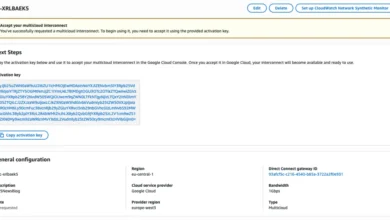
In enterprise networking, AWS announced the preview of AWS Interconnect – Last Mile in collaboration with Equinix. Designed to bridge enterprise data centers to the cloud without manual cross-connect provisioning or complex router configurations, the service establishes private, managed connectivity from any of Equinix’s 282 global data centers directly into AWS. The architecture features quad-redundant capacity distributed across two physical locations and four independent links, complete with automated Border Gateway Protocol (BGP) and Virtual Local Area Network (VLAN) provisioning, a 99.99% availability service level agreement (SLA), and native MACsec encryption by default. The preview launched in the San Jose metropolitan area and expanded to Northern Virginia, offering initial 1 Gbps connections at no additional cost.
On the security front, AWS Security Hub integrated a comprehensive Software Bill of Materials (SBOM) inventory across organizational compute resources. By aggregating software package data from Amazon Elastic Compute Cloud (EC2) instances, Amazon Elastic Container Registry (ECR) container images, and AWS Lambda functions, Security Hub automatically compiles an exhaustive catalog mapping every installed library, its precise version, and the exact count of impacted resources. Operating transparently atop the SBOM data already generated by Amazon Inspector, this centralized inventory equips security operations teams with the immediate visibility required to remediate zero-day vulnerabilities across large-scale cloud footprints without incurring extra charges under Security Hub Essentials.
Broader Industry Implications and Future Outlook
The cumulative impact of these infrastructure enhancements reflects a broader macroeconomic and technical trend across enterprise IT: the continuous minimization of migration friction and operational toil. As organizations prepare for major industry gatherings, such as the upcoming AWS re:Invent conference in Las Vegas, cloud architects are increasingly prioritizing solutions that integrate seamlessly into existing ecosystems rather than demanding wholesale architectural rewrites.
By enabling live database migrations, bulk asynchronous data loading with minimal performance degradation, and elastic generative AI runtimes that scale efficiently with demand, AWS is positioning its portfolio to capture workloads from legacy on-premises environments and competing cloud providers alike. Industry observers suggest that as these automation-first paradigms become standard across enterprise platforms, the traditional boundaries separating database administration, software engineering, and artificial intelligence operations will continue to blur, accelerating the pace of digital modernization globally.