The Ultimate Guide to Securing and Maintaining Your Facebook Verification Badge in 2024


In the modern digital landscape, establishing unassailable credibility and authenticity is a paramount challenge for high-profile brands, public figures, and content creators. As social media platforms have grown in economic and cultural influence, they have simultaneously become hotbeds for malicious actors, digital identity theft, and sophisticated impersonation schemes. For legitimate businesses and influencers on Meta’s flagship platform, discovering a network of fraudulent accounts operating under one’s name is an increasingly common and damaging operational hazard. To combat this pervasive issue and provide users with a definitive marker of trust, Meta utilizes the coveted blue verification badge—a symbol that signifies authenticity, safeguards public interest, and distinguishes genuine entities from impostors.
Understanding the Evolution of Facebook Verification
The mechanism of account verification on social media has undergone a profound structural evolution over the past decade. In May 2013, Facebook officially introduced its verification system, drawing inspiration from Twitter’s pioneering framework to authenticate high-profile accounts belonging to public figures, global journalists, entertainment personalities, athletes, and major corporate organizations. Initially, this distinction was strictly limited to a rarefied tier of global celebrities and institutional giants.
As digital ecosystems matured, the platform expanded its parameters. In 2018, Meta broadened the scope of verification to encompass Pages boasting substantial, engaged followings, acknowledging that medium-sized enterprises and regional public figures faced identical risks of impersonation. Most recently, the platform extended the availability of the verification checkmark to individual personal profiles, provided the account holder meets rigorous thresholds for public interest, audience size, and notable presence.

Despite the widespread recognition of the blue checkmark, misconceptions regarding its function persist. The verification badge is strictly an indicator of authenticity—confirming that an account is the genuine digital presence of the celebrity, public figure, or global brand it represents. It is distinct from temporary platform accolades such as top seller badges, active group contributor markers, or top fan designations. Furthermore, while Meta historically experimented with secondary indicators such as gray checkmarks for local businesses and specific Marketplace verifications, these alternative programs have since been retired, cementing the blue checkmark as the sole universal standard for authentic digital identity on the platform.
The Mechanics of the Application Process
Securing the blue checkmark begins with submitting a standardized verification request form directly through the platform. While the user interface allows virtually any account holder to initiate this request, the evaluation backend operates under strict internal criteria designed to vet applicants thoroughly. Navigating this process successfully requires a strategic approach divided into preliminary preparation, precise documentation, and the establishment of verifiable public notability.
Step one of the preparation phase requires applicants to clearly determine whether they are seeking verification for a personal profile or a dedicated business Page. Logging into the active account prior to accessing the request form ensures that the system automatically aligns the application with the correct digital asset. For personal profiles, applicants must supply the precise profile URL, whereas business Pages require comprehensive organizational data linked to established legal entities.
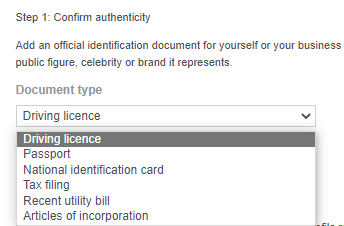
Step two involves confirming unequivocal authenticity. To prevent fraudulent submissions and combat the proliferation of synthetic identities, Meta requires applicants to submit official government-issued identification. For individuals, this typically includes a valid driver’s license, passport, or national identification card. For businesses and corporate entities, accepted documentation extends to official tax filings, articles of incorporation, or utility bills bearing the official name and address of the enterprise. These documents must be digitally scanned and securely attached to the verification portal.

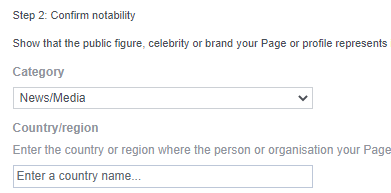
Step three addresses the critical component of notability. Meta explicitly states that verification is reserved for accounts that represent entities in the public interest and face a high, demonstrable risk of impersonation. Consequently, applicants must provide categorical data detailing their industrial sector, geographic strongholds, and primary audience demographics. To substantiate public interest, the platform permits applicants to submit up to five independent URLs linking to reputable news articles, profiles, or external digital properties that showcase their public footprint. Meta expressly excludes paid promotional content, sponsored articles, and low-tier blogs from consideration, prioritizing objective journalistic coverage and organic market presence.
Step four marks the conclusion of the active submission phase: the waiting period. Once the application is officially transmitted, internal moderation teams review the submitted credentials against proprietary evaluation matrices. Historically, this review cycle ranges from 48 hours to 45 days. Applicants subsequently receive formal notification of approval or rejection via the primary email address associated with their account.
Strategic Imperatives for Maximizing Approval Odds
Because Meta’s verification process remains notoriously opaque, digital marketing strategists and brand management experts advise adherence to rigorous preliminary optimization protocols to maximize the statistical probability of application acceptance. Internal platform reviewers evaluate profiles based on four foundational pillars: authenticity, uniqueness, completeness, and notability.
First, comprehensive optimization of company and personal information is non-negotiable. An enterprise or public figure cannot reasonably expect verification if foundational data points—such as contact phone numbers, physical office addresses, operating hours, and email conduits—are outdated, conflicting, or entirely absent. Every digital touchpoint must reflect verifiable real-world credentials.
Second, depth of detail within the "About" section is vital. Digital assets should feature exhaustive descriptions of the brand’s mission, historical background, core offerings, and founding personnel. The more transparent and complete a digital profile appears, the simpler it is for automated and human reviewers to establish a direct correlation between the online asset and the real-world entity.
Third, strict adherence to professional presentation standards is mandatory. The aesthetic tone, linguistic style, and visual branding deployed across a Facebook profile or Page must align seamlessly with the entity’s presence across the broader digital landscape and physical marketplace. Content that invites controversy, reduces public credibility, or skirts ethical boundaries can instantly disqualify an applicant during the manual review phase. Brand custodians are advised to audit their archives, eliminating or revising any historical posts that fail to meet high professional thresholds.
Fourth, establishing robust cross-platform digital architecture is essential. Verified accounts rarely exist in an isolated vacuum. Applicants must embed accurate, direct hyperlinks to their official corporate websites on their Facebook profiles, while concurrently ensuring that their official web domains feature reciprocal, highly visible links back to their official Facebook presence. This cross-verification solidifies ownership and proves domain authority.
Fifth, establishing and maintaining a dedicated Facebook Business Page rather than relying solely on a personal profile is critical for corporate entities. While the fundamental verification request process is structurally similar, a professional Business Page inherently projects organizational legitimacy and provides specialized data fields that reinforce brand notability.
Finally, proactive community building remains the cornerstone of perceived notability. An account cannot achieve verification without a thriving, active audience. Brands must implement consistent organic engagement strategies, foster community dialogue through targeted content, and utilize integrated social media management tools to monitor sentiment and audience growth over time.
Post-Verification Security and Compliance Protocols
Securing the coveted blue checkmark represents only a fraction of the challenge; maintaining the badge requires continuous adherence to strict platform regulations and rigorous digital hygiene. Meta reserves the unilateral right to strip an account of its verification badge if the entity violates established terms of service, undergoes a significant structural rebranding without proper re-authorization, or falls victim to security breaches.
To insulate a verified asset against malicious takeover attempts, implementing advanced account security measures is mandatory. Enabling two-factor authentication (2FA) creates an impenetrable barrier against unauthorized access. By requiring an alternative authentication vector—such as hardware security keys, third-party authenticator applications, or encrypted SMS verification codes—beyond standard credential entry, account holders drastically reduce the viability of credential-stuffing and phishing attacks designed to hijack high-value verified assets.
Furthermore, verified entities are held to rigorous compliance standards regarding platform policies. While all users must adhere to foundational Community Standards concerning hate speech, illegal commodities, and online harassment, verified accounts face heightened scrutiny regarding intellectual property rights and privacy violations. When sharing user-generated content or redistributing third-party digital assets, verified brands must ensure complete compliance with copyright frameworks to avoid punitive platform strikes that jeopardize verification status.
Ultimately, maintaining the long-term utility of a verified Facebook presence demands an aggressive, sustained marketing strategy. Because platform notability is an active, ongoing metric rather than a permanent lifetime achievement, entities must continuously generate high-impact organic content, invest strategically in targeted advertising campaigns, and actively engage with their communities. By systematically combining robust security protocols, pristine digital branding, and consistent community cultivation, brands and public figures can successfully secure, retain, and leverage the immense trust afforded by Facebook’s premier symbol of authenticity.