AWS Weekly Roundup: Lambda Web Functions Revolutionize Deployment While Bedrock AgentCore Tackles AI Governance

Amazon Web Services has introduced a major shift in how developers deploy serverless applications and govern autonomous artificial intelligence systems, bridging the gap between existing application architectures and cloud-native execution environments. The recent wave of updates highlights a dual strategy by the cloud computing giant: dramatically reducing friction in web application deployment while simultaneously establishing robust, gateway-enforced security paradigms for enterprise AI agents.
At the center of these developments is the release of AWS Lambda Web Functions, a new execution form factor designed to run standard HTTP web applications without requiring developers to rewrite their code into event handlers or use legacy adaptation layers. Alongside this compute announcement, AWS has underscored the rising imperative for rigorous AI governance, publishing architectural frameworks to manage autonomous agents operating at scale through Amazon Bedrock AgentCore.
Streamlining Serverless Architecture with Lambda Web Functions
Historically, deploying standard web applications built with frameworks like Express, Hono, Fastify, or Next.js onto AWS Lambda required developers to wrap their applications in custom adapters or event-handling structures to translate API Gateway payloads into standard HTTP requests. This architectural constraint often introduced latency, complicated local testing, and created a barrier to entry for teams migrating existing monorepos or monolithic web services to a serverless paradigm.
AWS Lambda Web Functions eliminates this friction by natively supporting plain HTTP servers. Developers can take an existing port-listening application, execute a deployment command, and receive a live HTTPS URL in under a minute without modifying application logic or configuring complex infrastructure beforehand.
This capability is built upon the same Firecracker microVM isolation technology that powers traditional Lambda functions, ensuring robust security boundaries. However, Lambda now supports three distinct form factors within a single application architecture:
- Event Functions for asynchronous, event-driven workloads.
- Web Functions for user-facing HTTP layers.
- MicroVMs for stateful sandboxes handling untrusted code execution.
Under the hood, the execution environment introduces critical optimizations for web workloads. Each execution environment can handle up to 1,200 concurrent requests, allowing traffic bursts to share warm environments rather than enforcing a strict one-to-one mapping between requests and individual execution containers. Furthermore, billing metrics measure the actual CPU time consumed by the code rather than wall-clock duration. This shift alters the cost-benefit arithmetic for server-side rendering, API backends, and token-streaming inference endpoints, where execution threads spend significant cycles waiting on network I/O or downstream services.
Global Distribution and Availability
Enterprise scalability is natively integrated into the Lambda Web Functions release. By appending regional parameters to the deployment command, engineering teams can replicate their code and configuration across multiple AWS Regions, pairing the deployment with latency-based routing behind a single global URL.
Additionally, development teams can execute weighted traffic splits across different application revisions to facilitate safe, gradual canary rollouts. At launch, Lambda Web Functions is available in five initial AWS Regions, supporting Node.js 24 running on Arm64 architecture with full Virtual Private Cloud (VPC) connectivity.
Complementing the compute release, Amazon CloudFront now natively supports Web Function endpoints as direct origins, utilizing Origin Access Control (OAC) to secure traffic flows between the content delivery network and the serverless backend.
Addressing AI Autonomy and Governance at Scale
While infrastructure deployments are becoming more frictionless, the enterprise challenge of governing autonomous systems has intensified. In a recent analysis published by AWS engineering leadership, titled Trust in Depth: Giving Agents More Autonomy Without Losing Control, the company addressed a critical operational bottleneck in modern artificial intelligence deployments: human-in-the-loop oversight.
As organizations scale their deployment of generative AI agents, relying on manual human verification for every decision quickly becomes unsustainable. Operators tasked with reviewing every micro-action inevitably experience cognitive fatigue, leading to oversight failures and security gaps.
To resolve this dilemma, AWS advocates for a structural shift in how boundaries are enforced. Rather than relying on an agent’s internal reasoning to govern its own behavior—which creates vulnerabilities if the model hallucinates or is subjected to prompt injection attacks—guardrails must be enforced externally.
The proposed framework relies on four foundational questions evaluated at four distinct operational moments:
- Scope: Defining the permitted domain of action.
- Know: Verifying identity and context.
- Bound: Establishing hard programmatic limits.
- Observe: Continuous monitoring and auditing.
These constraints are implemented through Amazon Bedrock AgentCore policies enforced directly at the API gateway layer. Because the agent does not control the enforcement mechanism, it cannot bypass or disable the security parameters, regardless of its underlying reasoning path or prompt instructions.
Broader Industry Implications and Chronology
The convergence of rapid deployment tools and stringent governance frameworks reflects broader industry maturation. Over the past decade, AWS has refined automated reasoning systems in production environments, notably managing AWS Identity and Access Management policies processing more than 2.1 billion requests per second. Applying these same mathematical verification techniques to generative AI agent workflows represents a significant evolution in enterprise cloud security.
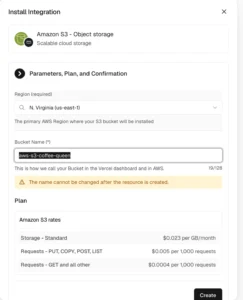
Industry analysts note that these updates align with a broader enterprise demand for speed paired with accountability. As cloud providers remove the operational overhead of managing infrastructure—exemplified by S3 provisioning tools and native HTTP server support on Lambda—the primary differentiator for enterprise software delivery shifts toward security architecture, compliance enforcement, and automated governance.
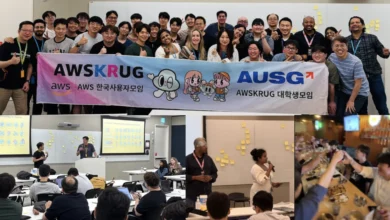
The ongoing rollout of these features signals that AWS is positioning its ecosystem for an era where application code is ephemeral and globally distributed by default, while AI orchestration requires deterministic, mathematically verifiable boundaries to maintain enterprise trust. Development teams are encouraged to monitor the official AWS What’s New portal and participate in upcoming community events through the AWS Builder Center as these capabilities expand across global regions.