AWS Weekly Roundup: Generative AI, Continuum Vulnerability Management, and ECS Gateway Lead October Infrastructure Updates

The landscape of cloud computing and enterprise technology continues to evolve at a relentless pace, highlighted by a series of pivotal announcements from Amazon Web Services (AWS) that bridge the gap between emerging artificial intelligence capabilities and the rigorous demands of enterprise security, infrastructure management, and database migration
. From the modernization of traditional sectors like Brazilian agribusiness through localized generative voice models to groundbreaking security paradigm shifts designed to combat shrinking vulnerability exploitation windows, October has proven to be a transformative month for cloud architecture.
In an increasingly interconnected digital ecosystem, the convergence of AI deployment, hardware flexibility, and proactive defense mechanisms dictates competitive advantage. This week’s comprehensive analysis explores the primary AWS launches, contextualizing their broader industry implications, technical specifications, and operational workflows for global enterprises.
The Imperative of Generative AI in Traditional Sectors
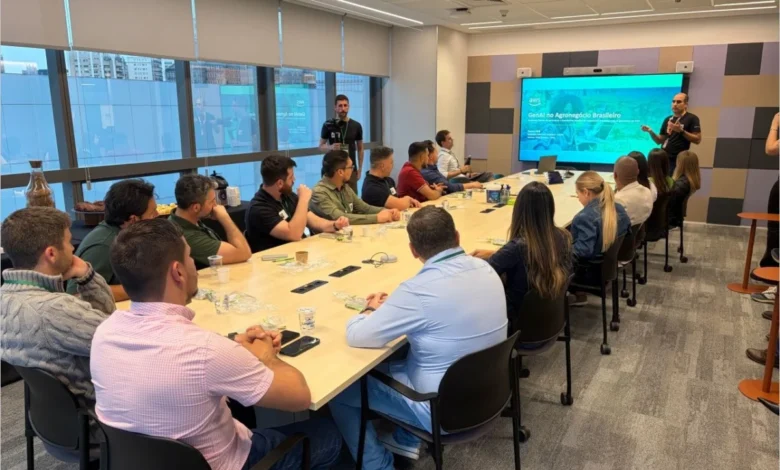
The intersection of generative artificial intelligence and traditional industries such as agriculture underscores a fundamental shift in how enterprise technology delivers value. Recent engagements with commercial and technology leaders within the Brazilian agribusiness sector at the AWS executive offices in São Paulo highlight a critical operational reality: the adoption of advanced AI is no longer a speculative endeavor for legacy markets, but a decisive factor in operational efficiency.
Discussions in boardroom settings rarely center on whether artificial intelligence belongs in agriculture; rather, industry leaders focus intently on delivery mechanisms. When agronomists, logistics coordinators, and farm managers operate machinery across vast rural expanses, visual interfaces are inherently dangerous and impractical. The primary point of interaction is voice.
This operational reality elevates seemingly routine product updates to critical strategic milestones. The Amazon Polly Generative engine upgrade—introducing 14 new voices across nine locales, including two dedicated Brazilian Portuguese voices, Leo and Carolina—directly addresses this hands-free imperative. By integrating natural-sounding regional dialects into speech synthesis, cloud infrastructure directly empowers workers who rely on auditory interfaces while navigating between agricultural production sites. This localized integration demonstrates how foundational cloud services must adapt to the nuanced linguistic and operational requirements of diverse global markets.
Redefining Vulnerability Management with AWS Continuum
While user-facing AI interfaces capture immediate operational attention, the enterprise security landscape faces a much sharper and more urgent challenge: the systematic collapse of the patch window. Security telemetry and threat intelligence increasingly indicate that the traditional timeline—where organizations could measure vulnerability remediation in weeks following public disclosure—is obsolete.
The Shifting Threat Landscape and Honeypot Telemetry
Empirical evidence gathered by Amazon Threat Intelligence starkly illustrates this reality. Telemetry data from MadPot highlighted a targeted exploitation attempt of the PHP2Shell vulnerability on October 17. This malicious activity occurred a full four days before CVE-2026-109618 and CVE-2026-109619 were formally and publicly disclosed. Furthermore, on the official day of disclosure, functional proof-of-concept exploits were actively circulating by 02:00 UTC, leaving a twelve-hour window of exposure before the coordinated embargo lifted at 14:00 UTC.

This chronology establishes a dangerous precedent for security operations teams. Organizations that initiate vulnerability investigations upon public disclosure are inherently compromised by threat actors who operate on zero-day or pre-disclosure intelligence. Consequently, modern incident response and vulnerability management must calibrate their baselines from the earliest known exploitation vectors rather than official CVE release dates.
Operational Mechanics of AWS Continuum
To combat this compressed threat lifecycle, AWS introduced AWS Continuum, a service engineered to transform vulnerability management from a passive reporting mechanism into an active, automated remediation pipeline. Rather than generating static compliance reports or exhaustive vulnerability lists, Continuum constructs an active context graph synthesizing data from enterprise code repositories and the surrounding AWS infrastructure.
The service operates through a multi-stage validation and remediation workflow:
- Contextual Analysis: Findings are evaluated based on their proximity to business-critical systems, mapping the potential lateral movement of an attacker.
- Isolated Sandbox Verification: Exploitable findings are autonomously reproduced within secure, isolated sandboxes using proof-of-concept code, providing developers with tangible evidence rather than abstract severity labels.
- Automated Remediation Generation: Once verified, the system constructs a targeted fix and opens a formal pull request within the organization’s version control system.
Crucially, the control boundary of AWS Continuum maintains human oversight as a mandatory gatekeeper. Every generated remediation requires explicit authorization, demanding that engineering teams review and merge the pull request. While future iterations may introduce autonomous remediation classes gated by stringent confidence thresholds, the current general availability release—deployed in US East (N. Virginia) and US West (Oregon)—ensures that architectural integrity remains under direct human control. Alongside this release, AWS published comprehensive AWS WAF mitigations to counter the aforementioned PHP2Shell remote code execution vulnerabilities, providing a multi-layered defense strategy for web-facing workloads.
Streamlining Microservices Architecture with Amazon ECS Gateway
Managing ingress traffic and network security boundaries in containerized environments has traditionally required complex coordination between dedicated network infrastructure teams and application developers. To alleviate this operational friction, AWS launched Amazon ECS Gateway, a native service designed to decouple the provisioning of load balancing and networking primitives from container application logic.
Architectural Separation of Concerns
Under the ECS Gateway model, operational responsibilities are cleanly bifurcated:
- Platform Teams: Responsible for defining centralized networking baselines. A single gateway encapsulates an organization’s designated subnets, security groups, Transport Layer Security (TLS) certificates, listener configurations, and AWS WAF web Access Control Lists (ACLs).
- Application Teams: Empowered to opt in autonomously by incorporating a simple gateway connector directly into their service definitions.
Upon integration, Amazon Elastic Container Service (ECS) automatically provisions an AWS Certificate Manager (ACM) certificate, generates a unique DNS hostname, configures listener rules, establishes target groups, and assigns a security group that restricts incoming traffic exclusively to the designated Application Load Balancing infrastructure.
Economic Efficiency and Scalability
The economic and architectural advantages of ECS Gateway are substantial. The service allows up to 25 distinct microservices to share a single Application Load Balancer (ALB), significantly reducing idle infrastructure costs. ECS dynamically manages the lifecycle of these load balancers—provisioning the initial ALB upon the first service connection and automatically deprecating them when no longer required.
Furthermore, scalability parameters accommodate massive enterprise deployments: a single gateway can associate with up to 10,000 individual clusters, with a maximum of five gateways permitted per cluster. Organizations can adopt this architecture incrementally using standard UpdateService API calls without disrupting existing load balancer configurations. Available at no additional charge in all commercial AWS Regions where Amazon ECS operates, ECS Gateway represents a major leap forward in multi-tenant container management.

Expanding Generative AI and Hardware Ecosystems
The broader AWS product portfolio saw significant enhancements aimed at giving developers greater flexibility, specialized hardware support, and advanced model customization capabilities.
Amazon Polly Generative Engine Upgrade
Building upon its foundational speech capabilities, Amazon Polly expanded its generative voice catalog to 57 voices across 11 languages and 25 locales. The inclusion of 14 new voices spanning nine locales—highlighted by the debut of Hindi and Finnish generative voices and the addition of Brazilian Portuguese speakers Leo and Carolina—enhances global accessibility. Because this update functions as a seamless, drop-in replacement, existing API calls using SynthesizeSpeech require no code modifications while instantly delivering more natural, context-aware audio output.
Native PyTorch Support on AWS Trainium via TorchNeuron
To combat hardware vendor lock-in and optimize deep learning inference and training costs, AWS announced the public beta of TorchNeuron. This open-source PyTorch backend enables developers to execute machine learning models on AWS Trainium chips simply by modifying execution targets to .to('neuron'). Maintaining full compatibility with eager execution and torch.compile, TorchNeuron integrates deeply with the Neuron Kernel Interface to support custom operators across Trainium2 and Trainium3 hardware instances. This development complements recent updates in AWS Neuron 2.33, reinforcing the principle that foundational software stacks should remain independent of underlying silicon choices.
Custom Model Training on Amazon SageMaker AI
Organizations seeking to fine-tune foundational models without the administrative burden of managing distributed GPU clusters can now leverage generally available training sessions on Amazon SageMaker AI. This capability grants developers absolute control over the post-processing loop—including custom loss functions and reward signals—while SageMaker automates GPU allocation, distributed cluster execution, fault recovery, and checkpoint persistence. Metering is optimized to charge exclusively for processed tokens, pausing financial accumulation while custom reward functions evaluate computational batches. This launch coincides with expanded support for cutting-edge architectures including Muse Glimmer, Qwen 3.8, and Ministral 3.
Enterprise Productivity and Database Modernization
Additional infrastructure announcements reflect AWS’s continued focus on enterprise developer productivity and seamless data migration:
- Structured Outputs on Amazon Bedrock: Anthropic Claude models accessible via Amazon Bedrock now support native, schema-compliant JSON outputs across both runtime and mantle endpoints. This eliminates the need for complex custom parsing, retry logic, or post-processing layers, vastly increasing the reliability of automated financial report analysis, clinical note parsing, and intent-based support ticket routing.
- Zero-Downtime Valkey Migrations: Amazon ElastiCache Serverless for Valkey introduced native online migration capabilities, enabling enterprises to transition self-managed Valkey or Redis OSS databases from Amazon EC2 directly into ElastiCache Serverless without incurring application downtime or returning client errors during cutover.
- Runtime Tool Discovery via AWS Agent Registry: AWS Agent Registry provides a managed catalog for Model Context Protocol (MCP) servers and agent skills, allowing orchestrators to query approved operational capabilities dynamically at runtime rather than statically compiling them during build phases.
- Large-Scale Oracle Migrations: Highlighting large-scale database modernization, U.S. Bank successfully migrated 119 terabytes of data across four Oracle Exadata databases to Amazon RDS for Oracle. Utilizing a configuration-driven pipeline powered by Oracle XTTS, AWS DataSync, and Amazon EFS over bandwidth-constrained Direct Connect links, the institution completed baseline copies in approximately seven days with zero data loss and average cutover times of just four hours per database.
Upcoming Industry Events and Outlook
As the technology sector looks toward the culmination of the calendar year, preparation for industry-defining conferences is underway. AWS re:Invent 2026 is scheduled to run from November 30 to December 4 in Las Vegas, featuring an extensive catalog of more than 2,200 technical sessions, workshops, and architectural chalk talks. Concurrently, regional community engagement concludes its 2026 Brazilian circuit with the AWS Community Day Brasil Norte in Belém on October 31.
The breadth of these announcements—ranging from localized generative voice interfaces for agricultural workers to automated code vulnerability remediation and zero-downtime database migrations—demonstrates the maturing maturity of cloud infrastructure. As threat actors compress exploitation timelines and enterprises demand frictionless hybrid architectures, the success of modern cloud operations will depend on automated defense, decoupled networking primitives, and intelligent, adaptable software ecosystems.