U.S. Intelligence Memo Alleges Chinese State Security Recruited Executive to Target Nvidia CEO Jensen Huang

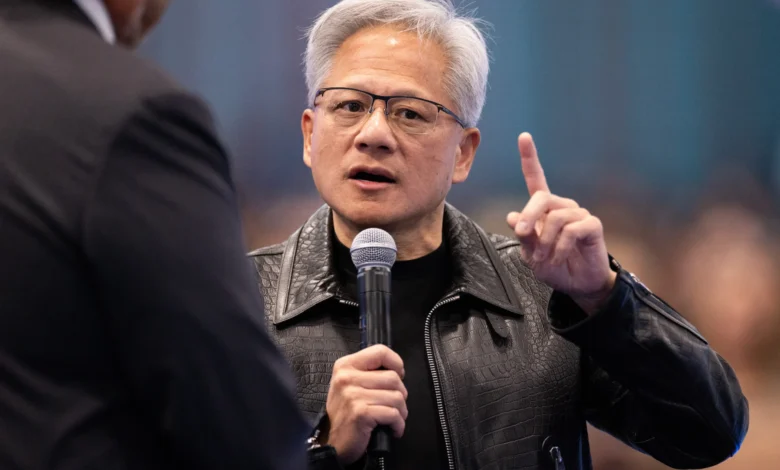
An intelligence memorandum circulated earlier this year has ignited intense scrutiny across geopolitical and technology sectors, alleging that technology executive Alice Huang was recruited by China’s Ministry of State Security to act as an intelligence asset targeting Nvidia Chief Executive Officer Jensen Huang. The explosive claims, which have surfaced through investigative reporting by major international publications, highlight the escalating espionage risks surrounding the global semiconductor industry
as artificial intelligence hardware becomes a primary focal point of national security competition.
The existence of the intelligence document first came to light through a report published by The New York Times, which detailed findings drawn from evaluations by U.S. intelligence agencies. Subsequent reporting by The Financial Times revealed further sensitive details contained within the memo, including assertions that Jensen Huang and Alice Huang, an executive at the Singapore-based firm Megaspeed, had maintained a romantic relationship. The convergence of corporate leadership, international commerce, and state-level intelligence operations has placed one of the world’s most influential technology figures directly at the center of a complex geopolitical struggle.
The Anatomy of the Allegations
According to the intelligence assessments cited in the reports, the recruitment effort was orchestrated by China’s Ministry of State Security (MSS), the nation’s primary civilian intelligence and security agency. The MSS has increasingly focused its operations on acquiring advanced technological know-how, intellectual property, and strategic insights from Western nations, particularly in sectors critical to artificial intelligence, quantum computing, and advanced manufacturing.
Alice Huang, operating from Singapore in her capacity as an executive at Megaspeed, was allegedly positioned to establish professional and personal proximity to Nvidia’s chief executive. Singapore serves as a major commercial and financial hub in the Asia-Pacific region, hosting regional headquarters for numerous multinational technology corporations and functioning as a critical bridge between Western firms and Asian markets. The choice of jurisdiction highlights the transnational nature of modern corporate espionage, where intelligence targets and operatives frequently interact outside their home countries.
While the intelligence memo outlines the alleged recruitment and the purported nature of the relationship, public reporting emphasizes that intelligence assessments are working evaluations rather than finalized judicial findings. Nevertheless, the involvement of state-sponsored intelligence apparatuses targeting a chief executive of Jensen Huang’s stature underscores the extreme value placed on Nvidia’s proprietary technology, strategic roadmap, and corporate relationships.
Corporate and Official Responses
In the wake of the media disclosures, Nvidia moved swiftly to address the implications of the intelligence memo. A spokesperson for the company issued statements to leading media outlets, characterizing Jensen Huang’s professional interactions with Alice Huang as routine and "not unusual" given the standard networking and business engagements expected of a major tech executive operating globally. Furthermore, the spokesperson firmly pushed back against any insinuation that sensitive or classified corporate data had been compromised, emphasizing that Nvidia maintains strict protocols and does not share classified information with its commercial customers.
The company also reiterated its commitment to national security and domestic compliance, noting that Nvidia prioritizes the deployment of its most advanced technologies within the United States. "We sell the first, best and most of our technology in America," the spokesperson stated, reflecting the company’s delicate balancing act as it navigates stringent U.S. export controls while maintaining a massive global footprint.
Representatives for Alice Huang and the Ministry of State Security have not publicly verified the contents of the intelligence memo. Governments and intelligence agencies typically maintain a policy of neither confirming nor denying leaked or classified assessments, leaving the public record reliant on investigative journalism and official corporate clarifications.
Broader Scrutiny: The New Matrix Investigation
The revelations regarding the intelligence memo coincided with broader investigative reporting examining the vulnerabilities within the enforcement of U.S. export controls on advanced semiconductors. In a separate report published by The New York Times, journalists scrutinized New Matrix, a Chinese corporate entity that had received explicit authorization from the U.S. Commerce Department to purchase advanced Nvidia artificial intelligence chips.

However, when reporters visited the physical office address officially registered by New Matrix, they discovered what was described as "a hollow gray shell"—an unoccupied or non-operational location lacking the legitimate infrastructure expected of an enterprise authorized to procure high-end computing hardware. This physical discrepancy has amplified concerns among lawmakers and national security experts that authorized entities can sometimes serve as front organizations or proxy conduits for blacklisted private equity firms, military-linked institutions, or restricted technology conglomerates seeking to bypass strict U.S. trade restrictions.
The combination of the intelligence memo concerning Jensen Huang and the scrutiny surrounding procurement loopholes like New Matrix illustrates the multifaceted pressure points facing the semiconductor supply chain. As advanced graphical processing units (GPUs) become the foundational infrastructure for artificial intelligence development globally, both physical logistics and human networks are facing unprecedented levels of intelligence surveillance and regulatory oversight.
Context, Chronology, and the Geopolitics of Semiconductors
The events detailed in the recent intelligence leaks do not occur in a vacuum; they represent the culmination of years of intensifying technological rivalry between the United States and China. To understand the gravity of the current situation, it is necessary to examine the broader timeline of semiconductor geopolitics:
- October 2022: The U.S. Department of Commerce implements sweeping export controls designed to restrict China’s ability to obtain advanced computing chips, supercomputer components, and the machinery required to manufacture high-end semiconductors.
- 2023–2024: Nvidia adapts its product lineup by developing scaled-down versions of its flagship AI chips to comply with U.S. regulatory thresholds, allowing continued sales to the Chinese market while remaining within legal boundaries.
- October 2023: The Biden administration tightens export restrictions further, closing loopholes that allowed the export of certain high-performance AI chips and adding several Chinese AI chip design firms to the Bureau of Industry and Security’s Entity List.
- 2024–2025: As geopolitical tensions mount, intelligence agencies in the U.S. and allied nations increase counterintelligence monitoring around critical technology sectors, focusing heavily on executive protection, supply chain integrity, and intellectual property theft.
- Early 2026: U.S. intelligence services circulate the internal memo detailing the alleged MSS recruitment effort targeting Nvidia’s chief executive.
- November 2026: Public reporting by The New York Times and The Financial Times brings the contents of the memo and related procurement investigations into the public domain.
This timeline illustrates how semiconductors have transitioned from standard commercial commodities into strategic assets comparable to defense hardware or energy resources. Jensen Huang, as the leader of the company that designs the vast majority of the world’s leading artificial intelligence training chips, occupies a singular position at the apex of this technological ecosystem.
Analysis of Implications for the Tech Industry
The public disclosure of the intelligence memo and the subsequent investigations carry several profound implications for Nvidia, the broader technology sector, and international business relations:
1. Heightened Executive Security Protocols
Corporate leaders in foundational technology sectors—particularly artificial intelligence, biotechnology, and aerospace—face an increasingly hostile intelligence landscape. Chief executives and senior engineers are prime targets for foreign intelligence services seeking non-public information regarding product roadmaps, manufacturing yields, and strategic partnerships. Companies are expected to recalibrate their security postures, implementing rigorous counterintelligence training, travel security protocols, and vetting procedures for executives engaging with foreign entities.
2. Stricter Scrutiny of Export Compliance and Front Companies
The revelation regarding New Matrix highlights the persistent challenges in enforcing trade restrictions across complex international supply chains. U.S. regulators are likely to face increased pressure from lawmakers to implement more stringent on-the-ground verification processes before granting export licenses to overseas buyers. This could lead to longer approval cycles, increased compliance costs, and tighter restrictions on third-party intermediaries operating in transit hubs like Singapore, Hong Kong, and the United Arab Emirates.
3. Geopolitical Pressure on Multinational Corporations
Nvidia and its peers are caught in an escalating great-power competition where neutrality is increasingly difficult to maintain. While American firms are legally bound by U.S. export controls and national security directives, they simultaneously rely on global manufacturing ecosystems—predominantly centered in Taiwan—and massive consumer markets abroad. Incidents involving alleged state-sponsored intelligence targeting corporate leadership reinforce the narrative that economic technology policy and national security are now inextricably linked.
4. Investor Sentiment and Governance
While corporate disclosures and official rebuttals have sought to stabilize market perceptions by emphasizing that no classified data was compromised, institutional investors are increasingly incorporating geopolitical and counterintelligence risks into their corporate governance evaluations. Transparency, robust compliance frameworks, and proactive risk management will become critical benchmarks for evaluating leadership stability in high-stakes industries.
As the global race for artificial intelligence supremacy accelerates, the intersection of corporate enterprise and international statecraft will remain a high-risk domain. The unfolding situation surrounding Nvidia highlights the vulnerability of key industry figures to state-sponsored espionage and underscores the vital necessity for rigorous vigilance across both private enterprise and public regulatory frameworks.