Artificial intelligence systems have achieved remarkable milestones in reasoning, tool execution, and complex workflow automation. Yet, a fundamental limitation has persistently hindered user experience: amnesia. Standard conversational AI architectures treat every interaction as an isolated event, purging all contextual awareness the moment a session terminates. Consequently, developers and end-users alike are forced to continually re-explain preferences, project scopes, and foundational guidelines at the onset of every new engagement.
To bridge this operational gap, engineers are increasingly turning to dedicated memory layers that allow artificial intelligence agents to retain, update, and selectively recall information across disparate sessions. By coupling the OpenAI Agents SDK with Mem0—an advanced memory management framework—developers can engineer context-aware applications that evolve alongside the user. Furthermore, by integrating Model Context Protocol (MCP) servers, this persistent memory architecture can be seamlessly extended to specialized developer environments like OpenCode, transforming standard coding assistants into personalized development partners.
The Anatomy of AI Memory and Retrieval
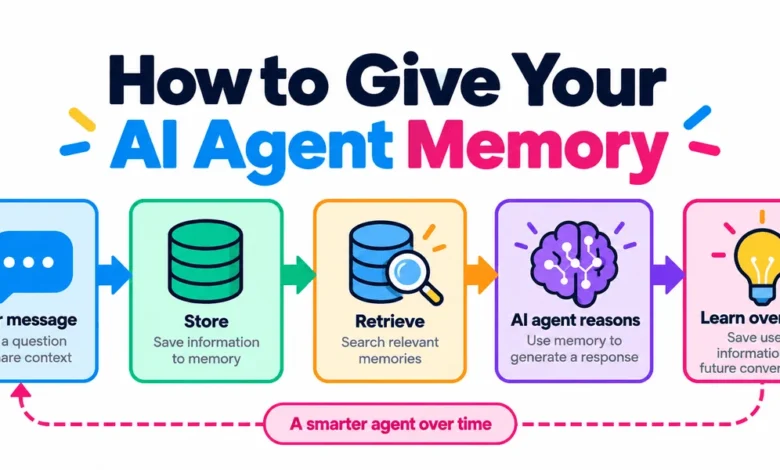
To understand the mechanics of cross-session retention, it is vital to examine how memory operates within cognitive computing architectures. Unlike human memory, which relies on biological neural plasticity, AI memory systems must capture, index, and retrieve unstructured data via programmatic interfaces. Generally, agentic memory is partitioned into short-term working memory—which handles the immediate context window of an active chat—and long-term persistent storage, which preserves facts, preferences, and historical decisions over months or years.
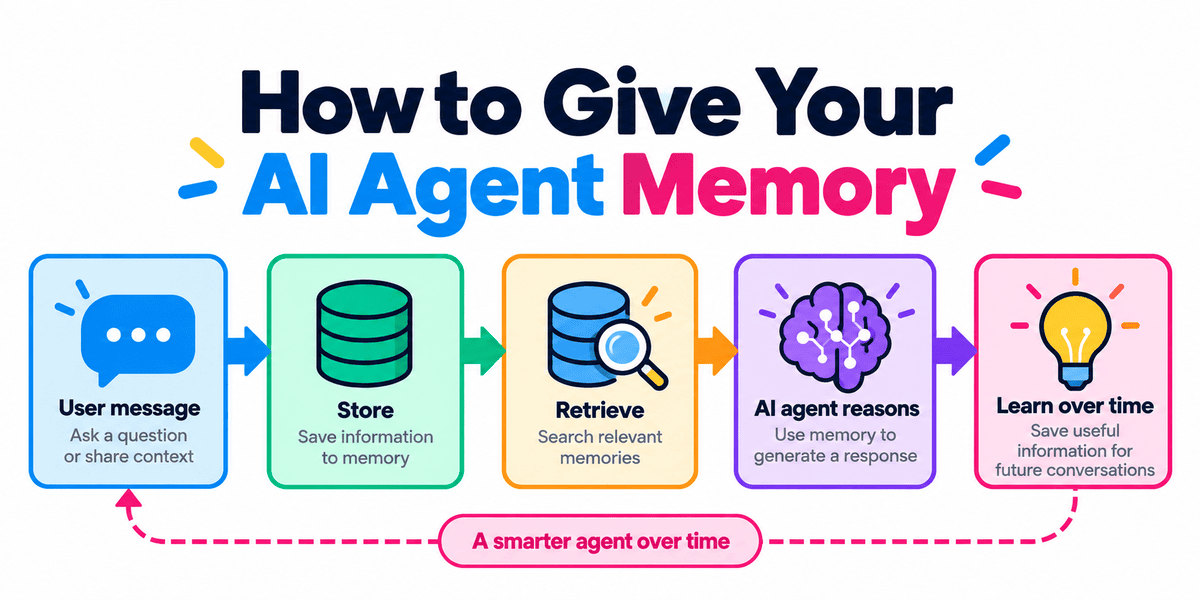
The critical engine within any long-term memory framework is semantic retrieval. Rather than stuffing historical transcripts directly into the prompt—a practice that quickly exhausts token limits and degrades reasoning performance—an intelligent memory layer queries a vector database or specialized store. It extracts exclusively the data points relevant to the current user prompt. This selective injection keeps the context window lean while providing the agent with the illusion of continuous, long-term familiarity.
Industry analysts note that persistent memory shifts the paradigm of software interaction from stateless command-line execution to stateful collaboration. According to recent technical evaluations in enterprise AI deployments, reducing repetitive context-setting improves task completion velocity by up to thirty percent in complex software development pipelines.
Building a Long-Term Memory Agent with Python
Implementing cross-session memory requires a structured approach utilizing modern developer tooling. Developers can construct a fully functional, memory-enabled assistant by leveraging the OpenAI Agents SDK alongside Mem0.
The implementation begins within a standard Python environment. Developers install the necessary libraries via package management:
pip install openai-agents mem0aiFollowing the installation, environment variables must be configured to authenticate requests against the respective APIs:
export OPENAI_API_KEY="your-openai-key"
export MEM0_API_KEY="your-mem0-key"
The foundational code establishes the client connection and isolates user data via a unique identifier, ensuring that memories do not bleed across different user profiles:
from agents import Agent, Runner, function_tool
from mem0 import MemoryClient

memory = MemoryClient()
USER_ID = "developer_primary"
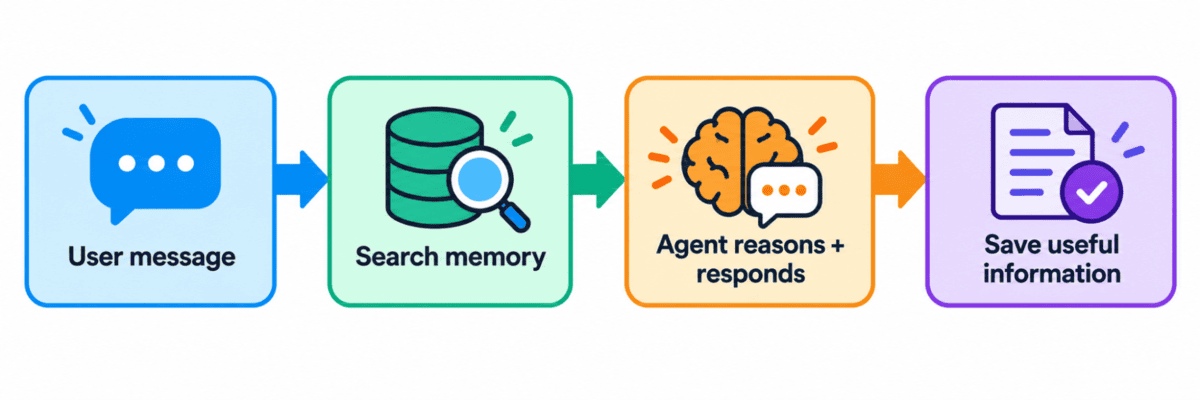
To enable the agent to interact with its persistent store, engineers must define explicit tools for searching and saving information. The search_memory function utilizes semantic similarity to pull relevant historical facts without requiring exact keyword matches:
@function_tool
def search_memory(query: str) -> str:
    """Search for relevant memories about the user."""

    results = memory.search(
        query=query,
        filters="user_id": USER_ID,
        top_k=5,
    )

    memories = results.get("results", [])

    if not memories:
        return "No relevant memories found."

    return "n".join(
        f"- item['memory']"
        for item in memories
    )
Conversely, the save_memory tool allows the agent to autonomously identify and store durable preferences, technical constraints, or project specifications during routine conversation:

@function_tool
def save_memory(content: str) -> str:
    """Save useful long-term information about the user."""

    memory.add(
        messages=[

                "role": "user",
                "content": content,

        ],
        user_id=USER_ID,
    )

    return "Memory saved."
With the tooling established, the agent is instantiated using the OpenAI Agents SDK. System instructions dictate how the agent balances retrieval and saving behaviors, ensuring that temporary pleasantries are ignored while vital engineering preferences are cataloged:
agent = Agent(
    name="Memory Assistant",
    model="gpt-5.6-luna",
    instructions="""
    You are a personal assistant with long-term memory.
    Always call search_memory before answering, even for general questions.
    When a relevant memory is found, acknowledge it naturally at the start,
    for example: "Oh, I remember you prefer...", then use it.
    Save durable preferences, goals, and facts; confirm each save in one
    sentence. Skip greetings, temporary info, and duplicates.
    """,
    tools=[
        search_memory,
        save_memory,
    ],
)
Extending Persistent Memory to Coding Assistants via MCP
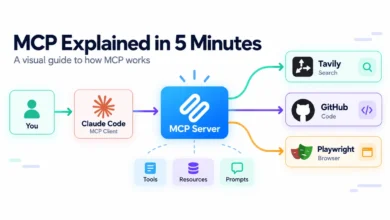
While custom Python applications provide granular control, developers frequently rely on specialized coding environments like OpenCode. To eliminate the friction of building custom integrations for every developer tool, Mem0 provides an official hosted Model Context Protocol (MCP) server. MCP standardizes how AI models communicate with external data sources and execution environments.
Integrating persistent memory into OpenCode is accomplished via the command line interface using the MCP manager:
npx mcp-add
  --name mem0-mcp
  --type http
  --url "https://mcp.mem0.ai/mcp"
  --clients "opencode"
Once registered, the coding assistant gains direct access to a suite of memory operations, including add_memory, search_memories, get_memories, update_memory, and delete_memory. Developers can verify the active toolset within OpenCode by executing:

opencode mcp listIn practice, this integration radically alters the developer workflow. If a programmer informs OpenCode during an initial session that they prefer utilizing modern package managers like uv instead of traditional pip for Python projects, that preference is indexed in the Mem0 backend. When the developer initiates a completely separate session days later to scaffold a new repository, the coding assistant queries the MCP memory layer, recognizes the established preference, and automatically generates initialization scripts tailored to uv:
uv init my-project
cd my-project
uv add <runtime-dependency>
uv add --dev pytest ruff mypy
Industry Implications and Strategic Outlook
The commercialization and open-source availability of cross-session memory layers address one of the most persistent complaints regarding generative artificial intelligence: conversational fatigue. Consumer applications, most notably OpenAI’s ChatGPT, have integrated proprietary memory features to retain user context across disparate chats, setting a new baseline expectation for software personalization.
For enterprise organizations, the implications extend far beyond convenience. Persistent memory architectures enable internal knowledge management tools to track complex corporate decisions, compliance frameworks, and project histories without exposing sensitive internal repositories to broad, uncurated training sets. By leveraging modular middleware like Mem0 alongside robust orchestration SDKs, engineering teams can construct localized, highly secure memory tiers that empower AI agents to act as genuine longitudinal assistants.
As software development increasingly transitions toward autonomous multi-agent systems, the ability to maintain state across execution boundaries will dictate market adoption. Systems that remember are no longer an experimental novelty; they are rapidly becoming the foundational standard for intelligent digital infrastructure.