Google Unveils Gemini Omni: A Multimodal Shift Toward Conversational AI Video Generation and Editing

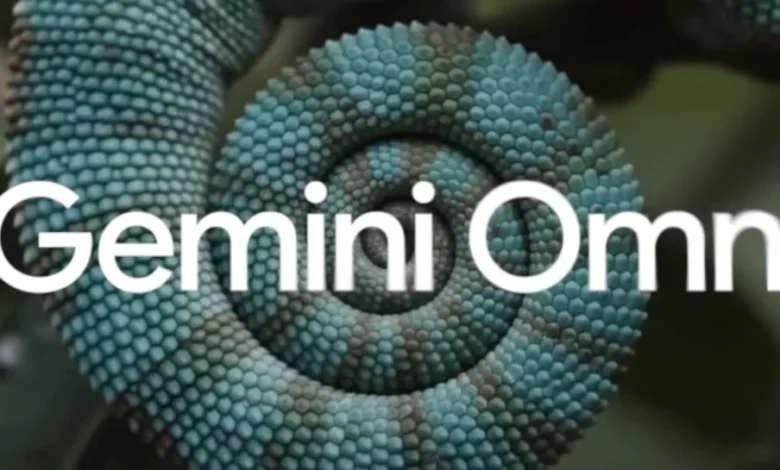
Google has officially introduced Gemini Omni, its most ambitious multimodal model family to date, aiming to unify text, images, audio, video, and code into a single, cohesive ecosystem. Announced during the Google I/O 2026 conference, the flagship initial release—Gemini Omni Flash—signals a significant evolution in generative artificial intelligence. Rather than functioning as a standard standalone text-to-video chatbot upgrade, Gemini Omni attempts to collapse multiple fragmented creative workflows into one continuous system capable of native multi-input generation, style transfer, and conversational video editing.
This development arrives at a critical juncture in the artificial intelligence sector. While early waves of generative AI focused heavily on one-shot text-to-video outputs—often resulting in visually stunning clips that lacked continuity or practical editing pathways—the industry has increasingly pivoted toward user control, physics simulation, and multi-turn revision capabilities. Google’s latest architecture seeks to address these industry-wide bottlenecks by bridging the gap between advanced reasoning and digital media creation.
The Technical Framework of Gemini Omni
At its core, Gemini Omni is designed to ingest diverse reference materials simultaneously. Users can supply a text prompt alongside a character image, a style reference board, a pre-existing source video, and an independent audio track. The model then processes these heterogeneous inputs to generate a unified, context-aware output.
This capability marks a departure from traditional generation methods. Instead of relying purely on generalized statistical approximations of a prompt, Omni permits creators to anchor their digital assets using tangible references. According to Google’s technical specifications, the underlying architecture features improved intuition regarding spatial physics, gravity, fluid dynamics, kinetic energy, and scene continuity. Historically, AI-generated video models have struggled with maintaining consistency beyond the first few seconds of a clip, frequently suffering from object drift, deformed anatomy, or sudden breaks in logic. Gemini Omni attempts to mitigate these issues by preserving scene context across multi-turn user interactions.
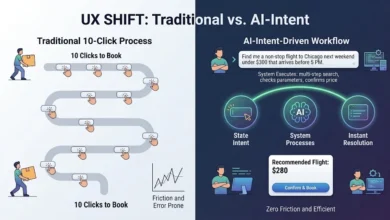
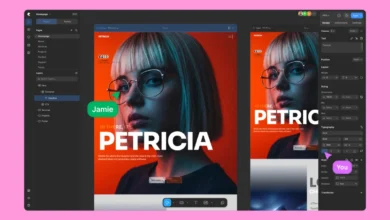
Furthermore, the model introduces natural language video editing as a primary workflow. Rather than forcing creators to rely on traditional timeline-based editors—which require manual masking, layer adjustments, and complex keyframing—Omni allows users to execute complex alterations through conversational prompts. Instructions such as shifting camera angles, modifying environmental backgrounds, or replacing specific objects can be applied sequentially, allowing the AI to build upon prior instructions rather than forcing the user to restart the generation process from scratch.
Chronology and Strategic Rollout
The deployment of Gemini Omni follows a phased rollout strategy that prioritizes consumer platforms and content creators before expanding to enterprise infrastructure.
The launch sequence began immediately following the Google I/O 2026 keynote:
- Initial Consumer Availability: Google released Gemini Omni Flash to Google AI Plus, Pro, and Ultra subscribers through the native Gemini application and the Google Flow ecosystem.
- Creator Integration: Simultaneously, the model was made accessible at no additional cost to users aged 18 and older via YouTube Shorts Remix and the YouTube Create application, facilitating rapid adoption among social media creators.
- Developer and Enterprise Roadmap: Google confirmed that application programming interface (API) access for developers and enterprise clients will follow in the subsequent weeks, with precise pricing structures and latency documentation pending further release.
This deliberate sequencing indicates that Google views consumer feedback and high-volume media generation platforms as the primary proving grounds for the technology before exposing it to enterprise software developers and complex corporate pipelines.
Comparison with Existing Industry Models
Industry analysts have drawn immediate comparisons between Gemini Omni and existing generative video frameworks, most notably OpenAI’s Sora and Google’s own Veo model line.
While Veo remains focused primarily on high-fidelity video generation from text prompts, Gemini Omni operates as a broader multimodal creation and reasoning engine. Veo established Google’s competitive footing in cinematic text-to-video synthesis, whereas Omni is structured to dissolve the boundaries between separate creative tasks. By combining video generation, video editing, audio synchronization, and multi-input prompting into a single continuum, Omni positions itself less as a standalone content generator and more as an interactive digital production suite.
This approach reflects a broader market trend. Independent software reviews and industry analyses consistently highlight that creators are increasingly fatigued by disjointed workflows that require separate tools for image generation, video prompting, lip-syncing, and post-production editing. By absorbing these distinct functions into one conversational model, Google is attempting to streamline the entire digital pipeline.
Practical Applications and Sector Impact
Beyond cinematic entertainment and social media content creation, Google has emphasized the utility of Gemini Omni in educational, technical, and professional environments. Demonstrations showcased during the launch highlighted the model’s ability to translate complex textual concepts into visual explainers—such as claymation-style simulations of protein folding or stop-motion animations detailing biological processes like the hippocampus.
For educators, marketers, technical writers, and product design teams, the ability to rapidly prototype accurate visual explanations from brief prompts could significantly reduce production friction. However, industry experts caution that these practical applications carry inherent risks regarding factual accuracy. While an AI model can generate a visually convincing explainer, its underlying scientific, legal, or technical mechanics require rigorous human oversight to prevent the propagation of misinformation.
Identity Verification, Safety, and Governance
The introduction of powerful video editing, speech transformation, and personal avatar generation tools has immediately brought questions of digital safety and authenticity to the forefront. The capacity to seamlessly manipulate existing video footage and replicate human likenesses presents significant challenges related to misinformation, non-consensual deepfakes, and intellectual property infringement.
To address these concerns, Google has integrated foundational provenance tracking measures into the Gemini Omni ecosystem. Content generated or modified using Omni within the Gemini app, Google Flow, or YouTube platforms incorporates automated watermarking via Google DeepMind’s SynthID technology. Additionally, the outputs embed C2PA Content Credentials, providing a cryptographic ledger that allows platforms and viewers to verify whether a piece of media was created or altered using artificial intelligence.
While provenance standards do not eliminate malicious actors, industry bodies generally view the implementation of cryptographic watermarking as an essential baseline for maintaining media integrity across major distribution channels.
Market Implications and Future Outlook
The commercial success of Gemini Omni will ultimately depend on its reliability outside of controlled corporate demonstrations. As enterprise developers await forthcoming API access, the broader creative community will test the model’s limits regarding precise cuts, timing control, brand safety compliance, and operational latency.
If Google successfully delivers on its promises of persistent context, reliable physics simulation, and fluid conversational editing, Gemini Omni could redefine the standard for creative software tools. Rather than functioning as a digital slot machine that occasionally yields impressive results, conversational AI systems may evolve into dependable collaborative partners for media production.
As the artificial intelligence sector moves past the initial novelty of text-to-video generation, the battleground has decisively shifted toward user control, workflow integration, and governance. Gemini Omni represents Google’s definitive entry into this next phase of the digital media landscape.