How AI-Driven Search Behavior is Transforming Consumer Discovery and Redefining 2027 Advertising Strategies

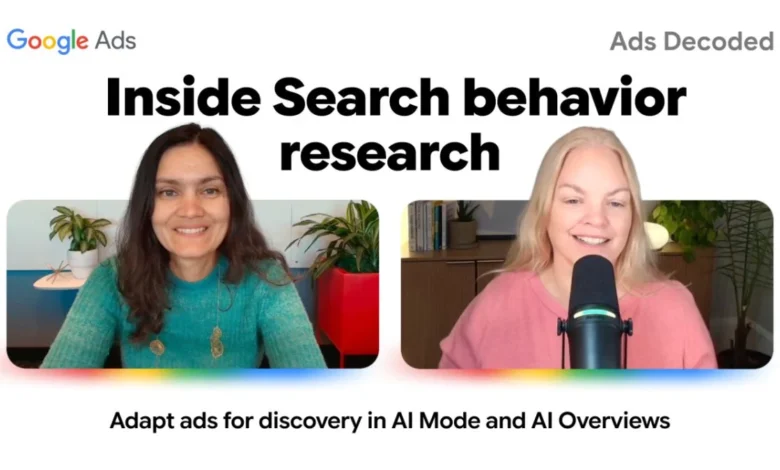
As artificial intelligence continues to reshape the digital information landscape, the fundamental mechanics of how users interact with search engines are undergoing a profound transformation. According to recent insights from Google executives, consumers are increasingly turning to AI-powered search modes to ask significantly longer, highly contextualized questions and to initiate their decision-making processes much earlier in the buying cycle. These shifts, highlighted during a recent industry deep-dive podcast and corresponding executive statements, suggest that the traditional linear path from a short keyword query to a final purchase is rapidly giving way to a more fluid, conversational, and exploratory user journey.
The evolving dynamics of search behavior were a central focus of an episode of the Google Ads Decoded podcast, which aired on October 28. The discussion featured Ginny Marvin, Google Ads Product Liaison, alongside Shivani Mohan, Vice President of Data Science and User Experience Research for Search. Their conversation unpacked the practical implications of conversational AI in search and addressed how digital marketers must begin adapting their long-term strategies, particularly as they formulate campaigns for 2027 and beyond. While Google’s data highlights expanding query lengths and rising multimodal usage, industry observers note that these behavioral changes demand a fundamental rethinking of how brands capture attention during the earliest stages of consumer evaluation.
The Evolution of Search: From Keywords to Complex Conversations
For decades, digital advertising and search engine optimization (SEO) have relied on short-tail keywords—brief, punchy phrases like best running shoes or digital marketing agency. However, data released by Google indicates that consumers utilizing AI-powered search modes are crafting queries that are roughly three times longer than traditional searches. This surge in length is not merely a stylistic change; it represents a deeper cognitive shift in how people use search engines to solve problems.
Rather than tossing a few disjointed terms into a search bar, users are engaging in multi-turn, back-and-forth dialogues with AI systems. They are typing out full sentences, embedding personal constraints, weighing intricate tradeoffs, and even incorporating voice and image inputs to articulate their exact needs. For instance, instead of searching for a lawnmower, a consumer might ask an AI-driven search interface to compare electric lawnmowers suitable for a steep, half-acre yard that can handle wet grass, while factoring in battery lifespan and storage limitations.
This conversational capability allows users to explore a problem, evaluate potential solutions, and weigh opposing viewpoints all within a single, continuous session. Discovery and evaluation are no longer separate phases separated by hours of clicking through multiple blue links; they now occur concurrently inside the search interface. Consequently, advertisers are forced to look beyond the initial trigger phrase. The granular questions people ask as they narrow down their options reveal underlying anxieties, technical requirements, and specific objections that standard product descriptions and generalized service pages rarely address.
Analyzing the Metrics: What Google’s Data Reveals About AI Mode
Google’s October 28 advertising announcements and the accompanying U.S. AI Mode report—published initially in May 2026—provide a quantitative glimpse into this changing landscape. Beyond the headline-grabbing statistic that queries are three times longer, the data indicates that more than one in six AI Mode searches in the United States are multimodal, meaning they involve a combination of text and image inputs.
Despite these compelling figures, independent analysts and marketing experts urge caution when translating these metrics into immediate tactical adjustments. While longer questions provide richer semantic context about a user’s state of mind, they do not inherently correlate with stronger buying intent or higher conversion rates. A consumer asking a complex, exploratory question may be at the very top of the marketing funnel, weeks or even months away from making a financial commitment.
Furthermore, digital marketing professionals must avoid generalizing niche statistics across the entirety of the global search ecosystem. The one-in-six multimodal search metric, for example, applies specifically to AI Mode within the U.S. market and cannot be blanketed over all traditional Google searches. Nevertheless, the trajectory is clear: search engines are evolving into sophisticated advisory tools, and the data they generate offers unprecedented granularity into consumer psychology—provided brands know how to interpret it.
The Enduring Demand for Human Perspectives and Lived Experience
Even as AI summaries streamline the initial stages of information gathering, Google’s internal user experience research underscores a fascinating counter-trend: consumers actively crave the authenticity, depth, and earned authority of the open web. In her LinkedIn commentary surrounding the podcast episode, Shivani Mohan emphasized that while users deeply appreciate the clarity and conciseness provided by AI-generated overviews, they simultaneously seek out human perspectives found in online forums, independent product reviews, podcasts, and video demonstrations.
This dichotomy highlights a critical nuance for content creators and advertisers alike. When a consumer uses an AI-powered search assistant to evaluate a product, the AI can successfully synthesize technical specifications, pricing data, and feature comparisons. However, it cannot replicate the lived experience of a human user who has tested the product in adverse conditions, encountered its hidden flaws, or developed workarounds for its limitations.
For brands, this means that traditional promotional copy is increasingly insufficient. If a product page or a video advertisement merely repeats marketing claims without offering verifiable, firsthand proof, it fails to answer the nuanced questions posed by modern researchers. Consumers are looking for third-party validation, granular demonstrations, and transparent critiques. Mohan’s observations point to billions of clicks flowing outward to the open web, proving that AI summaries act as a springboard rather than a final destination for curious minds.
Implications for Advertisers and Long-Term Strategic Planning
As the digital marketing community digests these insights, attention has turned sharply toward campaign execution and future-proofing. In the wake of Ginny Marvin’s social media announcements, digital marketing professionals and small business owners raised pressing questions regarding how to adapt ad copy, landing pages, and performance measurement frameworks to cater to earlier, exploratory consumer intent.
While Google’s leadership has not provided rigid playbooks or specific campaign settings for navigating this transition, the overarching advisory framework for advertisers planning their 2027 strategies centers on content alignment and audience intent. Marketing teams must conduct comprehensive audits to identify the complex questions their target audiences ask before making a purchase. Are those questions answered clearly on landing pages, or do they force the user to look elsewhere?
Moreover, paid search and SEO teams must work in closer alignment to capture exploratory traffic. Traditional search campaigns have historically focused on capturing high-intent keywords right at the point of purchase. In an AI-driven search ecosystem, brands that fail to establish presence and trust during the early, exploratory phase risk being filtered out of the consideration set entirely before the consumer ever reaches the checkout page.
Looking Ahead: Testing, Adaptation, and Industry Uncertainty
The convergence of AI-driven conversational search and the enduring demand for human authenticity leaves several open questions for the advertising industry. Chief among them is how these behavioral shifts vary across different industrial sectors, demographic groups, and complex purchasing cycles. While Google has successfully mapped out the macro trends of longer queries and earlier discovery, it has yet to supply standardized conversion benchmarks tailored specifically to AI-mode interactions.
Consequently, brands will need to adopt an empirical approach centered on continuous testing and refinement. Advertisers must evaluate whether addressing granular, exploratory customer queries within their content ecosystem effectively moves prospective buyers down the conversion funnel. As search engines continue to evolve into interactive advisory partners, the brands that succeed in 2027 and beyond will be those that view AI not as a replacement for human connection, but as a sophisticated gateway to deeper, more authentic engagement.