AWS Weekly Roundup: Generative AI In Agribusiness, Advanced Vulnerability Management, and Infrastructure Updates Take Center Stage

Amazon Web Services (AWS) has rolled out a sweeping suite of technological enhancements, enterprise security tools, and infrastructure updates designed to address the tightening timelines between vulnerability disclosures and active cyber exploitation. From the deployment of automated code remediation systems and advanced generative text-to-speech engines to native hardware integrations and database migration benchmarks, the latest round of AWS updates highlights a broader industry shift toward real-time responsiveness, reduced operational friction, and decentralized management architectures.
The announcements underscore the changing dynamics of enterprise cloud deployments, where traditional patching windows measured in days or weeks are increasingly rendered obsolete by rapidly evolving threat landscapes. Industry leaders and enterprise engineers are continuously forced to rethink how software pipelines, compute hardware, and security perimeters interact under high-stakes, low-latency environments.
Revolutionizing Enterprise Security: AWS Continuum and the Shrinking Patch Window
The most pressing release in the latest AWS update cycle is the general availability of AWS Continuum, an advanced security service engineered to fundamentally reframe vulnerability management. Rather than operating as a traditional vulnerability scanner that simply generates static lists of software flaws and severity labels, Continuum constructs a comprehensive, dynamic context graph mapping an organization’s code repositories directly to its active AWS runtime environment.
This contextual mapping allows the platform to assign precise evidence levels to each discovered finding. To eliminate ambiguity, Continuum isolates and reproduces exploitable findings within an isolated sandbox environment, generating proof-of-concept code so development and security teams can directly observe the mechanics of the vulnerability. The system subsequently ranks issues based on the proximity of the attack path to business-critical systems, ultimately automating the remediation process by opening targeted pull requests for developer review.
Presently, the control boundary mandates human approval for every remediation action, requiring developers to review and merge the generated pull requests. However, future iterations are expected to introduce autonomous fix classes gated behind strict confidence thresholds. Currently, AWS Continuum is available in the US East (N.Virginia) and US West (Oregon) commercial regions.
The urgency driving the release of Continuum was starkly illustrated by telemetry data released concurrently by Amazon Threat Intelligence. Analysts discovered that active exploitation attempts regarding the PHP2Shell vulnerabilities (tracked as CVE-2026-109618 and CVE-2026-109619) occurred on October 17—four days prior to their public disclosure. Furthermore, proof-of-concept exploits were circulating across underground forums and security channels roughly twelve hours before the official embargo was scheduled to lift.
This chronology demonstrates that conventional patch management strategies reliant on multi-day delays are no longer viable. Enterprise security posture now demands rapid, automated identification and immediate threat mitigation, prompting AWS to simultaneously release specialized AWS WAF mitigations to shield vulnerable deployments from active zero-day attacks.
Modernizing Application Delivery with Amazon ECS Gateway
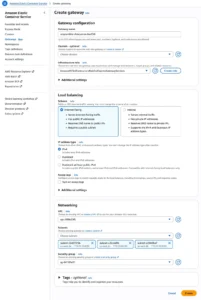
Addressing the perennial operational friction between network management and application development teams, AWS has introduced Amazon ECS Gateway. The service is designed to split the division of labor required to expose containerized microservices to external traffic.
Under this model, central platform teams establish a unified gateway configuration incorporating organizational subnets, security groups, Transport Layer Security (TLS) certificates, listener settings, and AWS WAF web ACLs. Individual application teams can then seamlessly opt in by attaching a gateway connector directly to their service definitions. In response, Amazon Elastic Container Service (ECS) automatically provisions an ACM certificate, a unique DNS hostname, necessary listener rules, target groups, and isolated security groups that restrict incoming traffic exclusively to the Application Load Balancing layer.
The economic and architectural efficiencies are significant: up to 25 distinct services can share a single Application Load Balancer (ALB). ECS autonomously provisions the initial ALB upon the first connection and decommissions the resource when it is no longer required. Each gateway can associate with up to 10,000 individual clusters, supporting a maximum of five gateways per cluster. Organizations can adopt the feature incrementally using standard UpdateService APIs without disrupting existing load balancers. Amazon ECS Gateway is available at no additional charge in all commercial regions where Amazon ECS operates.
Expanding Generative AI and Voice Interfaces in Traditional Sectors
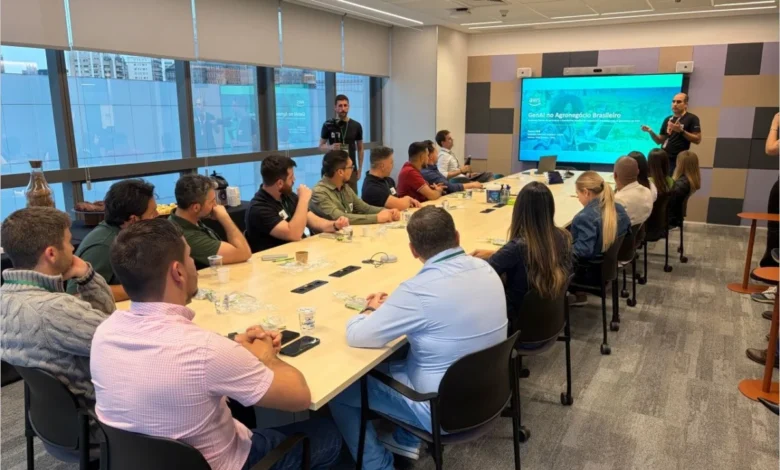
The intersection of generative artificial intelligence and traditional industries, such as agriculture, continues to drive practical product development. During executive briefings at the AWS office in São Paulo, technology leaders emphasized that the value of artificial intelligence in sectors like agribusiness is no longer a matter of theoretical adoption, but one of efficient delivery mechanisms. For field operators managing heavy machinery or driving between remote agricultural plots, graphical user interfaces are impractical; the primary interface must be audio-based.
To support this demand, AWS announced a major upgrade to the Amazon Polly Generative engine. The enhanced catalog now encompasses 57 distinct generative voices spanning 11 languages and 25 locales, introducing 14 new voices across nine locales, alongside the general availability of Hindi and Finnish. Notably, the update incorporates two new Brazilian Portuguese voices, Leo and Carolina. Maintained as a drop-in upgrade, the backend modifications preserve existing voice names, pricing structures, and standard SynthesizeSpeech API calls while delivering significantly more natural, human-like cadence and emotional inflection.
Hardware Flexibility and High-Performance Machine Learning
In the machine learning domain, hardware lock-in remains a persistent challenge for engineering teams scaling large language models. To mitigate this, AWS announced the public beta of TorchNeuron, an open-source PyTorch backend designed to enable direct model execution on AWS Trainium hardware via simple configuration adjustments—such as utilizing .to('neuron')—rather than requiring extensive code rewrites.

TorchNeuron preserves native eager execution and torch.compile functionality, integrating deeply with the Neuron Kernel Interface to support custom operators across Trainium2 and Trainium3 instances. This hardware abstraction aligns with broader industry movements toward platform-agnostic machine learning engineering, ensuring organizations retain architectural flexibility as semiconductor technologies evolve.
Concurrently, Amazon SageMaker AI introduced generally available training session APIs. These allow machine learning engineers to exert granular control over post-training loops, including custom loss functions and reward signals, while SageMaker AI manages the underlying operational complexities of GPU allocation, distributed execution, fault recovery, and checkpoint storage. Billing operates on a consumption model based on processed tokens, automatically pausing meters while custom reward functions evaluate batch outputs. The platform has also expanded foundational model support to include Muse Glimmer, Qwen 3.8, and Ministral 3.
Streamlining Developer Workflows, Data Migrations, and Structured Outputs
In addition to core security and machine learning infrastructure, AWS rolled out several targeted improvements designed to optimize developer productivity and large-scale data management:
- Structured Outputs on Amazon Bedrock: Enterprise developers leveraging Anthropic Claude models via Amazon Bedrock can now retrieve strictly schema-compliant JSON responses directly from endpoints without relying on custom parsing logic, complex retry loops, or extensive post-processing routines. This enhancement significantly hardens automated enterprise workflows such as financial report extraction, clinical record parsing, and intent-based support ticket routing.
- Zero-Downtime Valkey Migrations: Amazon ElastiCache Serverless for Valkey now supports live online migrations from self-managed Valkey or Redis OSS deployments running on Amazon EC2. The migration path ensures zero client-facing errors during data synchronization and cutover phases, eliminating the need for third-party replication utilities.
- Dynamic Agent Tool Discovery: AWS Agent Registry has launched as a managed catalog for Model Context Protocol (MCP) servers, autonomous agents, and agent skills. This service allows orchestrators to dynamically discover approved capabilities at runtime rather than hardcoding toolsets at build time, returning secure connection metadata without exposing invocation credentials.
- Large-Scale Enterprise Database Migration: Demonstrating the scalability of cloud database architectures, U.S. Bank successfully migrated four Oracle Exadata databases totaling approximately 119 terabytes to Amazon RDS for Oracle. Utilizing a configuration-driven pipeline comprising Oracle XTTS, AWS DataSync, and Amazon EFS, the initial baseline data sync completed in roughly seven days over a bandwidth-capped Direct Connect link, achieving zero data loss with cutover durations averaging four hours per database.
Broader Industry Implications and Future Outlook
The breadth of these announcements reflects an evolving enterprise cloud strategy characterized by deep automation, tighter integration between security protocols and development workflows, and reduced friction in multi-cloud and hardware-agnostic environments. As threat actors increasingly weaponize vulnerabilities hours or days prior to formal public disclosures, platforms like AWS Continuum signal an operational shift toward proactive, sandbox-verified self-healing code architectures.
Simultaneously, the democratization of high-performance machine learning through managed training sessions, native hardware backends like TorchNeuron, and voice integrations tailored for field-based operational environments illustrates how cloud providers are actively bridging the gap between advanced artificial intelligence research and practical, frontline enterprise application.
Industry stakeholders will gather to review these advancements in greater technical detail during the upcoming AWS re:Invent conference, scheduled to run from November 30 to December 4 in Las Vegas, where over 2,200 specialized sessions are expected to map out the trajectory of cloud computing, security, and artificial intelligence for the coming year.