Navigating Brand Sovereignty: Essential Strategies for Protecting Personal and Corporate Identity in the Era of AI and Advanced Search

In the contemporary digital landscape, safeguarding a personal brand, corporate entity, or commercial product requires moving far beyond traditional copyright enforcement and basic domain monitoring. Modern brand protection encompasses the proactive identification and mitigation of misrepresentation, brand confusion, direct impersonation, malicious traffic interception, and infrastructural abuse across both conventional search engines and generative artificial intelligence (AI) ecosystems. The ultimate objective is clear: correct accessible errors, report genuine digital exploitation, and establish verifiable, transparent official channels that both human users and automated systems can effortlessly authenticate.
While online reputation management traditionally focuses on subjective brand perception and public sentiment, modern brand protection addresses structural sovereignty. It evaluates whether audiences and algorithmic systems can accurately identify the authentic brand, source factual information, and definitively separate official corporate channels from deceptive impersonators or unauthorized intermediaries.
The Evolving Threat Landscape: Beyond Fake Websites and Social Profiles
Historically, brand infringement was largely confined to typo-squatted domains, unauthorized social media profiles, and counterfeit e-commerce storefronts. Today, malicious actors and automated systems exploit structural vulnerabilities deeply embedded within the digital supply chain. A primary example of this modern threat vector is "slopsquatting"—a deceptive practice where malicious packages are intentionally registered under nomenclature that AI coding assistants and Large Language Models (LLMs) are statistically prone to hallucinating.
Recent cybersecurity analyses have documented alarming instances of this phenomenon. In one notable case, the term "unused-imports" was registered as a malicious npm package, intentionally masquerading as the legitimate "eslint-plugin-unused-imports"—a common dependency frequently referenced by AI-driven development tools. Similarly, security researchers uncovered scenarios where LLMs autonomously synthesized package names by conflating two distinct, legitimate tools, subsequently propagating the resulting commands across hundreds of GitHub repositories containing AI-generated agent skills. While these specific incidents were neutralized before widespread exploitation occurred, they underscore a critical vulnerability: product and brand names can now be intercepted directly inside the core infrastructure trusted by software developers and autonomous AI agents.

Comprehensive Asset Cataloging: Establishing the Foundation of Brand Defense
Effective brand protection begins with a rigorous, meticulously documented inventory of every element associated with the brand’s identity. For corporate entities, this foundational database must capture legal and commercial names, historical monikers, alternative designations, official top-level domains, mobile applications, verified social media accounts, key executives, proprietary products, primary markets, and validated support channels. For public figures and professionals, documentation must include full legal names, professional aliases, transliterations, current and former professional roles, verified digital profiles, and disambiguation data to separate the individual from namesakes.
To maximize utility, every recorded fact requires empirical sourcing and a standardized last-checked timestamp. Integrating this information into a structured knowledge graph or a centralized relational database ensures optimal data provenance, significantly streamlining future audits and threat detection protocols.
Market-by-Market and Language-Specific Search Audits
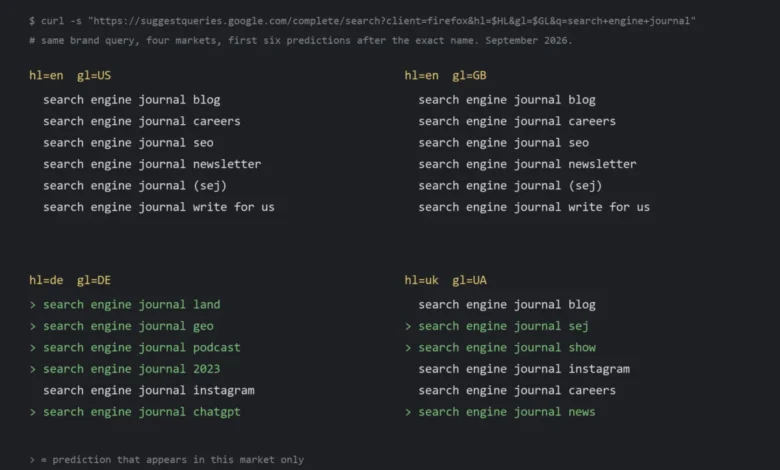
A brand’s digital footprint is rarely uniform across international borders. Search visibility, algorithmic interpretation, and localized competitive pressures vary dramatically by geographic market and linguistic region. A comprehensive brand audit must be executed independently for every country and language combination the organization serves. Executing audits across five distinct country-language pairs requires five distinct, localized evaluations.
To ensure objective diagnostics, audits must be conducted using clean, unauthenticated browser environments, ideally simulating real users physically located within the target market. Because search results are heavily influenced by geographic coordinates, language settings, and device categories, analysts must meticulously record environmental conditions. When evaluating markets where target audiences frequently utilize virtual private networks (VPNs), testing should mirror those network pathways, labeling diagnostic runs accordingly to prevent skewed data interpretation. Furthermore, while desktop audits remain common, mobile evaluations are vital, as mobile search layouts, user interfaces, and result priorities frequently diverge from desktop experiences.
Multi-Platform Search and Autocomplete Verification
Auditing search surfaces extends beyond executing a static list of branded queries. Analysts must investigate the actual terminology utilized by target demographics, leveraging autocomplete predictions and autosuggestion data to map user intent. Comprehensive query sets should encompass exact brand names, official login portals, ownership inquiries, trust verification metrics, customer complaints, support pathways, competitor comparisons, discount queries, and common typographical errors.

These query sets must be deployed across major search engines—including Google, Bing, Brave, and DuckDuckGo—as well as specialized verticals like image, news, map, video, and shopping search. Image search, in particular, frequently surfaces visual assets, unauthorized product listings, or graphical association errors that remain hidden on standard text-based result pages.
Autocomplete predictions demand rigorous scrutiny because they frame user inquiries before search results are even rendered. Security researchers have repeatedly documented malicious entities employing black-hat optimization tactics to manipulate autocomplete algorithms, injecting misleading or defamatory associations into predictive search drops. Brands operating in sensitive sectors, such as political or electoral domains, must implement daily monitoring protocols during critical periods to catch algorithmic anomalies swiftly.
Auditing Brand Integrity Within Generative AI Ecosystems
As artificial intelligence increasingly mediates how consumers discover information, auditing brand representation within generative AI platforms has become a non-negotiable operational necessity. Comprehensive evaluations must span prominent AI systems, including Google AI Overviews, Gemini, ChatGPT search, Perplexity, Claude with web search, and alternative search architectures like Brave Ask. Even if regional audiences rarely utilize certain alternative engines, engines like Brave frequently supply foundational index data to downstream AI vendors, making them critical nodes in the AI information supply chain.
AI audits require two distinct prompt categories: direct inquiries (evaluating brand definition, ownership, legitimacy, and contact protocols) and decision-based prompts (assessing comparative recommendations, use-case viability, and alternative solutions). Prompts must be executed multiple times within fresh, unmemorized conversational threads, as generative responses can fluctuate significantly even within the span of a single hour.
Recent empirical evaluations of conversational AI accuracy indicate that a vast majority of factual inaccuracies stem from information retrieval failures during the underlying search phase rather than logical reasoning errors by the model itself. Consequently, organizations must actively monitor whether AI crawler user agents (such as those deployed by OpenAI, Anthropic, and Perplexity) can successfully access, parse, and index official corporate web properties without encountering blocks or returning empty response shells.

Systematic Triage and Defensive Execution
When brand discrepancies, inaccuracies, or malicious exploits are identified, organizations must systematically categorize the issue to determine the appropriate legal and technical response. Issues range from simple internal data errors and third-party directory inaccuracies to severe criminal abuses such as lookalike domains, phishing support pages, and unauthorized trademark exploitation in paid advertising campaigns.
Prior to initiating takedown procedures, organizations must preserve comprehensive evidentiary documentation. This includes capturing complete target URLs, social handles, time-stamped full-window screenshots, contextual query parameters, geographic markers, redirect chains, and associated tracking or affiliate identifiers.
The tactical response follows a structured four-tier hierarchy:
- Internal Correction: Immediately rectify errors on properties directly controlled by the organization, standardizing product descriptions and metadata across all official channels.
- Third-Party Outreach: Submit verified primary documentation to update outdated or inaccurate third-party profiles and directory listings.
- Formal Enforcement: Report genuine violations—such as trademark infringement in paid search ads, fraudulent applications, phishing support pages, and malicious domains—utilizing platform-specific reporting channels, registrar dispute mechanisms (such as UDRP), and host-level takedown requests.
- Competitive Counter-Positioning: Where complete removal is legally or logistically unachievable, publish authoritative, highly optimized first-party content to outrank and overshadow misleading third-party narratives.
While formal takedown requests are processed, containment protocols must be immediately enacted. Organizations should prominently display official domain names, authorized mobile applications, verified social media handles, and legitimate support contact protocols across all owned properties, while simultaneously briefing customer support teams to protect vulnerable users from ongoing deception.
Proactive Monitoring and Alert Infrastructure
Relying solely on periodic manual audits leaves brands vulnerable to rapid exploitation. Establishing a robust, automated alert infrastructure ensures immediate notification when new threats emerge. Monitoring systems should track core brand names, common typographic misspellings, and high-risk derivative terms across registration databases and search indices.

Key monitoring vectors include:
- Certificate Transparency Logs: Monitoring tools (such as crt.sh) to detect the issuance of new Transport Layer Security (TLS) certificates for lookalike or homoglyph domains.
- Domain Registrar Alerts: Real-time notifications for newly registered domains incorporating brand nomenclature alongside high-risk trigger words such as "login," "support," or "official."
- Internal Diagnostics: Analyzing DMARC email authentication failure reports, Search Console security notifications, and inbound customer support inquiries regarding account authenticity, which frequently provide the earliest indicators of emerging cyber threats.
Mitigating Impersonation Vulnerabilities Through Proactive Governance
The most effective brand protection strategy is proactive prevention. Organizations should systematically register defensive domain portfolios across relevant country-code and generic top-level domains, claim official social media handles across emerging platforms, and secure verified developer accounts within major software marketplaces and package registries.
Administrative security must be rigorously enforced through mandatory multi-factor authentication across all registrar, hosting, and social media management accounts, alongside the immediate revocation of access credentials for departing employees, terminated agencies, and former commercial affiliates. Maintaining a centralized, publicly accessible verification page listing all official corporate domains, applications, executive profiles, and communication channels empowers customers and automated systems alike to independently verify authenticity.
The Continuous Cycle of Brand Defense
Brand protection is not a static corporate checklist; it is an ongoing, dynamic operational requirement. Continuous monitoring of branded search results ensures that official properties retain primary visibility across top search result pages, minimizing the digital breathing room available to unauthorized resellers, impersonators, and malicious actors. By establishing rigorous auditing protocols, deploying automated threat detection systems, and maintaining an unwavering commitment to digital transparency, organizations can successfully defend their brand sovereignty against the rapidly evolving complexities of modern search and artificial intelligence.
Related posts: