Google and Kaggle Set Global Benchmark for Technical Education with 5-Day Agentic AI Course Reaching Over 1.5 Million Participants

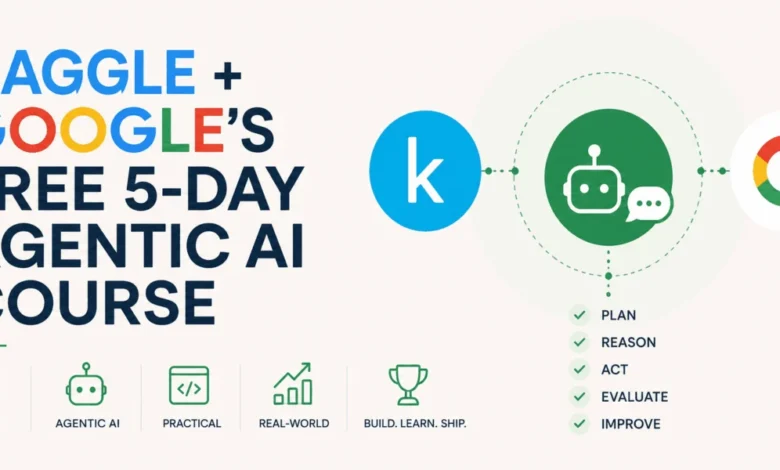
The landscape of professional technical education underwent a seismic shift in late 2025 as Google, in partnership with its subsidiary Kaggle, concluded the "5-Day AI Agents Intensive." The program, which focused on the architecture, deployment, and scaling of autonomous AI agents, recorded a staggering 1.5 million registrations. This figure represents one of the largest concentrated cohorts in the history of computer science education, signaling a global pivot from general generative AI awareness toward specialized agentic implementation. While massive open online courses (MOOCs) frequently cite high registration numbers with low completion rates, this initiative demonstrated significant engagement, with over 11,000 developers successfully submitting capstone projects—a metric that underscores the practical utility and rigor of the curriculum.
The Evolution of AI Education: From Generation to Agency
The 2025 Intensive was not an isolated event but the culmination of a strategic educational roadmap established by Google and Kaggle. In 2024, the organizations launched the "GenAI Intensive," which attracted 140,000 developers and eventually set a Guinness World Record for the largest virtual AI conference during a subsequent rerun. However, as the industry moved past the initial novelty of Large Language Models (LLMs), the demand shifted from simple prompt engineering to the construction of complex, autonomous systems.
This transition reflects a broader industry trend. In early 2024, the primary focus for enterprises was "chatbots"—interfaces designed for human-to-machine conversation. By 2025, the focus had shifted toward "agents"—systems capable of using tools, interacting with external databases, and executing multi-step workflows with minimal human intervention. The "5-Day AI Agents Intensive" was designed to bridge this knowledge gap, providing a structured pathway for developers to move from passive LLM implementation to active agentic orchestration.
A Chronological Breakdown of the Intensive Curriculum
The course was structured to take participants from theoretical foundations to production-ready deployment in a compressed timeframe. Each day integrated a technical whitepaper with hands-on codelabs utilizing Google’s Gemini models and the newly refined Agent Development Kit (ADK).
Day 1: Foundations of Agentic Architecture
The program commenced by defining the boundary between a standard AI workflow and a true agentic system. The curriculum addressed a critical industry question: when is an agent actually necessary? Participants explored the trade-offs between rigid, deterministic workflows and the flexibility of autonomous agents. The practical component involved the construction of a basic single-agent system, followed by the introduction of multi-agent orchestration, where different AI entities collaborate to solve complex problems.
Day 2: Tooling and the Model Context Protocol (MCP)
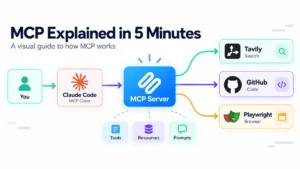
On the second day, the focus shifted to interoperability. An agent is only as effective as the tools it can access. Google introduced participants to the Model Context Protocol (MCP), a standardized framework that allows AI agents to communicate seamlessly with external systems, third-party APIs, and local databases. A significant portion of this module was dedicated to "human-in-the-loop" (HITL) protocols. By teaching developers how to implement approval gates for long-running or high-stakes operations, the course addressed the safety concerns that often prevent agentic systems from being deployed in sensitive enterprise environments.
Day 3: Context Engineering and Persistent Memory
One of the most significant hurdles in AI development is "statefulness"—the ability of an agent to remember past interactions and maintain a coherent long-term strategy. Day 3 delved into context engineering, moving beyond simple short-term memory buffers. Developers learned how to build agents with persistent memory that spans multiple sessions. This module was particularly lauded by participants for addressing why many "homemade" agents fail when tasked with complex, multi-day projects.
Day 4: Quality Assurance, Logging, and Metrics
As AI systems move into production, the ability to measure performance becomes paramount. Day 4 focused on the "unglamorous" but essential aspects of AI engineering: logging, tracing, and evaluation. Unlike traditional software, where code either works or fails, AI agents operate in a probabilistic space. The course taught developers how to use metrics to evaluate not just the accuracy of an agent’s response, but the efficiency and safety of its tool usage. This emphasis on evaluation is increasingly viewed as the most critical skill for developers seeking to ship reliable AI products to a global user base.
Day 5: The Path to Production and Managed Runtimes
The final day addressed the "last mile" of development. Moving an agent from a local Python notebook to a scalable cloud environment involves significant architectural challenges. The curriculum focused on the agent-to-agent protocol and deployment via the Vertex AI Agent Engine. By utilizing a managed runtime, developers were shown how to ensure their agents could handle fluctuating traffic, maintain security compliance, and integrate with existing enterprise cloud infrastructure.
Data-Driven Impact and Participant Demographics
The scale of the 2025 Intensive provides a unique data set for understanding the current state of the global developer ecosystem. The transition from 140,000 participants in 2024 to 1.5 million in 2025 represents a more than ten-fold increase in demand for advanced AI training.
Internal data released following the intensive suggests that the participant base was highly diverse, ranging from independent software engineers to lead developers at Fortune 500 companies. The 11,000 capstone submissions covered a wide array of use cases, including:
- Automated Research Assistants: Agents capable of scouring academic databases and synthesizing reports.
- Customer Support Orchestrators: Multi-agent systems that handle logistics, billing, and technical troubleshooting autonomously.
- Code Maintenance Bots: Agents designed to monitor repositories, suggest refactors, and update documentation.
The high conversion rate of registrations to project submissions—particularly for a course requiring Python literacy and API integration—suggests that the "agentic" shift is being driven by a practical need for automation rather than mere speculative interest.
Industry Implications and the "Vibe Coding" Movement
Following the success of the November 2025 run, Google and Kaggle transitioned the material into a self-paced "Kaggle Learn Guide." This move ensures that the curriculum remains a living resource for the global developer community. Furthermore, a refreshed iteration of the course launched in June 2026, themed around the emerging concept of "vibe coding."
Vibe coding refers to a paradigm shift where the developer focuses on high-level intent and "the vibe" of the system’s behavior, while the underlying AI agent handles the boilerplate code and low-level implementation. The success of the 5-Day Intensive suggests that this shift is becoming mainstream. By empowering developers to think at the architectural level rather than the syntax level, agentic AI is effectively lowering the barrier to building complex, enterprise-grade software.
Expert Analysis: The Democratization of Autonomy
Industry analysts suggest that the success of this course marks the end of the "experimentation phase" of generative AI. "The fact that 1.5 million people are learning how to build autonomous agents tells us that the industry is ready for the next level of integration," says tech researcher Nahla Davies. "The focus on Day 4—quality and evaluation—is particularly telling. We are moving away from ‘cool’ demos and toward ‘reliable’ systems."
The collaboration between Kaggle and Google also highlights the importance of community-driven learning. By providing free access to high-end tools like Gemini and Vertex AI within the Kaggle environment, Google is effectively subsidizing the upskilling of the global workforce. This creates a feedback loop: as more developers become proficient in Google’s AI ecosystem, the more the ecosystem itself becomes the industry standard.
Conclusion
The Google and Kaggle 5-Day AI Agents Intensive has established a new precedent for technical training in the age of artificial intelligence. By combining high-level theoretical insights with immediate practical application, the program has moved the needle on what is expected from the modern developer. As the 1.5 million participants begin to implement these agentic systems within their respective organizations, the impact on global productivity and software architecture is likely to be profound.
For those who missed the live event, the transformation of the curriculum into a permanent, self-paced resource on Kaggle ensures that the "agentic revolution" remains accessible to all. The message from Google is clear: the era of the simple chatbot is over; the era of the autonomous agent has arrived.