OpenAI Unveils Codex Micro as First Hardware Venture for Developer Productivity and AI Agent Management

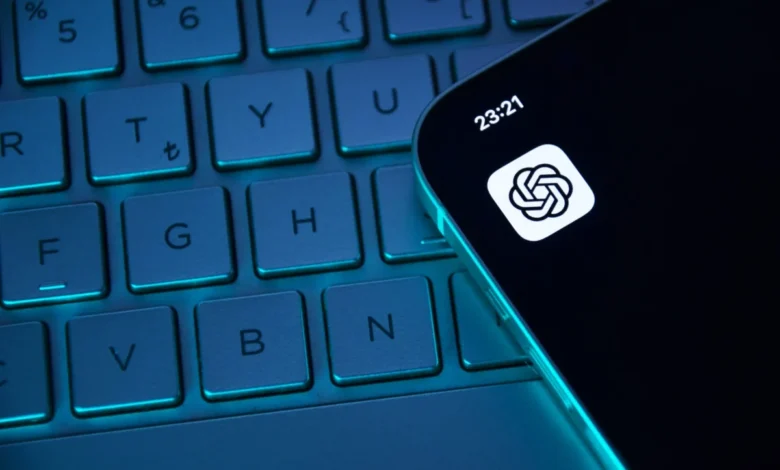
OpenAI has officially entered the hardware market with the release of the Codex Micro, a specialized peripheral designed to facilitate "agentic work" and provide developers with a tactile interface for managing artificial intelligence agents. While rumors have long swirled regarding a high-profile collaboration between OpenAI CEO Sam Altman and former Apple design chief Jony Ive, the Codex Micro represents a different strategic direction, developed in partnership with the boutique hardware manufacturer Work Louder. Priced at $230, the device is marketed as a "command center" for the modern developer, offering a physical bridge between human intent and autonomous AI execution.
The Codex Micro is not a traditional keyboard but rather a "macropad"—a compact, highly customizable input device featuring 13 mechanical switches, a rotary encoder, and a joystick. It is specifically optimized for users of OpenAI’s Codex, the model family that powers many of the industry’s leading automated coding tools and agentic frameworks. By moving complex software commands from keyboard shortcuts and screen-based menus to dedicated physical buttons, OpenAI aims to streamline the workflow of developers who are increasingly relying on AI to write, debug, and deploy code.
Technical Specifications and Hardware Architecture
The Codex Micro is built upon the foundation of the "Creator Micro" series by Work Louder, a company known for producing minimalist, industrial-grade peripherals for the creative community. The OpenAI edition features a distinctive aesthetic that aligns with the organization’s "OpenAI Supply" merchandise line, characterized by clean lines and functionalist design.
The device’s 13 mechanical switches are designed for high-tactile feedback, allowing for precise inputs. By default, the layout includes one oversized keycap that covers two switches, providing a prominent "primary action" button for the user’s most frequent command. Beyond the keys, the inclusion of a rotary encoder—a dial that can be turned and pressed—serves a unique function in the context of AI. OpenAI describes this dial as a tool to adjust the "brainpower" allocated to a task. In technical terms, this likely refers to the "n" parameter or the reasoning effort (tokens) dedicated to a specific prompt, allowing developers to manually throttle the intensity of the AI’s computation.
The hardware is further augmented by a joystick, which provides four-way directional input, and a comprehensive RGB backlighting system. Unlike the purely aesthetic lighting found on gaming peripherals, the Codex Micro utilizes its RGB LEDs as a status indicator. The lighting around the individual "agent" keys provides real-time visual feedback on the progress of background tasks. For instance, a pulsing amber light might indicate an agent is currently processing a complex debugging sequence, while a solid green light signals a completed task.
The unit is wireless, supporting modern connectivity standards to maintain a clean workspace, and comes packaged with 32 customizable icon keycaps. These icons allow users to visually map specific functions—such as "Accept," "Reject," "Push-to-Talk," or "Trigger Custom Action"—to the physical buttons, creating a bespoke interface tailored to individual coding styles.
The Strategic Partnership with Work Louder
The release of the Codex Micro highlights OpenAI’s strategy of leveraging existing expertise in niche hardware markets rather than building a manufacturing pipeline from the ground up. Work Louder, the manufacturing partner, already offers a nearly identical device called the Creator Micro 2. The standard Creator Micro 2 is currently priced at $174, making the OpenAI-branded Codex Micro approximately $56 more expensive.
This price premium is attributed to the specialized firmware, the curated set of 32 custom keycaps, and the integration with OpenAI’s software ecosystem. While the Creator Micro 2 is a general-purpose tool for video editors and graphic designers, the Codex Micro is pre-configured for the specific API calls and workflow requirements of the Codex model.
The decision to work with Work Louder instead of Jony Ive for this specific release suggests a "two-track" hardware strategy for OpenAI. While the Ive project is rumored to be a revolutionary consumer device—often described as the "iPhone of AI"—the Codex Micro is a tactical, developer-focused tool intended to solidify OpenAI’s relationship with its core user base of software engineers.
Contextualizing "Agentic Work" and the Developer Workflow
To understand the utility of the Codex Micro, one must consider the shift from "Chat" to "Agents" in the AI industry. Early iterations of Large Language Models (LLMs) were primarily used for simple request-response interactions. However, the current frontier of AI involves "agents"—autonomous or semi-autonomous systems that can perform multi-step tasks, such as browsing the web, editing files in a repository, and running tests without constant human intervention.
Managing these agents presents a new set of user interface challenges. Developers often have multiple agents running simultaneously, each performing different sub-tasks. The Codex Micro addresses this by providing physical buttons to:
- Accept or Reject Outputs: Rapidly vetting AI-generated code blocks without reaching for a mouse.
- Push-to-Talk: Utilizing voice-to-code features integrated into modern IDEs (Integrated Development Environments).
- Start New Chats: Instantly resetting the context for a new problem-solving session.
- Monitor Progress: Using the RGB status lights to keep track of background agents while the developer focuses on a different part of the codebase.
By providing a dedicated physical space for these actions, OpenAI is attempting to reduce the cognitive load associated with managing AI assistants, effectively treating the AI as a programmable extension of the developer’s own hardware.
Market Analysis and Economic Implications
The $230 price point places the Codex Micro in the "premium enthusiast" category of the mechanical keyboard market. For comparison, high-end productivity macropads from brands like Elgato (the Stream Deck) or Razer typically range from $100 to $200. OpenAI is betting that the specific integration with Codex and the brand cachet of the organization will justify the higher cost.
From a business perspective, the Codex Micro serves as both a functional tool and a marketing vehicle. It is sold through "OpenAI Supply," the company’s retail arm that sells apparel and accessories. By turning the use of Codex into a "fashion statement" and a tangible desktop presence, OpenAI is fostering a sense of community and professional identity among developers.
Furthermore, the hardware serves as a hedge against "AI fatigue." As AI becomes more ubiquitous and invisible, physical hardware provides a "sticky" touchpoint that keeps the user tethered to OpenAI’s ecosystem. A developer who has invested $230 in a Codex-specific command center is statistically more likely to continue using OpenAI’s models over competitors like Anthropic’s Claude or Google’s Gemini.
Chronology of OpenAI’s Hardware Development
The journey toward the Codex Micro can be traced through several key milestones in OpenAI’s history:
- 2021: OpenAI releases Codex, the model that eventually becomes the backbone of GitHub Copilot.
- Late 2022: The viral success of ChatGPT shifts the company’s focus toward consumer-facing chat interfaces, but the developer community remains the primary driver of API revenue.
- 2023: Reports emerge that Sam Altman and Jony Ive are discussing a $1 billion hardware project, backed by SoftBank’s Masayoshi Son.
- Early 2024: OpenAI begins expanding its "Supply" store, testing the waters for physical products with high-end apparel and stationery.
- Late 2024: The Codex Micro is quietly launched, marking the first time OpenAI has sold a functional electronic device.
This timeline suggests a deliberate, phased approach to hardware. Rather than launching a high-risk consumer phone or wearable immediately, OpenAI is starting with a low-risk, high-margin peripheral aimed at a technical audience that understands the value of the underlying software.
Industry Reactions and Future Outlook
Early reactions from the developer community have been mixed, falling largely into two camps. Proponents of the device praise the industrial design and the utility of tactile feedback for AI management. Many mechanical keyboard enthusiasts have noted that Work Louder’s hardware is of exceptional quality, and the added functionality for AI workflows is a logical evolution of the macropad.
Skeptics, however, point to the price difference between the Codex Micro and the original Creator Micro, questioning whether the custom keycaps and firmware justify the $56 increase. Others argue that software-based shortcuts or existing, cheaper macropads could achieve the same results with minimal configuration.
Despite the debate, the Codex Micro represents a significant milestone in the evolution of human-computer interaction. It acknowledges that as AI models become more "agentic" and autonomous, the way humans interact with them must also change. We are moving away from the "text box" as the sole interface for AI. Whether through voice, gesture, or specialized mechanical switches like those on the Codex Micro, the future of AI will likely be characterized by a more diverse and tactile range of inputs.
As OpenAI continues to refine its models and potentially prepares for a larger consumer hardware launch with Jony Ive, the Codex Micro stands as a testament to the company’s ambition to occupy not just the digital space of the cloud, but the physical space of the desk. It is a tool for the "21st-century mind," designed to turn the abstract process of AI orchestration into a tangible, mechanical reality.