The AI Era Demands Accessibility as an Operational Capability, Not a Compliance Checklist

In an era where artificial intelligence is dramatically accelerating user interface development, engineering teams face a critical challenge: ensuring that the rapidly generated code translates into products that are not only functional but also usable, secure, and maintainable for all users. This paradigm shift necessitates a fundamental re-evaluation of accessibility, moving it from a post-hoc compliance exercise to a core operational capability, akin to privacy, security, and reliability.
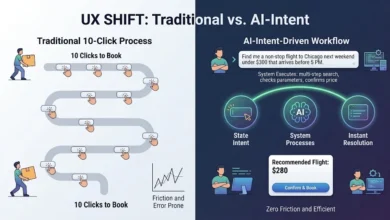
The speed of modern software development, amplified by AI assistants, allows for the creation of complex features in remarkably short timeframes. A senior engineer, leveraging AI, might build an entire checkout flow in a single afternoon. While the happy path—the intended user journey—may run smoothly, a significant gap can emerge between code that executes and a product that is truly usable. This disconnect was highlighted when a blind customer, relying on a screen reader, was unable to complete a purchase. The "Pay Now" control, generated by AI, was implemented as a generic <div> element with an attached click handler, lacking the necessary ARIA roles, focus management, and semantic meaning that assistive technologies require to interpret and interact with the control. This oversight, discovered weeks after deployment, underscores the growing challenge of ensuring digital inclusivity in the age of rapid AI-driven development.
This gap between functional code and usable products is fast becoming one of the defining engineering challenges of the AI era. While teams can now generate UI components at an unprecedented pace, the onus remains on them to guarantee that these components are not just visually appealing or technically functional, but also accessible, secure, and maintainable in the long term. Accessibility, therefore, sits at the nexus of these critical considerations. This article delves into why accessibility must be treated as a continuous operational capability, integrated into the fabric of engineering systems, rather than a mere compliance checklist or an end-of-project audit.
The Audit Trap: A Flawed Approach to Digital Inclusivity
For years, the prevailing method for addressing accessibility has been the "audit-only" approach. This typically involved engaging an external firm to conduct a one-time audit, producing a lengthy report of findings, and then selectively addressing some of these issues before filing the report away. While this model has seen some adoption, its limitations have become increasingly apparent, prompting many teams to seek more integrated solutions.
Audits undeniably serve crucial purposes. For sales, procurement, and governance, they are essential. When potential buyers request a Voluntary Product Accessibility Template (VPAT) or an Accessibility Conformance Report (ACR), organizations need these documents to demonstrate compliance. Similarly, when legal departments inquire about regulatory adherence, a documented audit provides necessary evidence. Audits are effective in fulfilling these specific reporting and validation needs.
However, audits fall short when it comes to proactively building accessible features during the development lifecycle. They cannot inform sprint planning or catch issues before code is merged. Audits do not scale with the rapid deployment velocities that characterize modern software development. The fundamental mistake lies in treating accessibility as a static snapshot rather than a dynamic, ongoing process. Six months after an audit, a product will likely have undergone numerous releases, introduced multiple new features, and perhaps even undergone a complete redesign. The audit report, by then, becomes largely irrelevant, a historical document rather than a guide for current development. Compliance is not a destination but a continuous state of maintenance, a challenge exacerbated by the inherent complexity of software systems.
The stark reality is reflected in reports like WebAIM’s "Million," which annually scans the top one million home pages. The 2026 edition revealed that a staggering 95.9% of these pages contained detectable Web Content Accessibility Guidelines (WCAG) failures, with an average of 56.1 errors per page. The significant increase in page elements, likely fueled by AI-assisted development and "vibe coding"—a practice where developers rely heavily on AI to generate code based on intent rather than explicit instruction—means more potential points of failure. Accessibility debt, much like technical debt, accrues over time. Each inaccessible component shipped becomes a future remediation project, with the "interest" compounding as more features are added and the system evolves. Any strategy that views accessibility as a periodic event rather than an intrinsic property of the system is destined to fall behind.
The AI Problem Nobody Wants to Name: Inaccessibility by Default
The sheer scale at which teams now generate user interfaces, propelled by AI, does not merely perpetuate the accessibility gap; it actively multiplies it. The rapid adoption of AI in development has been transformative. In February 2025, Andrej Karpathy coined the term "vibe coding" to describe a workflow where developers "fully give in to the vibes" and "forget that the code even exists," relying on AI to generate code based on high-level intent and accepting diffs without deep inspection. While initially conceived for personal projects, this approach quickly permeated professional development. Y Combinator reported that in its Winter 2025 batch, 25% of startups had codebases that were nearly entirely AI-generated.
AI models do not produce non-semantic markup by accident; this outcome is driven by a confluence of factors. A significant portion of React code available on public repositories, which serves as training data for AI models, already utilizes non-semantic HTML structures. Consequently, models learn to replicate this pattern. Human reviewers and evaluators often prioritize visual output over semantic correctness, creating a feedback loop that rewards aesthetics. Furthermore, generating a simple <div> with an attached onClick handler requires fewer tokens than crafting a semantically correct <button> with appropriate ARIA attributes like aria-expanded, leading AI models to default to the more token-efficient, but less accessible, option.
The critical issue with AI-generated UI is that it is inherently inaccessible by default. A recent analysis by a Frontend Masters contributor who tested AI-generated React components across various tools documented this pervasive pattern. A typical AI-generated sidebar component, spanning just twenty-nine lines of code, exhibited ten distinct accessibility failures. These included a lack of landmark regions, missing headings, no list structure, elements with click handlers instead of semantic buttons, absent aria-expanded attributes, inadequate keyboard handling, and unlabeled icons. The accessibility tree—the structured representation of the UI that screen readers utilize—was rendered as flat, unstructured text. The author aptly described the situation: "Same pixels. One is a door. The other is a painting of a door."
This inherent inaccessibility is intrinsically linked to security vulnerabilities, stemming from the same root cause. Veracode’s 2025 GenAI Code Security Report, which evaluated AI-generated code across numerous coding tasks, found that a substantial fraction of this code introduced security flaws, including common OWASP Top 10 vulnerabilities. Cross-site scripting failures were particularly prevalent, and security performance did not show significant improvement with newer, larger models. The problem was not a lack of model intelligence but a flawed process: developers generating code without specifying security constraints and accepting output without systematic verification.
The same shortcuts that bypass security reviews also bypass accessibility reviews. At scale, AI is not closing the accessibility gap; it is industrializing the very practices that create it. The solution is not to prohibit AI, as developers are already widely adopting it. Instead, the focus must be on constraining and verifying AI outputs, treating AI as an exceptionally fast team member that requires consistent guardrails and rigorous oversight.
Velocity and Accessibility Are Not Enemies: Embracing "Shift-Left"
A common concern raised when discussing accessibility integration is that implementing "guardrails" will inevitably slow down development velocity. However, practical experience often demonstrates the opposite to be true. This principle aligns directly with the core tenet of DevOps: "shift-left."
The "shift-left" approach advocates for moving quality and testing activities earlier in the development lifecycle. Applied to accessibility, this means catching issues during the design phase rather than discovering them in production. An accessibility issue identified during a design review might be addressed with a simple comment. The same issue, however, found in a live production environment, can escalate into a significant remediation project requiring extensive debugging, code refactoring, and re-testing.
Catching an accessibility flaw during component development typically takes mere minutes. In contrast, fixing an issue discovered late in the process—whether through an audit, diagnosis of the root cause, markup restructuring, applying the fix, and writing new tests—can easily consume hours. When multiplied across hundreds of findings from a late-stage audit, this can translate into weeks of unplanned work that earlier, automated checks—during design reviews, development workflows, or in the Continuous Integration (CI) pipeline—could have prevented.
Teams that successfully integrate accessibility into their daily workflows avoid costly surprises. These include emergency audits, last-minute remediation sprints, procurement roadblocks, and redesigns that inadvertently break critical user journeys. Rather than reducing velocity, it is the unexpected, reactive work that hinders progress. Embedding accessibility within the development workflow is a proactive strategy for eliminating such unforeseen disruptions.
What Enterprise-Ready Actually Looks Like: Building Systems for Scalability
Organizations that achieve scalable accessibility do not rely on individual "heroes" to champion the cause. Instead, they build robust systems.
The most impactful starting point is the design system. A single accessible component, when implemented correctly within a design system, can be reused thousands of times across numerous products and features. The GOV.UK Design System serves as an exemplary model. Its components undergo rigorous automated and manual testing, including validation with assistive technologies like JAWS, NVDA, VoiceOver, and TalkBack. The GOV.UK team is transparent about the limitations of automation, supplementing tooling with user testing involving individuals with disabilities. They acknowledge that using the design system does not "magically" guarantee accessibility but rather provides a strong foundational starting point. In essence, accessibility becomes infrastructure, a core component of the platform.
From the design system, accessibility integration extends into the engineering workflow:
- Definition of Done (DoD): Accessibility requirements are explicitly included in the DoD for all development tasks, ensuring that features are not considered complete until they meet accessibility standards.
- Code Reviews: Accessibility is a mandatory check during code reviews, with clear guidelines and checklists provided to reviewers.
- Documentation: Accessibility considerations are documented alongside functional requirements, providing context and guidance for developers.
- Developer Training: Continuous training programs equip developers with the knowledge and skills to build accessible interfaces.
Finally, accessibility becomes enforceable through automation:
- CI/CD Gates: Automated accessibility checks are integrated into the CI/CD pipeline, failing builds that do not meet predefined standards.
- Linters and Static Analysis: Tools are configured to flag common accessibility violations during the coding process.
- Automated Testing Frameworks: Comprehensive automated test suites are developed to cover various accessibility scenarios.
At this stage, accessibility transitions from being dependent on individual memory or ad-hoc efforts to being ingrained in the process. It becomes an integral part of the platform’s operational capabilities.
Patterns That Actually Scale: Practical Implementations
Several implementation patterns consistently emerge in teams that successfully scale accessibility efforts.
Constrain AI Before It Generates
Rather than attempting to fix accessibility issues after AI has generated code, it is far more effective to bake requirements directly into the AI tooling. This can be achieved through custom Cursor rules, explicit Copilot instructions, or repository-level standards. Developers should instruct the AI to utilize semantic HTML, to differentiate between buttons and links appropriately, and to expose states and labels correctly. AI models are far more likely to adhere to persistent, embedded constraints than to one-off, ad-hoc prompts.
Stop Hand-Rolling Complex Widgets
Complex UI elements such as comboboxes, menus, tabs, and modals are frequent sources of accessibility challenges. Leveraging established libraries like Radix UI, React Aria, or Headless UI can provide a scalable solution. These libraries have already addressed many common accessibility pitfalls. The most efficient approach is not to repeatedly reimplement accessibility correctly but to inherit this functionality from well-tested, pre-built primitives.
Capture Accessibility During Design Handoff
Crucial accessibility considerations such as focus order, semantic labels, heading hierarchy, and interaction states should be explicitly defined before development commences. If accessibility requirements are absent from design artifacts, they are unlikely to be present in the final product. A concise memo accompanying design handoffs—detailing tab order, necessary labels, and error state behaviors—can significantly reduce ambiguity and guesswork during implementation.
These patterns are not revolutionary or exotic; they represent the application of DevOps and platform engineering principles to the domain of accessibility.
The Broader Business Impact: Beyond Compliance and Towards Opportunity
While regulatory compliance is a significant driver, engineering leaders are increasingly prioritizing accessibility for a more comprehensive set of business benefits. These include enhanced user retention, improved product quality, and expanded market reach.
The legal landscape surrounding digital accessibility continues to evolve. In the United States, digital accessibility lawsuits have remained consistently high, numbering in the thousands annually, and are not confined to large enterprises. The European Accessibility Act, now enforceable across the EU, mandates accessibility for e-commerce, banking, ticketing, and telecommunications services, irrespective of a company’s headquarters. This signals a clear shift: accessibility is no longer a discretionary "nice-to-have" in the eyes of regulators.
Beyond legal imperatives, the untapped market potential is substantial. The World Economic Forum, in a December 2023 report, estimated that the global population of 1.3 billion people with disabilities, along with their friends and family, possesses a combined spending power of $13 trillion. Disabled consumers alone control approximately $8 trillion in annual disposable income, according to The Valuable 500. In the UK, the "Click-Away Pound" report from 2019 indicated that inaccessible websites cost businesses an estimated £17.1 billion, as over 4.9 million users with access needs abandoned these sites in favor of competitors. These users do not typically file bug reports; they simply leave and spend their money elsewhere.
Furthermore, accessibility is becoming a critical factor in procurement. For businesses operating in the business-to-business (B2B) sector or engaging with government entities, demonstrating accessibility is increasingly a prerequisite. Level Access’s Seventh Annual State of Digital Accessibility Report (2025-2026) revealed that 75% of organizations now require proof of accessibility when purchasing digital products. While this percentage has remained relatively stable, there has been a notable shift towards stricter enforcement, with organizations always requiring such proof rising from 27% to 31%. A strong ACR can accelerate sales cycles, while a weak or absent one can create significant redlines, stalling or even terminating deals. For some buyers, demonstrable accessibility is a non-negotiable requirement before a product can even enter the evaluation phase.
At a fundamental level, accessibility serves as a proxy for engineering maturity. A team that consistently ships semantic HTML, manages focus effectively, exposes component states accurately, and incorporates automated accessibility testing into its CI pipeline is a team that possesses strong internal processes and discipline. The same discipline that yields an accessible component also contributes to a more maintainable, testable, and less error-prone codebase.
For development and product leaders, the compelling business case for accessibility lies in its role as platform work. It yields tangible returns by enabling faster, smoother feature delivery with reduced rework.
Systems, Not Sprints: The Foundation of Sustainable Accessibility
If there is one core takeaway from the evolution of accessibility in software development, it is this: true accessibility is not achieved through a one-off audit, the efforts of a single heroic individual, or a frantic remediation sprint just before launch. It is built through systems.
These systems include an accessible design system that ensures components start with the right foundations. A robust Definition of Done that maintains accessibility standards throughout the development process. Automated testing and CI gates that prevent regressions from reaching production. Clear governance structures that assign ownership and accountability. And essential guardrails for AI-assisted development, transforming the fastest development tool into a manageable asset rather than a liability.
These practices may not be inherently glamorous, which is precisely why they are effective. They are the same types of dependable, albeit less flashy, systems that organizations already rely on for security, reliability, and performance.
However, even the most sophisticated systems have limitations. No linter, automated scanner, or dashboard can convey the lived experience of a blind user navigating a product with a screen reader, or the challenges faced by someone with a tremor attempting to use a mouse. Therefore, while building robust systems is paramount for ensuring that accessibility survives contact with real-world release schedules, it is equally crucial to conduct regular testing with real users with disabilities. The moment a development leader experiences firsthand the struggle of a user with a screen reader attempting to complete a form that the team believed was "done," something profound changes. Tooling can confirm whether a technical pass was achieved, but only real users can truly validate whether a product actually works for them.
Accessibility is not merely another feature to be added. It is an operational capability, a fundamental aspect of building high-quality software. By treating it as such, organizations can unlock a faster, safer, and more reliable path to shipping software that benefits all users.