A Decade Later, Persuasive Design Has Matured Into Behavioral Strategy, Offering a More Robust Approach to User Engagement

Ten years ago, the field of user experience design began to explore the potential of "persuasive design," a concept that moved beyond mere usability to actively influence user behavior toward desired outcomes. In 2015, Anders Toxboe was among the voices advocating for this shift, proposing that by leveraging principles of psychology, designers could foster higher sign-ups, smoother onboarding, and increased user retention. Today, Toxboe revisits this frontier, arguing that persuasive design has not faded but evolved into a more sophisticated discipline known as "behavioral design." This evolution addresses persistent challenges like weak activation and user drop-off, offering a framework for understanding and guiding user actions in a way that benefits both users and businesses, without resorting to manipulation.
The initial promise of persuasive design was significant: to harness psychological insights to improve product performance. However, as Toxboe notes, the reality over the past decade has presented a more nuanced picture. Many product teams continue to grapple with fundamental issues such as high bounce rates, poor activation rates, and users abandoning products before experiencing their core value. While usability improvements remain crucial, they often fail to address the underlying behavioral gaps that contribute to these problems. This is where behavioral design, as an updated iteration of persuasive design, steps in. It focuses on aligning product experiences with the fundamental drivers of human behavior, guided by an ethical compass. When implemented effectively, behavioral design can enhance conversion rates, onboarding completion, engagement, and long-term usage, all while avoiding deceptive tactics.
The core principle of behavioral design, as articulated by Toxboe, is not to introduce more superficial "growth hacks" or deceptive patterns. Instead, it emphasizes a deep understanding of what truly enables or hinders users in achieving their objectives. This approach seeks to bridge the gap between user aspirations and business needs, creating mutually beneficial outcomes. The distinction between persuasion and deception, Toxboe asserts, lies in intent and accountability. While the power of these psychological tools is undeniable, their ethical application hinges on the designer’s intention and a commitment to transparency. Without a clear understanding of psychological principles, designers risk unknowingly employing manipulative tactics or falling prey to their own biases. Therefore, a mature understanding of behavioral design necessitates a critical examination of both its potential for good and its susceptibility to misuse.
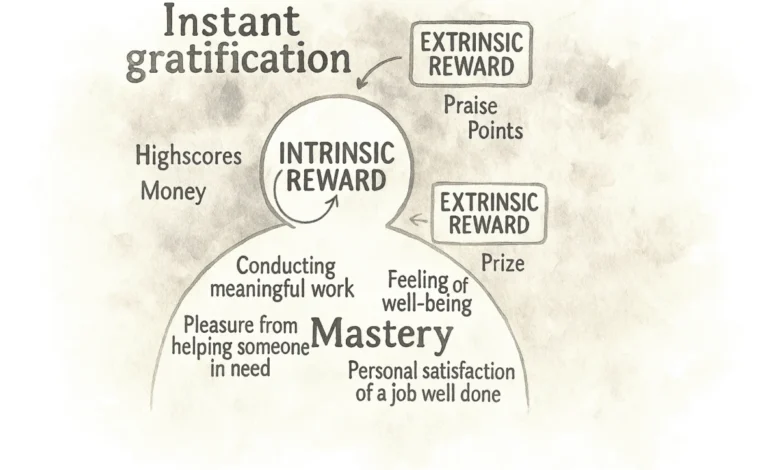
A decade of experience has revealed the limitations of early persuasive design approaches, which often equated psychology with simple gamification. Tactics such as points, badges, and leaderboards, while sometimes effective in the short term for nudging users through onboarding or encouraging brief engagement, proved to be superficial. Over time, users recognized these mechanics as disconnected from meaningful progress, leading to disengagement once the novelty wore off. This realization has led to a greater appreciation for the insights offered by self-determination theory, which distinguishes between extrinsic motivators (rewards, praise) and intrinsic drivers (autonomy, competence, relatedness). Products that have sustained user engagement have done so by tapping into these intrinsic needs. For instance, a language learning streak that signifies genuine skill improvement and progress is more effective than a badge awarded simply to inflate a dashboard metric.
Lesson 1: From Quick Fixes to Behavioral Strategy
One of the most significant lessons learned over the past decade is that behavioral design achieves its greatest impact when it transcends isolated fixes and becomes a deliberate, overarching strategy. Product teams often initiate efforts with a narrow focus, such as improving sign-up rates or reducing early churn. When conventional UX optimizations yield diminishing returns, the allure of psychological interventions for a quick boost can be strong. However, the true opportunity lies not in incremental uplifts but in establishing a systematic approach to understanding and shaping user behavior across the entire product lifecycle.
Behavioral design, at its core, is about empowering users to succeed. It shifts the focus from merely optimizing a specific screen or metric to understanding the user’s internal state and context. This strategic perspective might lead to designing onboarding experiences that leverage curiosity and the goal-gradient effect to guide users toward an immediate sense of accomplishment, rather than relying on passive help documentation. It also encourages designing for long-term commitment through elements like relevant social proof, appropriately challenging tasks, progressive disclosure of advanced features, and timely, opportune triggers. The fundamental shift is from creating products that are merely easy to use to designing products that are easier to commit to.
The field has moved from scattered hypotheses to a growing repository of repeatable patterns, but their efficacy is maximized when integrated within a coherent behavioral model. This model defines user objectives, identifies roadblocks, and outlines the levers the team will employ at each stage. While early explorations were influenced by nudging principles, it has become evident that nudges alone are insufficient for addressing deeper behavioral challenges. A comprehensive behavioral strategy integrates tactics, grounds them in genuine user motivations, and links experiments to a clear theory of change, aiming for compounding benefits over time rather than one-off wins.
Lesson 2: Game Mechanics Alone Are Not Enough
The notion that game mechanics—points, badges, leaderboards—alone constitute a robust behavioral strategy has been largely debunked. While these elements were once a shorthand for applying psychology, their limitations have become apparent. They serve as mere decoration unless they address a genuine user need. A critical question for any team employing gamification is its purpose: does it facilitate meaningful user progress, or does it simply serve to boost internal metrics? Without alignment with intrinsic motivation, such superficial approaches are destined to fail.
Consequently, points and streaks are no longer considered automatic improvements. Teams now rigorously assess whether these mechanics enhance user competence, control, or connection. A streak, for example, is only valuable if it reflects tangible progress in a skill that users genuinely care about. Similarly, a leaderboard is only beneficial if users are motivated to compare themselves and if the ranking provides actionable insights. If these conditions are not met, such elements become clutter rather than motivational tools.
The most effective products now prioritize intrinsic motivation. They clearly articulate what users can become or achieve through the product, and only then consider how gamified elements can enhance that journey. When gamified features are incorporated, they are woven into the core user loop, not appended as an afterthought. They are designed to signify mastery, celebrate significant milestones, and reinforce self-driven goals, differentiating them from mere cosmetic enhancements.
Lesson 3: From Cause and Effect to Holistic Systems Thinking
Early persuasive design often operated on a simplified cause-and-effect logic: identify a problem, introduce a psychological lever, and expect a predictable positive outcome. In reality, user behavior is far more complex. Individuals are influenced by a confluence of factors including context, personal history, competing priorities, mood, time constraints, trust levels, and varying definitions of success. A single action can be motivated by multiple reasons, and a user’s behavior can fluctuate significantly from one day to the next.
This complexity underscores the importance of systems thinking. User behavior is shaped by intricate feedback loops and delays, not just isolated triggers. Outcomes such as trust, competence, and habit are cultivated over time. A design change that boosts conversion in the short term might inadvertently undermine long-term retention. This phenomenon, often experienced as an increase in support tickets or refunds following a seemingly successful "conversion win," highlights how optimizing a local metric can negatively impact the broader system.
Design structures either empower users or constrain them. Decisions regarding defaults, navigation, feedback mechanisms, pacing, and rewards all contribute to shaping the user’s journey. The objective, therefore, is not to perfect a single, linear funnel but to cultivate an environment that supports multiple valid paths to success. This requires a system that prioritizes long-term user goals over short-term clicks. A mature behavioral strategy embraces this holistic view, designing for diverse user pathways, promoting autonomy over compliance, and considering downstream effects beyond immediate conversion.

Lesson 4: From Triggers to Context
The evolution in behavioral design frameworks reflects a similar shift in focus. A decade ago, the Fogg Behavior Model (B=MAP: Behavior = Motivation, Ability, Prompt) was widely influential, emphasizing that simply prompting users was ineffective if motivation or ability were lacking. This model provided a valuable starting point for understanding the prerequisites for behavior.
However, the field has recognized that prompts alone cannot compensate for a deficit in capability or opportunity. Users cannot be nagged into acquiring skills they lack or into engaging in contexts that are absent. This realization has led many practitioners to adopt more comprehensive models, such as the COM-B model (Capability, Opportunity, Motivation, Behavior). COM-B offers a more nuanced understanding by breaking down behavior into its constituent components. It prompts teams to assess whether individuals possess the necessary capability, whether the environment provides the opportunity, and whether motivation is present.
This framework aligns well with modern product design, where behavior unfolds across multiple devices, channels, and moments, extending far beyond a single screen. COM-B also bridges the gap with broader behavior change initiatives in fields like public health and policy, reducing the need for isolated UX frameworks. By framing issues in terms of capability, opportunity, and motivation, teams move beyond simplistic cause-and-effect explanations. A drop in completion rates, for instance, is no longer attributed solely to a flawed button or a lack of reminders. Instead, it prompts an investigation into how skills, context, and motivation interact. A capability issue might necessitate interface improvements and enhanced education, while an opportunity issue could relate to device access, timing, or social dynamics. Motivation can be influenced by factors as diverse as pricing and brand trust, as well as in-product messaging.
Modern behavioral design is therefore less about activating clicks and more about shaping conditions where action becomes easy and meaningful. This broader lens also facilitates cross-functional collaboration. Product managers, designers, marketers, and engineers can operate from a shared behavioral model, understanding their respective roles. Designers shape perceived capability and opportunity within the interface, marketing influences motivational framing and triggers, and operations manage structural opportunities. COM-B fosters a unified understanding of the system, enabling teams to work cohesively rather than in isolation.
Lesson 5: Psychology Can Also Be Used to Design and Decode Discovery
The COM-B model serves as a crucial bridge between the discovery and ideation phases of product development. In discovery, it provides structure for research, guiding the design of interview protocols, the interpretation of analytics, and the analysis of observational studies. Its foundational purpose is to diagnose the necessary changes for behavior to shift, a task that aligns perfectly with early product exploration.
Effective discovery moves beyond simply asking users what they say they want and instead delves into what their behavior reveals. Instead of accepting superficial answers to questions like "Why did you stop using the product?", a behavioral approach systematically probes capability, opportunity, and motivation. This involves detailed inquiries into the user’s experience, including the device used, time of day, presence of others, and competing demands. Users are encouraged to discuss the relative importance of the behavior within their lives and the trade-offs they make. While these questions feel natural to participants, they systematically cover the three core components of COM-B, mirroring the qualitative methods used by behavior change practitioners.
Behavioral data can be analyzed through the same lens. Funnel drop-offs, task completion times, and click patterns offer clues about potential barriers: are users struggling due to a lack of capability, environmental impediments, or insufficient motivation? Modern analytics tools enable observation of actual user behavior, complementing self-reported data for a more comprehensive understanding. The discrepancies between what users say and what they do are not irritations but critical signals, revealing the influence of biases, habits, and emotional factors. By categorizing these mismatches within the COM-B framework and linking them to specific barriers like risk aversion, analysis paralysis, status quo bias, or present bias, vague insights are transformed into a structured map of obstacles.

The outcome of such discovery processes extends beyond personas and journeys; it includes a clear articulation of the current behavior, the desired target behavior, and the specific behavioral barriers and enablers that lie between them.
Lesson 6: Use Behavioral Discovery in Your Ideation
The transition from discovery to ideation can be streamlined with a simple template: "From [current behavior] to [target behavior], by [doing X], because of [barrier Y]." This "from-to-by-why" framing compels teams to articulate their underlying beliefs and assumptions. Instead of merely suggesting the addition of a checklist, the statement becomes: "We believe a checklist will help new users feel more capable, thereby increasing the likelihood they will complete setup in their first session." This transforms a design idea into a testable behavioral hypothesis.
With this foundation, teams can generate multiple variations that express the same principle in different ways and design experiments to test them. This might involve experimenting with various messages leveraging loss aversion, simplifying high-friction steps through different approaches, or testing different forms of social proof with varying tones and proximity. The critical shift is from a trial-and-error approach to deliberately targeting identified capability, opportunity, or motivation issues and rigorously testing which interventions prove effective in the specific context.
Every proposed idea should answer the fundamental question: "Which barrier are we trying to change?" Over time, this iterative loop between behavioral discovery and ideation cultivates a localized playbook, revealing which principles consistently benefit users within a particular product’s ecosystem and which fall short. It also highlights that patterns from case studies do not automatically transfer, emphasizing the need for context-specific, user-centered implementations over generic recipes, even in areas like gamification and behavior change research.
The dual application of psychology in both discovery and ideation represents a significant advancement. A product trio can collaboratively analyze a persistent drop-off point and ask, "Is this a capability, opportunity, or motivation issue?" They can then generate targeted ideas rather than relying on guesswork, fostering a shared language that makes behavioral design an integrated aspect of cross-functional team operations.
A Decade Later: What Has Proven to Work in Practice
The past decade of persuasive design has underscored a crucial realization: behavioral insights are only valuable when teams can collectively act upon them. Effective methods are paramount. Over time, a set of structured workshop formats has emerged as a consistent means for product teams to identify behavioral barriers, align on opportunities, and generate solutions grounded in psychological principles rather than superficial patterns. As behavioral design has evolved from tactical nudges to a strategic discipline, the question of practical implementation has become central: How do teams effectively collaborate on this work?
Product managers, designers, researchers, and engineers must transition from scattered observations, such as "people seem confused here," to a unified behavioral diagnosis, and subsequently to targeted ideas that reflect the underlying drivers of capability, opportunity, and motivation. A highly effective method for operationalizing this process is through structured workshops. These sessions aim to equip teams with a shared understanding of user behavior, enable them to identify leverage points for intervention, and foster collaborative ideation and ethical review of potential solutions.

While real-world product development is often iterative and non-linear, a structured sequence of exercises provides a valuable mental model for learning and for introducing behavioral design to new teams. This process illuminates the journey from initial discovery to behavioral clarity, from opportunity identification to concrete ideas, and finally, to interventions that have undergone rigorous ethical scrutiny. The exercises described below represent one such structured approach, designed to guide teams through a progression from empathy and insight to prioritized opportunities, well-defined concepts, and responsible solutions.
The order of these exercises is deliberate, with each step building upon the preceding one to foster a holistic understanding and application of behavioral design. While teams may adapt the timing and format based on their constraints, the underlying progression remains critical. The goal is to preserve the sequence from understanding to prioritization, ideation, and reflection. This sequence can be condensed into half-day workshops or spread across a full week, depending on team availability.
The following walkthrough provides a detailed look at each exercise, often facilitated in conjunction with a curated library of persuasive patterns.
Exercise 1: Behavioral Empathy Mapping
The initial step involves cultivating a shared, psychologically informed understanding of users. Behavioral Empathy Mapping builds upon traditional empathy mapping by focusing on what users attempt, avoid, postpone, misunderstand, or feel uncertain about. These subtle behavioral cues often reveal more than explicit statements of needs or pain points.
Goal: To understand the factors that drive or inhibit target behavior by capturing users’ thoughts, feelings, statements, and actions, and identifying behavioral barriers and enablers.
Steps:
- Define the Target Behavior and Persona: Clearly articulate the specific behavior to be influenced and the user persona(s) involved.
- Brainstorm User Thoughts and Feelings: Consider what the user might be thinking and feeling at each stage of the journey related to the target behavior. This includes emotions, attitudes, and internal dialogues.
- Identify User Actions: Document the observable actions the user takes, both within and outside the product, related to the target behavior.
- Note User Sayings: Record any verbal or written expressions the user makes, including feedback, complaints, or casual comments.
- Capture User Experiences: Detail what the user sees and hears in their environment, both within the product interface and in their broader context.
- Identify Behavioral Barriers and Enablers: Based on the above, explicitly list factors that hinder or facilitate the target behavior.
Output: A concentrated map detailing the psychological and contextual forces influencing the target behavior, which then informs Behavioral Journey Mapping.

Exercise 2: Behavioral Journey Mapping
Following the development of a nuanced understanding of user mindset and context, the next step is to map how these forces manifest over time. Behavioral Journey Mapping overlays user goals, actions, emotions, and environment onto the product journey, highlighting specific moments where behavior tends to stall or shift.
Unlike traditional journey maps, this approach emphasizes points where capability is compromised, where the environment presents obstacles, or where motivation wanes or conflicts arise. These moments serve as early indicators of where intervention is both necessary and feasible. The output clearly illustrates for the team precisely where the product may be demanding too much, where users lack adequate support, or where additional motivation or clarity is required.
Goal: To map the progression from the user’s starting point to the target behavior, identifying key enablers and barriers along the way.
Steps:
- Outline the User’s Journey: Chronologically map the key stages a user moves through from initial awareness to achieving the target behavior.
- Map User Goals and Actions: For each stage, detail what the user is trying to achieve and the actions they take.
- Identify Emotions and Thoughts: Document the user’s emotional state and cognitive processes at each stage.
- Analyze Capability, Opportunity, and Motivation: At each touchpoint, assess the user’s capability to perform the action, the environmental opportunities available, and their motivation levels.
- Pinpoint Barriers and Enablers: Explicitly identify factors that hinder (barriers) or facilitate (enablers) the target behavior at each stage. This includes psychological barriers (e.g., fear of failure, analysis paralysis) and contextual enablers (e.g., readily available information, social support).
- Visualize the Flow: Use a visual format (e.g., a flowchart or timeline) to represent the journey, clearly marking moments of struggle or success.
Output: A clear, behavior-focused journey map that details where users encounter difficulties, the reasons behind them, and the moments offering the most leverage for change.
Exercise 3: Behavior Scoring
With a refined understanding of the user journey and the critical moments where behavioral support could be beneficial, the team is ready to identify the most impactful behaviors to influence.
Goal: To determine which potential target behaviors warrant initial focus, based on their potential impact, ease of modification, and measurability.

Steps:
- List Potential Target Behaviors: Brainstorm a comprehensive list of behaviors that, if altered, would significantly contribute to business objectives or user success.
- Assess Impact: For each behavior, assign a score (e.g., 1-10) reflecting the potential positive impact of its change on key business metrics or user outcomes.
- Evaluate Ease of Change: Rate each behavior’s susceptibility to change through product interventions (e.g., design adjustments, feature enhancements). A higher score indicates greater ease of modification.
- Determine Ease of Measurement: Assess how easily and reliably the success of influencing each behavior can be tracked and measured. A higher score indicates greater ease of measurement.
- Calculate Total Score: Sum the scores for Impact, Ease of Change, and Ease of Measurement for each behavior.
- Prioritize: Rank the behaviors based on their total scores, with higher scores indicating higher priority.
Output: A prioritized list of target behaviors, supported by a rationale for their selection, alongside a list of lower-priority behaviors for future consideration.
A filled-out Behavior Scoring table might illustrate this process:
| Potential target behaviors | Impact of behavior change | Ease of change | Ease of measurement | Total |
|---|---|---|---|---|
| User completes onboarding checklist in first session. | 8 | 6 | 9 | 23 |
| User invites at least one teammate within 7 days. | 9 | 4 | 8 | 21 |
| User watches the full product tour video. | 4 | 7 | 6 | 17 |
| User reads help documentation during onboarding. | 3 | 5 | 4 | 12 |
In this example, completing the onboarding checklist emerges as the primary focus due to its high impact, reasonable ease of modification through design, and straightforward measurability. While inviting a teammate may be strategically vital, its influence might extend beyond interface design, positioning it as a secondary priority.
Exercise 4: Ideas First, Patterns Later
Once the team has identified the most critical behaviors to influence, a common pitfall is prematurely resorting to familiar psychological tactics. This exercise deliberately separates idea generation from the application of psychological frameworks.
Goal: To generate solutions rooted in the user’s context first, and then employ psychological principles to refine and strengthen these solutions.
Steps:

- Revisit the Behavioral Journey Map and Prioritized Behaviors: Refer back to the identified user struggles and the prioritized target behaviors.
- Brainstorm Solutions Based on Context: Without initially considering psychological patterns, generate a wide range of potential solutions that directly address the identified barriers and enablers within the user’s journey. Focus on practical improvements to the user experience, workflow, or product features.
- Frame Solutions with Behavioral Principles: Once a set of contextually relevant ideas has been generated, review them through the lens of behavioral science. For each idea, identify which psychological principles (e.g., loss aversion, social proof, cognitive fluency) could be leveraged to enhance its effectiveness.
- Refine and Strengthen Ideas: Modify the initial ideas to explicitly incorporate these principles, ensuring they are designed to address specific capability, opportunity, or motivation issues.
- Document the Rationale: Clearly articulate why each refined solution is expected to influence the target behavior, referencing the specific psychological principles and the user barriers they address.
Output: A refined set of solution concepts that are grounded in real user context and supported, where applicable, by behavioral principles, rather than being dictated by them. This approach prevents the team from engaging in "pattern-first design," where ideas are retrospectively fitted to theories rather than addressing genuine human situations.
Exercise 5: Dark Reality
Before solutions are translated into experiments or shipped features, they must undergo a crucial ethical assessment. This step is vital for uncovering potential ethical risks, unintended consequences, and possibilities for misuse.
Goal: To identify ethical risks, unintended consequences, and potential misuse of proposed solutions before implementation.
Steps:
- Review Proposed Solutions: Examine each refined solution concept generated in the previous exercise.
- Imagine Success (and Over-Success): Consider what would happen if the solution were extremely effective. What are the potential downsides of widespread adoption or intense usage?
- Consider Different User Groups: Evaluate how the solution might impact vulnerable users, those with different levels of digital literacy, or individuals in diverse socioeconomic situations.
- Identify Potential for Misuse: Think about how the solution could be intentionally exploited or misused by malicious actors or even by well-intentioned users in unintended ways.
- Explore Unintended Consequences: Brainstorm any downstream effects or ripple effects that the solution might have on user behavior, product ecosystem, or society.
- Assess Ethical Alignment: Evaluate whether the solution aligns with ethical principles, such as transparency, fairness, autonomy, and user well-being.
- Mitigation Strategies: For any identified risks, brainstorm potential mitigation strategies, design adjustments, or policy changes to address them.
Output: Solutions that have been ethically stress-tested, with acknowledged risks documented and plans for mitigation in place.
The teams that derive the most benefit from behavioral design typically do not rely on a single "psychology expert." Instead, they cultivate a shared vocabulary around product psychology and develop the ability to communicate effectively about customer behavior. This shared language transforms psychology into a collaborative, cross-functional endeavor.
When patterns and principles are openly shared and discussed:

- Teams can diagnose problems more accurately: They can identify whether a user issue stems from capability, opportunity, or motivation.
- Ideation becomes more targeted: Solutions are designed to address specific behavioral barriers, rather than being generic.
- Ethical considerations are integrated earlier: Potential misuse and unintended consequences are anticipated and addressed proactively.
The "Persuasive Patterns" collection, for instance, was developed to provide teams with a common language and a concrete set of examples. Whether used in workshops or as ongoing references, the goal is to make product psychology accessible and discussable by the entire team.
Persuasive design, once viewed as a collection of tricks, has evolved into a more systematic practice. This evolution involves simple methods, a shared vocabulary, and a consistent inquiry into the realities of users’ lives. The next frontier is not merely more sophisticated nudges but a more disciplined practice: utilizing straightforward methods, fostering a common language, and consistently asking, "What is truly happening in our users’ lives here?"
By focusing on a single behavioral problem, employing a few of these exercises, and providing the team with a shared set of patterns to reference, organizations can begin practicing persuasive design in its evolved form: grounded in evidence, respectful of users, and aimed at achieving outcomes that are valuable for both users and the business.