Google Integrates Gemini 4 Hydrogen as Global Default for AI Mode and Complex AI Overviews

Google has officially rolled out Gemini 4 Hydrogen as the new default underlying model for AI Mode across global markets, marking a significant evolution in how the search giant handles everyday queries, complex inquiries, and generative search summaries. Announced via social media by Robby Stein, Vice President of Product for Google Search, alongside a simultaneous corporate publishing update, the deployment expands
the footprint of the Gemini 4 architecture to billions of users worldwide. The transition occurs concurrently with the rollout of the broader November core algorithm update, creating a dynamic operating environment for SEO professionals, digital publishers, and search engine optimization analysts who track referral traffic and AI-driven visibility.
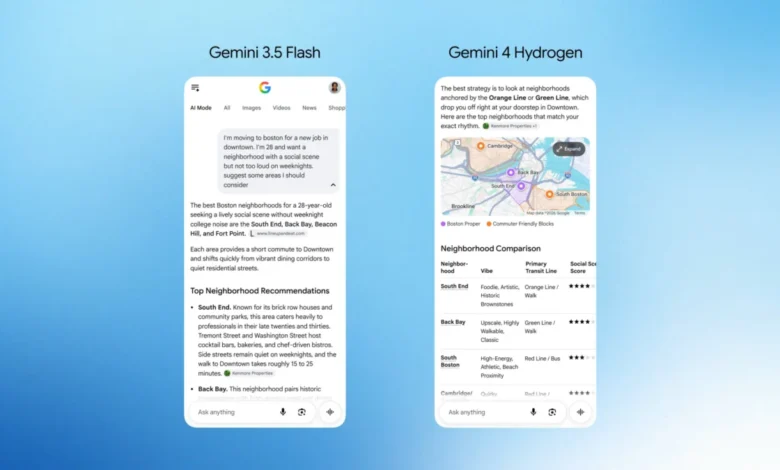
The newly deployed model steps into a central role following a succession of iterative model introductions throughout the year. Earlier in May, during the Google I/O developer conference, the company established Gemini 3.5 Flash as the global baseline for AI Mode. However, rapid advancements in large language model efficiency necessitated a more capable engine for general tasks. According to official documentation released by Google, Gemini 4 Hydrogen is engineered specifically for speed and all-around assistance, contrasting with its sibling models in the Gemini 4 family—such as Carbon and Argon—which are optimized for intensive, long-running deep reasoning tasks.
Chronology of the Gemini 4 Rollout
The timeline leading up to the global deployment of Gemini 4 Hydrogen reflects Google’s methodical, tiered approach to deploying advanced generative intelligence infrastructure into production environments. The foundational architecture of the Gemini 4 series first surfaced in mid-autumn, signaling an aggressive push by the company to outpace competing conversational search paradigms.
On October 13, Google introduced Gemini 4 Argon as an optional, high-tier choice reserved exclusively for subscribers of Google AI Pro and Ultra plans. This release immediately sparked speculation within the digital marketing community regarding whether Argon or a similarly powered variant would eventually graduate to become the standard default experience for non-paying or standard users.
Several weeks later, on November 10, Google expanded its premium offerings by initiating the rollout of Gemini 4 Carbon to Ultra tier subscribers within AI Mode, positioning it as the premier engine for the most complex analytical and multi-step reasoning workloads. Just two days later, on November 12, the company executed its most expansive shift yet by deploying Gemini 4 Hydrogen globally as the default model for all AI Mode users, while simultaneously assigning it to process the most challenging queries within AI Overviews.
Crucially, this deployment collided directly with the initial rollout phase of the November core search update, which commenced on November 10. The overlap of a major model architecture shift and a core search engine ranking update presents unique analytical hurdles for webmasters attempting to isolate the root causes of traffic fluctuations.
Technical Enhancements and Functional Upgrades
The integration of Gemini 4 Hydrogen brings several demonstrable performance improvements to the user interface, moving beyond simple conversational text generation to deliver a more structured and comprehensive information retrieval experience. Google’s engineering teams have tuned the model to address long-standing friction points in natural language search behavior.
Foremost among these enhancements is superior handling of multi-part inquiries and complex, highly specific prompts. Historically, generative search features occasionally faltered when users chained multiple distinct questions into a single search box or injected nuanced constraints. Gemini 4 Hydrogen demonstrates a markedly improved ability to parse these compound requests, follow complex system commands more rigorously, and interpret queries containing typographical errors without degrading the quality of the output.
Furthermore, the model introduces advanced query fan-out capabilities. In modern search architectures, query fan-out refers to the system’s capacity to simultaneously execute multiple distinct sub-queries across various subtopics of a broad initial inquiry. By running these parallel searches under the hood, Hydrogen synthesizes a more comprehensive response while pulling from a broader spectrum of source material. According to Google’s published product notes, this mechanism successfully surfaces a wider array of helpful links, frequently connecting users to niche websites and specialized domains that they might not have discovered through traditional search navigation.
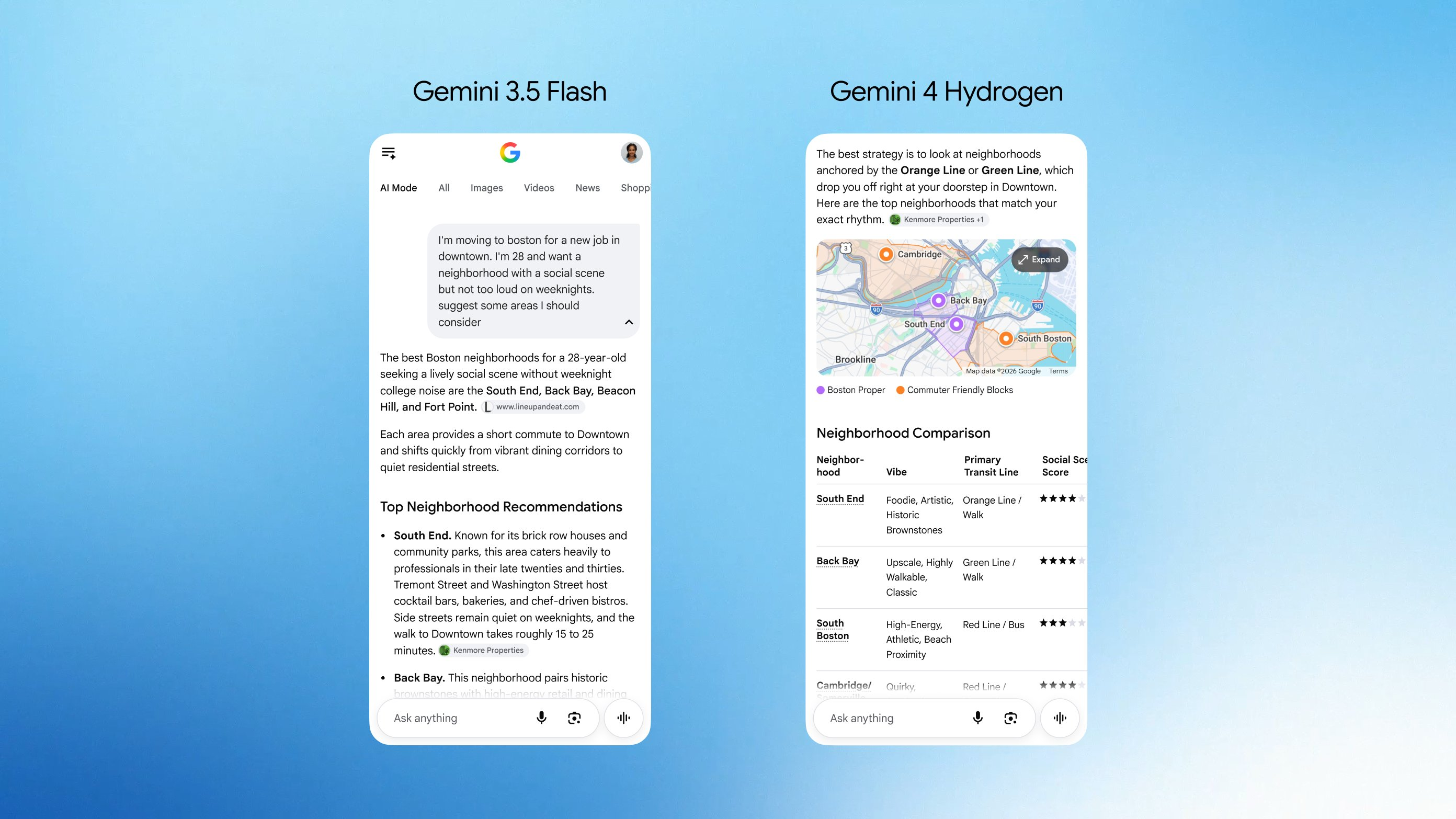
Visual aids and formatting have also seen substantial upgrades. AI Mode answers powered by Hydrogen now routinely incorporate dynamic visual elements, including embedded images, structured response formats, detailed comparison tables, and customized interactive tools. These enhancements are deployed uniformly across all languages currently supported by AI Mode, ensuring linguistic parity for international user bases.
Impact on AI Overviews and Search Visibility
While AI Mode represents the direct conversational interface of Google Search, the inclusion of Gemini 4 Hydrogen within AI Overviews carries direct ramifications for the visibility of third-party publishers. Robby Stein’s official announcement confirmed that Hydrogen is actively deployed to handle "the hardest questions in AI Overviews," signifying a division of labor where simpler queries may continue to rely on lighter, legacy infrastructure, while computationally demanding or ambiguous queries are routed to the new flagship model.
This bifurcation complicates citation tracking. Publishers and SEO data providers who monitor how often Google cites their domains within generative summaries must now account for a structural shift that occurred mid-month. Because the model change took place on November 12—merely 48 hours after the initiation of the November core update—analysts face a dual-variable environment. Pinpointing whether a drop or surge in organic referral traffic stems from algorithmic ranking adjustments or the altered citation patterns of Gemini 4 Hydrogen requires rigorous segmentation of web analytics data.
Although Google asserts that the model’s enhanced query fan-out logic results in a greater overall volume of web links being displayed, the company has not published quantitative figures detailing the precise shift in citation frequency per query type. Consequently, digital marketing teams must rely on first-party telemetry, examining internal server logs, Google Search Console performance reports, and specialized third-party tracking tools to measure the localized impact on their specific niches.
Strategic Implications for Publishers and SEO Professionals
The deployment of Gemini 4 Hydrogen underscores the continuous transition of search engines from deterministic keyword-matching systems to autonomous synthesis engines. For content creators and web publishers, this paradigm shift demands a re-evaluation of content optimization strategies.
Traditional optimization focused heavily on exact-match keywords and top-of-funnel informational queries. However, as models like Hydrogen become adept at synthesizing answers to multi-part, highly specific questions via query fan-out, the value of deep, granular, and authoritative content increases. When AI models break a complex query into subtopics, they pull supplementary data points from specialized sites that comprehensively answer niche aspects of the user’s intent.
To maintain visibility in an ecosystem dominated by advanced generative models, publishers are advised to focus on several key pillars:
- Data Segmentation and Historical Baselining: Webmasters should clearly mark November 10 (the start of the core update) and November 12 (the rollout of Gemini 4 Hydrogen) in their analytics platforms. Comparing performance metrics strictly across pre- and post-transition windows helps mitigate false assumptions regarding traffic volatility.
- Comprehensive Structural Formatting: Because Gemini 4 Hydrogen aggressively utilizes structured responses, comparison tables, and visual aids, content that naturally incorporates clear data tables, bulleted summaries, and logical semantic hierarchies is more likely to be parsed and cited effectively.
- Authority and Depth: With the model handling the most difficult inquiries in AI Overviews, surface-level content that merely regurgitates basic facts faces a higher risk of disintermediation. First-party research, expert commentary, and highly specific domain expertise provide the unique informational inputs that advanced query fan-out mechanisms require.
Looking Ahead
As the November core update approaches its official completion date and Google refines the operational parameters of the Gemini 4 family, industry observers await further technical documentation regarding how the company classifies "hardest questions" within AI Overviews. Until official guidelines or classification taxonomies are published, digital analysts must rely on empirical observation to map the behavioral tendencies of Gemini 4 Hydrogen.
The rapid succession of model deployments—ranging from the introduction of Argon and Carbon for power users to the universal adoption of Hydrogen for the general public—demonstrates Google’s commitment to maintaining a fast-paced release cycle for generative search infrastructure. For the digital ecosystem, adapting to this fluid environment requires continuous monitoring, agile content strategies, and a sophisticated understanding of how large language model updates intersect with traditional search algorithms.