AI Marketing Agents: Revolutionizing Social Media Management Through Autonomous Workflows

Social media teams today grapple with an unprecedented capacity problem, facing an ever-expanding array of platforms, a deluge of messages, and never enough hours to manage it all manually. This pervasive challenge is being decisively addressed by the advent of AI marketing agents, sophisticated software programs designed to autonomously handle multi-step tasks – from generating compelling content and monitoring real-time trends to routing customer messages – all without requiring human direction for every single action. This guide delves into the intricate process of creating such agents for a robust AI marketing strategy, covering everything from selecting appropriate frameworks and architectural designs to integrating agents with live social data and establishing critical guardrails for brand consistency. Whether one is a seasoned marketer exploring no-code AI tools or a developer crafting bespoke workflows, a clear roadmap from conceptualization to deployment is essential in this rapidly evolving landscape.
The evolution of social media management has been a journey from manual, labor-intensive processes to increasingly automated systems. Early tools offered basic scheduling and analytics, providing much-needed relief but still requiring significant human oversight. The rise of traditional marketing automation introduced rule-based systems, streamlining repetitive tasks like email sequences or basic post scheduling. However, these systems, while efficient, operated within rigid parameters. They lacked the adaptability, contextual understanding, and proactive decision-making capabilities required to navigate the dynamic, often unpredictable, world of social media. The sheer volume of platforms, the rapid pace of content consumption, and the expectation for real-time engagement have created a bottleneck that human teams, no matter how dedicated, struggle to overcome. This is where AI agents emerge as a transformative force, offering a new paradigm that moves beyond simple automation to genuine autonomy.
Understanding the Autonomous AI Agent
At its core, an AI agent is a software program leveraging a large language model (LLM) as its cognitive engine. Unlike a conventional chatbot, which typically responds to direct questions based on pre-programmed scripts or a limited understanding of conversational context, an AI agent possesses the ability to plan, execute, and adapt. It can make independent decisions, interact with external tools and APIs, and complete complex, multi-step tasks without constant human intervention. This fundamental difference marks a significant leap from reactive to proactive digital engagement. Every AI agent operates on four core components: a sophisticated LLM for reasoning, a memory system to retain context and learning, a set of tools to interact with the external environment, and a planning module to break down complex goals into actionable steps. These elements empower agents to move beyond simple responses, enabling them to strategize, learn, and act in dynamic environments.
The strategic shift towards AI-driven workflows is increasingly recognized as a potent growth lever for entire marketing departments. According to The 2025 Sprout Social Index, a comprehensive industry report, a significant 54% of marketing leaders believe that AI will be the primary catalyst empowering them to grow their teams moving forward. This statistic underscores a critical insight: autonomous systems are not merely tools for replacing human roles but rather for augmenting and scaling team capabilities, allowing human talent to focus on higher-level strategy, creativity, and nuanced decision-making.
Traditional social media automation, while valuable, adheres to fixed, predefined rules. AI marketing automation, powered by agents, transcends these limitations by reading context, adapting to new information, and independently handling multi-step tasks without the constraints of rigid decision trees. This advanced level of autonomy is rapidly becoming an industry standard. The 2025 Sprout Social Index further reveals that an overwhelming 97% of marketing leaders consider it absolutely crucial for marketers to possess the knowledge and skills to effectively use AI in their daily social media work. This highlights an undeniable imperative for professionals to embrace and integrate AI into their operational frameworks.
Autonomous agents demonstrably outperform standard automation in several key areas. For instance, while traditional automation can schedule posts, an AI agent can dynamically generate diverse content variations based on real-time trend analysis and audience sentiment, optimizing for engagement. Where standard tools might provide basic analytics, an agent can proactively identify emerging conversations, predict potential crises, and even suggest pre-emptive communication strategies. Furthermore, agents can engage in personalized customer interactions that evolve beyond simple FAQs, understanding user intent and escalating complex issues appropriately. The transition to an AI-driven social media workflow is thus not merely an efficiency gain; it’s a strategic enhancement that allows departments to achieve unprecedented levels of agility and responsiveness.
Integrated AI Solutions: Sprout Social’s Approach
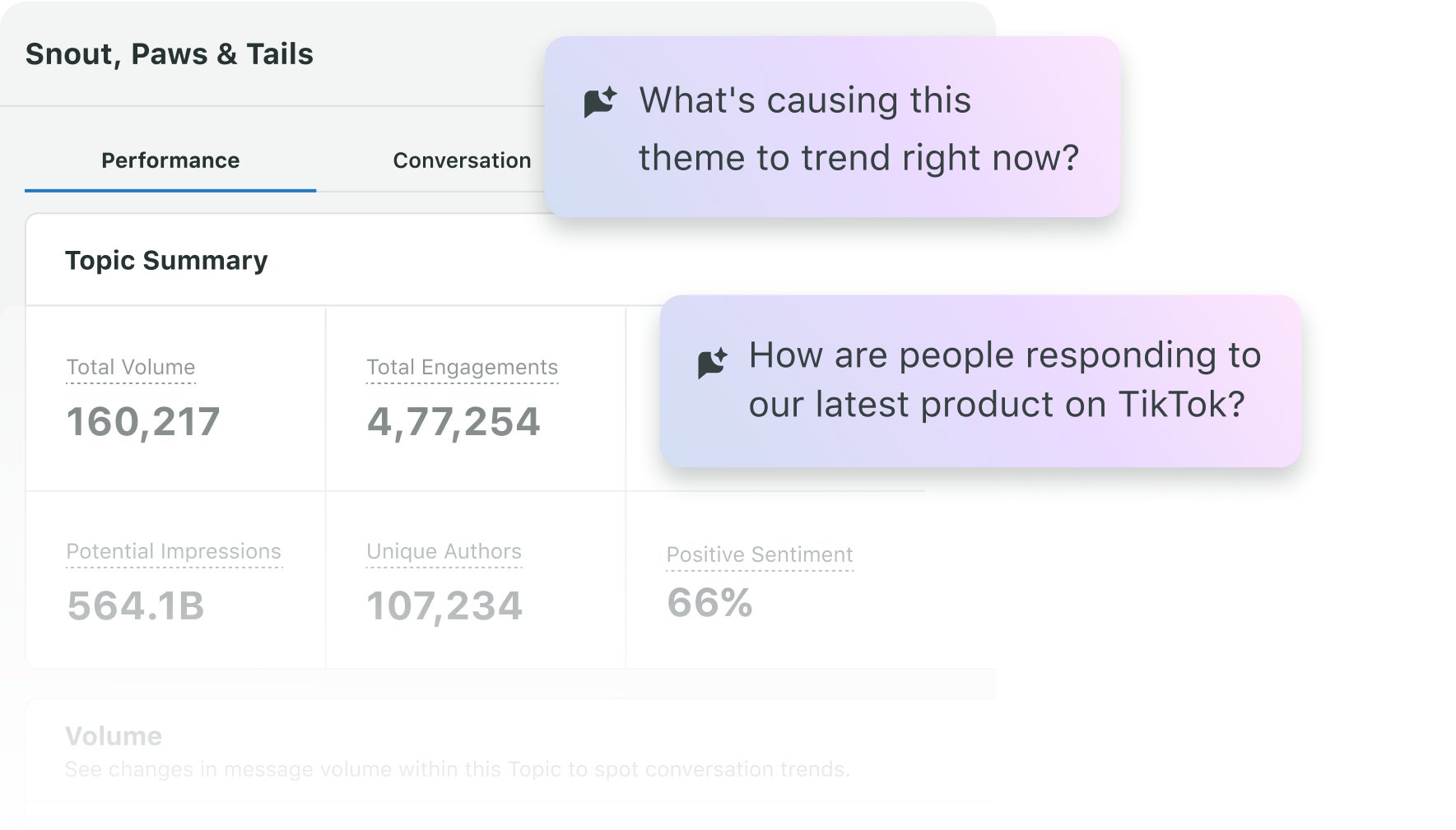
For organizations not yet ready to undertake the complex task of building custom AI agents from the ground up, integrated solutions offer a powerful alternative. A social intelligence platform that seamlessly incorporates autonomous capabilities directly into existing workflows becomes indispensable. Sprout Social exemplifies this approach, moving beyond basic management functions by leveraging agentic AI to transform real-time social signals into a coordinated, actionable business strategy.
Sprout’s proprietary AI agent, Trellis, acts as a connective tissue across an entire operation. It excels at revealing the "why" behind emerging trends, moving beyond surface-level data to provide deeper insights, and subsequently automating the path to action. This allows teams to tactically apply Sprout’s AI to solve daily capacity problems. For instance, Trellis can analyze social listening data to identify brewing trends or potential crises, providing immediate insights and suggesting next steps before issues escalate. Its AI Assist capabilities can generate fresh caption ideas, optimize send times based on audience behavior, and refine content to resonate more effectively. With Sprout, social media management evolves from mere content dissemination to a sophisticated, intelligence-driven operation that fuels decisive, automated action across the entire team. This integrated approach offers a streamlined entry point for businesses looking to harness the power of AI without the overhead of custom development.
Architecting Autonomy: Building Your AI Marketing Agent
The journey to building an effective AI agent begins with selecting the right development environment or framework. This choice hinges significantly on the technical proficiency of the team and whether the strategy involves no-code AI marketing tools or custom-coded solutions.

| Framework Type | Best For | Examples |
|---|---|---|
| No-code platforms | Marketers without coding experience | n8n, Relevance AI, ChatGPT GPT builder |
| Low-code solutions | Teams seeking customization without full development | Flowise, LangFlow |
| Code-based frameworks | Developers requiring full control | LangChain, CrewAI, AutoGen |
Each of these frameworks establishes connectivity with social media platforms primarily through REST APIs, which are standardized protocols for software to exchange data. No-code AI tools typically utilize visual drag-and-drop interfaces, simplifying the process of mapping this logic. Conversely, code-based frameworks offer developers granular control over every API call and webhook, allowing for highly customized and complex integrations. Platforms like Sprout Social provide robust APIs that enable agents to pull critical publishing data and engagement metrics directly into their workflows, ensuring they operate on accurate, real-time social intelligence.
Agent architecture, the structural design dictating how an agent processes information and completes tasks, is equally crucial. The choice of AI workflow pattern directly impacts system scalability and performance. Most social media marketing teams wisely adopt a "crawl, walk, run" approach, commencing with a single agent for a specific use case, then progressively expanding into more complex multi-agent workflows as their needs and understanding mature. Common architectural patterns include:
- Single-Agent Reactive: An agent designed for a specific, immediate task, like responding to direct messages.
- Single-Agent Proactive: An agent that monitors for specific triggers and initiates actions, such as identifying a trending topic and drafting content.
- Multi-Agent Collaborative: Multiple agents working together, each specializing in a different part of a larger workflow (e.g., one agent monitors trends, another generates content, a third schedules it).
- Hierarchical Agents: A primary "manager" agent that delegates tasks to specialized "worker" agents, ideal for complex, multi-stage campaigns.
Step-by-Step Agent Creation
Building an autonomous system demands a structured progression from high-level strategy to meticulous technical execution. The development process, while handling sophisticated logic, adheres to a clear path designed to ensure reliability, brand safety, and optimal performance.
Step 1: Define the Goal and Constraints
The initial and most critical step is to define a single, specific, and measurable task for the agent. Vague objectives inevitably lead to unreliable agents. Examples include responding to frequently asked questions, generating variations of a social post, or monitoring brand mentions for sentiment shifts. Effective deployment mandates a strategic "crawl, walk, run" methodology. As Tatiana Holyfield, former VP of Social at SiriusXM, emphasized in the Sprout Social webinar "Data to Dollars: Leveraging Social Data for Increased Investment," grounding initial goals in audience data is paramount for long-term success. Holyfield advocates for "really understanding your audience and then setting goals accordingly," which "really allows you to test and learn and be strategic with your budget." This approach enables teams to "start small and scale up," ensuring alignment with leadership on what works and what doesn’t.
Following this guidance, a detailed system prompt must be crafted. This prompt serves as the agent’s digital job description, clearly delineating its responsibilities and limitations. The clearer the scope, the more predictable and on-brand the output. By initiating with a small, data-backed pilot – for instance, an agent designed to identify high-intent customer queries – organizations can effectively demonstrate the technology’s value to leadership before scaling to more intricate multi-agent workflows. Existing parameters from social management workflows, such as tracked brand keywords or campaign hashtags, can serve as excellent initial task boundaries for the agent.
Step 2: Select the Model and Framework
The choice of large language model (LLM) is pivotal, as it dictates the agent’s reasoning quality, contextual understanding, and the "context window" – the amount of information it can process at any given time. High-capacity models like GPT-4 and Claude 3.5 Sonnet are adept at handling complex, nuanced tasks, offering superior reasoning. For simpler, high-volume jobs, open-source models can be a more cost-effective and performant choice.
The framework selected must align with the team’s technical skill level. As previously discussed, no-code platforms are ideal for marketers, low-code solutions offer flexibility for teams needing some customization, and code-based frameworks provide developers with complete control.
Step 3: Add Tools, Memory, and Test Loop
Tools are the essential components that transform an agent from a mere text generator into an autonomous system capable of taking real actions. These tools connect the agent to external APIs, databases, and search engines, allowing it to gather information, interact with other software, and perform specific functions.
Memory in an AI agent operates on two distinct layers:
- Short-term memory: This holds the context of the current conversation or task, enabling the agent to maintain coherence and continuity within a single interaction.
- Long-term memory: Employing a vector database, this layer stores and retrieves past interactions, user preferences, and historical data. This allows the agent to recall information across multiple sessions, personalize responses, and learn from its experiences over time.
Before public deployment, rigorous testing with real message data is non-negotiable to ensure the agent functions reliably and as intended.
Connecting Your Agent to Social Data, Tools, and Memory
Integration is the crucial phase where an agent gains access to the necessary data to operate autonomously. This involves connecting it to three primary types of sources:
- Social Data: Real-time information from platforms like Twitter, Facebook, Instagram, and LinkedIn, including posts, comments, direct messages, and engagement metrics.
- Internal Data: Proprietary company data such as CRM records, product catalogs, customer service histories, and brand guidelines.
- External Data: Information from third-party APIs, news feeds, trend analysis tools, and general web search results.
To ensure secure and controlled access, OAuth and API authentication protocols must be employed. Agents should only be granted "scoped access," meaning permissions are strictly limited to what is necessary for the assigned task, never broader. Furthermore, establishing a centralized asset library for agent-generated content is critical. This allows human teams to review and approve outputs before they go live, maintaining brand consistency and mitigating risks.
Guardrails and Governance for Safe, On-Brand Automation
Brand governance is paramount in the realm of AI agents, demanding firm rules that dictate what an agent can publish and how it responds. Without robust guardrails, even a meticulously built agent risks producing off-brand, inaccurate, or potentially harmful outputs. AI safety should not be an afterthought but a fundamental design requirement from the outset.
Key safety measures to implement before deployment include:
- Detailed System Prompts: As discussed, these define the agent’s personality, tone of voice, brand guidelines, and prohibited actions.
- Content Filters: Implementing output filters that scan generated content for keywords, sentiment, and adherence to brand values before publication.
- Human-in-the-Loop Approval: For sensitive responses or critical content, requiring human review and approval before anything goes live.
- Ethical Guidelines: Establishing clear ethical boundaries for data usage, privacy, and responsible AI behavior.
- Audit Trails: Maintaining comprehensive logs of all agent actions and decisions for accountability and troubleshooting.
- Regular Training and Updates: Continuously refining the agent’s knowledge base and rules to adapt to evolving brand guidelines and social media norms.
Testing and Evaluating Your AI Agent
Thorough testing is essential to confirm an agent’s reliability before it interacts with a live audience. The evaluation process should encompass four distinct layers:
- Unit Tests: Verifying individual components and functions of the agent work as expected.
- Integration Tests: Ensuring seamless interaction between the agent and all connected external tools and data sources.
- User Acceptance Testing (UAT): Real-world testing by human users to assess the agent’s performance from an end-user perspective, identifying usability issues and unexpected behaviors.
- Adversarial Testing: Intentionally attempting to provoke the agent into producing undesirable or off-brand outputs to identify and mitigate vulnerabilities.
Consistent tracking of performance benchmarks is crucial. AI agents, much like human teams, can experience "drift" over time due to updates in social media platforms’ APIs, shifts in audience behavior, or changes in external data sources. Regular evaluation and recalibration are necessary to maintain the system’s accuracy, relevance, and effectiveness.
Examples of AI Agents Driving Social Results
Real-world applications demonstrate the transformative potential of AI agents when the right model connects with the right data:
- Proactive Customer Service Agent: An agent monitors social media for high-intent customer queries or complaints, automatically categorizing them, providing initial helpful responses, and routing complex issues to the appropriate human support team. This drastically reduces response times and improves customer satisfaction.
- Dynamic Content Generation & Optimization Agent: This agent analyzes trending topics, audience engagement patterns, and competitor activity in real-time. It then generates diverse content variations, suggests optimal posting times, and even adapts existing content for different platforms, maximizing reach and engagement.
- Competitive Intelligence & Market Analysis Agent: An agent continuously monitors competitor social activity, industry news, and consumer sentiment across various platforms. It identifies emerging trends, flags potential threats or opportunities, and compiles concise reports for strategic decision-making, providing a significant competitive edge.
- Influencer Identification & Outreach Agent: By analyzing vast amounts of social data, an agent can identify relevant micro-influencers based on audience demographics, engagement rates, and content alignment with brand values, then even draft initial outreach messages.
- Crisis Monitoring & Rapid Response Agent: This agent continuously scans for mentions of a brand or keywords associated with potential crises. Upon detection, it immediately alerts relevant teams, provides a summary of the situation, and can even draft holding statements for human review, significantly reducing response times during critical events.
Each of these agents performs optimally when provided with access to clean, structured social data. The richer and more comprehensive the data pipeline, the more precise and impactful the agent’s decisions and actions will be.
Summary and Next Steps
Building an effective AI agent for social media marketing hinges on four critical pillars: a clearly defined goal, the selection of an appropriate model, secure integrations with relevant data sources and tools, and continuous evaluation. The most successful implementations typically begin with a focused use case, demonstrating its value, and then strategically scale. Organizations achieving the strongest results are not necessarily deploying the most intricate systems, but rather building focused agents with well-defined boundaries and access to reliable, high-quality data.
The future of social media marketing is undeniably intertwined with autonomous AI. As these technologies mature, they will not only solve the current capacity crisis but also unlock new avenues for creativity, hyper-personalization, and strategic insight, fundamentally reshaping how brands connect with their audiences. For those curious about how built-in AI capabilities can transform their social strategy, exploring platforms that integrate these advanced features is a logical next step.