The Death of the Social Graph: How One Veteran Creator Reclaimed Visibility in the Age of Algorithmic Interests

The fundamental mechanics of social media engagement have undergone a seismic shift, rendering the traditional "follower-based" growth model largely obsolete. For nearly two decades, digital influence was measured by the size of one’s audience; today, that metric is increasingly irrelevant. As platforms transition from the "social graph"—where connections dictate content distribution—to the "interest graph," where algorithmic curation determines visibility, creators are finding that legacy audiences no longer guarantee reach.

This structural transition is best exemplified by the recent experience of long-time digital strategist and content creator Jeff Bullas. Despite commanding a massive following of 535,000 on X (formerly Twitter), his account experienced a drastic decline in impressions by mid-2026. By June 24, 2026, daily post impressions had plummeted to approximately 200, a figure that stood in stark contrast to his historical performance. This collapse of organic reach serves as a case study for a broader digital phenomenon: the decoupling of follower counts from content discovery.
The Great Algorithmic Shift
The migration from social graphs to interest graphs represents the most significant change in platform architecture since the inception of social networking. In the early 2010s, platforms prioritized chronological feeds and follower-based distribution. If a user followed an account, they were theoretically guaranteed to see that account’s output.
By 2026, however, platforms like X have evolved to prioritize "interest-based" discovery. In this environment, the algorithm evaluates individual posts based on topical relevance, sentiment, and user engagement signals, regardless of whether the reader follows the author. Consequently, a creator with half a million followers may be invisible to their own base if their content does not trigger the specific signals the algorithm currently favors. This creates a hyper-competitive environment where human-generated content must contend with a deluge of AI-assisted output, which can be produced at scale for virtually zero cost.
Chronology of an Experiment
In response to this precipitous drop in engagement, a four-month experiment was launched in July 2026 to determine if visibility could be recovered by adapting to the interest graph.
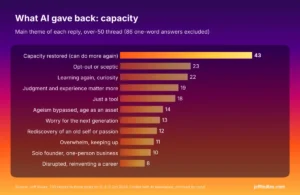
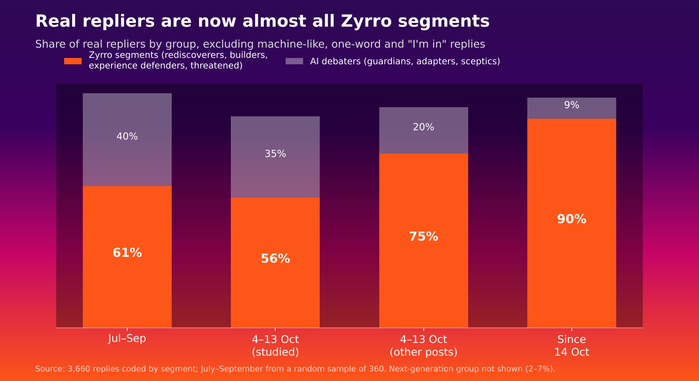
Between July and October 2026, the strategy shifted from "broadcasting" to a targeted, data-driven approach. The experiment involved rigorous daily posting, systematic analysis of platform metrics, and a qualitative review of over 3,660 individual replies.
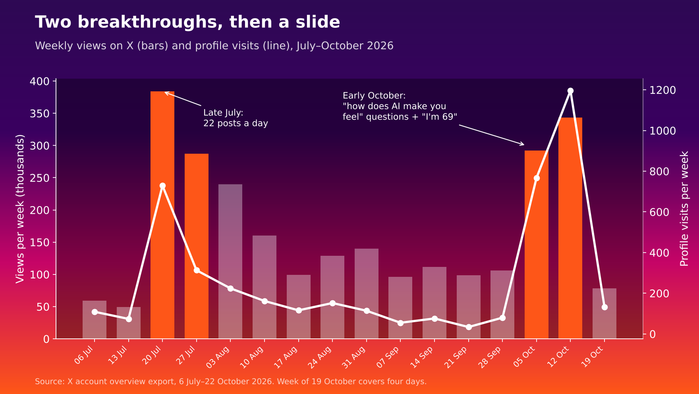
The initial phase, spanning July to September, focused on general commentary regarding Artificial Intelligence. During this period, the content failed to find a consistent audience, and engagement metrics remained stagnant. However, a pivot in mid-October—shifting the focus toward the personal experiences of professionals navigating the AI era—yielded immediate results. By late October, the account was averaging 35,000 views per day, a 17,500% increase from the June low point.
Data-Driven Insights and Engagement Metrics
The analysis of 3,660 replies from 2,020 unique individuals provided granular insights into how the new algorithm functions. A critical finding is that only one in five people interacting with the content were followers. This confirms that the platform is actively promoting content to non-followers based on the content’s perceived "interest value."
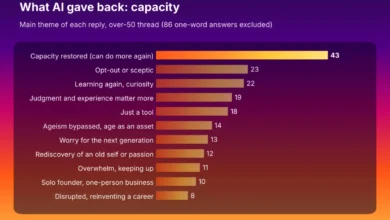
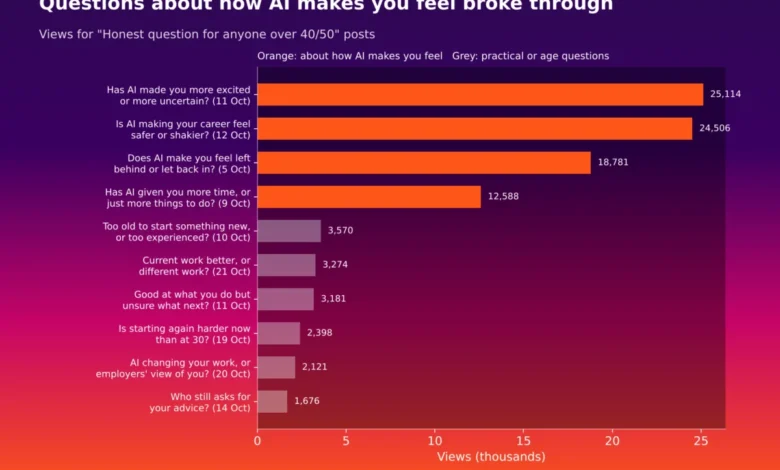
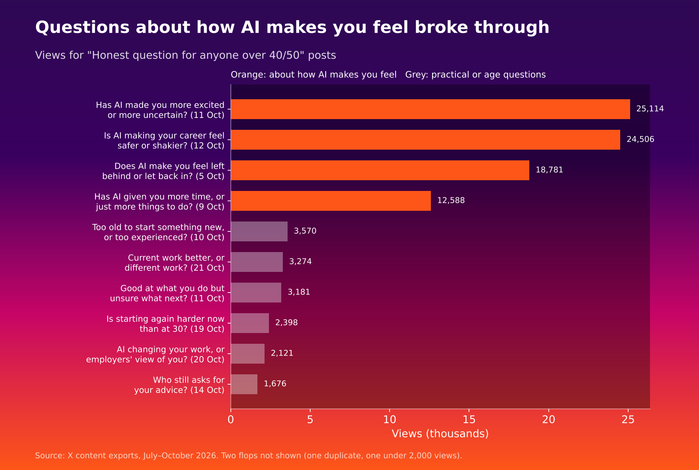
Furthermore, the research identified a "feeling-based" threshold for engagement. Questions that were purely practical or informational frequently failed to gain traction, whereas questions that probed the emotional impact of technological shifts—such as inquiries into whether AI inspires excitement or uncertainty regarding the future—consistently outperformed others. This suggests that the algorithm prioritizes content that prompts immediate, reflexive human responses.
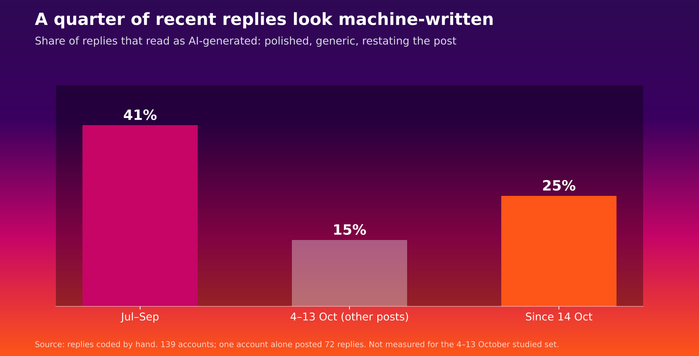
The experiment also revealed the pervasive influence of automated accounts. Data indicated that approximately 25% of replies in October were machine-generated, identified by their repetitive, polished, and largely hollow nature. This aligns with broader industry data, such as the 2025 Imperva Bad Bot Report, which noted that non-human traffic accounted for over 50% of web traffic in 2024. For creators, this necessitates a shift in how success is measured: moving away from vanity metrics like "reply counts" toward "meaningful connections" and "profile visits."
Implications for Modern Content Strategy
The shift to the interest graph mandates a fundamental restructuring of digital strategy for professionals and brands. The primary takeaways from this shift include:
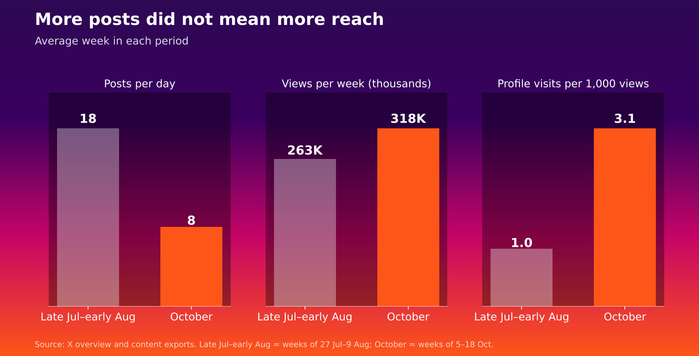
- Prioritizing Intent Over Volume: High-frequency posting is no longer a viable strategy for growth. The data indicates that increasing the volume of posts does not correlate with increased reach. Instead, quality and relevance to a specific, defined audience are the primary drivers of discovery.
- The Role of Personal Narrative: The most successful content was not that which offered the most "clever" analysis, but that which shared personal, vulnerable stories. Personal detail serves as a signal to the algorithm that the content is unique and human-centric, helping it distinguish the post from mass-produced AI content.
- Conversational Depth: Replying to commenters is significantly more impactful than simply publishing new posts. Engagement serves as the "conversation" that keeps users on the platform, which the algorithm rewards with greater reach.
- Platform Risk Mitigation: Relying solely on social media algorithms is increasingly perilous. The experiment reinforces the necessity of moving high-value traffic off-platform to owned assets, such as newsletters, websites, or proprietary waitlists.
Broader Industry Context
Industry analysts suggest that this transition is a defensive maneuver by platforms to combat the "dead internet theory," where bot-generated content threatens to overwhelm human users. By moving to an interest-based model, platforms can more effectively curate high-quality, human-centric interactions, thereby increasing user retention.
However, this also places immense pressure on creators. The ability to "crack the code" of an algorithm is transitory; as soon as a creator identifies a successful pattern, the platform’s underlying logic may shift again. For professionals, this highlights the "career-long" dilemma: the need to constantly redefine one’s value proposition in a digital landscape that prioritizes current relevance over historical status.
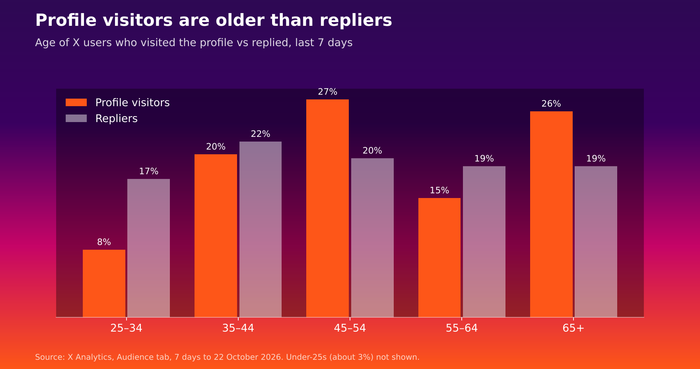
Ultimately, the lesson of the 2026 data is that influence is no longer a static asset accumulated through follower growth. Instead, it is a dynamic, ongoing process of being recognized by the right people for the right expertise. For those who built their reputation in the era of the social graph, the challenge is no longer just how to be "seen," but rather ensuring that when they are seen, they are connecting with an audience that serves a long-term professional or personal objective. As platforms continue to iterate, the most resilient creators will be those who prioritize community and identity over the ephemeral metrics of a follower count.