Luxury Retail CEOs Prioritize "Dream Selling" and Experiential Value Over Price Amidst Economic Uncertainty

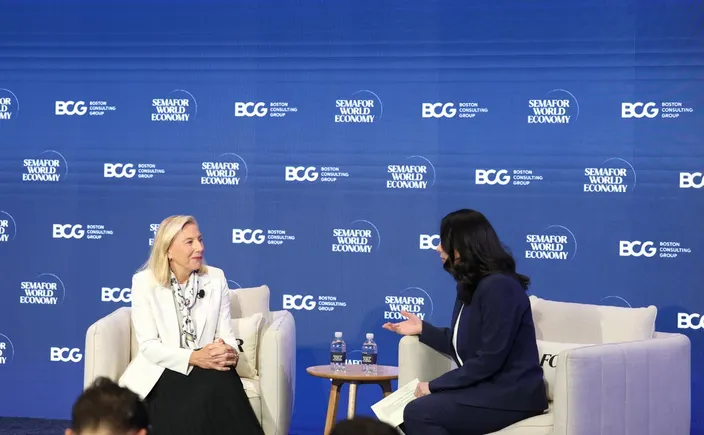
The landscape of luxury retail is undergoing a significant evolution, with industry leaders increasingly emphasizing the creation of compelling brand narratives and immersive customer experiences over mere price points. At the Semafor World Economy summit in Washington, D.C., prominent figures from Ralph Lauren and Tapestry, the parent company of Coach, articulated a strategy that prioritizes emotional connection and perceived value, even as consumers grapple with persistent macroeconomic pressures and fluctuating sentiment. This approach, they argue, is crucial for maintaining brand resilience and fostering customer loyalty in an era where the definition of "value" extends far beyond the cost of an item.
The Art of Selling a Dream: Ralph Lauren’s Vision
Patrice Louvet, President and CEO of Ralph Lauren, articulated this sentiment with clarity, stating at the summit on Wednesday that the luxury fashion industry fundamentally "sells a dream." He challenged the common simplification of value solely to price, asserting that for luxury brands, the equation is considerably more nuanced.
"Often, people just simplify this whole value equation to what’s the price for the item, and in this industry, it’s so much more than that," Louvet explained to the assembled audience. He elaborated on Ralph Lauren’s internal framework for defining value, which he described as a multifaceted calculation: the quality of the brand’s storytelling, the excellence of its products, and the richness of the shopping experience, all divided by the price. This holistic approach, Louvet suggested, is a key factor in the enduring resilience of Ralph Lauren’s customer base. Despite broader economic headwinds, the brand’s clientele demonstrates consistent spending power, with an average income typically exceeding $100,000, underscoring their capacity and willingness to invest in the brand’s perceived value.
The concept of "selling a dream" at Ralph Lauren translates into a strategic focus on cultivating positive and memorable interactions that transcend the core apparel offerings. A prime example of this philosophy in action is the success of "Ralph’s Coffee." This initiative, which first debuted within a Ralph Lauren flagship store in New York City in 2014, has since expanded significantly, now encompassing several global cafes and even mobile coffee trucks. This strategic diversification into an adjacent, experience-driven sector allows the brand to engage with consumers in a more relaxed and accessible setting, reinforcing the brand’s aspirational lifestyle even outside the traditional retail environment.
Louvet further emphasized the growing importance of tangible, in-person experiences in an increasingly digital world. As e-commerce continues its upward trajectory and artificial intelligence promises to further streamline online transactions, Louvet anticipates a heightened consumer desire for richer, more authentic physical encounters. Initiatives like Ralph’s Coffee, or even the seemingly minor but impactful gesture of managing customer wait times outside stores, are integral components of Ralph Lauren’s broader storytelling strategy. These elements contribute to an overall brand narrative that positions the customer’s visit not merely as a transaction, but as an invitation into the brand’s ethos.
"When you come into our stores, the concept is not ‘welcome to our stores,’" Louvet remarked, drawing a distinction that resonated with the audience. "The concept is ‘welcome to our home.’" This carefully chosen framing aims to foster a sense of belonging and personal connection, elevating the retail space into an extension of the brand’s aspirational identity.
Tapestry: Connecting with the Next Generation Through Experience
Joanne Crevoiserat, CEO of Tapestry, echoed this sentiment, highlighting that experiences are equally central to her company’s strategy for delivering value and maintaining pricing integrity. Tapestry, a global luxury group that includes renowned brands such as Coach, Kate Spade, and Stuart Weitzman, is keenly focused on connecting with a younger demographic.
"Our focus is on this young consumer and people ask me all the time, ‘Isn’t this young consumer under pressure?’ And, ‘How is it that your business is so healthy, given… the backdrop?’" Crevoiserat stated at the conference on Tuesday, acknowledging the prevalent concerns about the economic well-being of this demographic. She attributed the company’s sustained health to a deep-seated commitment to understanding their clientele. "And the answer to that question is: We stay close to our consumers. We really want to understand what they’re going through, how they’re feeling, so that we can deliver not only great product, but experiences in marketing."
For the Coach brand, this experiential focus is manifest in initiatives like the "craftsmanship bars" found in select locations. These in-store stations allow customers to personalize certain bags, offering a tangible way to co-create a product that is uniquely their own. Crevoiserat noted that this approach fosters a sense of ownership and individuality, particularly appealing to younger consumers who often seek to express their personal style and connect with friends through shared creative endeavors. This personalization goes beyond a simple transaction; it’s an engagement that allows customers to imbue their purchases with personal meaning, thereby enhancing the perceived value.
Building an emotional connection with Tapestry’s brands is a strategic imperative, regardless of the prevailing macroeconomic climate. Crevoiserat’s remarks come at a time when consumer sentiment in the United States has reached historically low levels, according to recent reports indicating inflation’s persistent impact. This backdrop of economic anxiety underscores the importance of brand loyalty built on more than just price.
Adding to these economic pressures has been a year of volatile and evolving tariff rates in the U.S. Despite facing increased costs stemming from tariffs related to the International Emergency Economic Powers Act (IEEPA), Tapestry opted against passing these increases directly onto consumers. This decision highlights a deliberate strategy to absorb these costs rather than alienate price-sensitive customers.
"The way we think about price in our business is… based on what the consumer sees," Crevoiserat explained. "We are focused on delivering value into the marketplace that the consumer recognizes. So we did not… take price up in response. We doubled down on our capabilities to understand the consumer and deliver innovation." This approach suggests a long-term perspective, prioritizing sustained customer relationships and brand equity over short-term profit margins derived from price hikes. By focusing on innovation and a deeper understanding of consumer desires, Tapestry aims to create value that is perceived as inherent to the brand, rather than a reflection of fluctuating input costs.
The Broader Economic Context and Industry Implications
The insights shared by Louvet and Crevoiserat arrive at a critical juncture for the retail sector. The period between 2022 and early 2024 has been characterized by persistent inflation, rising interest rates, and a general sense of economic uncertainty. Data from the U.S. Bureau of Labor Statistics has shown that inflation, while moderating from its peak, continues to impact household budgets. Consumer sentiment surveys, such as those conducted by the University of Michigan, have repeatedly indicated low levels of confidence regarding personal finances and the overall economic outlook.
In this environment, luxury brands that can successfully abstract their value proposition beyond price are better positioned to weather economic downturns. The emphasis on "dream selling" and experiential value serves as a buffer against the commoditization that can plague brands more susceptible to price competition. By cultivating a strong emotional connection and offering unique, memorable experiences, Ralph Lauren and Tapestry are aiming to build a form of brand loyalty that is less elastic to economic fluctuations.
The expansion of Ralph Lauren’s coffee concept, for instance, can be viewed as a strategic move to diversify revenue streams and create touchpoints that reinforce brand identity in a less transactional manner. Similarly, Tapestry’s investment in in-store customization and personalized experiences at Coach taps into the growing consumer desire for authenticity and self-expression, particularly among younger demographics who are digital natives but also value tangible, unique interactions.
The mention of IEEPA-related tariffs by Crevoiserat also sheds light on the complex geopolitical and economic factors influencing global retail operations. These tariffs, often imposed in response to trade disputes or national security concerns, can significantly impact the cost of goods for retailers reliant on international supply chains. Tapestry’s decision not to raise prices in response suggests a strategic calculation that maintaining customer trust and loyalty is paramount, even if it means absorbing some of the increased costs. This contrasts with some segments of the retail market that have readily passed on increased costs to consumers, potentially leading to reduced sales volumes or a shift in consumer preference towards more affordable alternatives.
Future Outlook and Strategic Considerations
The strategies articulated by these luxury leaders offer a roadmap for navigating the complexities of the modern consumer market. The ability to craft compelling narratives, offer immersive experiences, and foster deep emotional connections appears to be a more sustainable path to long-term success than relying solely on price competition or product innovation.
The continued growth of e-commerce and the increasing sophistication of AI tools will likely further amplify the demand for unique in-person experiences. Retailers that can effectively blend the convenience of digital channels with the richness of physical interactions will be best positioned for future growth. This might involve leveraging technology to enhance in-store experiences, such as augmented reality try-ons or personalized digital recommendations that complement the physical retail journey.
Moreover, the focus on understanding the evolving needs and desires of specific consumer segments, particularly younger generations, is critical. As Crevoiserat highlighted, these consumers are not simply seeking products; they are seeking brands that align with their values, offer opportunities for self-expression, and provide memorable experiences.
The success of this "dream selling" approach hinges on authentic execution and a consistent brand message. Consumers, especially in the luxury segment, are discerning and can quickly identify brands that are merely going through the motions. For Ralph Lauren and Tapestry, the commitment to storytelling, quality, and personalized experiences appears to be a foundational element of their enduring appeal and their resilience in the face of economic uncertainty. As the global economic landscape continues to shift, the luxury retail sector’s ability to "sell a dream" will undoubtedly remain a key differentiator and a driver of sustained value.
Related posts: