Mastering the BFCM Playbook: How Brands Can Stand Out in a Trillion-Dollar Holiday Economy

Black Friday and Cyber Monday (BFCM) represent the most exhilarating yet daunting period of the retail calendar for business owners, digital marketers, and brand strategists alike. In an era where steep discounts and aggressive promotions have become standard table stakes for consumers, simply launching a generic sale often feels like shouting into a crowded digital room. Yet, capturing consumer attention during this high-spend window remains critical for annual revenue targets.
According to economic data and retail analytics, the financial stakes have never been higher. Adobe Analytics reported that Black Friday online sales alone generated a record $11.8 billion in 2025—marking a 9.1 percent increase from the $10.8 billion recorded in 2024. Meanwhile, Cyber Monday reached an unprecedented $14.25 billion. The broader 2025 holiday shopping season culminated in a historic $257.8 billion in total online spending. Looking ahead, the National Retail Federation (NRF) forecasts that total winter holiday sales will surpass $1 trillion for the first time in history during the 2026 season, cementing BFCM as a vital economic engine.

With BFCM 2026 officially scheduled for November 27 and November 30, respectively, brands face the dual challenge of cutting through intense noise while managing consumer expectations. To navigate this high-pressure landscape, businesses are deploying a sophisticated mix of public relations, value-driven positioning, exclusivity, user-generated content, and calculated disruption.
Leveraging Lifestyle Publications and Editorial Backlinks
Long before physical or digital storefronts open their virtual doors, lifestyle media outlets begin preparing exhaustive holiday gift guides and product roundups. Major publications such as Women’s Health, Cosmopolitan, and Good Housekeeping routinely initiate their Black Friday editorial campaigns weeks in advance. These outlets assign dedicated newsroom staff to continuously update product reviews and affiliate-driven roundups throughout the shopping weekend.
For brands operating within targeted consumer niches, early outreach to lifestyle journalists offers compounding returns. Offering affiliate commissions or exclusive early-access discount codes to journalists can secure valuable product placement. Beyond immediate sales conversion, securing backlinks from high-authority media domains significantly boosts search engine optimization (SEO) performance. Furthermore, these proactive public relations efforts help brands build enduring relationships with niche media professionals, ensuring long-term brand recall well beyond the fourth quarter.

Showcasing Brand Values to Counter Over-Consumerism
While millions of shoppers hunt for deep discounts, a growing segment of the consumer base experiences fatigue from the hyper-consumerism traditionally associated with BFCM. Brands that successfully align their operations with core environmental and social values often capture high levels of consumer trust by taking a stand against traditional retail frenzy.
The outdoor apparel industry has pioneered this philosophical shift. For years, retailer REI has closed its physical storefronts entirely on Black Friday, giving employees paid time off and encouraging its loyal customer base to participate in the #OptOutside movement. Similarly, Patagonia famously ran a full-page advertisement in The New York Times bearing the headline "Don’t Buy This Jacket," reinforcing its Common Threads initiative aimed at combating excessive consumption.
Other brands have leveraged the weekend for direct philanthropic impact rather than margin compression. Cosmetics company Lush once introduced thousands of limited-edition orangutan soaps during Black Friday weekend, committing 100 percent of proceeds to the Sumatran Orangutan Society, resulting in a rapid sellout. Sustainable footwear brand Allbirds adopted a similarly counter-intuitive approach by raising prices by $1 across its entire inventory during the event, directing all incremental proceeds to the youth-led climate movement Fridays For Future.

Cultivating Scarcity Through Strategic Exclusivity
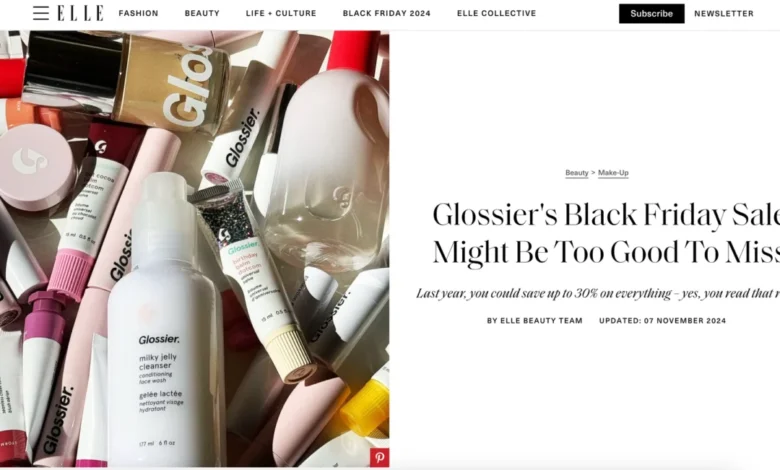
For brands whose product lines command high perceived value, maintaining pricing integrity while participating in the cultural moment requires careful calibration. Cult skincare brand Glossier addresses this by limiting its promotional calendar to a single sitewide sale per year, anchored around Black Friday.
By refusing to discount products at any other point in the calendar, Glossier transforms its annual sale into an organically newsworthy event. Major fashion and beauty publications cover the impending event weeks in advance, while dedicated consumer communities on platforms like Reddit generate organic anticipation. This artificial scarcity drives massive conversion velocity over a compressed timeframe without permanently eroding brand equity.
Alternatively, brands can leverage invitation-only mechanics to foster deep customer loyalty. Similar to Amazon’s Prime Day invite-only structures, businesses can segment their existing email subscriber lists or loyalty program members to deliver personalized discount codes. While requiring greater operational effort, this personalized approach reassures high-frequency buyers that their ongoing patronage is valued above transactional acquisition.

Deploying Anti-Marketing and Disruption Tactics
To truly subvert the predictable sea of promotional banners, a subset of brands has embraced anti-marketing strategies—utilizing humor, irony, and outright absurdity to capture public discourse.
Cards Against Humanity has built a recurring tradition of executing disruptive Black Friday stunts. Past campaigns have included temporarily raising the price of its flagship card game by $5, launching a 99 percent off sale featuring high-value luxury items, and charging customers $5 simply for nothing in return—a stunt that reportedly generated over $70,000 in revenue. While such maneuvers require an established, cult-like audience with a high tolerance for irreverence, they demonstrate the outsized media impressions generated by breaking industry conventions.
Similarly, corporate entities have occasionally utilized simulated administrative errors to spark organic viral engagement. McDonald’s once published a cryptic social media post reading, "Black Friday Need copy and link," which rapidly accumulated tens of thousands of interactions. While heavily speculated to be a calculated campaign stunt, the resulting public discourse drove massive brand visibility. Home textile brand Brooklinen executed a comparable strategy via an intentional "mistaken" email leak from a fictional marketing intern, effectively announcing an early-access week of promotions while humanizing the brand’s digital voice.

Maximizing Reach Through User-Generated Content and Live Streaming
With marketing teams facing intense operational bandwidth constraints during the holiday rush, leveraging user-generated content (UGC) provides a scalable solution for maintaining active social channels. Reposting authentic customer reviews, unboxing videos, and organic product styling across Instagram Stories and TikTok allows brands to maintain high posting frequencies without exhaustive asset production.
Live-stream shopping has simultaneously evolved into a high-conversion channel. Brands such as MeUndies pioneered this format with interactive live events featuring tiered promotions that unlocked deeper discounts as viewer counts scaled. According to platform data, interactive live shopping events have demonstrated conversion rates significantly higher than traditional static digital advertising, particularly among younger demographic cohorts.
TikTok continues to dominate as a primary discovery engine for BFCM shopping, driven by algorithmic prioritization of authentic, low-production content. Beauty brands like BPerfect Cosmetics and athletic apparel giant Gymshark have successfully utilized the platform by combining trending audio, relatable humor, creator partnerships, and prominent social bio links to streamline the path from discovery to checkout.

Navigating the Extended Holiday Shopping Timeline
Contemporary consumer behavior has fundamentally altered the traditional timeline of the holiday retail season. According to data from the National Retail Federation’s holiday research, approximately 43 percent of consumers initiate their holiday shopping prior to November. Among these early shoppers, 50 percent cite budget distribution as their primary motivation, while 37 percent point to early-season promotional pricing.
Nevertheless, the core Thanksgiving weekend remains critical, with roughly 64 percent of consumers planning to complete major purchases during the four-day window. Furthermore, NRF surveys indicate that 62 percent of shoppers do not finalize their holiday purchasing until December, proving that high-intent consumer traffic extends well beyond Cyber Monday.
For marketing executives, these behavioral shifts underscore the necessity of a sustained, multi-phase campaign strategy. By warming up audiences with early promotional touchpoints, aligning promotional calendars with brand values, and utilizing interactive digital formats, businesses can successfully capture market share across an increasingly elongated and competitive retail landscape.