Which online reputation management tool fits your team? Compare options by price, channels covered, and scale, from Google to Brandwatch.

In the digital age, a brand’s reputation is no longer defined solely by its advertising campaigns or corporate press releases; it is forged in the volatile, real-time arena of online reviews, social media discourse, and search engine results. With platforms like Yelp hosting over 330 million reviews and consumer trust becoming a primary currency for market valuation, the ability to monitor and respond to public perception has transitioned from a public relations "nice-to-have" to an essential operational requirement. Online Reputation Management (ORM) software has emerged as the definitive solution for enterprises seeking to navigate this landscape, moving beyond manual monitoring toward automated, data-driven intelligence.

The Evolution of Reputation Management
Historically, reputation management was a reactive, manual process handled by PR agencies. Organizations would clip newspaper mentions and manually track letters to the editor. Today, the velocity of information—where an unaddressed customer complaint on X (formerly Twitter) or a one-star Google review can go viral in hours—has necessitated the use of sophisticated software.
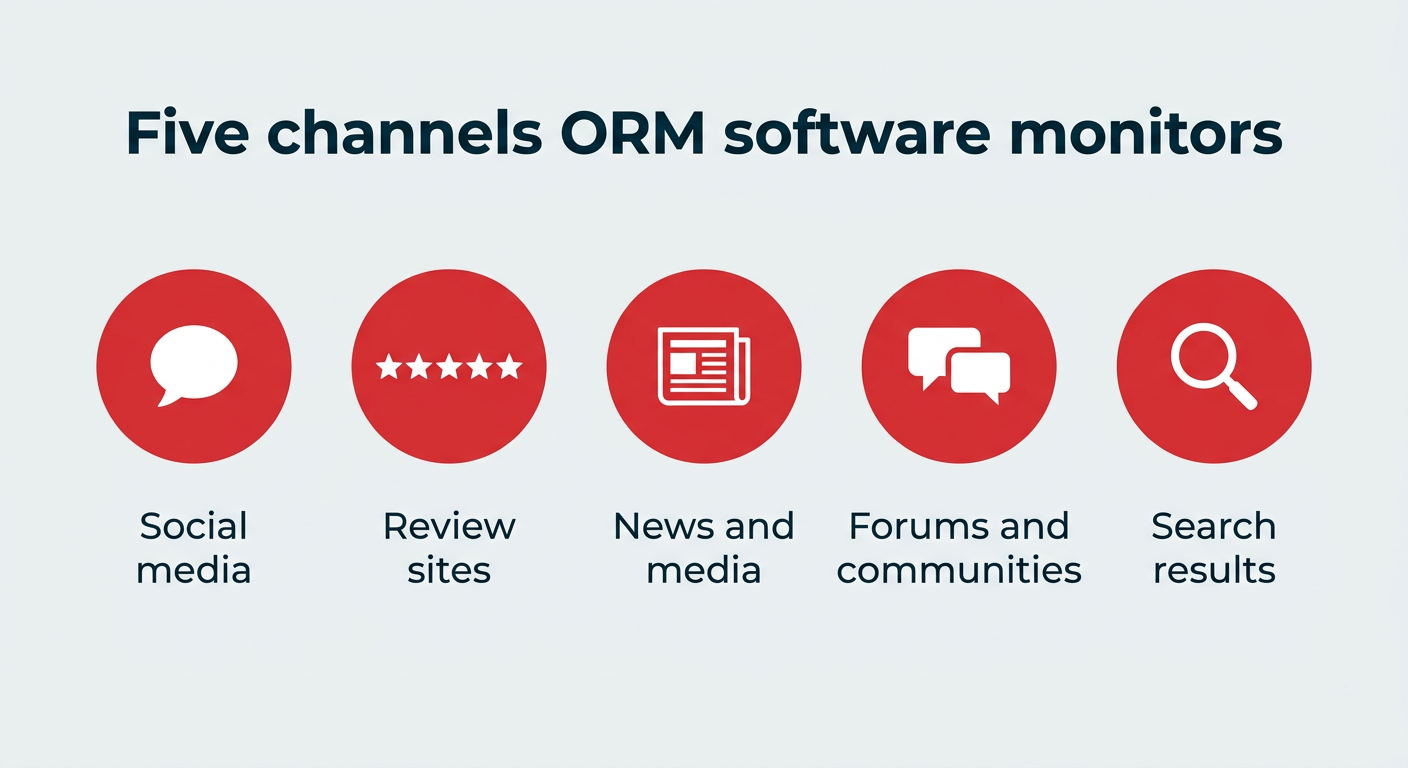
Current data from the 2025 Edelman Trust Barometer highlights a critical shift in consumer behavior: trust is now weighted as heavily as price and product quality during the purchase decision process. Furthermore, demographic shifts indicate that for adults under 30, the credibility of social media channels now matches that of traditional news organizations. Consequently, ORM software must now synthesize data from diverse sources, including forums, news outlets, social platforms, and specialized review sites, to provide a unified brand health score.
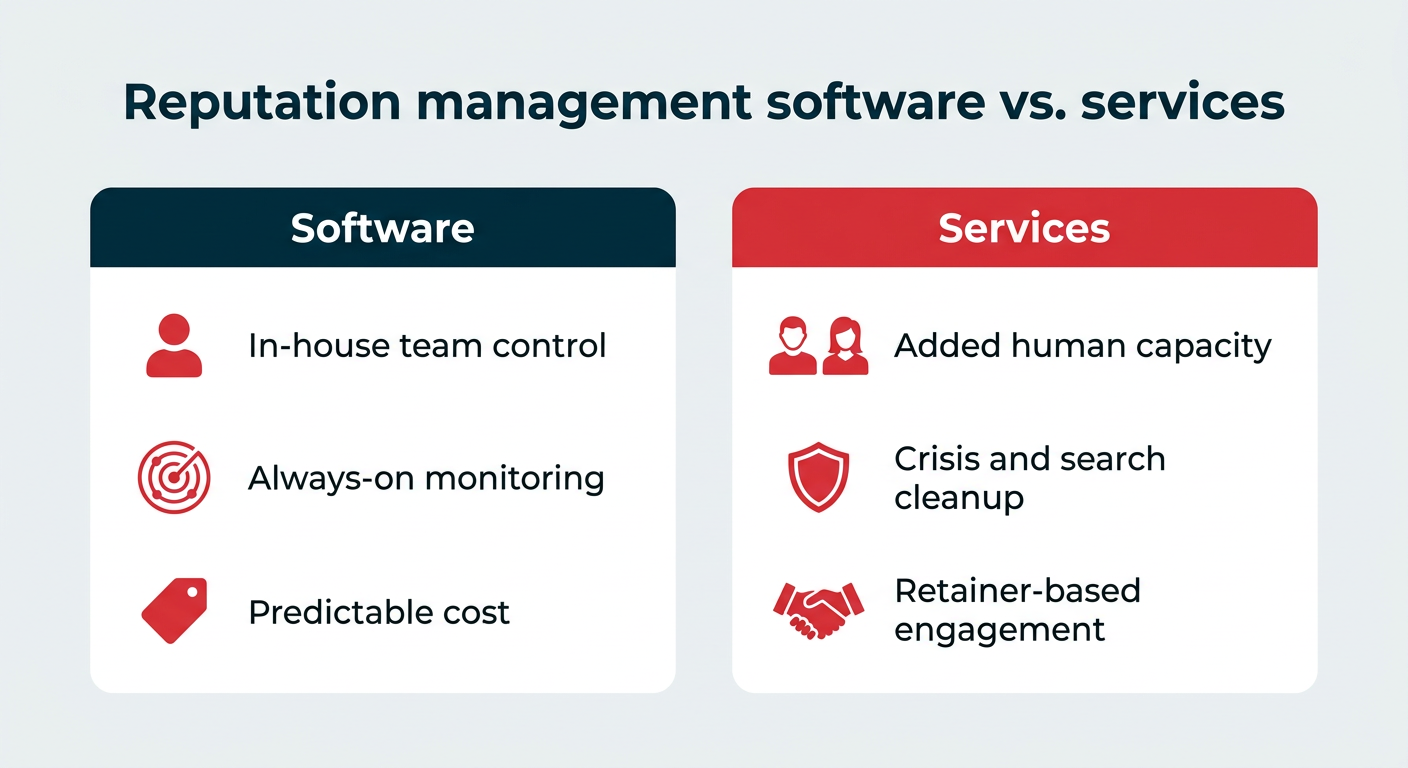
Software vs. Managed Services: A Strategic Distinction
For organizations evaluating their strategy, the primary decision lies between investing in in-house software or outsourcing to specialized reputation management agencies.

Software-based ORM tools offer a predictable, scalable, and granular approach. They empower internal marketing and customer support teams with dashboards, real-time alerts, and sentiment analysis, allowing for immediate intervention. By utilizing tools like Hootsuite, Brand24, or Yext, companies maintain data ownership and operational control.

Conversely, reputation management services—often structured as retainer-based consultancies—provide human capital to handle crisis management, legal remediation for negative search results, and complex PR campaigns. Many global enterprises now adopt a hybrid model: deploying high-performance software for daily monitoring and automated response workflows, while retaining agency support for high-stakes, crisis-level events.
Criteria for Tool Selection
Selecting the appropriate platform requires a rigorous assessment of technical and operational needs. When evaluating the 12 top-tier tools for 2026, organizations must weigh several key performance indicators:
- Channel Coverage: Does the tool monitor the specific platforms where your customers are most active?
- Sentiment Analysis: Does the platform utilize AI to accurately detect tone, sarcasm, and intent?
- Integration Capabilities: Can the tool sync with existing CRM, helpdesk, and business intelligence software (e.g., Salesforce, Zendesk) to create a seamless workflow?
- Governance and Compliance: For regulated industries, does the software offer audit trails, approval hierarchies, and secure data handling?
- Scalability: Can the system handle multi-location or multi-brand portfolios without losing visibility?
An Analysis of Industry-Leading Platforms
The marketplace for ORM software is segmented by use case, ranging from enterprise-wide social operating systems to specialized review aggregators.
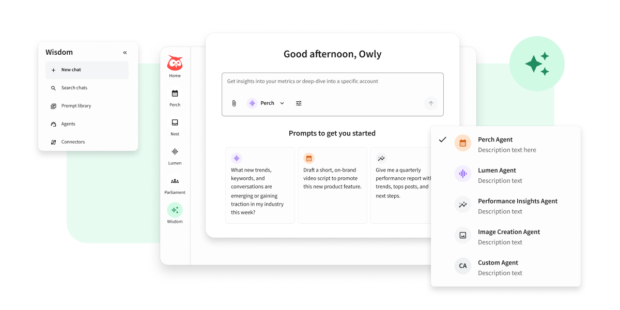
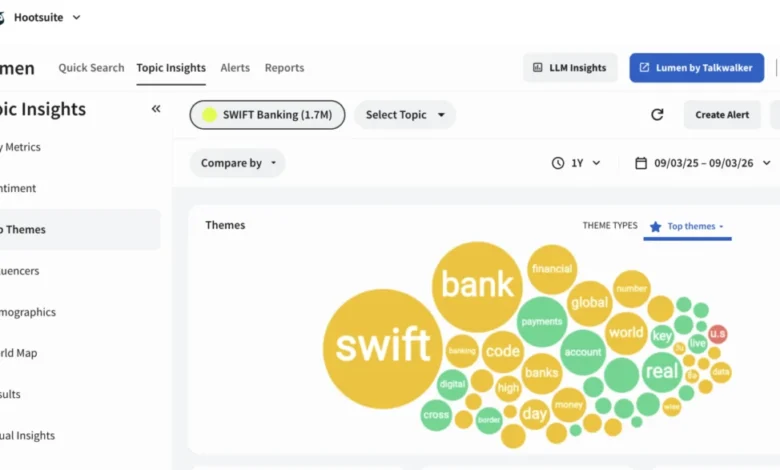
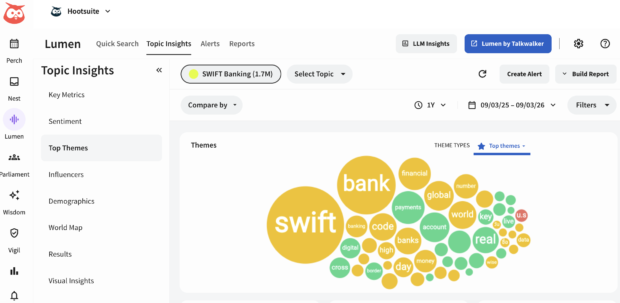
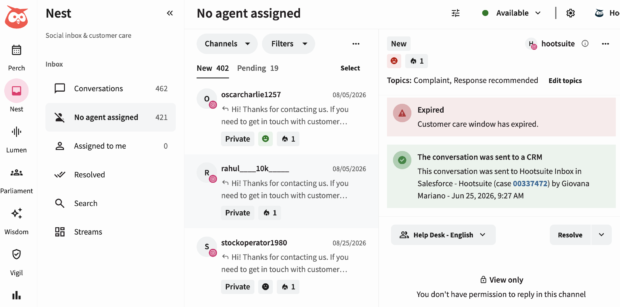
- Enterprise Integration (Hootsuite): Hootsuite stands out as a comprehensive Social OS. By unifying listening (Lumen), customer care (Nest), and governance (Vigil) within a single interface, it bridges the gap between passive monitoring and active engagement. Its ability to process 150 million sources in 187 languages makes it a powerful choice for multinational organizations.
- Multi-Location Efficiency (Birdeye, SOCi, Yext): These platforms are engineered for franchises and retail chains. Their strength lies in localized reputation management—ensuring that a business’s information is accurate across hundreds of directories while simultaneously automating review collection at the store level.
- Media Intelligence (Meltwater, Brandwatch): These tools serve a more PR-centric audience. They are designed for deep consumer intelligence, identifying emerging trends and providing the kind of high-level analytics required for long-term brand strategy and media relations.
- SEO and Visibility (Semrush): For teams where search engine ranking is the primary proxy for reputation, Semrush offers a unique value proposition by linking brand mentions to backlink health and keyword position tracking.
- The Baseline (Google Alerts): While limited in scope and lacking AI capabilities, Google Alerts remains a necessary, cost-free entry point for smaller teams to track basic web mentions.
The Legal and Ethical Landscape: The Review Gating Debate
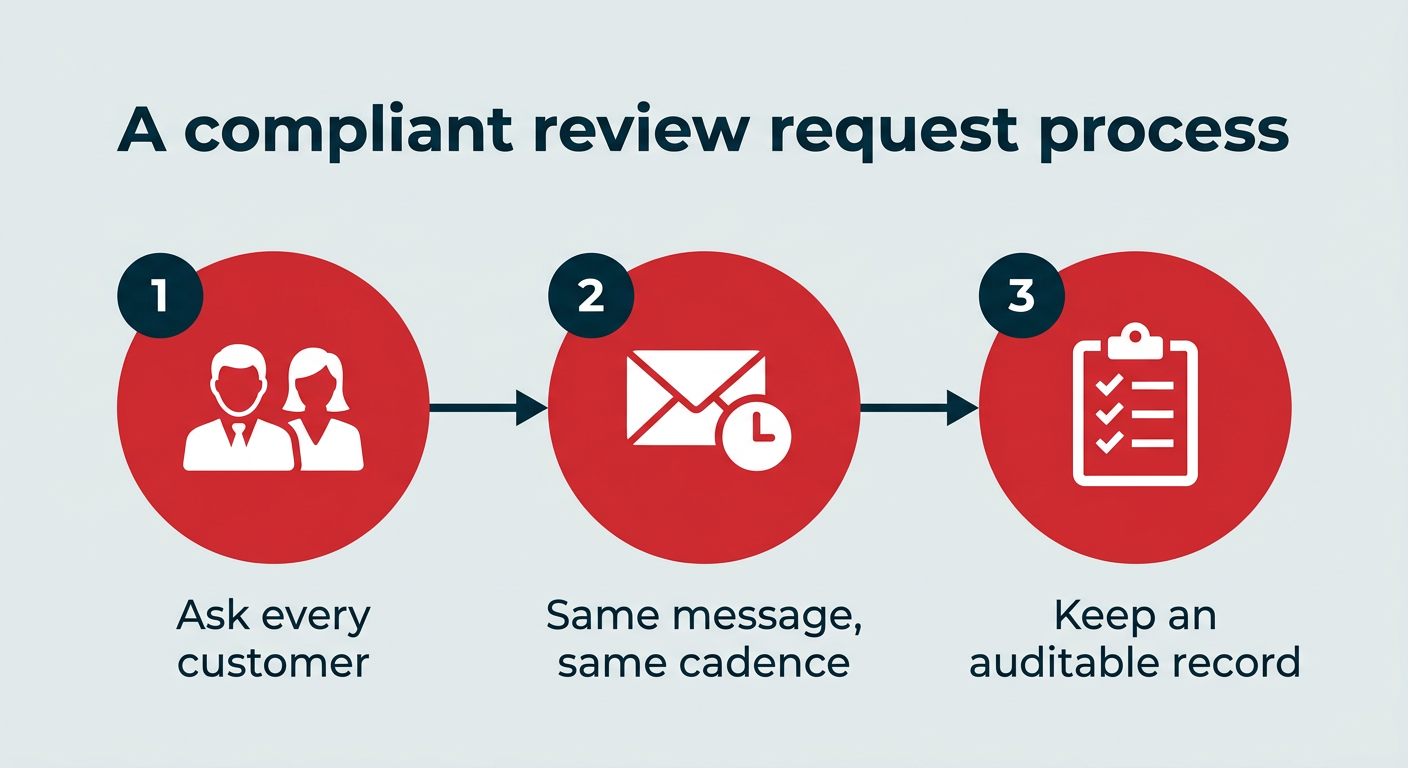
A critical component of modern ORM is the solicitation of customer reviews. However, this process is subject to strict regulatory oversight. The U.S. Federal Trade Commission (FTC) has increasingly categorized "review gating"—the practice of proactively screening customers to ensure only those with positive experiences are invited to leave public reviews—as a deceptive trade practice.
The industry standard, enforced by platforms like Google, is to request feedback from all customers uniformly. ORM software plays a vital role here by automating these requests while maintaining an auditable trail of when and how customers were invited to share their experiences. Violating these policies can lead to the suppression of listings or total removal from search results, rendering the effort counterproductive.

Implementing a Six-Step Reputation Strategy
To effectively manage reputation, organizations should adopt a systematic, six-step framework:

- Audit: Establish a baseline by conducting a comprehensive search of existing brand sentiment across all digital touchpoints.
- Deploy: Implement an ORM tool to centralize monitoring, ensuring that no channel is left unobserved.
- Categorize: Automate the sorting of incoming feedback into buckets—such as "Urgent/Crisis," "Customer Service Query," or "Brand Advocacy."
- Analyze: Utilize AI-powered sentiment analysis to track fluctuations over time, identifying patterns that precede potential crises.
- Engage: Respond to feedback—both positive and negative—with speed and transparency. Research suggests that a public, professional response to a negative review can significantly mitigate brand damage.
- Report: Synthesize findings into actionable insights for executive leadership to inform broader customer experience (CX) improvements.
Broader Implications and Future Outlook
As we look toward the latter half of the decade, the integration of Generative AI into ORM tools will further accelerate the speed of response. AI-driven "Orchestration Layers"—such as those found in modern social suites—will not only alert teams to a PR threat but will also draft compliant, on-brand responses for human review.

The ultimate goal of these investments is not just damage control, but the cultivation of long-term brand equity. In an era where digital noise is constant, the brands that listen most intently and respond most authentically are those that will secure the highest levels of customer loyalty. By treating online reputation as a continuous, data-backed operational function rather than a periodic PR task, organizations can transform their digital presence from a potential vulnerability into a sustainable competitive advantage.
Related posts: