The Children’s Place Appoints CFO as Principal Executive Officer Following Leadership Exodus Amid Deep Financial Turmoil

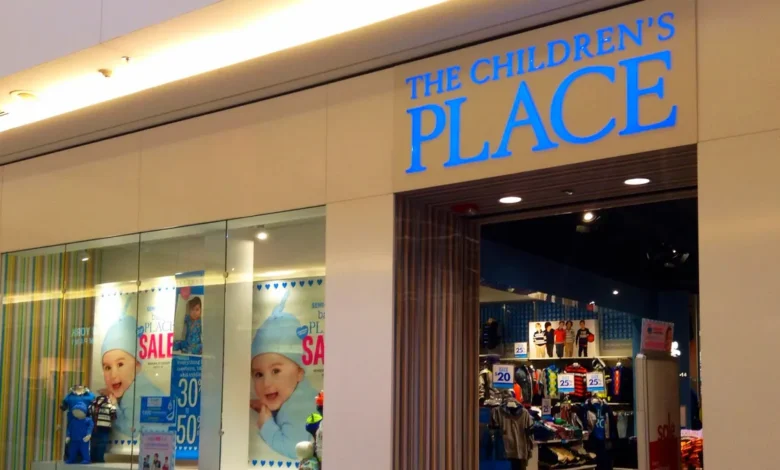
The leadership structure at The Children’s Place has undergone a sudden and sweeping transformation. Following the departure of multiple key executives and directors, including the chief executive officer, the struggling children’s apparel retailer has named its chief financial officer as the new principal executive officer. This transition marks the latest chapter in a turbulent multi-year period for the once-dominant mall-based retailer, which has struggled to regain its
footing despite significant ownership shifts, aggressive cost-cutting measures, and strategic overhauls designed to salvage its declining market share.
The sudden management vacuum underscores the immense operational and financial pressures facing the company. Industry analysts, retail observers, and investors are closely monitoring how the remaining leadership team will steer the brand through an increasingly unforgiving macroeconomic environment. As the company prepares for the crucial upcoming holiday shopping season, the appointment of the CFO to the top executive post signals a desperate, finance-driven strategy focused entirely on liquidity preservation, debt management, and survival rather than aggressive expansion.
A Timeline of Distress: From Majority Stake Acquisition to Executive Turnover
To understand the current crisis at The Children’s Place, it is necessary to examine the rapid escalation of financial distress that began years prior. The roots of the current leadership vacuum trace back to early 2024, when the company found itself in dire financial straits, burdened by mounting debt and shrinking liquidity.
In March 2024, Saudi investment firm Mithaq Capital—which had steadily built up a substantial equity position in the retailer—stepped in to provide critical financial lifelines, including interest-free loans and credit facilities to keep operations afloat. Mithaq’s intervention ultimately resulted in the investment firm securing a majority ownership stake in the enterprise. Following this takeover, Mithaq sought to install leadership that could navigate the treacherous retail waters, implementing a series of board shakeups and executive appointments intended to optimize operations.
However, the turnaround strategy faced immediate headwinds. Throughout 2025 and into 2026, the company continued to burn through cash as customer traffic in traditional brick-and-mortar mall locations dwindled. By mid-September 2026, the severity of the operational challenges became starkly evident during the reporting of the company’s second-quarter financial results. Net sales plummeted nearly 20% year over year to $241.8 million, while the company’s net loss widened nearly sixfold to $31 million.
During that earnings announcement, executive leadership emphasized that their primary mandate was to protect liquidity, slash operational costs, and evaluate the core operating model. Yet, barely two months following those disclosures, the executive team that promised this turnaround has departed entirely, leaving the CFO to helm the battered organization as principal executive officer.
Financial Realities and Plummeting Metrics
The financial data surrounding The Children’s Place paints a grim picture of a legacy retailer struggling to adapt to structural shifts in consumer behavior. The nearly 20% drop in net sales reported in September 2026 was not an isolated anomaly, but rather part of a sustained downward trajectory. Lower foot traffic across North American shopping malls has disproportionately impacted specialty apparel retailers that rely heavily on physical storefronts to drive impulse purchases.
Furthermore, the widening net loss—reaching $31 million in a single quarter—highlights the severe margin compression the company has experienced. While management previously enacted aggressive cost-reduction strategies, including supply chain optimizations, vendor renegotiations, and corporate headcount reductions, these measures have thus far failed to offset the precipitous decline in top-line revenue.
Financial institutions and market researchers have been vocal about the retailer’s narrow margin for error. A research note published in mid-September 2026 by UBS analysts led by Jay Sole pointed out that while the company made some commendable progress in managing inventory levels and stabilizing short-term cash-flow trends, liquidity remains an acute and ongoing risk. The UBS note cautioned that customer demand had dropped off far more steeply than initial internal projections suggested, making it highly improbable that The Children’s Place will be able to expand its market share or operating margins in the near to medium term.
"The Children’s Place’s new management team has made considerable progress improving profitability by reducing its cost structure," Sole noted in the research report. "However, weak customer traffic and a competitive children’s apparel environment are likely to keep the top line under pressure."

Macroeconomic Pressures and Industry-Wide Headwinds
The struggles experienced by The Children’s Place are emblematic of a broader, systemic contraction within the North American children’s apparel sector. Retailers operating in this specific niche are currently contending with a confluence of powerful macroeconomic and demographic headwinds that complicate any traditional path to recovery.
Chief among these demographic challenges is the declining fertility rate across the United States and Canada. With fewer births year after year, the total addressable market for newborn, toddler, and children’s clothing is naturally shrinking. This structural demographic shift means that retailers are no longer fighting merely for a larger slice of a growing pie, but rather fiercely competing for a stagnant or shrinking pool of consumers.
Compounding the demographic squeeze is the relentless march of e-commerce competition. Digital-native brands, direct-to-consumer apparel startups, and fast-fashion giants have captured significant market share by offering lower price points, highly targeted social media marketing, and frictionless online shopping experiences. Traditional mall-based retailers, historically reliant on physical storefronts and traditional promotional calendars, have struggled to pivot their digital infrastructure quickly enough to match consumer expectations.
Compounding matters further is the squeeze on household discretionary spending. Slower real income growth for middle- and lower-income families—who traditionally form the core demographic of value-oriented children’s apparel brands—has limited discretionary consumption. Inflationary pressures on everyday essentials such as groceries, housing, and utilities leave parents with smaller budgets for non-essential clothing purchases, forcing them to seek out ultra-low-cost alternatives, secondhand marketplaces, or promotional discounts.
According to long-term projections cited by UBS analysts, the broader North American children’s wear market is anticipated to achieve a meager 1% growth rate going forward, a notable deceleration from the 2.3% compound annual growth rate recorded over the preceding decade.
Implications for the Future of the Retailer

The elevation of the chief financial officer to the role of principal executive officer following the exit of the broader executive team carries profound implications for the strategic direction of The Children’s Place. When a corporate turnaround is spearheaded by a CFO rather than a traditional merchant, visionary, or marketing-focused CEO, it invariably signals a period of strict financial triage.
In the immediate term, the new principal executive officer is expected to double down on preservation tactics. This will likely involve further rationalization of the store footprint—accelerating the closure of underperforming mall-based locations to eliminate lease liabilities and stop cash bleeding. Additionally, inventory management will remain under a microscope, with the company likely leaning into leaner inventory buys to minimize the risk of being forced to clear unsold goods through heavy, margin-eroding markdowns.
For Mithaq Capital, the majority stakeholder, the executive turnover represents a critical juncture. The investment firm faces difficult decisions regarding whether to inject fresh capital into the business to fund a prolonged, arduous digital transformation, or to manage the retailer for cash generation while scaling down operations to minimize further losses.
Broader Industry Ramifications
The ongoing struggles of The Children’s Place serve as a cautionary tale for traditional mall-based specialty retailers. As consumer shopping habits permanently migrate toward digital platforms and discount alternatives, legacy brands with heavy fixed store costs face an existential reckoning.
The ability to cut costs, while mathematically necessary for survival, has proven insufficient as a standalone strategy without a revitalized value proposition that resonates with modern parents. As the new leadership team at The Children’s Place takes the helm under these challenging circumstances, stakeholders across the retail landscape will be watching closely to see whether financial discipline alone can rescue a brand caught in the crosscurrents of unfavorable demographics, fierce digital competition, and shifting consumer economics.
Related posts: