Selecting the optimal color palette remains one of the most persistent hurdles in digital design and user interface development. What begins as an imaginative concept often deteriorates into a frustrating exercise of entering arbitrary hexadecimal codes, endlessly adjusting saturation and brightness sliders, and second-guessing every chromatic choice. For both veteran developers and novices, translating brand identity or abstract concepts into a cohesive, accessible digital aesthetic requires more than mere intuition; it demands efficient workflows and robust tooling.
To bridge the gap between creative vision and technical execution, modern designers frequently rely on specialized digital instruments. These applications streamline the selection process, test for accessibility compliance, and eliminate the friction of manual configuration. Industry research indicates that color selection and accessibility compliance consume a significant portion of early-stage front-end development cycles. Understanding the fundamentals of color theory and implementing structured workflows can radically accelerate project delivery timelines while ensuring brand consistency across diverse digital touchpoints.
The Evolution of Digital Color Workflows and Web Accessibility
In the early decades of web design, color selection was largely constrained by standard palette limitations and manual HTML/CSS input. Designers relied on static swatch books, basic photo editing software, and primitive color pickers to build digital interfaces. As the web evolved into a dynamic, content-rich medium defined by responsive frameworks and complex user experiences, the demand for sophisticated, adaptable color systems surged.
Simultaneously, regulatory standards and industry best practices have elevated the importance of web accessibility. Ensuring that text elements maintain sufficient contrast against background fills is no longer optional; it is a fundamental requirement governed by the Web Content Accessibility Guidelines (WCAG). Modern color generators have consequently evolved from simple brainstorming novelties into comprehensive design suites equipped with automated contrast checkers, color blindness simulators, and integration plugins for design systems like Tailwind CSS.
Industry analysts note that adopting specialized palette generators can reduce initial layout and skinning phases by up to thirty percent. By automating repetitive tasks—such as generating harmonious secondary accents or exporting clean CSS gradients—these platforms allow developers and UI/UX specialists to focus on overarching user experience architecture.
Comprehensive Review of Essential Color and Gradient Tools
Navigating the vast ecosystem of web-based design utilities can be overwhelming. To assist professionals in refining their digital toolkit, the following five platforms represent the most reliable, efficient, and feature-rich resources available for modern web creation.
1. Coolors: The Industry Standard for Rapid Ideation
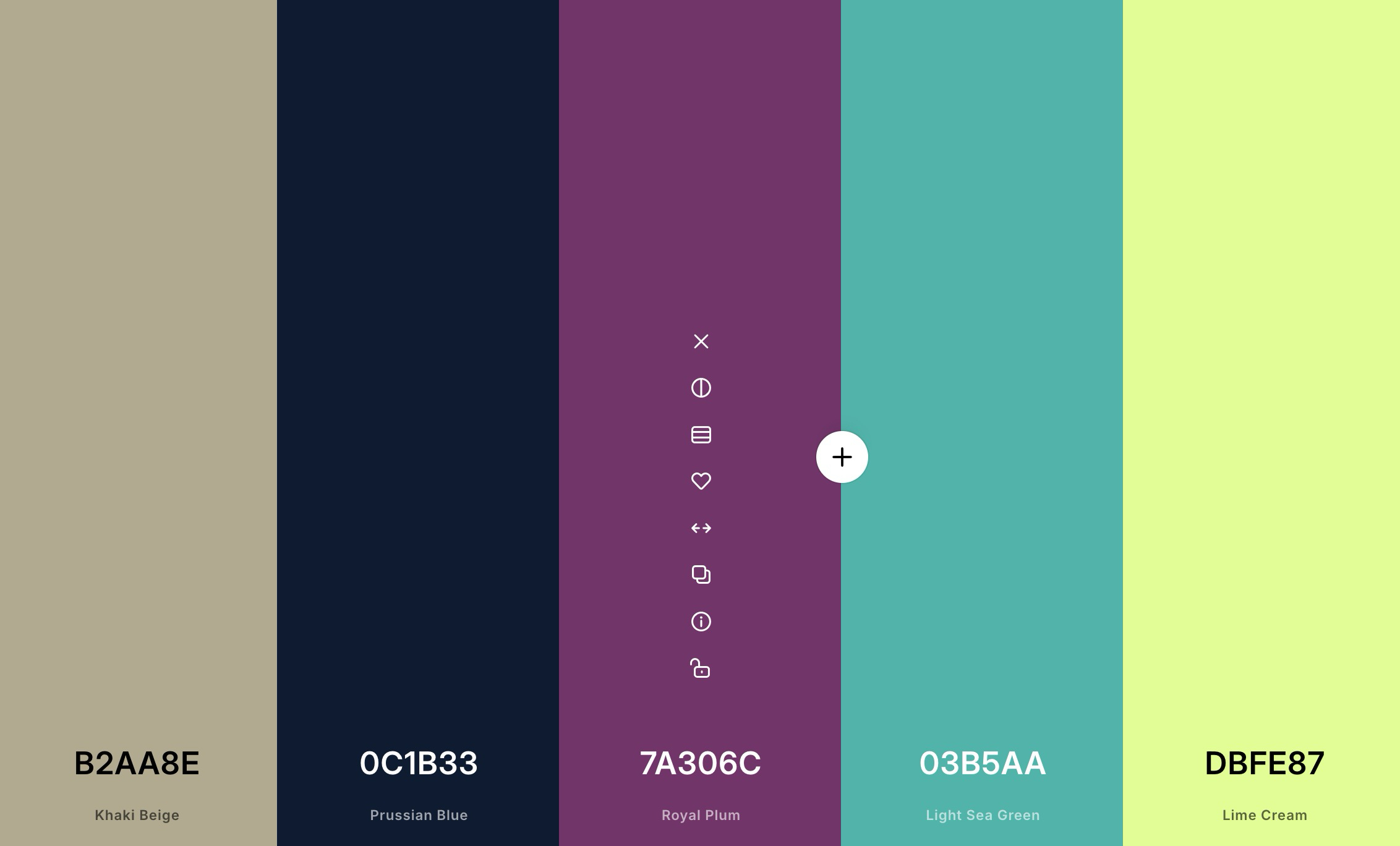
Coolors has established itself as an indispensable resource for digital creators seeking immediate inspiration. At the core of the platform is its lightning-fast palette generator. Users simply press the spacebar to cycle through harmonious, algorithmically balanced combinations until a compelling configuration emerges.
Beyond its foundational generation capabilities, Coolors offers a comprehensive suite of features designed to support end-to-end project development. The platform includes an advanced image picker that extracts accurate color profiles from uploaded photographs, a real-time contrast checker to verify accessibility compliance, and a palette visualizer that projects generated colors onto realistic user interface wireframes. Furthermore, specialized gradient creation tools and direct integration helpers for utility-first frameworks like Tailwind CSS make Coolors one of the most versatile utilities on the market.
2. Grabient: Specialized Control for Dynamic Backgrounds
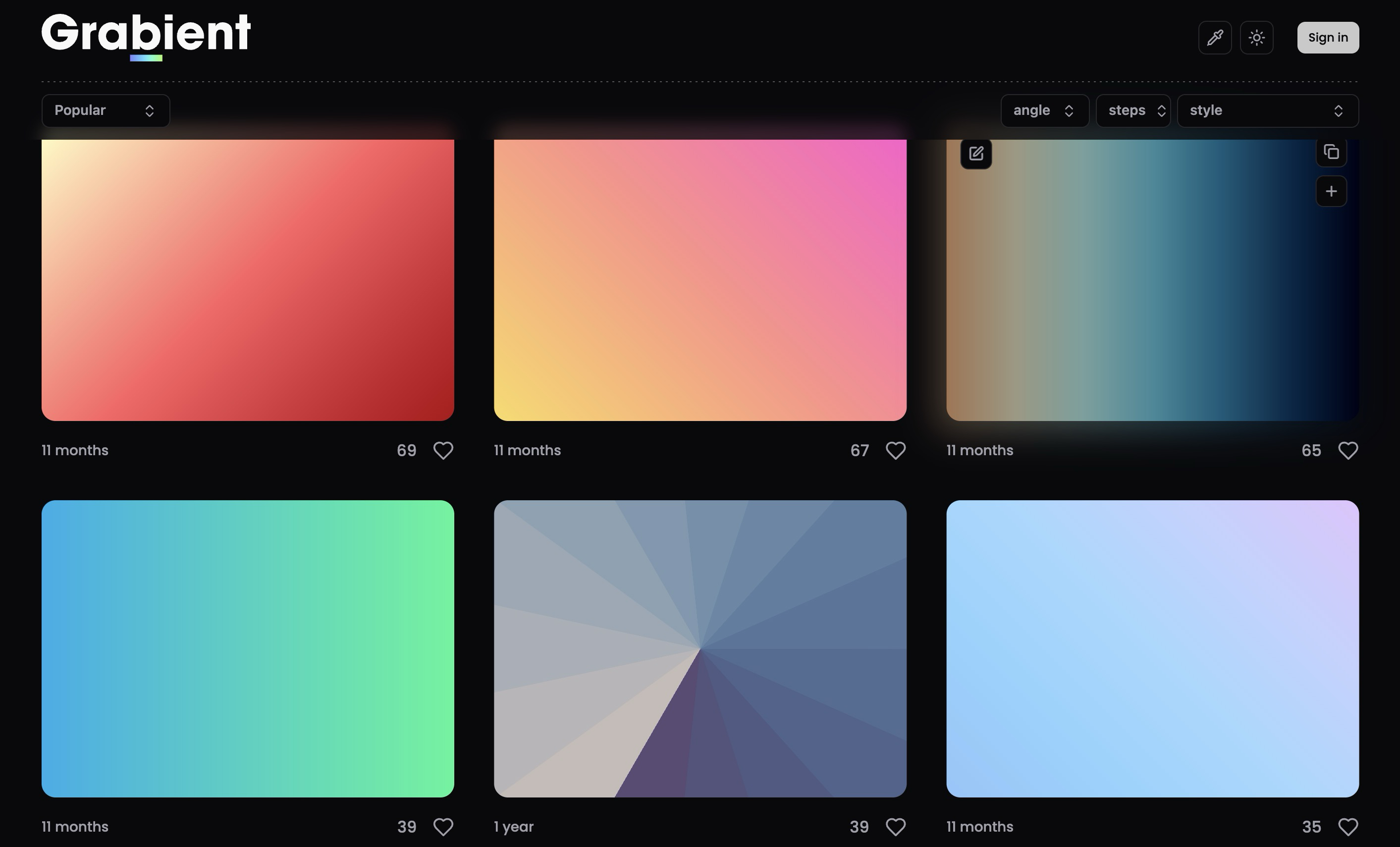
When a project brief demands sophisticated linear or radial gradients rather than flat color fills, Grabient serves as an optimal solution. Built specifically for gradient creation, the platform features a streamlined, intuitive interface that allows designers to manipulate color stops, adjust angles, and control opacity with absolute precision.
Grabient distinguishes itself by merging gradient generation with secondary palette-finding capabilities, ensuring that background blends complement primary brand identities. For front-end developers constructing landing pages, hero banners, and high-conversion marketing sections, Grabient eliminates the tedious process of writing complex CSS linear-gradient syntax manually, offering instant, production-ready code snippets.
3. ColorHub: Product-Minded Palettes for Realistic Layouts
ColorHub approaches chromatic selection from a distinctly product-oriented perspective. Recognizing that colors appearing harmonious in isolation often clash within complex application interfaces, ColorHub integrates realistic layout previews directly into its workflow.
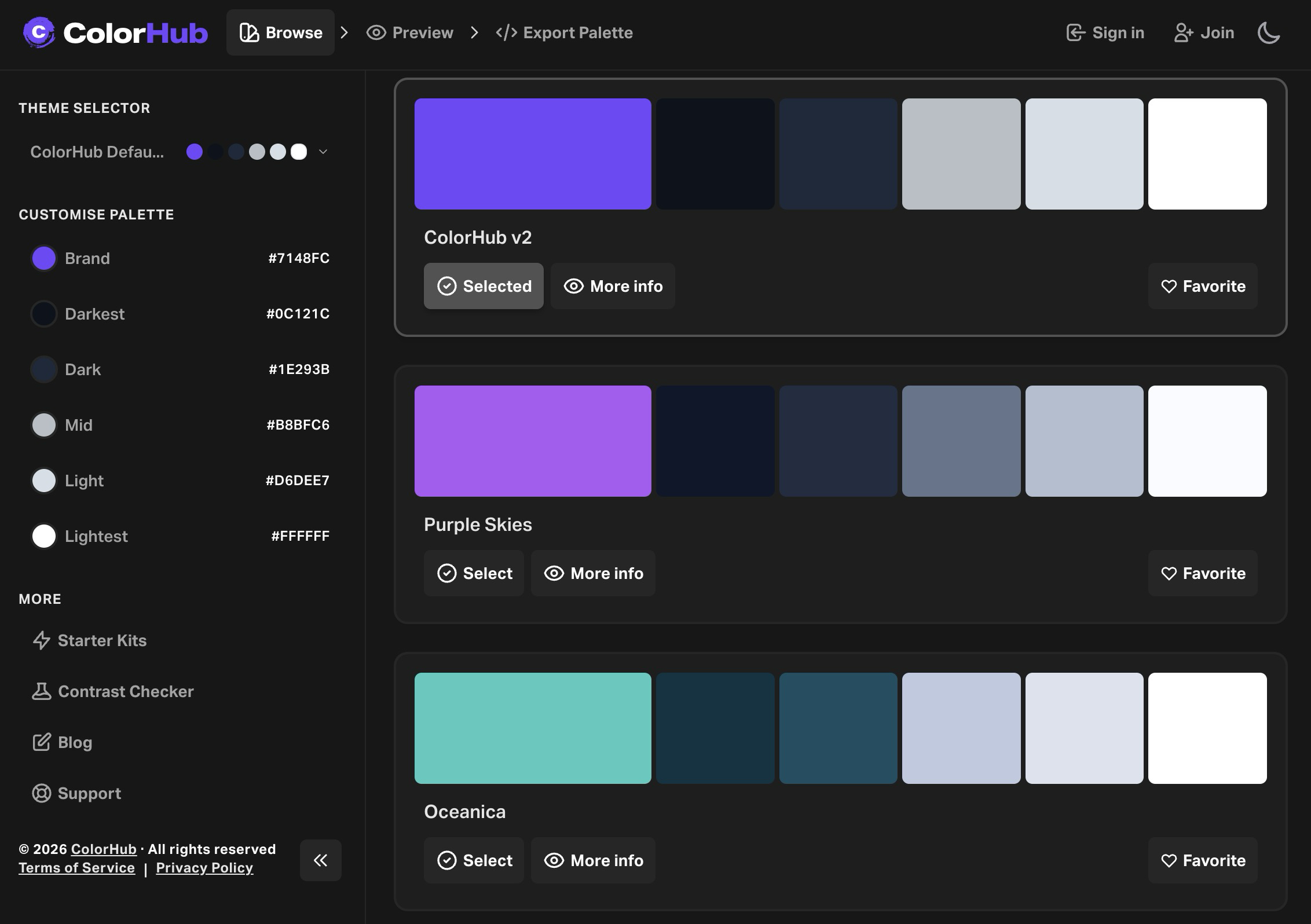
Recent platform updates introduce curated starter kits, comprehensive palette previews applied to landing-page templates, robust contrast evaluation tools, and personal favorites libraries. This functionality is particularly valuable for product designers and software engineers who must ensure that chosen palettes maintain readability and aesthetic integrity across dense dashboards, navigation bars, and data visualization modules.
4. Color Hunt: Curated Simplicity for Intuitive Browsing
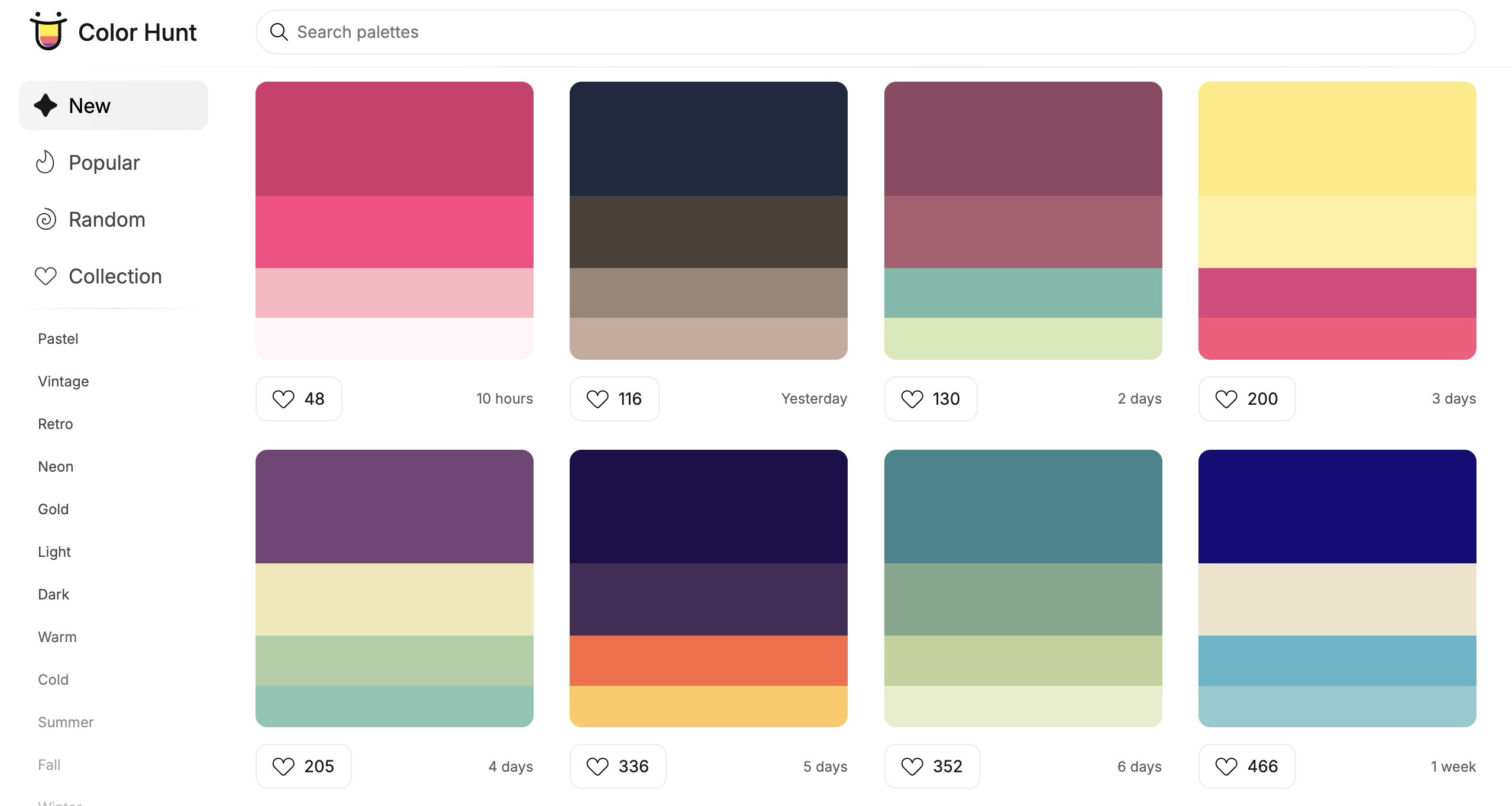
For creators who prefer an unencumbered, browse-driven approach, Color Hunt offers a vast, community-driven collection of hand-picked color palettes. Organized meticulously by theme, mood, and aesthetic style—ranging from pastel and retro to dark mode, wedding, and neon configurations—the platform encourages organic discovery.
Color Hunt appeals to professionals who wish to bypass complex technical laboratories in favor of immediate visual selection. By reducing cognitive load and presenting pre-validated combinations, the platform enables rapid decision-making during the early phases of mood boarding and concept presentation.
5. Gradients by Colorion: Streamlined CSS Delivery
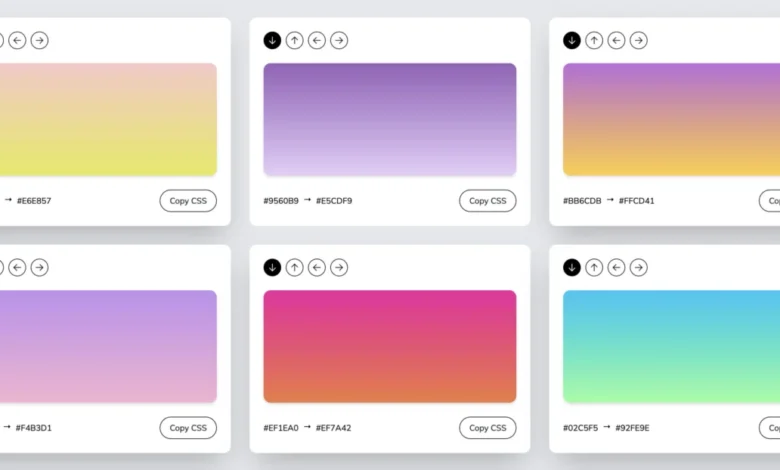
When project requirements call strictly for clean background gradients and immediate code export, Gradients by Colorion provides an efficient, no-nonsense solution. The platform curates a vast selection of subtle and striking color transitions, allowing users to alter directional vectors and copy generated CSS statements with a single click.
Eliminating unnecessary setup menus and configuration friction, Colorion serves as a reliable utility for developers seeking to elevate basic callout sections, cards, and container backgrounds without encumbering their deployment pipeline.
Strategic Selection and Workflow Integration
Determining the ideal tool depends heavily on the specific phase of the design lifecycle and project requirements:
- For comprehensive ideation and accessibility auditing: Coolors provides the most extensive feature set.
- For marketing hero sections and immersive background transitions: Grabient and Gradients by Colorion offer specialized gradient controls.
- For interface testing and product-ready validation: ColorHub ensures real-world applicability.
- For rapid inspiration and thematic browsing: Color Hunt delivers an efficient, curated experience.
Ultimately, challenges in digital color selection rarely stem from a lack of creative taste, but rather from inefficient workflows. Integrating specialized generation and validation tools into standard development pipelines empowers teams to explore diverse chromatic directions rapidly, maintain strict accessibility standards, and eliminate redundant configuration labor across every digital project.
Related posts: