In early 2026, a seismic shift rippled through the user experience (UX) design industry, fundamentally altering the landscape of the profession. The long-standing debate on whether UX designers should possess coding skills was abruptly and decisively settled not by industry consensus, but by the brute force of evolving job market demands. A cursory review of professional networking platforms like LinkedIn reveals a stark transformation: UX roles increasingly specify requirements for AI-augmented development, technical orchestration, and the creation of production-ready prototypes. This burgeoning expectation has ignited a significant concern among many in the field, who fear it represents a detrimental conflation of distinct professional disciplines, potentially sacrificing user experience quality for perceived development speed.
The immediate impact of this market-driven evolution has been the emergence of a "pressure cooker" role, characterized by an unprecedented level of responsibility placed upon UX designers. They are now expected to simultaneously conceptualize the user’s "vibe" – the emotional and intuitive feel of an interface – and deliver functional "code," leveraging AI agents to bridge technical gaps that historically demanded years of dedicated computer science education and practical coding experience. However, as organizations rush to adopt these new paradigms, a critical realization is dawning: AI-generated functional code is not always synonymous with good code. This phenomenon is leading to a significant competency gap and raising questions about the long-term sustainability and quality of user-centric digital products.
The LinkedIn Pressure Cooker: Role Creep Accelerates in 2026
The current job market is sending an unambiguous signal regarding the future of design-related professions. Projections from the U.S. Bureau of Labor Statistics indicate that while traditional graphic design roles are expected to see a modest growth of approximately 3% through 2034, UX, UI, and Product Design roles are anticipated to expand at a much more robust rate of 16% over the same period. This substantial growth, however, is increasingly intertwined with the rapid advancement of AI product development. Within this burgeoning sector, "design skills" have recently ascended to the number one most in-demand capability, even surpassing traditional coding and cloud infrastructure expertise.
Companies spearheading AI platform development are no longer solely seeking individuals with a strong visual design background. Instead, they are actively recruiting professionals who possess the nuanced ability to "translate technical capability into human-centered experiences." This necessitates a profound understanding of how complex AI functionalities can be rendered intuitive, safe, and genuinely useful for the end-user, irrespective of their technical acumen.
This evolving demand places UX designers in a high-stakes environment. Their responsibilities are expanding beyond the mere aesthetic and functional design of interfaces to encompass a deep comprehension of underlying technical logic. This shift is pushing the UX professional toward a "design engineer" model, where they are tasked with bridging the chasm between abstract AI logic and user-facing code. A recent industry survey revealed that a significant majority of designers, 73%, now view AI as a primary collaborator rather than merely a tool. Yet, this perceived collaboration frequently manifests as "role creep," where recruiters are not only seeking empathy and information architecture expertise but also the ability to generate React components and manage code repositories.
This rapid expansion of responsibilities has created a distinct "competency gap." Experienced senior designers, who have dedicated decades to mastering the intricacies of cognitive load, accessibility standards, and ethnographic research, now find themselves evaluated on their proficiency in debugging CSS Flexbox issues or managing Git branches. The core concern is not the advent of new technologies itself, but the fundamental "reallocation of value" within the industry. Businesses are increasingly prioritizing the speed of output over the nuanced quality of the user experience. This prioritization is fundamentally reshaping the definition of a "successful" designer in 2026.
The Competence Trap: Merging Two Deep Skill Sets Yields Average Results
A potentially dangerous myth is gaining traction within corporate boardrooms: the notion that AI effectively renders a designer equivalent to an engineer. This narrative suggests that because a Large Language Model (LLM) can generate a functional JavaScript event handler, the individual prompting it does not need to grasp the underlying logic. In reality, attempting to master two profoundly different and deeply specialized fields concurrently is highly likely to result in a state of "averagely competent" proficiency in both, rather than achieving mastery in either.

The "Averagely Competent" Dilemma
The expectation for a senior UX designer to also become a senior-level coder is akin to asking a master chef to simultaneously be a master plumber simply because both professions operate within the realm of the kitchen. While the plumber might get the water flowing, their understanding of the intricate system, the potential for leaks, or the reasons for rattling pipes might be superficial at best. Similarly, a designer who can prompt AI to generate code might achieve a functional outcome, but they may lack the deep understanding to optimize it for performance, security, or long-term maintainability.
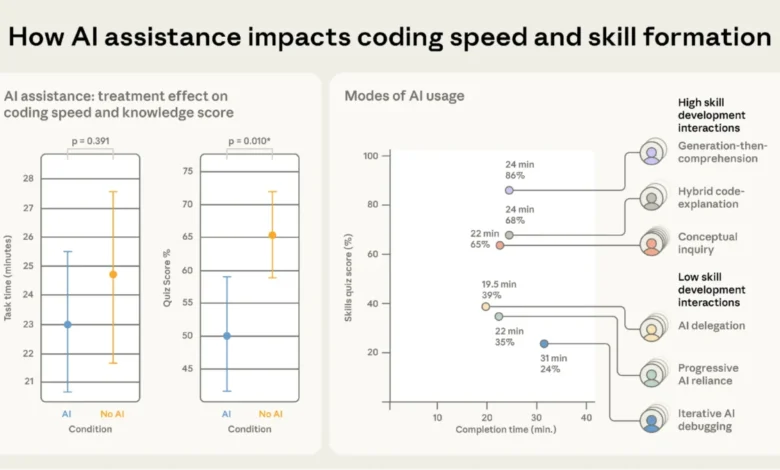
The consequence of this is a significant increase in "Quality Debt." When a designer relies solely on AI-generated code without the foundational knowledge to audit and refine it, they inadvertently ship code that is often unoptimized, inefficient, and potentially riddled with subtle errors. This creates a substantial "Rework Tax" on engineering teams, who are then tasked with rectifying these issues. The initial promise of AI was to empower designers to ship features independently, bypassing the need to burden engineering resources. The reality, however, has been the emergence of a significant bottleneck, where designers, lacking deep coding expertise, produce code that requires extensive refactoring by specialized engineers.
Common Issues in Designer-Generated AI Code
Developers frequently encounter a range of problems when working with AI-generated code produced by designers who lack a comprehensive understanding of software architecture and best practices. These issues include:

- Inconsistent Code Style and Naming Conventions: AI-generated code often fails to adhere to established project-specific coding styles, variable naming conventions, and established patterns. This creates visual clutter and makes the codebase harder to read and maintain.
- Lack of Optimization: AI models, while capable of generating functional code, may not inherently produce the most efficient algorithms or data structures. This can lead to performance bottlenecks, increased resource consumption, and slower application responsiveness.
- Security Vulnerabilities: Without a deep understanding of security principles, designers prompting AI might inadvertently generate code that contains exploitable vulnerabilities, such as insecure input handling, weak authentication mechanisms, or improper data sanitization.
- Accessibility Oversights: While designers are tasked with creating accessible experiences, AI-generated code might not always implement accessibility best practices correctly. This can include improper ARIA attribute usage, inadequate keyboard navigation support, or insufficient contrast ratios, rendering the application unusable for individuals with disabilities.
- Poor Error Handling and Debugging: AI-generated code may lack robust error handling mechanisms, making it difficult to diagnose and resolve issues when they arise. This necessitates significant effort from engineers to implement proper logging, exception handling, and debugging strategies.
- Scalability Challenges: Code generated without a consideration for future scalability can become a significant impediment as the application grows. This might involve inefficient database queries, unoptimized network requests, or a monolithic architecture that is difficult to decompose.
When a designer delivers AI-generated code that fails during a high-traffic event or introduces significant bugs, their role shifts from that of an innovator to a liability. They are no longer seen as an expert, but as a source of technical debt.
Creating More Work, Not Less
The cycle of rework is exacerbated when designers, unfamiliar with a company’s internal standards, push AI-generated code that disregards established naming conventions or management patterns. Instead of facilitating progress, they are inadvertently creating complex puzzles for engineers to solve later. This "Rework Tax" drains valuable engineering time and resources, undermining the very efficiency gains AI was supposed to provide.
The Solution: Embracing Designer-Coder Collaboration
The industry must move away from the detrimental "Solo Full-Stack Designer" paradigm and embrace a model of genuine "designer/coder collaboration." The ideal reality involves a symbiotic relationship where UX designers leverage their deep understanding of user needs and design principles to conceptualize and prototype, while skilled engineers translate these designs into robust, optimized, and maintainable code.

The Ideal Collaboration Model:
- UX Designers: Focus on user research, empathy mapping, information architecture, interaction design, prototyping, and user testing. They utilize AI as a powerful tool to accelerate ideation and iteration, generate initial design concepts, and create low-fidelity prototypes.
- Engineers: Specialize in software architecture, clean code practices, performance optimization, security implementation, and rigorous testing. They receive well-defined design specifications and prototypes from UX designers and translate them into production-ready code, ensuring scalability, reliability, and maintainability.
- AI as an Augmentation Tool: AI serves as an assistant to both disciplines, aiding in code generation, bug detection, performance analysis, and even suggesting design improvements based on user data. However, human oversight and expertise remain critical for quality assurance and strategic decision-making.
Beyond the Prompt: Guardians of the User Experience
The current "AI Infatuation" within the industry is likely a temporary phase. As the initial novelty wanes, the inherent limitations of AI-generated code without expert oversight will become increasingly apparent. Businesses that continue to prioritize "designer-shipped code" without robust engineering validation will inevitably face the repercussions of escalating technical debt, heightened security risks, and potential accessibility lawsuits.
The UX designers who will thrive in 2026 and beyond are those who resist the temptation to become mere "prompt operators." Instead, they must position themselves as the indispensable "guardians of the user experience." This strategic stance offers a mutually beneficial outcome for experienced designers and the industry as a whole. The core value of UX design has always been its unwavering advocacy for the human on the other side of the screen.
AI should be harnessed to augment design thinking, enabling faster testing of more ideas and quicker iteration cycles. However, it must never supplant the specialized engineering expertise required to ensure that designs are not only aesthetically pleasing and intuitive but also technically sound and accessible to everyone. By championing this collaborative approach, UX designers can ensure that the future of digital products is both innovative and user-centric.