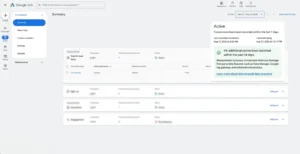
Google Downplays Search Console "Error" Reports. Says Many Aren’t Real Problems


In a recent discussion that could reshape how website owners and SEO professionals interact with Google’s vital diagnostic tool, Google’s John Mueller and Martin Splitt have urged a fundamental shift in perspective regarding Google Search Console (GSC). Instead of viewing GSC solely as a repository of errors requiring immediate fixes, they advocate for its use as a sophisticated platform for identifying and understanding patterns, many of which are entirely normal and expected aspects of website operation and search engine indexing. This recalibration of approach aims to alleviate unnecessary user anxiety and foster a more nuanced understanding of search engine performance.
Reinterpreting Search Console’s Diagnostic Landscape
The core of Mueller and Splitt’s message centers on a perceived disconnect between Google’s communication of Search Console data and the way many users interpret it. Martin Splitt articulated this concern, highlighting that a significant number of users approach GSC with the primary objective of finding and rectifying "errors." This often leads to an overreaction to reports like 404 "errors" (page not found) or the status of pages as "not indexed," when in reality, these situations may not signify a problem demanding a fix.
Splitt elaborated on this phenomenon, recalling an instance at a Search Central Live event where a website owner expressed confusion over the indexing report. The user observed that a page they believed was indexed was reported as "not indexed" in Search Console, prompting them to question what they had done incorrectly. Similarly, Splitt noted another example on Reddit where an individual felt they had made a significant mistake due to a large number of pages appearing as "non-indexed" in their reports.
John Mueller corroborated Splitt’s observations, attributing this misunderstanding to a common beginner-level issue. He explained that many new users of Search Console perceive the presence of hundreds of non-indexed pages as a definitive error that necessitates immediate correction. This initial reaction often prompts them to embark on extensive troubleshooting efforts without first understanding the underlying reasons for the indexing status.
The Impact of Google’s Communication Mechanisms
Adding to the complexity, Splitt pointed out that Google’s automated notifications, particularly those related to page indexing, can inadvertently exacerbate this "fix-it" mentality. While intended to keep users informed, these alerts can create the impression that any deviation from full indexing is a problem that requires intervention.
"And I think the mechanism we have for people to acknowledge that they understand what’s happening is this like fix, confirm fixed or mark as fixed or something," Splitt commented. "And while generally a great thing, I think in this case, it’s a little triggering the wrong response or the wrong expectation, I think."
Mueller suggested that the "mark as fixed" functionality, while useful in many contexts, might contribute to this misinterpretation due to its consistent presence across various reporting sections within Search Console. He acknowledged that for certain issues, such as server misconfigurations leading to a surge in 404 errors, the "mark as fixed" option is indeed appropriate. However, he distinguished this from situations where indexing anomalies are a result of Google’s algorithmic decisions rather than a technical flaw on the website owner’s part.
"On the other hand, if something else went wrong in indexing and it’s more like our systems decided we weren’t as curious as you might be, then it’s not something that you necessarily fix yourself, it’s not something purely technical," Mueller stated. This distinction is crucial: not all reporting anomalies are actionable problems for the website owner.
Shifting the Paradigm: Identifying Patterns Over Errors
The proposed shift in perspective moves from a reactive "error-fixing" mode to a proactive "pattern-identification" approach. Martin Splitt shared feedback from a fellow Googler, who characterized the data within Search Console not as a list of problems, but as a reflection of observable patterns. When these patterns deviate from expectations, it signals an opportunity for deeper investigation.
"It’s an interesting way of looking at it, I think, because it’s not like, is this index, is this not index? It’s a different thought. It’s like, is the site in the index doing what I expect to do?" Splitt explained. This reframing encourages users to assess whether their website’s performance in search results aligns with their strategic goals, rather than simply reacting to individual data points.
Splitt offered a concrete example involving website migrations and the implementation of redirects. During such a process, an increase in "pages with a redirect" in the indexing report is not an error but an expected outcome. If a user solely focuses on the "not indexed" status of these redirecting pages as a problem, they miss the actual intent of the action. Conversely, if the indexing report doesn’t reflect the expected surge in redirects after a migration, it might indicate that the process is not yet complete or has encountered an issue. This nuanced understanding allows for more informed decision-making and a more accurate assessment of progress.
Deconstructing the "404 Error" Misconception
The discussion also circled back to the perennial point of confusion: the 404 "error" report. Mueller and Splitt reiterated that a 404 server response is technically an "error" from the perspective of the request made by a crawler or browser. When a URL is requested and does not exist on the server, the server’s response is an indication of a failed request – an error. However, this does not inherently imply a mistake on the website owner’s part.
"I also think, especially with 404s, that’s something that sometimes throws people off because they’re labeled as an error and it’s almost like your website is returning an error. And then a lot of people see that and say, well, I have to fix this error," Mueller observed.
Martin Splitt clarified that a 404 response can, in many instances, be the correct and expected outcome. This occurs when a URL legitimately no longer exists, such as after content has been removed or consolidated. The "error" designation in this context refers to the server’s inability to fulfill the request, not necessarily a flaw in the website’s architecture or content strategy.
"It’s actually a good thing. The problem is that, and then I get the question like, so, but why does Search Console show it as an error? Because it is an error. It’s just an expected one," Splitt stated. This distinction is critical for understanding that the presence of 404s in GSC is not universally a sign of a broken website but can be a natural consequence of content lifecycle management.
However, the presence of 404s in GSC should still warrant investigation. A sudden or unexplained surge in 404 errors could signal a genuine problem, such as broken internal links where a page was moved or deleted without updating internal references, or external links pointing to non-existent pages. The key is to differentiate between expected, managed 404s and unexpected, problematic ones.
Broader Implications for SEO and Website Management
This reframing of Google Search Console has significant implications for SEO professionals and website administrators. By shifting the focus from error remediation to pattern analysis, users can:
- Reduce Unnecessary Work: Avoid spending time and resources fixing issues that are not detrimental to their site’s performance or user experience.
- Gain Deeper Insights: Identify trends and anomalies that can reveal underlying strategic successes or failures, such as the effectiveness of a content migration or the reach of a new campaign.
- Improve Strategic Decision-Making: Use data more effectively to inform content creation, site structure, and technical optimization efforts.
- Foster a More Realistic Understanding of Search: Accept that a certain level of non-indexed pages or 404 responses is a natural part of a dynamic website and the broader search ecosystem.
The underlying message from Mueller and Splitt is one of empowering users with a more mature and analytical approach to Search Console data. It encourages a move away from a reactive, fear-driven mindset to a proactive, insightful one, ultimately leading to more effective and efficient website management in the complex landscape of search engine optimization. The tool, they suggest, is not just a bug-reporting system but a sophisticated dashboard for understanding a website’s interaction with Google Search.
The discussion also implicitly highlights the ongoing evolution of Google’s search algorithms and indexing processes. As Google becomes more adept at understanding context and intent, the interpretation of data points like "indexed" or "not indexed" becomes more nuanced. What might have been flagged as an error in the past could now be recognized as a normal operational state for a particular page or type of content.
This philosophical shift is not just about semantics; it is about fostering a healthier and more productive relationship between website owners and the tools Google provides. By understanding that many "errors" are simply data points reflecting normal website activity or Google’s processing, users can dedicate their efforts to addressing genuinely problematic issues and optimizing their sites for better search performance, rather than chasing phantom problems. The ultimate goal is to leverage Search Console not as a source of anxiety, but as a powerful ally in achieving SEO success.
Related posts: