Google Ads Rolls Out New Invalid Traffic Overview Card to Provide Greater Financial Transparency for Advertisers

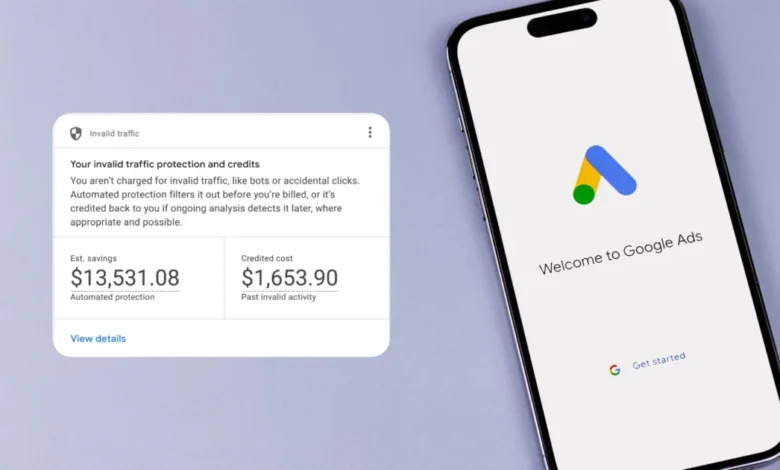
Google Ads has officially commenced the global rollout of a comprehensive feature designed to give digital marketers unprecedented visibility into how invalid traffic is handled across their campaigns. The new Invalid Traffic Overview Card consolidates previously fragmented data, offering a centralized view of both pre-billing filtered activity and post-billing credits issued to accounts. Announced by Google Ads Liaison Ginny Marvin via LinkedIn and further detailed in the latest edition of the Ads Decoded newsletter, the feature is now live for all global accounts and is fully integrated into Search Ads 360 for managing applicable Google Ads properties.
For years, digital advertisers have navigated a complex ecosystem where tracking invalid interactions—such as bot activity, accidental clicks, and deliberate attempts to artificially inflate ad spend—required cross-referencing multiple reports and sifting through monthly billing statements. While Google’s automated filters and manual review systems have consistently worked behind the scenes to intercept fraudulent or accidental engagement before it impacts an advertiser’s budget, the financial scope of those prevented charges remained opaque. The introduction of this new card bridges that reporting gap by translating blocked traffic into estimated monetary savings, giving media buyers a clearer picture of their campaign economics.
The Evolution of Invalid Traffic Detection and Reporting
To understand the significance of this rollout, it is helpful to examine the historical context of invalid traffic (IVT) management in digital advertising. Since the inception of pay-per-click (PPC) advertising models, click fraud and invalid impressions have posed significant challenges to both platforms and brands. Advertisers have long demanded transparency regarding how platforms identify and neutralize malicious traffic.
In response, major search engines and programmatic networks developed sophisticated multi-layered detection systems. These protocols analyze myriad signals, including IP addresses, user behavior, browser fingerprints, and interaction velocity, to distinguish between genuine human interest and automated scripts. However, until recently, reporting mechanisms primarily focused on volume metrics—such as the number of invalid clicks filtered—rather than the actual financial value saved.
Google’s introduction of the estimated savings metric on the new overview card marks a philosophical shift toward financial transparency. By quantifying the exact dollar amounts prevented from hitting invoices, Google is providing advertisers with tangible metrics that can be easily communicated to stakeholders, finance departments, and clients. This evolution reflects growing industry demands for granular, audit-ready data in an era where digital marketing budgets face intense scrutiny.
Anatomy of the New Invalid Traffic Overview Card
Located on the primary Google Ads Overview page beneath the Campaigns tab, the Invalid Traffic Overview Card is designed for rapid data consumption while offering deep-dive capabilities. The interface is engineered to streamline how media buyers audit their account health and verify billing adjustments.
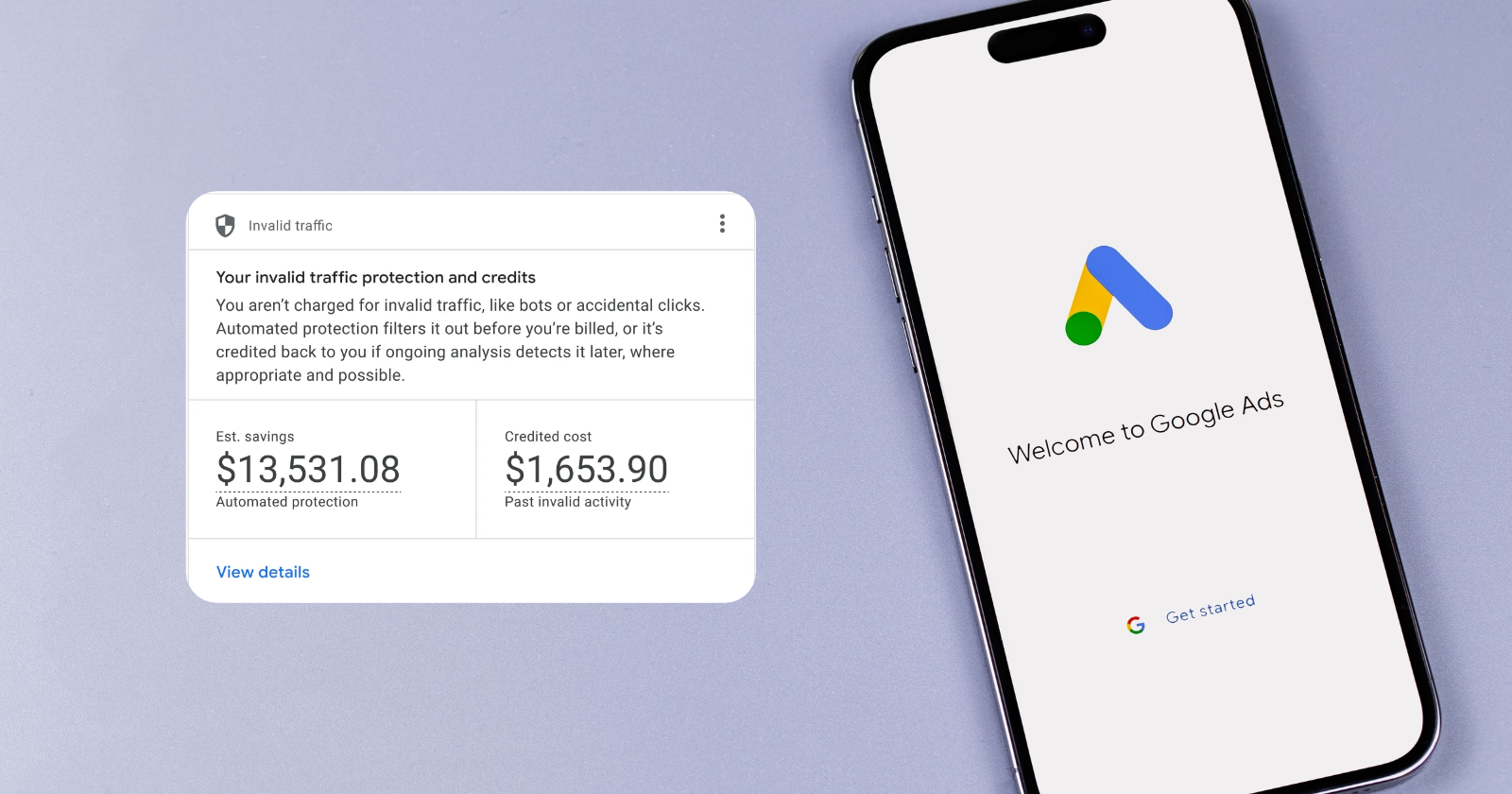
At its core, the card categorizes data into three primary reporting areas, anchored by the newly introduced estimated savings figure. While advertisers historically had access to invalid click percentages and raw counts, they lacked a direct translation of those figures into currency. The new card displays the estimated dollar value that Google’s filtration systems successfully blocked prior to billing.
Furthermore, when advertisers select the "View details" prompt within the card, the interface expands to reveal a comprehensive daily trend chart alongside a granular campaign-level table. This granular breakdown enables media buyers to isolate specific initiatives that may be attracting anomalous attention. Additionally, the view provides direct links to the specific monthly invoices where post-billing credits were successfully applied, eliminating the tedious cross-referencing process that previously defined IVT audits.
Post-Billing Adjustments and Performance Metric Discrepancies
One of the more nuanced technical challenges addressed in Google’s rollout involves the timing of IVT detection and its reflection in standard campaign performance reports. Because Google Ads locks standard campaign metrics at month-end to align seamlessly with formal billing records, any invalid traffic identified after that accounting window presents a reporting conundrum.
When Google detects and issues credits for invalid traffic post-billing, those financial adjustments do not automatically alter the Cost or Cost-Per-Acquisition (CPA) figures presented in the standard Campaigns table. This structural separation is designed to maintain historical consistency in financial records, but it can create discrepancies for analysts trying to reconcile spend reports with actual expenditures.
To bridge this gap, Google has introduced a dedicated reporting mechanism within the Report editor: the Invalid Activity Credit: Search & PMax report. Comprising ten specialized metrics—including Adjusted cost and Adjusted cost per conversion—this report allows performance marketers to evaluate true campaign expenditures with post-billing credits fully factored in. Crucially, these credits are attributed directly to the dates the ads originally ran, rather than the date the credit was formally issued. Advertisers can access this asset by navigating through the Report editor to pre-defined templates, ensuring they have an accurate financial baseline for Search and Performance Max campaigns.
Strategic Implications and Analytical Limitations for Media Buyers
While the introduction of the Invalid Traffic Overview Card represents a major step forward in platform transparency, industry experts emphasize that the data must be interpreted with appropriate context. The campaign-level breakdowns clearly highlight where Google’s filters are most active, but the raw dollar amounts require careful analysis.
For instance, a high-budget brand campaign or a large-scale Performance Max initiative will naturally display higher estimated savings simply because it commands a larger share of overall traffic and impressions. Comparing the raw dollar amounts of savings across campaigns of disparate sizes does not inherently indicate which initiatives suffer from severe traffic quality issues. Normalizing these savings against total spend or total impressions is essential for an accurate comparative analysis.
Moreover, transparency has its boundaries. The new card exclusively reflects invalid activity that Google’s proprietary systems have successfully identified and intercepted. It does not provide insight into sophisticated, zero-day fraudulent behaviors that may have bypassed detection algorithms entirely.
This distinction is particularly critical for lead-generation accounts. Many advertisers mistakenly assume that low invalid traffic percentages reported within Google Ads guarantee high lead quality. However, as Google Ads Liaison Ginny Marvin clarified in the Ads Decoded newsletter, platform filters are engineered to intercept invalid ad interactions, not necessarily fraudulent form submissions. Malicious actors or uninterested users may generate legitimate clicks and ad engagements before completing downstream conversions with fake data. Consequently, an account could exhibit minimal reported invalid traffic in Google Ads while still struggling with an influx of low-quality leads. To diagnose and resolve lead quality issues, advertisers must cross-reference Google Ads reporting with internal CRM data, sales pipeline metrics, and conversion tracking mechanisms rather than relying solely on the platform’s native invalid traffic metrics.
Industry Reception and Future Outlook
The broader digital marketing community has largely welcomed the rollout, viewing it as a constructive measure that enhances accountability. Agency leaders and in-house marketing directors have long advocated for clearer financial visibility, noting that streamlined reporting reduces administrative friction during monthly audits and client reviews.
As ad fraud tactics continue to evolve alongside advancements in artificial intelligence and automated web browsing, the cat-and-mouse game between ad platforms and malicious actors will undoubtedly persist. Features like the Invalid Traffic Overview Card signal an ongoing commitment by major publishers to equip advertisers with the analytical tools needed to navigate these modern digital threats. Moving forward, digital marketers are encouraged to integrate these new reporting views into their routine audits while maintaining a holistic approach to performance analysis that encompasses both platform-level data and downstream business outcomes.