
Every data scientist is intimately familiar with a specific, uneasy moment in the modeling lifecycle: a training script completes, the evaluation metrics are reviewed, and the model returns an astonishing 99 percent accuracy rate. Rather than prompting a celebration, this exceptional performance almost invariably triggers immediate skepticism. Nine times out of ten, the culprit is data leakage—the inadvertent inclusion of unauthorized information within the training data that would fundamentally be inaccessible during real-world prediction operations.

Data leakage represents one of the most pervasive and insidious challenges in applied machine learning. It quietly compromises predictive validity, transforming robust analytical pipelines into brittle systems that fail catastrophically upon deployment. To investigate how modern artificial intelligence handles this perennial pitfall, a recent empirical experiment was conducted using four real-world data projects. The study sought to answer two critical questions: how dramatically does data leakage artificially inflate performance metrics on authentic datasets, and can an unprompted AI model successfully identify these vulnerabilities simply by reviewing a plain-text description of the pipeline before execution?
Experimental Design and Methodology
To rigorously test these dynamics, researchers deliberately engineered four distinct, well-known leakage patterns into separate, authentic data science projects sourced from industry-standard repositories. Each leak was designed to enter the analytical pipeline through a different vector: a feature that mechanically dictates the target label, a variable constructed using unauthorized future information, a data-splitting strategy that blatantly ignores underlying relational structures, and a preprocessing sequence executed in the incorrect temporal order.

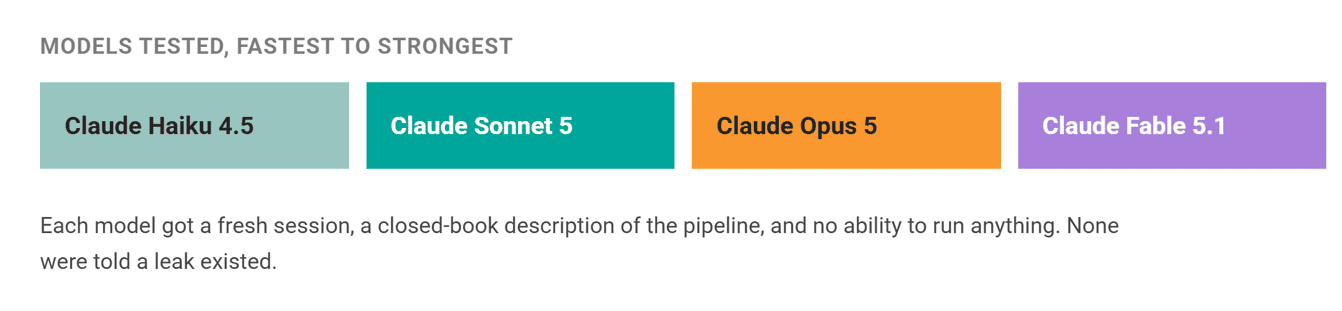
Once the datasets and pipelines were prepared, real machine learning models were trained under both leaked and clean conditions, recording the precise quantitative impact on performance metrics. In a parallel track, zero-memory analytical sessions were established with a suite of Anthropic Claude models spanning varying tiers of speed and capability—specifically Claude Haiku 4.5, Claude Sonnet 5, Claude Opus 5, and Claude Fable 5.1.
Crucially, the AI models were provided with closed-book descriptions of the features, pipelines, or code segments without the ability to execute code. They were given no prior hint, warning, or indication that a data leak existed within the provided material. The objective was to evaluate whether automated code and pipeline review could serve as an effective preventative safeguard against structural modeling errors.
Case 1: The Feature That Mechanically Knows the Answer
The first phase of the experiment utilized historical stock market datasets from the StrataScratch platform, specifically targeting the task of predicting Amazon stock price direction. The core objective was to determine whether Amazon’s daily closing price would land higher than that same day’s opening price, framing the target variable as a binary classification problem where the label equals one if the closing price exceeds the opening price, and zero otherwise.
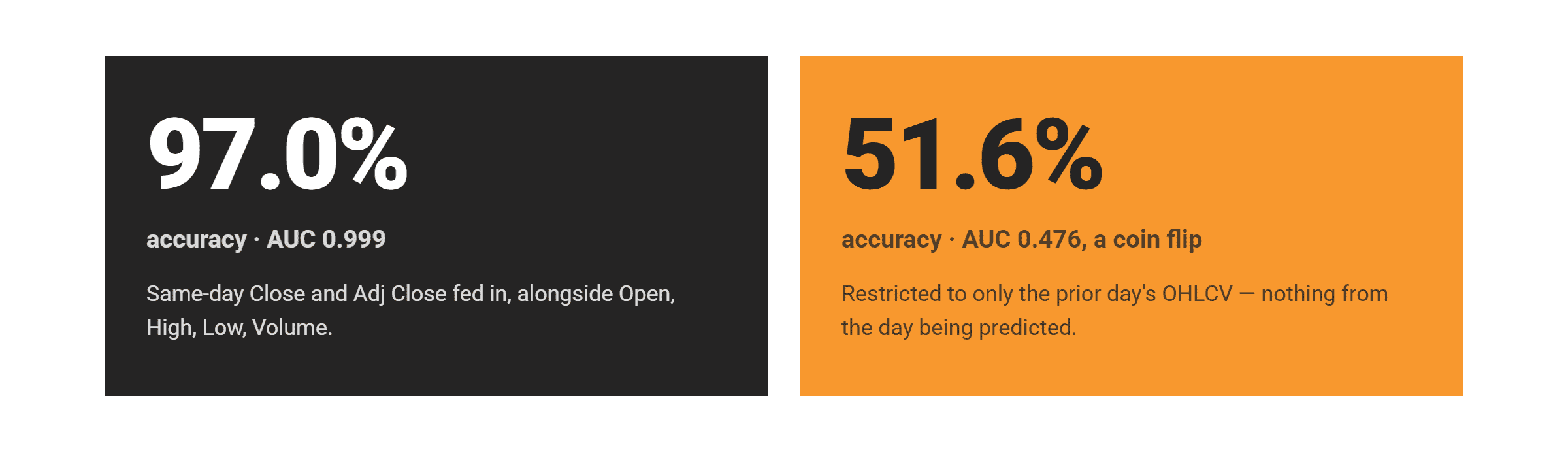
When the experimental pipeline fed the model the exact same day’s closing price and adjusted closing price alongside the opening, high, low, and volume metrics, the validation accuracy skyrocketed to an implausible 97.0 percent, accompanied by an Area Under the Curve (AUC) score of 0.999. However, when the pipeline was restricted strictly to the prior day’s market metrics—ensuring no contemporaneous or future information from the predicted day contaminated the feature set—the validation accuracy plummeted to 51.6 percent, with an AUC of 0.476, effectively representing a random coin flip.

When the pipeline description for this scenario was presented to the AI models, all four successfully identified the vulnerability instantaneously. Furthermore, they correctly deduced the structural mechanics of the failure. Haiku labeled the architecture "circular," while Sonnet noted that the model possessed the capability to reconstruct the target label via a straightforward, single comparison. Opus extended the analysis further without prompting, deducing that if the daily high equaled the opening price, the asset fundamentally never traded above the opening value, legally necessitating a label of zero. Opus additionally established an accurate baseline expectation, predicting that an honest, uncorrupted model should naturally achieve an accuracy in the low 50 percent range.
Case 2: Temporal Contamination and Chronological Splits
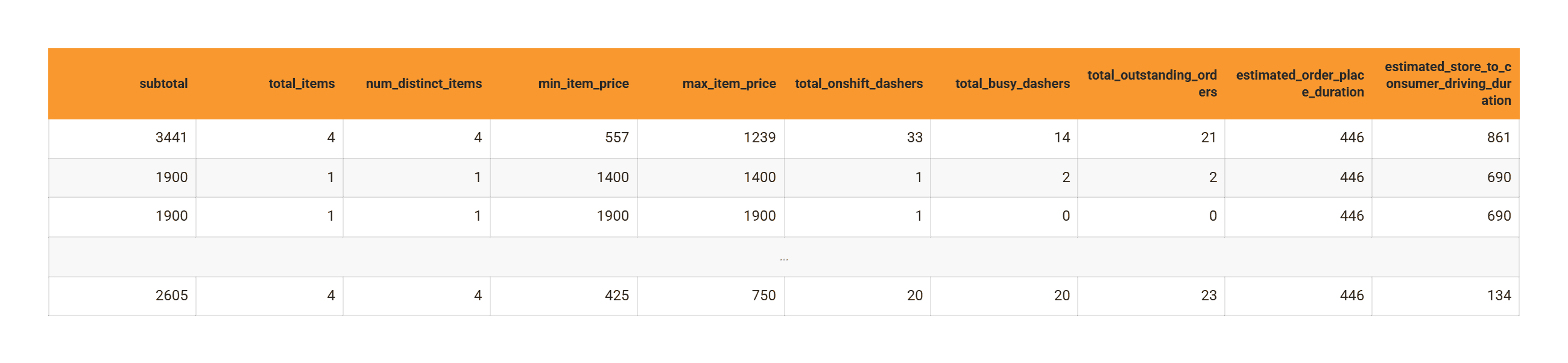
The second scenario examined a delivery duration prediction project utilizing historical order data from DoorDash, comprising nearly 200,000 distinct delivery records. The predictive task centered on calculating the exact delivery duration in seconds from the moment an order was placed to its final arrival.
Within this pipeline, researchers introduced an engineered feature representing the store’s average delivery duration. This feature introduced a dual-layer contamination vector. First, the store average was calculated by grouping the entire dataset—combining both training and testing subsets simultaneously—thereby allowing validation samples to directly inform the training features. For merchants with minimal order history, this metric effectively served as a smoothed proxy for the exact target value. Second, because the dataset relied on sequential timestamps, shuffling the table prior to an 80/20 train-test split permitted training rows to chronologically post-date testing rows, violating fundamental temporal causality.
Quantitatively, the leaked pipeline reported a Root Mean Squared Error (RMSE) of 862.7 seconds. Conversely, the honest, chronologically segregated pipeline yielded an RMSE of 949.9 seconds. Given that the median delivery time hovered around 44 minutes, the compromised model presented an illusion of superior predictive precision driven entirely by temporal data leakage rather than genuine pattern recognition.
Upon review, all four AI models successfully detected the store-average feature leak. However, only three of the four models—Sonnet, Opus, and Fable—unprompted, identified the fatal flaw of shuffling a timestamped dataset rather than applying a strict chronological split. Fable articulated the issue with exceptional clarity, noting that the training partition improperly contained orders that occurred chronologically after specific test-set observations. Haiku, conversely, addressed the feature-level leak but failed to detect the improper data partitioning strategy.
Case 3: Relational Data Structures and User-Level Contamination
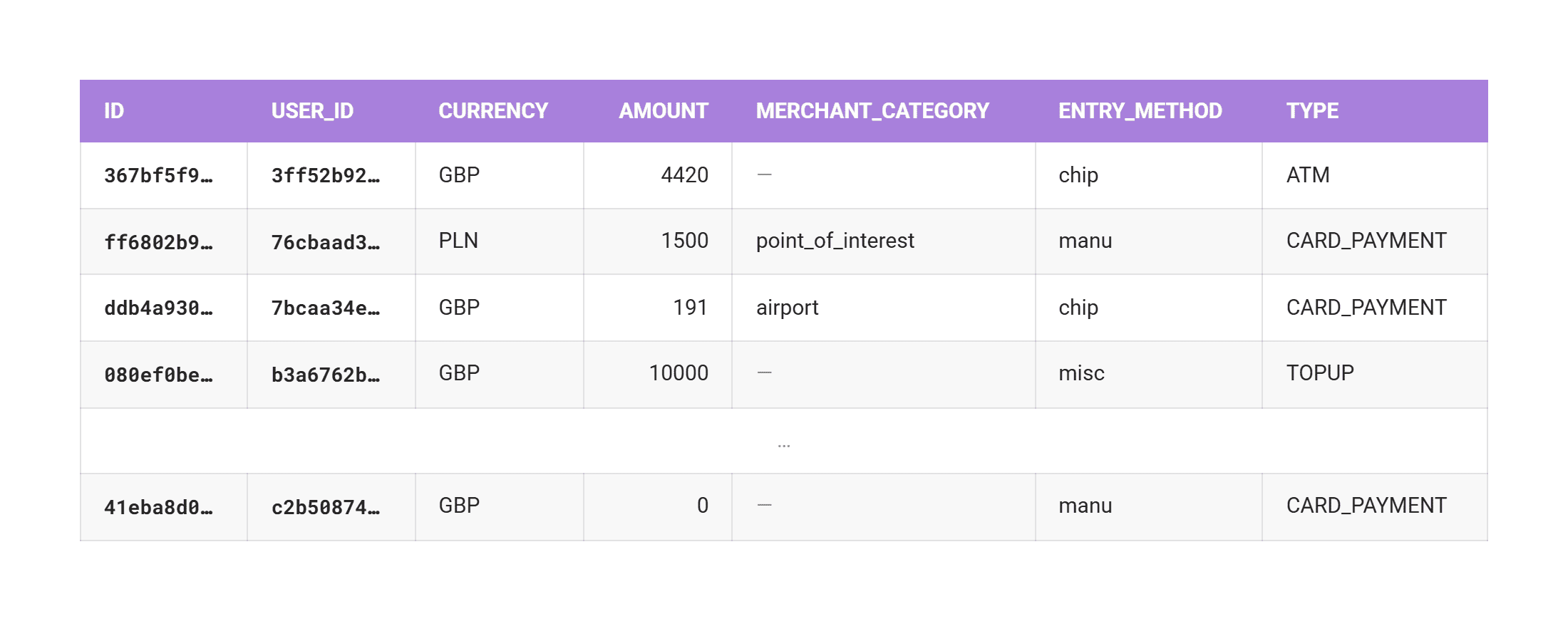
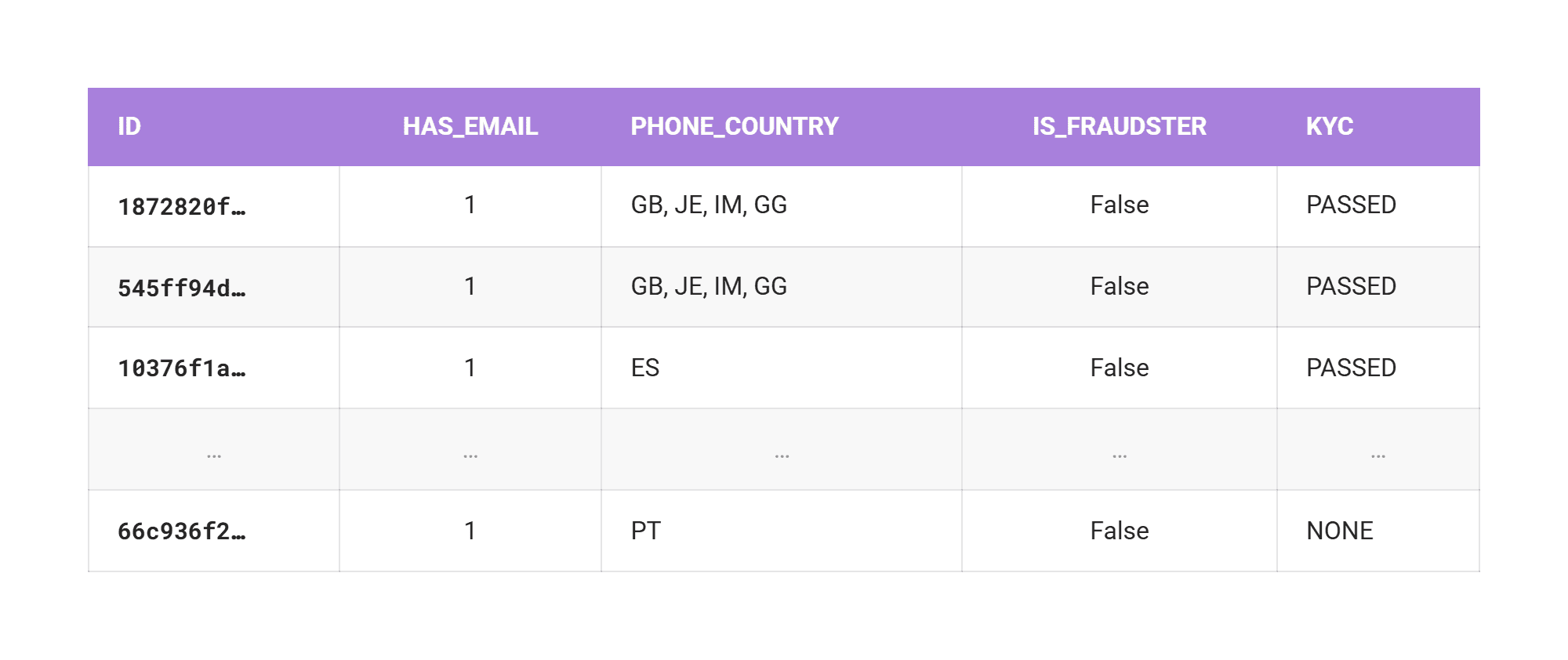
The third case study evaluated a fraudster detection pipeline utilizing banking data from Revolut, which exhibited a natural one-to-many relational schema consisting of user profiles paired with multi-row transaction histories. The primary objective was predicting whether a specific account holder qualified as a fraudster based on profile attributes and transactional behavior.

When researchers performed a standard, randomized row-level split on the joined relational table, approximately 87 percent of users maintained transactions distributed across both the training and testing partitions. Consequently, the test set frequently evaluated the model on novel transactions belonging to users whose profiles and historical behavior the algorithm had already encountered during training.
This relational oversight artificially inflated the model’s performance to an AUC of 0.960. When the dataset was correctly partitioned at the user level—ensuring absolute segregation so that no individual’s transaction history crossed the train-test boundary—the honest AUC settled at a realistic 0.898.
Every AI model evaluated in the study successfully isolated this mechanism without prompting, explaining that because the target label resided at the user level, a naive row-level split permitted the model to recognize familiar users rather than generalizing fraud patterns to previously unseen accounts. Opus delivered the most comprehensive critique, highlighting that the true sample size of the experiment was governed by the total count of unique users rather than the raw volume of transaction rows. Opus further flagged an auxiliary data leakage vector involving a backend account-status field that inadvertently categorized active versus locked accounts in direct alignment with the fraud labels.
Case 4: Preprocessing Sequences and Class Imbalance Management
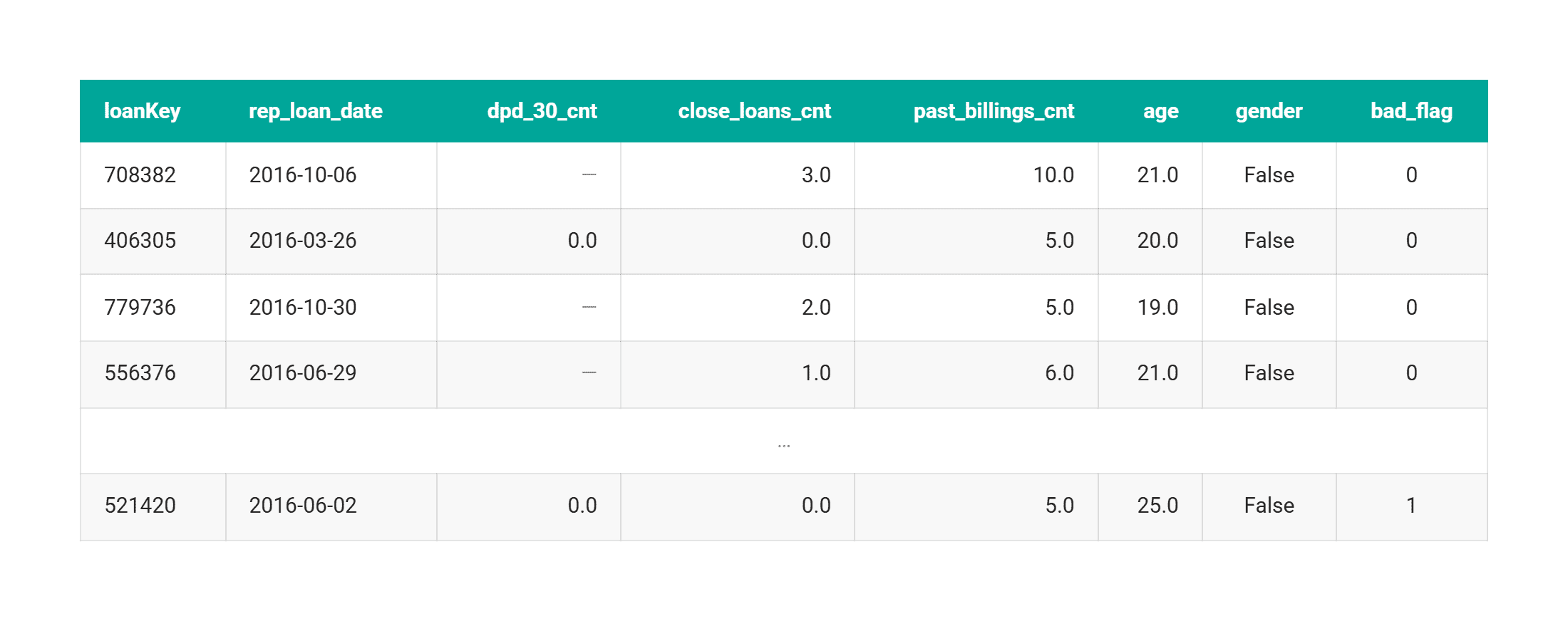
The final experimental phase investigated a loan default prediction pipeline derived from Chime data, characterized by a severe class imbalance where approximately 10 percent of loans represented positive defaults. To mitigate this structural imbalance, the initial pipeline executed an oversampling function that duplicated minority-class instances prior to executing the train-test split.
By performing oversampling before partitioning the dataset, identical duplicate copies of the same underlying loan records inevitably leaked into both the training and testing subsets. This sequencing error resulted in an inflated AUC score of 0.986. When the preprocessing steps were correctly inverted—partitioning the data first into pristine training and testing sets, and subsequently applying oversampling exclusively to the training partition—the evaluated AUC dropped to a modest 0.637.
Presented solely with a concise code snippet illustrating the flawed preprocessing order, all four AI models instantly flagged the methodology as a violation of validation integrity. Opus once again expanded its critique beyond the immediate bug, observing that applying stratification to already-balanced labels was statistically meaningless, questioning the necessity of oversampling versus utilizing class-weighted classifiers, and advising on appropriate evaluation metrics relative to specific operational review budgets.

Analytical Implications and Broader Industry Impact
The implications of this empirical study extend far beyond an academic exercise in pipeline debugging. As organizations increasingly integrate automated machine learning workflows and leverage large language models to accelerate software engineering and data science operations, the capacity to statically audit code and analytical logic becomes an invaluable defensive layer.
The findings demonstrate that modern artificial intelligence models possess a robust, innate capability to reason through structural statistical pitfalls. Even computationally lighter models, such as Claude Haiku, proved exceptionally reliable at catching primary, direct forms of data leakage when tasked with code and pipeline review. However, architectural complexity and depth of analysis scaled noticeably with model capacity. Advanced models like Opus consistently delivered secondary insights, identifying concurrent vulnerabilities, establishing realistic performance baselines, and challenging fundamental methodological assumptions.
Ultimately, integrating an automated code and pipeline audit into the preliminary phases of machine learning development offers a rapid, highly cost-effective barrier against compromised deployments. While human oversight remains indispensable for contextual interpretation, deploying large language models as preemptive code reviewers can dramatically reduce the frequency with which undetected data leakage propagates into production environments, safeguarding organizational analytics from the costly illusion of false precision.