As Large Language Model (LLM) interfaces move from experimental novelties to essential utilities, the digital divide threatens to widen for millions of individuals who rely on assistive technology. The rapid proliferation of immersive chat platforms—including industry leaders like ChatGPT, Claude, and Gemini—has outpaced standard accessibility compliance, creating a landscape where information and professional tools are frequently locked behind non-inclusive design patterns. For users of screen readers, voice control software, and other accessibility tools, the current "standard" web-based chat experience is often fraught with navigation dead-ends, silent updates, and visual-only feedback loops that render these powerful AI systems functionally unusable.
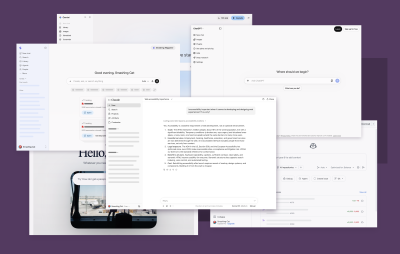
The core challenge lies in the "immersive" nature of these applications. Unlike traditional websites that rely on static content, LLM interfaces function as dynamic, state-heavy environments. In a typical session, a user submits a query, the model "thinks," and content streams into the interface in real-time. For a sighted user, this process is intuitive; for a user relying on a screen reader, the lack of appropriate ARIA (Accessible Rich Internet Applications) implementation means that the interface often appears frozen. Without proper programmatic announcements, the user is left unaware that the model has begun responding, let alone what that response contains. This failure to communicate state is more than a technical oversight; it is an exclusion from the modern digital economy, limiting access to knowledge, educational opportunities, and employment-enhancing tools.
A Chronology of Emerging Standards
The evolution of LLM accessibility has moved in three distinct phases over the past two years. Initially, in 2022 and early 2023, the focus was entirely on functionality and output quality. Accessibility was treated as an "optional enhancement" or a post-launch patching project. By late 2023, as legal pressure regarding digital compliance—specifically under the Americans with Disabilities Act (ADA) and the European Accessibility Act—began to mount, organizations shifted toward reactive remediation. We are currently entering the third phase: a move toward "accessibility-first" development. This shift recognizes that building inclusive interfaces from the ground up is not only more cost-effective but is essential for meeting the baseline requirements of modern web development.
Data and Accessibility Barriers

Research conducted by web accessibility advocacy groups highlights a sobering reality: despite the high technical literacy of LLM developers, the most popular chat interfaces often score poorly on automated accessibility audits. A 2024 analysis of leading chat platforms revealed that nearly 70% of these sites fail to properly announce the start and end of LLM message streaming.

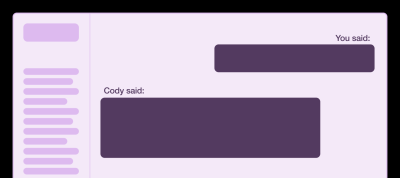
Furthermore, the visual bias inherent in current UI design poses significant hurdles. Developers frequently rely on spatial positioning—such as aligning user messages to the right and AI responses to the left—to distinguish between speakers. While this works for sighted users, it provides no context for screen reader users who navigate via a linear stream of text. Without explicit, hidden labels identifying the speaker (e.g., "User said" or "AI said"), the conversation becomes a disjointed stream of data. The industry is now converging on a set of best practices to resolve these issues, focusing on live region management, keyboard-accessible navigation, and the standardization of landmarks.

Technical Strategies for Inclusive Design

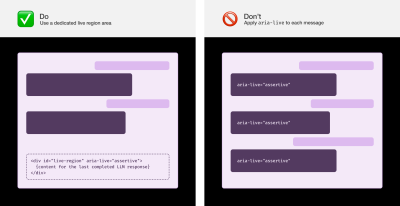
The most effective method for bridging this gap is the intelligent use of live regions. Developers should avoid the common pitfall of attaching aria-live attributes to individual message bubbles, which can cause screen readers to stutter or announce incomplete, streaming data. Instead, a best-practice architecture involves a dedicated, stable live region at the end of the DOM that announces the full, completed message once the streaming process has finished. This ensures that the user receives the information in a coherent, readable format rather than a chaotic stream of partial words.

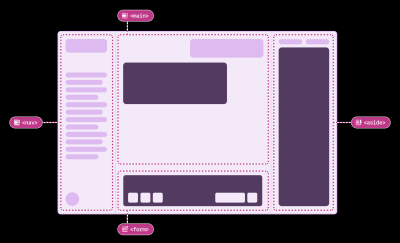
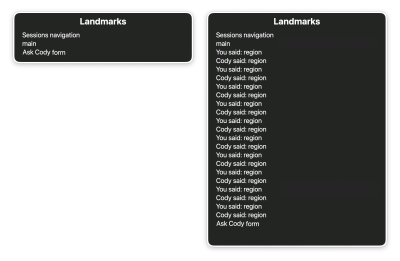
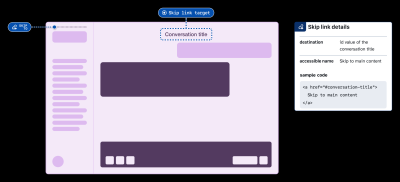
Beyond live regions, navigation must be reimagined for those who cannot rely on a mouse. Implementing landmark regions—such as <nav> for session history, <main> for the conversation, and <form> for the input—allows users to jump between sections using keyboard shortcuts. However, developers are cautioned against "landmark pollution." By wrapping every individual chat message in a landmark, developers can unintentionally clutter the navigation menu, making it difficult for users to find the core functional areas of the app. A more elegant solution is the use of visually hidden headings, which provide a reliable anchor point for screen readers to index the conversation history.
The Role of User Preferences and Customization
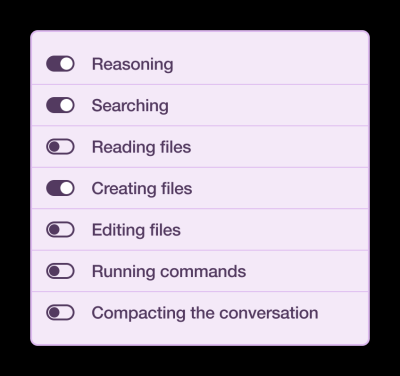
True accessibility acknowledges that one size does not fit all. For users with cognitive disabilities or those who are neurodivergent, the constant, shifting animations of a streaming LLM can be distracting or cause sensory overload. Developers are increasingly implementing "reduced motion" settings, allowing users to disable real-time text streaming and animations. Furthermore, providing options for re-bindable keyboard shortcuts allows users to tailor the interface to their specific motor capabilities, preventing the fatigue associated with repetitive, non-customizable interactions.
Sound-based notifications also play a complex role. While they can provide critical feedback for a process starting or ending, they can also interfere with white noise or music used by users to maintain focus. Allowing granular control over these audio cues—or providing haptic feedback alternatives—is a hallmark of a mature, inclusive platform.
Legal and Ethical Implications
The legal landscape surrounding AI accessibility is sharpening. With the introduction of the European Accessibility Act (EAA) and updated interpretations of Section 508 of the Rehabilitation Act in the United States, companies that fail to provide accessible AI interfaces face significant litigation risk. Beyond the courtroom, the ethical imperative is clear: LLMs are increasingly being used as the primary interface for government services, healthcare information, and job search platforms. If these interfaces remain inaccessible, the result is a systemic exclusion of disabled citizens from the most significant technological advancement of the decade.
The Future of Accessible AI
As the industry looks toward the future, new tools like ariaNotify() are set to simplify the management of live updates. While this native browser capability is promising, it is not yet a universal panacea, and developers are currently encouraged to rely on established, robust patterns like the TetraLogical live region techniques.
Ultimately, the most effective path toward accessibility is inclusive user research. By involving disabled individuals in the design and testing phases, organizations can move beyond basic compliance and create environments that are genuinely intuitive. As these technologies continue to permeate every aspect of professional and personal life, the standard for a "functional" digital experience must be raised to include every user, regardless of how they access the web. The goal is not merely to "fix" bugs, but to fundamentally shift the design culture to recognize that accessible, inclusive AI is the only version of AI that can truly serve the entire public.
As we refine these standards, the industry must remain vigilant, constantly auditing for new barriers as AI capabilities—such as multimodal inputs and complex agentic reasoning—continue to evolve. The lessons learned in the early days of chat-based UI will serve as the foundation for the next generation of human-computer interaction, ensuring that as machines become more intelligent, they also become more approachable for everyone.