White House Network Compromised by Residential Proxy Services Linked to Russian Cyber Actors

In a significant breach of digital hygiene and network security, multiple devices connected to the Executive Office of the President’s private network have been identified as functioning as exit nodes for residential proxy services. These services, which allow third parties to rent the internet addresses of unsuspecting users to mask their web traffic, have effectively turned high-level government workstations into gateways for anonymous internet activity. Security researchers have confirmed that among the services operating within the White House network is Infatica, a proxy provider founded by Vladimir Fomenko, a Russian national whose infrastructure was previously implicated in the 2016 interference in United States election systems.
The discovery, first reported by security firm Layer3 Intel, highlights a growing and often overlooked vulnerability in government cybersecurity: the proliferation of "free" software that monetizes user bandwidth by selling it to the highest bidder. This development raises urgent questions regarding the protocols governing mobile and desktop applications permitted on government-issued or employee-owned hardware used within federal facilities.
Chronology of the Exposure
The presence of these proxies was not the result of a targeted infiltration by foreign intelligence agencies, but rather a byproduct of the casual installation of applications that integrate residential proxy SDKs (Software Development Kits). Layer3 Intel, while conducting routine monitoring of global rotating residential proxy networks, observed a recurring pattern of traffic originating from the Executive Office of the President’s dedicated internet address network, identified as AS2650.
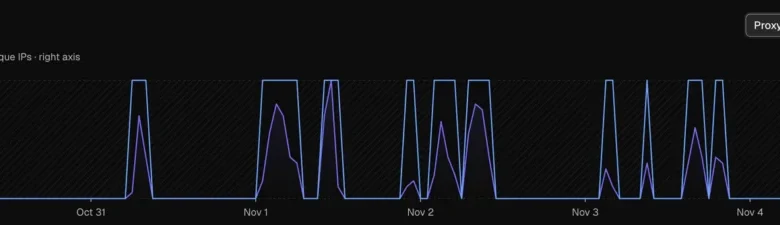
Between October 5 and November 3, researchers detected 236 distinct instances where proxy activity exited directly from the White House network. The activity followed a distinct temporal pattern, predominantly occurring between the hours of 5 p.m. and midnight, suggesting that the traffic was not related to official state business but rather occurred during the off-hours of the staffers who owned the devices.
Security firm Synthient, which collaborated on the analysis, confirmed via its tracking of proxy node telemetry that the traffic was linked to Windows 11 installations of the Infatica service. The frequency of this traffic—detected on 26 of the 30 days monitored—indicates that these were not isolated incidents of a single user, but rather a persistent state of network exposure that allowed unauthorized parties to route traffic through the White House’s internal infrastructure.
The Infatica Connection and Historical Context
The involvement of Infatica brings a troubling historical dimension to this security failure. Vladimir Fomenko, the founder of Infatica, was the proprietor of King Servers, a hosting provider that provided the infrastructure for several cyberattacks against election databases in Arizona and Illinois in 2016. At the time, six of the eight IP addresses used by Russian state-sponsored actors to target these systems were traced back to King Servers.
While there is no evidence that the current proxy activity is part of a coordinated state-sponsored espionage campaign, the use of a service with such provenance within the most secure facility in the United States represents a severe lapse in operational security. Residential proxy networks are notoriously difficult to police, often lacking robust "Know Your Customer" (KYC) requirements, which allows malicious actors to purchase access to specific geographical locations or network blocks for pennies on the dollar.
The Mechanics of Residential Proxy Abuse
Residential proxy services operate by turning a user’s device into an exit node. When a user installs an application—often disguised as a free VPN, a browser extension, or a system utility—they agree to a terms-of-service agreement that allows the provider to lease their IP address. To the rest of the internet, any traffic routed through that device appears to originate from the owner’s network, rather than the true customer of the proxy service.
This "anonymization" is highly sought after by cybercriminals. It is frequently utilized for:
- Credential Stuffing: Using stolen passwords to hijack accounts.
- Advertising Fraud: Generating fake clicks on paid advertisements.
- Content Scraping: Mass-harvesting data for AI model training while bypassing rate limits.
- Local Network Probing: As demonstrated in previous incidents, attackers can use these proxies to scan the local area network of the device owner to identify vulnerable IoT devices or internal systems.
Ben Brundage, founder of the proxy tracking firm Synthient, noted that the cost of entry is alarmingly low. "Some of these resellers sell bandwidth for as low as 60 cents a Gigabyte," Brundage stated. "That means for less than a dollar, you can gain access into some of the most confidential and trusted networks."
A Broader Systemic Vulnerability
The vulnerability identified at the White House is not unique to the executive branch. It is part of a wider ecosystem of digital insecurity that affects critical infrastructure worldwide. In January 2026, the proxy tracking service Spur released data indicating that residential proxy nodes were present in nearly 300 government-owned networks, 318 utility companies, 166 healthcare organizations, and 141 financial institutions.
The security firm Infoblox further underscored the scale of the issue, reporting that approximately 65% of its corporate customer base was regularly querying domains associated with residential proxy services. This suggests that the "bring your own device" (BYOD) culture, combined with the lack of rigorous network egress filtering, has created a situation where sensitive corporate and government environments are constantly being used as unwitting conduits for third-party traffic.
Security Implications and Future Risks
The implications of this breach are twofold: data exfiltration and network exploitation. By allowing an unknown third party to route traffic through the White House network, the staffers involved have effectively opened a "backdoor" into the internal digital perimeter. Even if the traffic is innocuous, the mere existence of a proxy node allows an attacker to bypass firewalls and security controls that are designed to restrict access from outside the network.
Furthermore, the vulnerability is not limited to the proxy service itself. In late 2025 and early 2026, security researchers identified that cybercriminals were actively exploiting vulnerabilities within the proxy software to gain remote code execution (RCE) on the host devices. This means that a malicious actor purchasing access through a proxy service could theoretically move from the proxy node to the host machine, potentially gaining access to the internal White House environment.
Official Response and Remediation
The White House has yet to provide an official statement regarding the findings. However, security professionals emphasize that the remediation process for such a breach must be aggressive. It requires:
- Strict Egress Filtering: Organizations must block traffic to known residential proxy exit nodes at the firewall level.
- Endpoint Management: Deploying more stringent mobile device management (MDM) policies that prohibit the installation of unauthorized third-party software, particularly those that integrate SDKs.
- Network Monitoring: Implementing advanced behavioral analytics to identify "beaconing" or abnormal traffic patterns that deviate from standard user activity.
The case of the White House proxy nodes serves as a stark reminder of the erosion of the "trusted network" concept. As the lines between personal devices and professional work environments continue to blur, the risk posed by the shadow economy of residential proxies grows. Without a concerted effort to vet the applications running on federal systems and to restrict the capabilities of the networks they inhabit, the Executive Office of the President—and institutions like it—remain vulnerable to a persistent and silent threat that hides in plain sight.
The incident underscores the urgent necessity for a comprehensive audit of all devices connected to the White House network, specifically looking for the "free" utilities that serve as the foundation for the proxy industry. Until such measures are implemented, the security of the nation’s most sensitive network remains compromised by the very tools meant to facilitate internet connectivity.
Related posts: