Australian Federal Police Dismantle TeamPCP Cybercrime Syndicate in Landmark Supply Chain Operation

The Australian Federal Police (AFP) have successfully concluded a high-stakes investigation into TeamPCP, a prolific and destructive cybercrime collective responsible for what security analysts describe as the longest-running and most sophisticated software supply chain attack campaign in history. In a coordinated operation, authorities arrested two men, aged 21 and 23, in Western Australia, effectively dismantling the core leadership of a group that has systematically compromised thousands of global businesses. The suspects, identified through legal proceedings as Ruben Ian Thomson and Michael Gaebler, faced 14 combined cybercrime charges following their appearance at the Perth Magistrates Court.

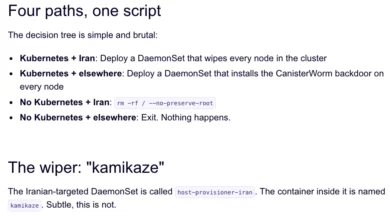
The arrests mark a significant victory for international law enforcement, including the Federal Bureau of Investigation (FBI) and local Western Australian authorities, who worked in tandem to track the group’s digital footprint across continents. The operation specifically targeted the syndicate’s infrastructure, which relied on the deployment of a self-propagating worm known as Shai-Hulud to infiltrate and weaponize open-source software development environments.
The Rise and Tactics of TeamPCP
TeamPCP emerged as a significant threat in late 2025, operating with a level of technical audacity rarely seen in independent cybercriminal groups. Rather than relying on traditional ransomware-as-a-service models, the group focused on poisoning the very tools upon which modern software development is built. By compromising legitimate open-source repositories on platforms like GitHub and NPM, TeamPCP turned the software supply chain against itself.

The group’s core methodology involved a cyclical exploitation model. Once the hackers gained unauthorized access to a network where an open-source tool was being developed, they embedded malicious payloads into the code. When other developers subsequently downloaded these tools—a standard practice in modern programming—the malware would execute on their local machines. This allowed TeamPCP to harvest credentials, which they used to publish even more malicious versions of popular development tools, creating a self-sustaining loop of infection that expanded their reach exponentially.
By early 2026, the group’s operations had reached a fever pitch. In March, they targeted the AI infrastructure firm LiteLLM. Security research by CloudSEK indicates that this single breach resulted in the harvesting of cloud service keys and sensitive secrets from over 2,500 organizations, including major global technology firms. By May, TeamPCP claimed to have compromised at least 3,800 code repositories on GitHub, a staggering figure that highlighted the fragility of current software distribution models.

Chronology of the Investigation
The downfall of TeamPCP was not the result of a single break, but rather a culmination of intelligence gathering and poor operational security (OPSEC) by the group’s leadership. The investigation gained significant momentum in June 2026, when security researchers began linking the online persona of the group’s primary architect, operating under handles like "Ellis," "BulkDMT," and "Deadcatx3," to real-world identifiers in Western Australia.
- 2022–2024: Early indicators of activity appear on cybercrime forums such as Raidforums and Nulled, where accounts linked to Ruben Thomson begin advertising illicit services and hosting solutions.
- Late 2025: TeamPCP officially launches, deploying the Shai-Hulud worm and initiating mass-scale supply chain compromises.
- March 2026: TeamPCP executes the high-profile breach of LiteLLM, triggering alarm across the cybersecurity industry and intensifying international investigations.
- May 2026: The group announces a "recruitment contest," offering Monero (XMR) prizes for the most successful supply chain attacks, which intelligence firms correctly identify as a talent acquisition strategy.
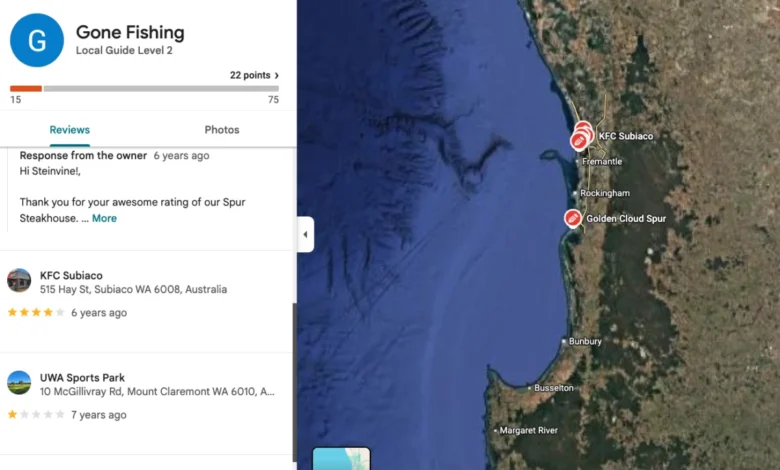
- July 2026: Security researchers and journalists identify a clear trail of breadcrumbs, including business filings, HackerOne profiles, and public Google Maps reviews that link the group’s leaders to the Perth area.
- August 2026: The AFP conducts raids in Western Australia, taking the primary suspects into custody and securing evidence that links the individuals to the TeamPCP infrastructure.
The "Cybercats" Network and Human Factors
Analysts at Google Threat Intelligence and other firms describe TeamPCP not as a singular, monolithic organization, but as a "center of gravity" for a broader, loosely affiliated network of actors known as "Cybercats." This community, which operated primarily through Matrix chat servers, acted as a clearinghouse for stolen credentials, exploit development, and data extortion.

The human element of TeamPCP was characterized by a chaotic intersection of technical talent and personal volatility. Evidence recovered from internal chats and social media presence revealed a group deeply entrenched in substance abuse and erratic behavior. The group’s spokesperson, Ruben Thomson, frequently discussed his struggles with narcotics, which occasionally led to prolonged, unexplained absences from the group’s operations.
The group’s undoing was exacerbated by a profound failure in operational security. Despite their technical sophistication, the leaders frequently used their real-world identities to register businesses, open bug-bounty accounts, and leave digital footprints that were easily traced by investigators using passive DNS records and publicly available threat intelligence databases.

Industry Response and Security Implications
The fallout from TeamPCP’s campaign has forced a fundamental shift in how the software industry manages dependency updates. Security researcher Charlie Eriksen, writing for Aikido Security, noted that TeamPCP’s activities served as a "wake-up call" for major repository hosts.
In response to the persistent threat posed by poisoned updates, GitHub implemented a mandatory three-day "cooldown" period for its Dependabot service in late July 2026. This measure is intended to provide a buffer, allowing maintainers and security tools to detect and neutralize malicious code before it can be automatically propagated to thousands of downstream users. Other coding ecosystems have followed suit, signaling a broader industry move toward "defensive coding" and heightened scrutiny of automated package management.

The Role of Artificial Intelligence
A critical finding in the post-mortem analysis of TeamPCP is the role of large language models (LLMs) in accelerating the threat actor’s capabilities. Security experts emphasize that while TeamPCP possessed raw talent, the use of AI tools significantly compressed the time required to move from identifying a vulnerability to executing an operational campaign.
By automating the generation of exploits and the management of server infrastructure, AI enabled the group to operate at a scale that would have previously required a much larger, more coordinated team. However, this ease of use also lowered the barrier to entry, allowing individuals who lacked professional discipline to cause enterprise-level damage. As Eriksen observed, these actors were "noisy" and prone to errors that traditional, professionalized criminal syndicates would avoid, but their lack of restraint made them disproportionately dangerous.

Legal and Social Consequences
Following the arrests, the legal process has moved swiftly. Ruben Ian Thomson was denied bail, reflecting the severity of the charges and the potential risk of flight. His co-defendant, Michael Gaebler, remains in custody. The two men are scheduled for further court appearances in mid-September.
The case of TeamPCP serves as a stark reminder of the vulnerability of the global software supply chain. The group’s legacy is defined by a paradox: their destructive actions humiliated major tech platforms into adopting necessary security reforms that had been stalled for years. While the arrest of the individuals behind TeamPCP provides immediate closure for the affected organizations, the industry remains focused on the broader, systemic changes required to prevent the next iteration of such a group from succeeding.

For the cybersecurity community, the lesson is clear: as long as the software development lifecycle remains dependent on implicit trust and rapid, automated updates, it will remain a prime target for those who can bridge the gap between research and mass-scale exploitation. The dismantling of TeamPCP is a significant milestone, but the structural issues they exploited continue to be a primary focus for security professionals globally.