Enterprise Social Media Strategy Guide: Fix Scattered Approvals, Unify Global Teams, and Prove ROI with the Right Roles and AI Governance.

The strategic deployment of social platforms by large organizations, commonly referred to as enterprise social media, has evolved into a critical mechanism for managing brand communications, engaging customers, and extracting valuable business intelligence at scale. This comprehensive approach is underpinned by a robust enterprise social media strategy – a meticulously crafted blueprint that dictates an organization’s presence across diverse platforms, the technological infrastructure employed, and the standardized processes implemented to ensure unwavering brand consistency and operational efficiency. In an era where digital presence directly correlates with market relevance, a well-defined strategy is no longer optional but a fundamental requirement for competitive advantage.
It is crucial to distinguish enterprise social media from an enterprise social network. While both leverage digital communication, their primary objectives and audiences diverge significantly. Enterprise social media is outwardly focused, serving as a vital channel for marketing, public relations, and customer interaction with external stakeholders such as consumers, prospects, and the general public. In contrast, an enterprise social network functions as an internal collaboration tool, designed exclusively for employee communication, knowledge sharing, and fostering internal cohesion. Platforms like LinkedIn, Instagram, and TikTok exemplify enterprise social media, driving external engagement, reach, and sentiment analysis. Conversely, internal systems such as Yammer, Viva Engage, or Slack are classified as enterprise social networks, with success measured by adoption rates, participation levels, and the efficacy of internal knowledge transfer.

The Distinct Landscape of Enterprise Social Media Management
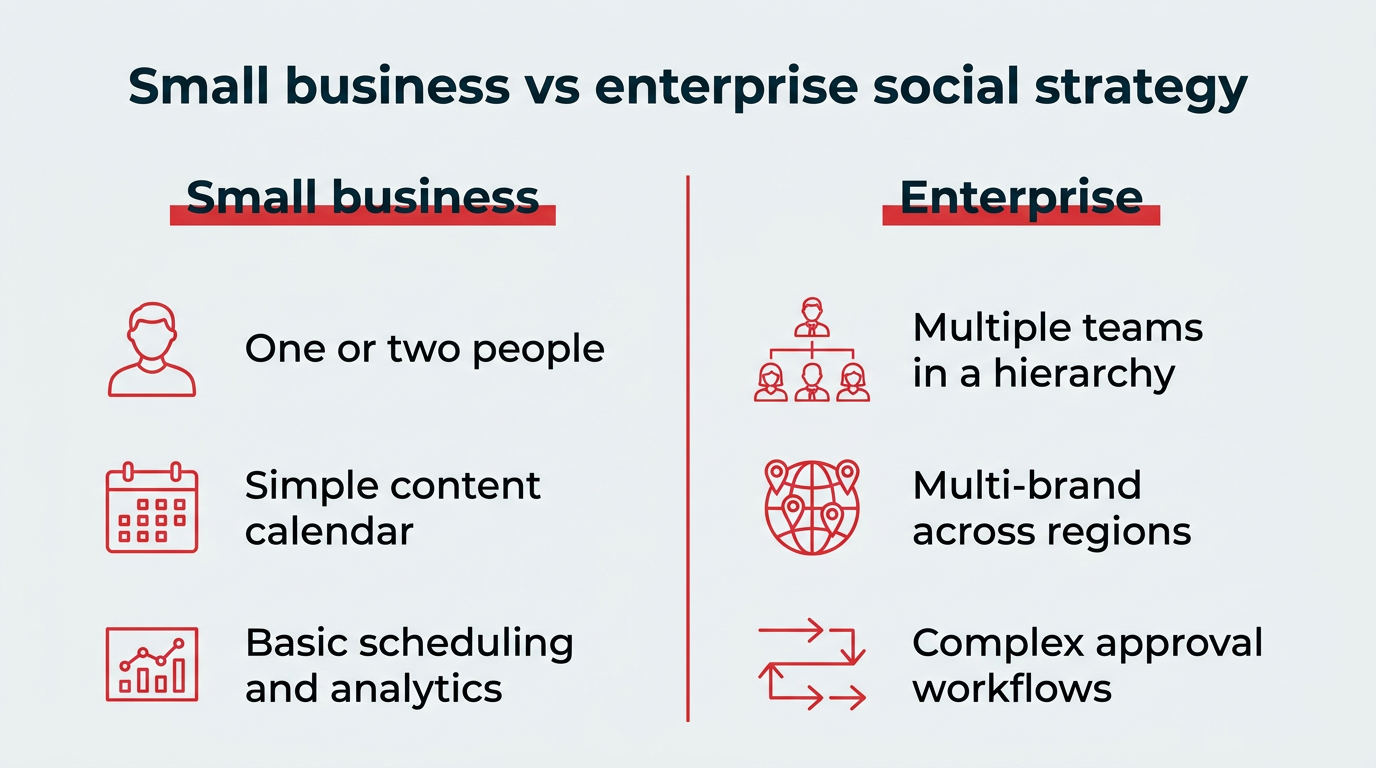
Managing social media at an enterprise level presents a far more intricate and expansive challenge than for small businesses. The sheer scale of operations, encompassing multiple brands, diverse geographical regions, and varied target audiences, necessitates a sophisticated strategy with numerous interconnected components. A small business might effectively manage its social presence with a compact team, relying on a basic content calendar and a few scheduling and analytics tools. This streamlined approach prioritizes visibility and direct engagement within a limited scope.
For large enterprises, however, the strategic imperative extends far beyond mere visibility. It encompasses rigorous governance, scalable operations, and comprehensive risk management. Key elements typically found within an enterprise social media strategy include:

- A centralized content calendar for overarching planning.
- Advanced social listening tools for real-time market insights.
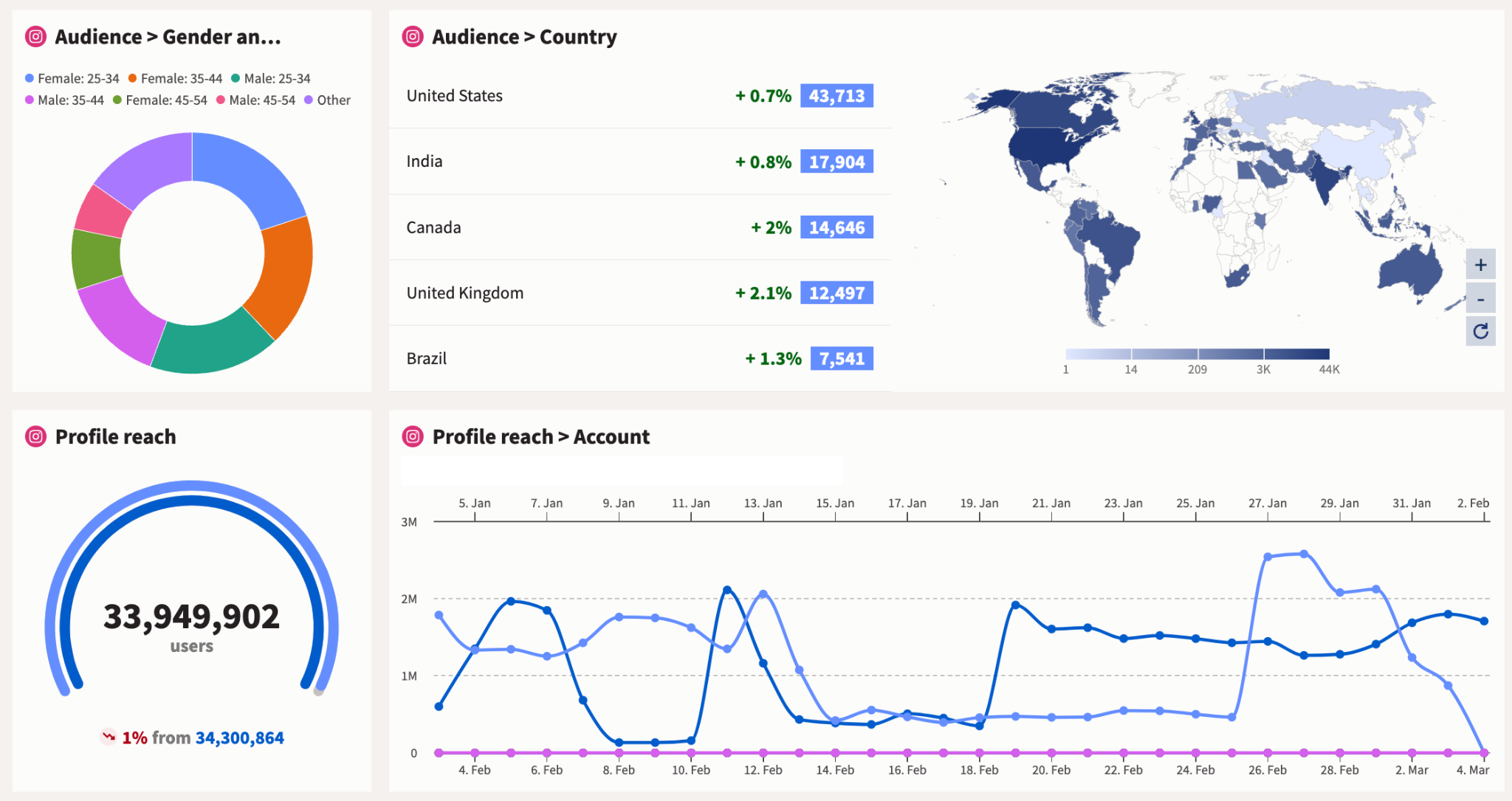
- Sophisticated analytics and reporting dashboards to track performance across all channels.
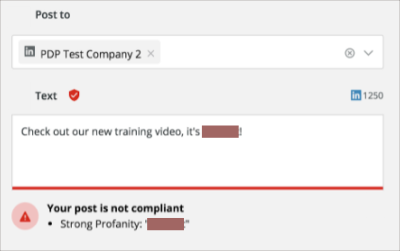
- Robust compliance and governance frameworks to adhere to industry regulations and internal policies.
- Multi-brand and multi-region management capabilities.
- Comprehensive approval workflows to ensure brand consistency and legal adherence.
- Employee advocacy programs to amplify organic reach.
- Crisis management protocols to swiftly address reputational threats.
- Integration with broader business intelligence and CRM systems.
Savannah Wiles, Staff Marketing Manager, Social & Influencer at Intuit Mailchimp, emphasizes the foundational elements of a strong enterprise social strategy: "A strong enterprise social strategy comes down to three things: your audience, your brand, and your goals." Wiles stresses the importance of viewing the audience as real individuals rather than abstract job titles and advocates for cultivating a unique, humanized brand persona. "Brands on social are almost cosplaying as people, so duality is possible with structure around where and when you shift," she notes. Crucially, Wiles adds, "Finally, every post should provide value, hard stop. That could mean driving downloads with new POVs or data, but it may also mean being relatable to drive engagements and shares."
The Imperative of a Unified Strategy for Large Organizations
In the absence of a unified strategy, large organizations risk fragmentation, inconsistency, and a diluted brand message. A coherent strategy provides a singular focus, transforming social media from a mere communication tool into a powerful growth engine. Consider global giants like Nike, which maintains hundreds of secondary Instagram accounts, each targeting distinct audiences and regions. While each account operates with its own team of managers and content creators, their individual objectives must seamlessly align with Nike’s overarching business goals and stringent brand guidelines. This complexity is further compounded by product-specific messaging, evolving legal compliance requirements, and numerous external collaborations, underscoring the critical need for a centralized, unified strategy.
The core components of such an enterprise strategy typically encompass:
- Clearly defined strategic goals and Key Performance Indicators (KPIs).
- Detailed roles, responsibilities, and a robust governance framework.
- Selection and integration of appropriate tools and data systems.
- Comprehensive content and brand standards.
- Strict compliance and regulatory policies, especially for regulated industries.
- A unified global strategy with adaptability for local markets.
- Continuous measurement and optimization processes.
- Built-in adaptability to respond to market shifts and emerging trends.
Navigating the Complexities of Scale and Brand Trust
By 2026, social media is projected to constitute a $276 billion global advertising market, solidifying its position as an indispensable business channel for enterprise-level corporations. A well-articulated strategy ensures consistency, compliance, and competitiveness, simultaneously mitigating the coordination challenges that inevitably arise with the expansion into new regions, brands, and accounts.
Challenges of Scale: Enterprises contend with a multitude of brands, regions, and audiences, often spanning disparate time zones and languages. This translates into the arduous task of coordinating content approvals when half the team is offline, navigating a labyrinth of regulatory rules that vary by market, and overcoming the tool fragmentation that frequently occurs when individual teams procure their own software solutions. A centralized strategy is pivotal for ensuring:
- Brand Consistency: Maintaining a unified voice and visual identity across all platforms and regions.
- Operational Efficiency: Streamlining workflows and approval processes to prevent bottlenecks.
- Regulatory Compliance: Adhering to diverse legal and industry-specific regulations globally.
- Resource Optimization: Preventing duplication of effort and maximizing the impact of social media investments.
Protecting Brand Trust in Complex Environments: The larger an organization, the higher the stakes associated with its social media presence. Every single post serves as a direct representation of the brand, and a solitary misstep can rapidly escalate into a widespread reputational crisis. A poorly phrased reply or an off-brand post from a regional account can cause significant damage before senior leadership is even aware. Consequently, brand consistency and early detection mechanisms are paramount at scale. A robust strategy incorporates:
- Unified Messaging: Ensuring all communications align with core brand values and guidelines.
- Proactive Reputation Management: Utilizing social listening to identify and address potential issues swiftly.
- Clear Crisis Communication Protocols: Establishing predefined responses for various scenarios to protect brand integrity.
- Centralized Oversight: Providing a holistic view of all social activity to monitor compliance and consistency.
Leveraging Social as a Growth Engine: Social media has transcended its initial role as a communication channel to become a significant revenue driver. Projections indicate that U.S. social commerce will exceed $100 billion by 2026, underscoring its integral role in a brand’s external ecosystem. Social platforms are often the first point of contact for consumers seeking to understand a brand. Enterprises can harness social media to:
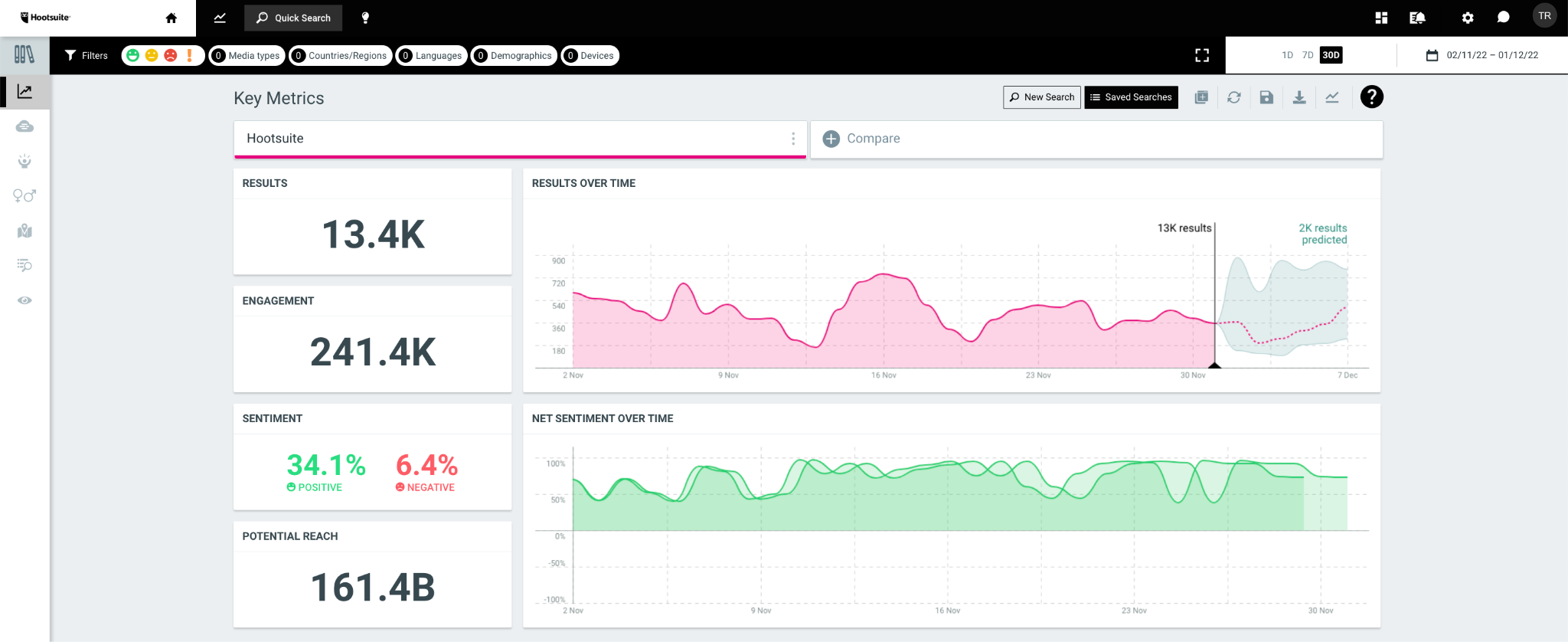
- Drive Brand Awareness and Recall: Expand reach and reinforce brand identity.
- Generate Qualified Leads: Convert social engagement into tangible business opportunities.
- Boost Sales and Conversions: Facilitate direct purchases or guide users to conversion points.
- Enhance Customer Service and Support: Provide real-time assistance and address customer queries.
- Gather Market Intelligence: Collect valuable insights into customer preferences and market trends.
- Foster Community and Loyalty: Build a loyal customer base through engaging interactions.
The Transformative Role of Artificial Intelligence
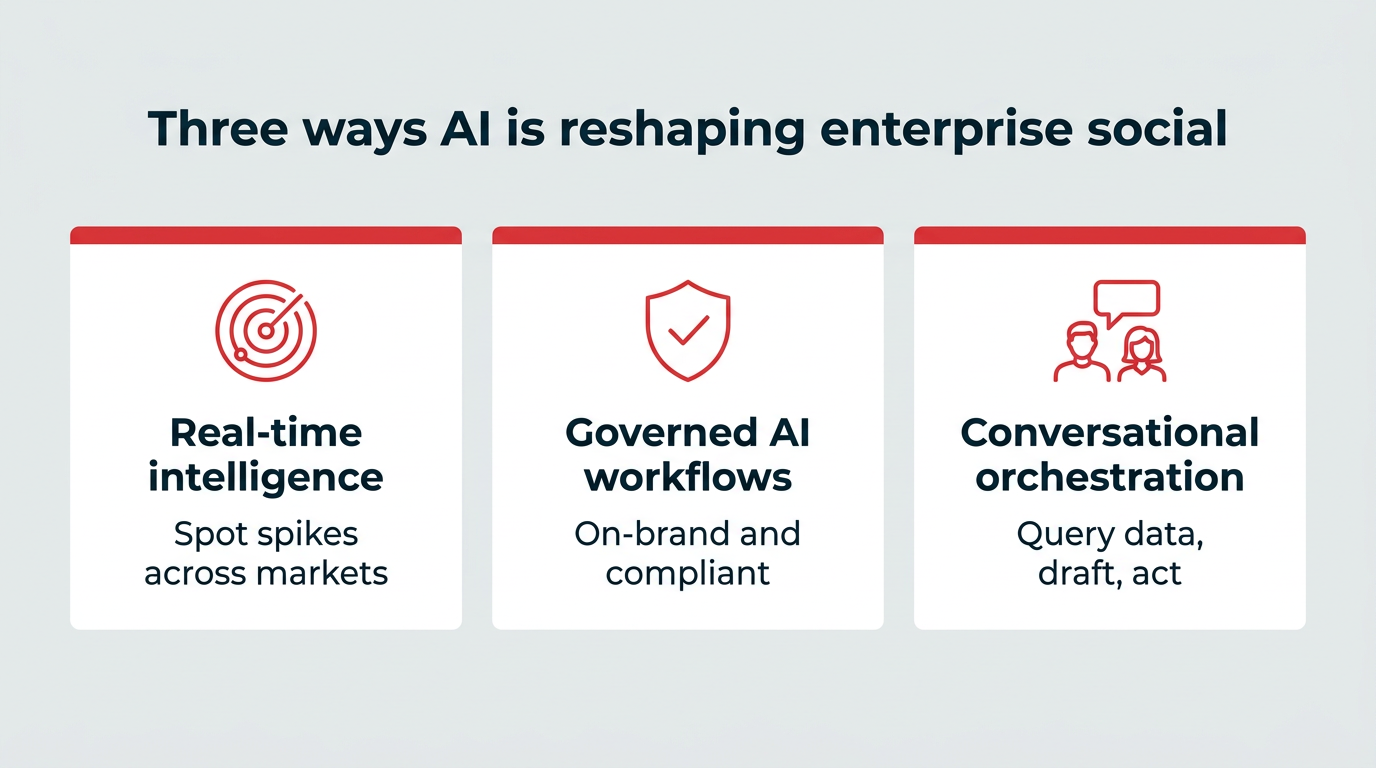
Artificial Intelligence (AI) has moved beyond being a mere novelty for content generation to become an indispensable operational intelligence layer within enterprise social media management. By 2026, AI’s capabilities extend far beyond drafting captions; it encompasses real-time sentiment analysis, intelligent routing of customer inquiries, and the seamless connection of insights to actionable strategies across disparate teams and regions.
Three key shifts define AI’s evolving impact on enterprise social media management:

- Automated Content Optimization: AI analyzes performance data to suggest optimal posting times, content formats, and messaging for maximum impact.
- Enhanced Social Listening and Sentiment Analysis: AI tools can process vast amounts of social data to identify trends, gauge public sentiment, and detect emerging brand crises in real-time.
- Personalized Customer Engagement at Scale: AI-powered chatbots and intelligent routing systems ensure customer inquiries are addressed efficiently and personalized interactions are maintained across high volumes.
- Predictive Analytics for Strategic Planning: AI can forecast content performance, audience behavior, and market shifts, enabling more proactive and data-driven strategic decisions.
AI also facilitates deep integration within the broader enterprise tech stack. Through robust connectors, contextual intelligence flows seamlessly between social platforms and existing business systems like CRM and BI tools. This integration ensures that AI outputs are grounded in verified, real-world data, preventing speculative or irrelevant recommendations.
The Paramount Importance of Governance with AI:
The advent of AI amplifies the need for robust governance frameworks. Ungoverned AI poses significant risks at enterprise scale, including the generation of off-brand content, the dissemination of unverified claims, or the publication of material that violates regulatory mandates. In highly regulated sectors such as healthcare and finance, such missteps can result in severe fines, legal repercussions, and irreparable reputational damage. Solutions like Hootsuite’s Vigil serve as a crucial governance layer, ensuring all AI-assisted work adheres to established policies, with every output traceable and every approval meticulously documented. This fusion of speed and control is what makes AI genuinely usable and reliable within regulated enterprise environments.
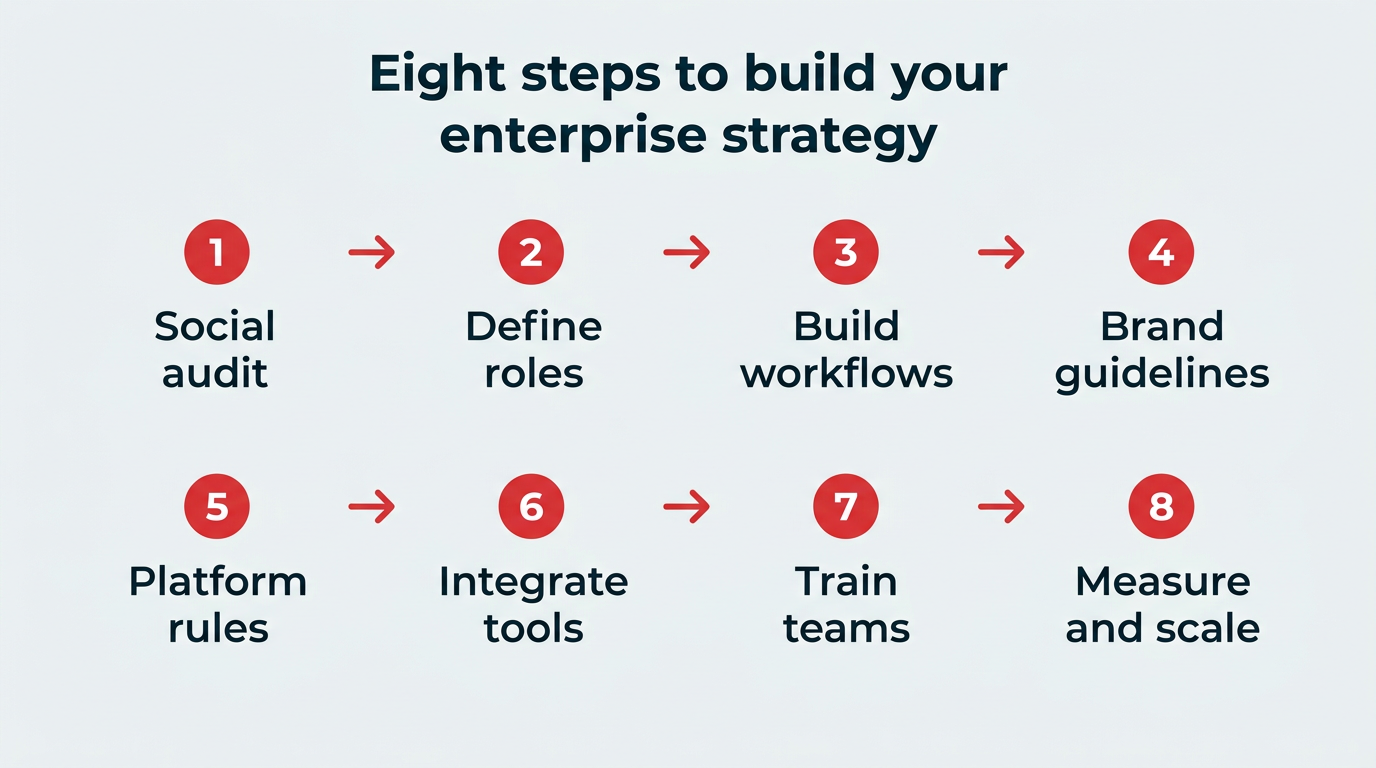
Building a Robust Enterprise Social Media Strategy: An Eight-Step Process
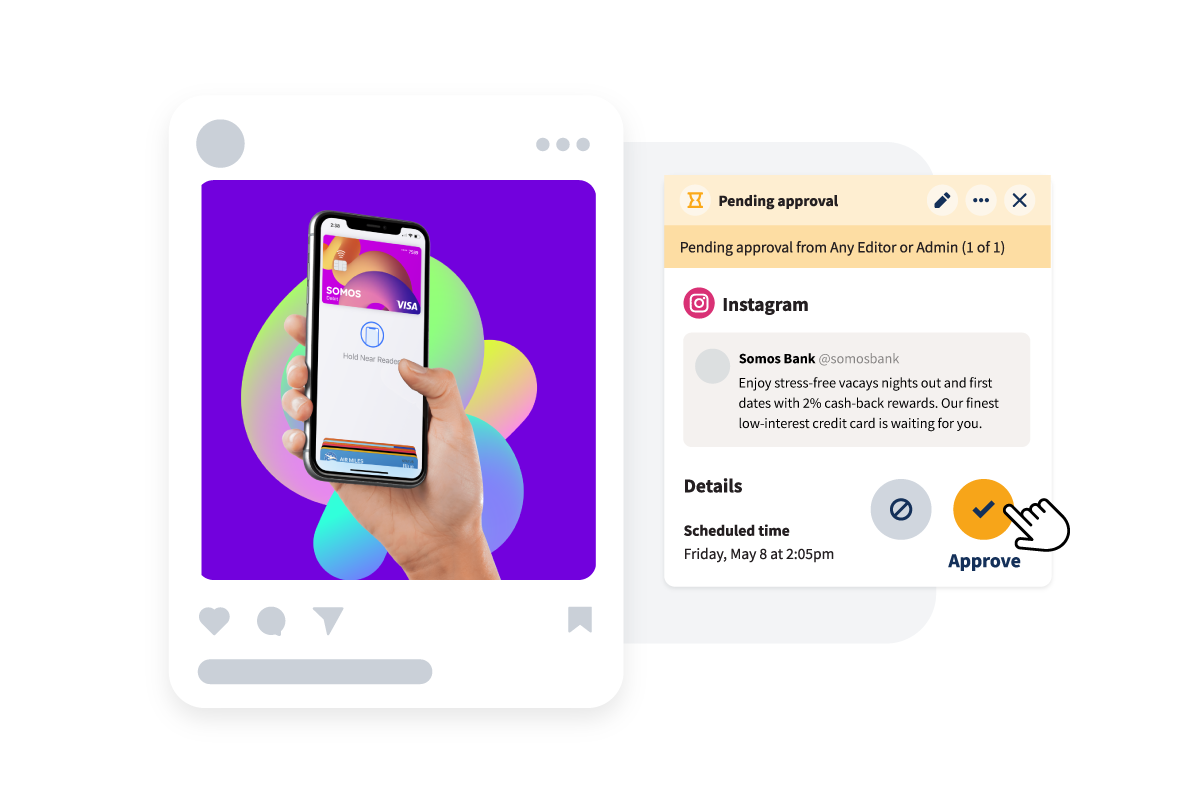
Developing a solid enterprise social strategy involves a structured, iterative process to ensure every team operates with a shared roadmap for appearance, success measurement, and scalability, with increasing emphasis on AI governance.
- Conduct a Social Audit Across Teams: Begin by cataloging every existing social account, ongoing campaign, and its respective owner. This audit identifies gaps, redundant pages, and any off-brand activities. It also provides critical data on audience engagement and the efficacy of current budget allocation.
- Define Roles and Responsibilities: Establish a clear organizational chart detailing who is responsible for what.
- Center of Excellence (CoE): A central team sets the overarching vision, brand voice, and operational guardrails, managing global strategy, governance, tool selection, and comprehensive reporting. Roles include Global Head of Social Media, Social Media Strategist, and Compliance Lead.
- Regional or Business Unit Teams: Local teams adapt global content for specific markets, managing day-to-day operations and reporting results back to the CoE. They ensure cultural relevance while adhering to brand standards. Roles might include Regional Social Media Manager and Local Content Creator.
- Cross-Functional Partners: Marketing, PR, customer service, HR, and legal/compliance teams collaborate to ensure campaign alignment, efficient customer care, and proper approvals. This interconnected ecosystem amplifies social impact. As Savannah Wiles advises, "Consider collaborating with other teams, like email and sales. Expand to channels that can support social content variety."
- Employee Advocates: Empowered and trained employees leverage platforms like Hootsuite Amplify or Parliament to safely share brand content, significantly boosting organic reach and credibility.
- Create Workflows for Approvals and Publishing: Implement standardized processes for content creation, review, and sign-off. Utilizing a social media management platform to automate these workflows ensures consistent visibility and accelerates publishing across teams.
- Include Brand and Content Guideline Usage: Translate existing brand voice and visual identity guidelines into specific social media applications. This is particularly vital for international brands, necessitating collaboration with regional representatives to localize global brand principles effectively.
- Establish Platform and Publishing Rules: Document specific content types, posting cadences, and engagement rules for each platform. This includes guidelines for image/video use, character limits, hashtag strategy, and response protocols. Crucially, compliance rules must be adapted for differing data privacy regulations (e.g., UK vs. USA), requiring input from legal teams.
- Integrate the Right Tools and Data Systems: Implement centralized platforms that automate routine tasks, provide unified dashboards for real-time performance tracking across channels and regions, and integrate with existing CRM, BI, and AI tools via connectors. This ensures a seamless flow of data and context.
- Train Your Teams: Once the strategy is finalized, conduct thorough training sessions to ensure all team members, especially global teams, are fully aligned and understand the new processes, tools, and guidelines. Ongoing training on compliance, accessibility, and platform best practices empowers employees to operate effectively and autonomously.
- Measure, Iterate, and Scale: Establish regular review cycles to analyze performance data, share insights, and refine the strategy. A robust enterprise social program is dynamic, evolving with the business and driven by continuous data analysis rather than guesswork.
Selecting the Right Technological Foundation
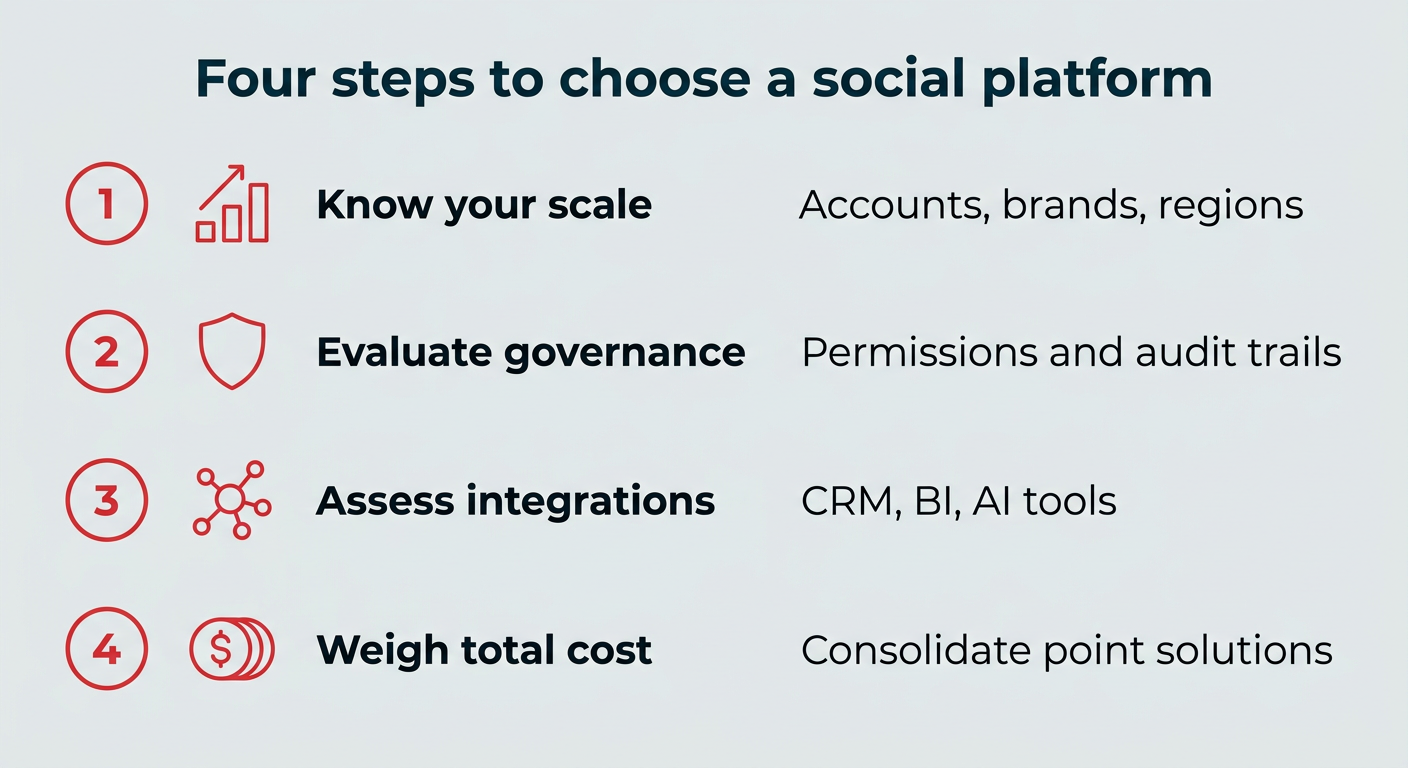
Choosing the appropriate enterprise social media platform is paramount, aligning the tool with the organization’s scale, governance requirements, and existing technological infrastructure. The wrong choice can lead to fragmented tools and inefficient workflows, while the right one consolidates operations. Gartner’s recognition of management and listening as a unified market underscores this integration imperative. A four-step framework for evaluation includes:
- Assess Current Needs: Identify pain points, scale requirements, and specific features needed for content, engagement, and analytics.
- Evaluate Integration Capabilities: Determine how well the platform integrates with existing CRM, BI, and other marketing technologies.
- Prioritize Governance and Security: Look for robust approval workflows, compliance features, and data security protocols.
- Consider Scalability and Support: Ensure the platform can grow with the enterprise and offers comprehensive support.
Essential Platform Capabilities: An enterprise-ready social media platform should facilitate:
- Centralized content planning and scheduling across multiple accounts.
- Streamlined content approval workflows with audit trails.
- Advanced social listening and sentiment analysis tools.
- Comprehensive, customizable analytics and reporting.
- Integrated team collaboration features.
- Robust compliance and risk management tools.
- Multi-language and multi-region support.
- Integration with CRM, marketing automation, and business intelligence systems.
- Employee advocacy modules.
Savannah Wiles emphasizes the need for depth: "In enterprise, you need to go deeper than just general social listening. We lean on customer support data to identify pain points and areas of messaging opportunity that will keep content valuable and fresh." Platforms like Hootsuite Social OS are specifically designed for complex organizations, offering structure, visibility, and tools like Streams for real-time monitoring, Analytics for performance tracking, Amplify for employee advocacy, and Vigil for AI governance.
Ecosystem Tools That Complement Your Platform:
A social platform rarely operates in isolation. Enterprises integrate it into a wider ecosystem of tools supporting the full customer and content lifecycle. Common categories include:
- Customer Relationship Management (CRM): To track customer interactions and manage leads.
- Business Intelligence (BI): For deeper data analysis and strategic insights.
- Marketing Automation Platforms (MAP): To streamline marketing campaigns across channels.
- Content Management Systems (CMS): For managing and distributing digital content.
- Digital Asset Management (DAM): To centralize and manage brand assets.
Hootsuite Social OS, through its connected systems and MCP connectors, aims to become the central hub for social operations, preventing data silos and fostering a holistic view of customer engagement.
Measuring Impact and Proving Return on Investment
At the enterprise level, measuring success necessitates standardization, alignment, and sophisticated tools. Key Performance Indicators (KPIs) commonly tracked include:
- Share of Voice: Your brand’s proportion of market conversation relative to competitors, signaling market position.
- Sentiment Score: The overall positive or negative tone of mentions, indicating brand health and emerging risks.
- Response Time: The speed at which your team replies to messages, driving customer satisfaction.
- Social-Attributed Leads: Qualified leads directly sourced from social channels, connecting social efforts to the sales pipeline.
- Employee Advocacy Reach: Organic reach generated by employee-shared content, extending brand exposure and lowering acquisition costs.
- Content Engagement Rate: Interactions relative to reach or impressions, revealing content resonance by market.
Standardizing KPIs Across Markets: It is essential to establish shared performance metrics applicable to every region or business unit, such as engagement rates, impressions, follower growth, and response time. These global KPIs can be complemented by localized metrics like regional reach or campaign conversions, enabling relevant comparisons while catering to market specificities.
Connecting Social Data to Business Metrics: Moving beyond vanity metrics, tying social data to concrete business outcomes is paramount. This can involve tracking social media’s contribution to website traffic, lead generation, customer acquisition, customer retention, and brand perception shifts. Integrating social data with CRM and sales platforms provides a comprehensive view of social’s impact on the entire customer journey and revenue generation.
Communicating Social Media Impact to Stakeholders: Stakeholders require clear, realistic assessments of social media’s impact. Savannah Wiles advises honesty regarding capabilities and flexibility with goals based on available support. "If you’re not able to deliver ROI or conversions directly, consider goals that show how social is supporting immediate KPIs, but also learnings that can improve future work," she suggests. Demonstrating how social initiatives support broader business objectives, such as brand equity, customer loyalty, or market intelligence, reinforces its value beyond immediate sales figures.
In conclusion, enterprise social media is a complex, dynamic, and indispensable component of modern business strategy. Successfully navigating its challenges—from fragmented approvals and global team unification to proving tangible ROI and integrating AI responsibly—requires a sophisticated, well-governed, and adaptable approach. By implementing a unified strategy, leveraging advanced technological platforms, and continuously measuring and optimizing performance, enterprises can transform their social presence into a powerful engine for sustained growth and brand leadership in the digital age.