The AI-Powered Marketing Revolution: Medvi’s Meteoric Rise and the Structural Shifts Redefining Business

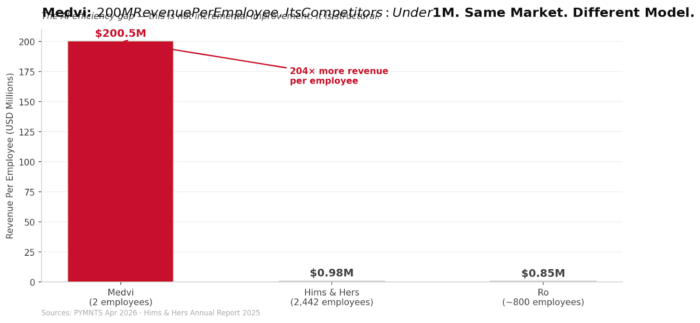
In September 2024, Matthew Gallagher, operating from his Los Angeles residence, launched Medvi, a GLP-1 telehealth startup. His initial resources were starkly limited: no employees, no venture capital, and no traditional marketing department. Yet, by the close of its first full fiscal year, Medvi had achieved an astonishing $401 million in sales, serving 250,000 customers and reporting a net profit margin of 16.2%. This figure is nearly triple that of Hims & Hers, a company with a workforce of 2,442 individuals. This trajectory, validating Sam Altman’s prediction of a one-person billion-dollar company facilitated by AI, materialized in an eighteen-month span. However, the narrative of Medvi’s success, while headline-grabbing, overlooks critical underpinnings for building enduring businesses.
The Great Marketing Reset: A Fundamental Economic Shift
The Medvi story is more than an isolated success; it is a potent indicator of a profound structural reset in the foundational economics of marketing. This shift has been building over the past three years and has now coalesced, fundamentally altering established paradigms. For the preceding three decades, marketing operated under a stable set of assumptions, each acting as a cost barrier and, consequently, a competitive moat. Companies with greater financial resources and larger teams could leverage these barriers to establish market dominance. The collapse of these cost structures, occurring simultaneously across virtually every marketing function, marks a pivotal moment.
What the Headlines Miss About AI and Marketing in 2026
A pervasive, yet often unspoken, system has been embedded within marketing organizations for the past thirty years. Built on assumptions that were once entirely reasonable, this system dictated how marketing was executed. These assumptions, while accurate for their time, fostered an organizational architecture designed to manage specific cost structures. This system, for decades, proved effective.
Then, the cost structure changed. Not incrementally, or in isolated sectors, but across the board, and with unprecedented speed. In 1995, launching a national advertising campaign required a minimum budget of $250,000, a dedicated agency, media buyers, a production team, and years of cultivated publisher relationships. This structural barrier, rather than a lack of ambition, limited widespread competition. Today, achieving comparable reach is attainable for under $500 per month, often with superior targeting, faster creative iteration, and higher profit margins. The danger lies not in possessing the wrong tools, but in maintaining an organizational structure optimized for a cost structure that is now obsolete.
The Data Reveals a Shifting Landscape
Current data indicates that 84% of marketing teams are now integrating AI into at least one workflow, a figure that suggests widespread transformation. However, a closer examination reveals that only 17% of these professionals have received comprehensive AI training. This disparity highlights a critical gap: tools have been adopted, but the underlying strategic thinking remains largely unchanged, perpetuating old systems within new interfaces.

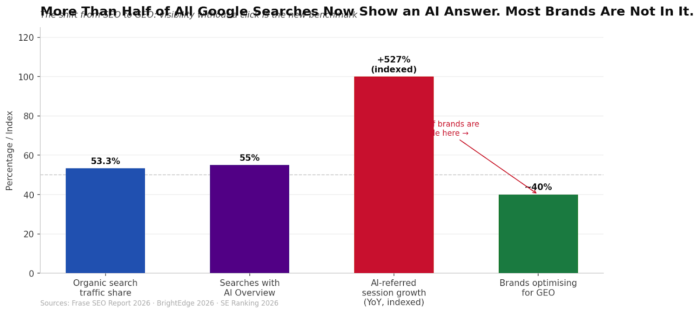
A more striking statistic is the 527% year-over-year growth in AI-referred web sessions in 2025. AI answer engines like ChatGPT, Perplexity, Google AI Mode, and Claude have emerged as the fastest-growing sources of web traffic. Alarmingly, fewer than 40% of brands are actively optimizing their presence within these AI-driven discovery platforms. The majority continue to invest in traditional search optimization for a landscape that no longer represents the primary mode of information discovery for a significant segment of the audience.
Furthermore, data on global workforce engagement paints a concerning picture: only 21% of employees are genuinely engaged in their work, a problem often rooted in a lack of perceived meaning. This disengagement carries an estimated annual cost of $8.9 trillion to the global economy. In this new era, winning teams will not be those that merely use AI to accelerate existing processes, but those that leverage it to fundamentally question and redefine the purpose of those processes.
The Unseen Risks of AI-Powered Marketing
The narrative surrounding Medvi’s success is not without its complexities. Six weeks prior to a prominent New York Times profile, the FDA issued a warning letter to the company regarding the misbranding of compounded drugs. Reports indicated that the AI chatbot used by Medvi had fabricated drug prices and invented product lines. In response, Gallagher chose to honor the fabricated prices, absorbing the associated costs. This situation serves as a critical case study, illustrating precisely where AI-powered marketing can generate extraordinary leverage and where it can introduce significant risks if the underlying systems are not redesigned in tandem with the technology.
Three Crucial Insights for Practitioners
1. AI Amplifies the Scarcity of Authentic Human Perspective: The proliferation of AI-generated content has saturated every digital channel. While polished and confident, much of this content is ultimately forgettable. True attention, the kind that halts scrolling, earns shares, and builds subscriber loyalty, originates from a specific human with unique experiences. The irony of the AI era is its role in creating the market’s scarcest commodity: genuine, unreproducible points of view.
2. The Most Significant AI Marketing Opportunity Lies Within the Funnel: Discussions around AI marketing often focus on content production. However, the most measurable returns are being realized deeper within the customer journey. AI is proving instrumental in enhancing lead scoring, boosting qualification rates by up to 60%; optimizing onboarding sequences to double Day-30 retention without product changes; developing churn prediction models that identify at-risk customers weeks in advance; and fine-tuning email send times to increase open rates by 35% without altering content. While the content narrative is visible, the funnel optimization is where substantial financial gains are being unlocked.
3. The Search Landscape Has Undergone a Seismic Shift: A significant 55% of all Google searches now feature an AI Overview, synthesizing answers and citing sources rather than presenting a list of traditional blue links. Brands that appear in these overviews are those possessing original data, clear structural organization, and demonstrable domain authority. Conversely, brands absent from these AI summaries are becoming invisible to the ecosystem’s fastest-growing traffic source. Many are unaware of this decline because their traditional SEO rankings have not yet been impacted, creating a subtle but critical decoupling of visibility and traffic.
The Playbook for a New Era of Marketing
This playbook does not argue for the replacement of marketers by AI. Instead, it posits a more uncomfortable truth: marketers who master AI’s application across each stage of the funnel, with meticulous sequencing and robust guardrails, will achieve outcomes unattainable by those who do not. This advantage stems not from superior intellect, but from aligning with the new economic realities of marketing, rather than working against them.
Each section of this playbook delves into a specific stage of the marketing system. Each is anchored by a leading expert recognized for their proficiency in that area, supported by data visualizations, real-world tactical examples from practitioners, and citations to the underlying research. The sequence itself forms a crucial part of the argument. Unlike typical AI marketing advice that presents options as interchangeable, this framework emphasizes their systemic interdependence. Weaknesses at any stage cascade downstream, impacting overall organizational performance. Organizations that grasp this principle are building durable competitive advantages, while others are merely using new tools to accelerate outdated systems.
The Integrated Marketing System
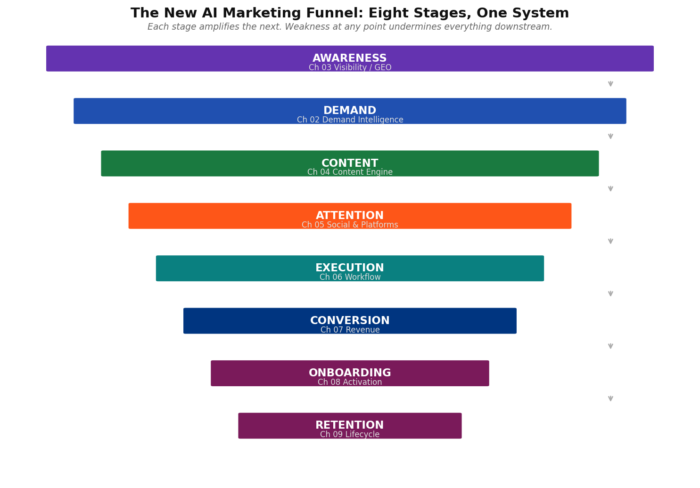
At its core, this framework outlines an eight-stage system, where each stage builds upon the preceding one.
| Stage | Chapter | Lead Expert | AI Leverage Point | Core Metric |
|---|---|---|---|---|
| Awareness & Visibility | 03 | Aleyda Solis | Structure content for AI citation (GEO) | 55% of searches show AI Overview |
| Demand Intelligence | 02 | Rand Fishkin | Research before tool selection | 84% use AI; 17% trained |
| Content Engine | 04 | Ross Simmonds | One idea → 7 assets via AI | 58% higher engagement |
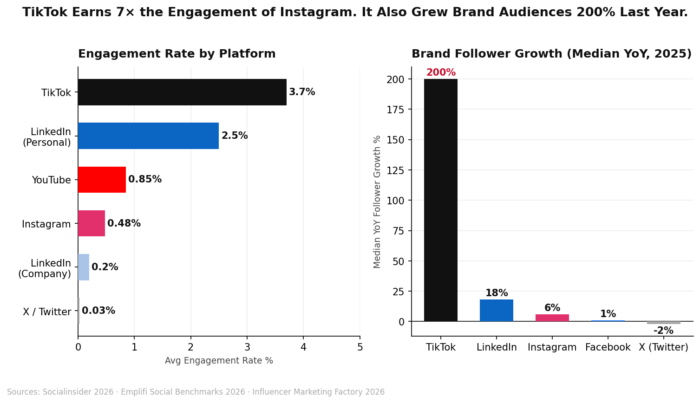
| Attention & Social | 05 | Gary Vaynerchuk | Platform-native AI creative iteration | TikTok: +200% follower growth |
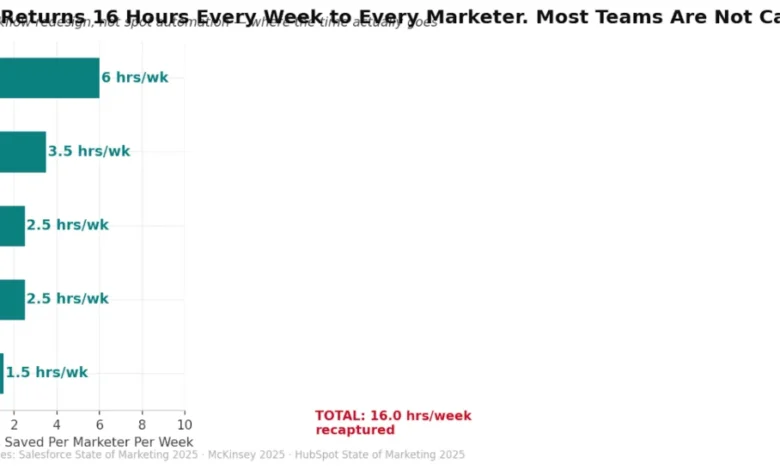
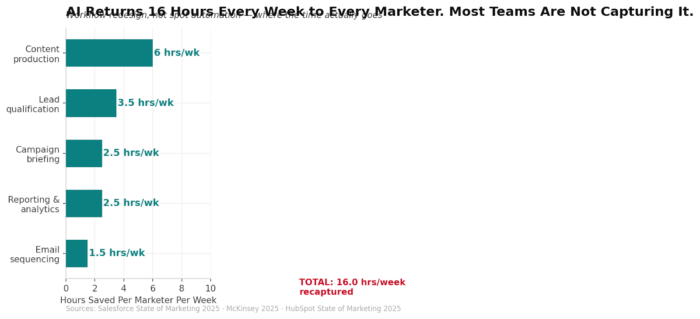
| Workflow Execution | 06 | Kieran Flanagan | AI agents: research → publish | 16 hrs saved/marketer/week |
| Revenue & Conversion | 07 | Kipp Bodnar | AI lead scoring + CRM enrichment | 1.5x revenue growth vs peers |
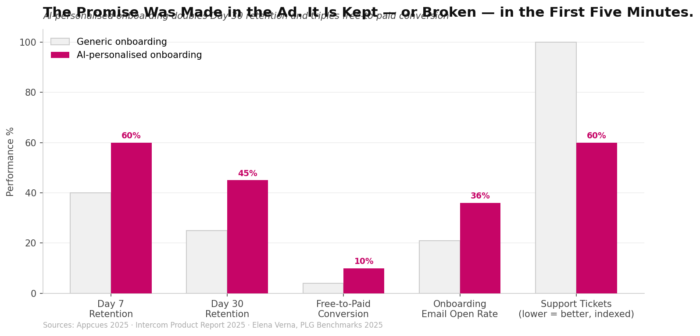
| Onboarding | 08 | Elena Verna | Personalised time-to-first-value path | Day-30 retention +60% |
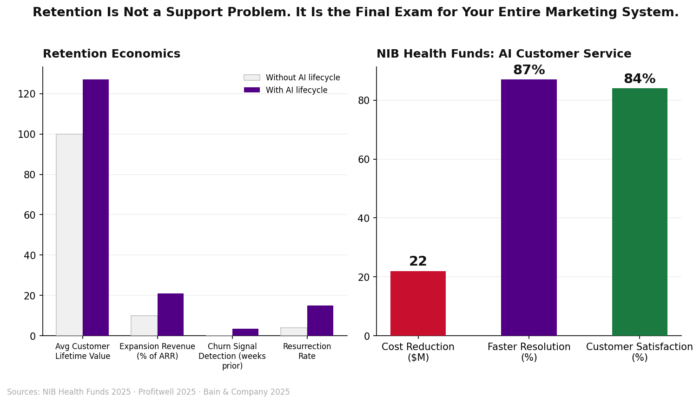
| Retention & Lifecycle | 09 | Elena Verna | Churn signal detection 3-4 wks early | Expansion revenue +60-90% |
The underlying technology stack serves as the infrastructure. The competitive moat is what is constructed with the efficiency gains provided by this infrastructure. The subsequent chapters detail how to build the appropriate moat, at each stage, in the correct sequence.
Chapter 1: AI Has Reshaped the Foundation of Marketing
LEAD EXPERT: Paul Roetzer, Founder, Marketing AI Institute
Paul Roetzer’s foundational work in establishing the Marketing AI Institute has positioned him as a leading authority on AI’s integration into marketing. His framework, viewing AI as a spectrum from assisted tasks to autonomous workflows, provides a clear model for organizations navigating this transition. Roetzer founded the institute in 2016, predating widespread awareness of generative AI. His book, "Marketing Artificial Intelligence" (2022), is a seminal text in the field. His 2025 finding that only 17% of marketing professionals have received comprehensive AI training is a widely cited statistic underscoring the gap between tool adoption and strategic understanding.
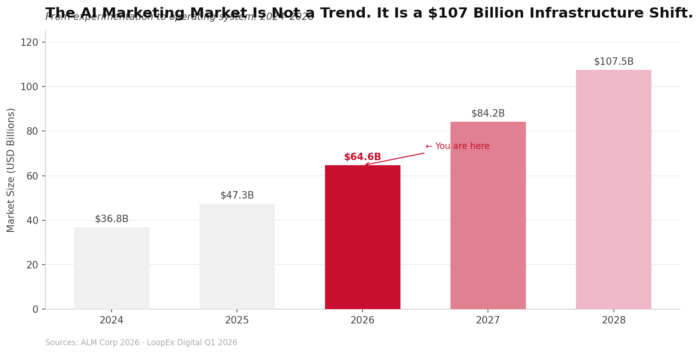
The most significant paradigm shift in this era is deceptively simple: AI is not merely a tool; it is a new operational layer underpinning every function within modern marketing. Teams that treat it as a productivity add-on will continue operating under the old model, albeit at a faster pace. Conversely, those who recognize the structural changes will engineer entirely new systems.
The Three Pillars of Structural Change
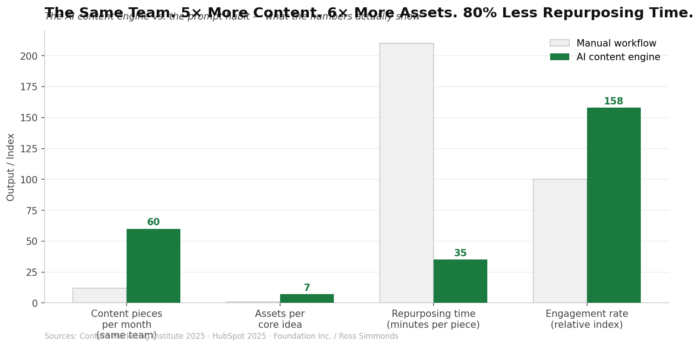
1. The Marginal Cost of Content Production Approaches Zero: A marketing team capable of producing twelve high-quality content pieces per month in 2021 can now generate sixty or more with the same headcount. The bottleneck has shifted from production capacity to audience attention.
2. The Cost of Iteration in Paid Creative Has Collapsed: An AI-equipped marketer can now generate, test, and iterate on thirty creative variants in the time it previously took to produce three. The guesswork involved in message and visual resonance is significantly reduced.
3. The Search Landscape Has Been Fundamentally Restructured: AI-referred web sessions experienced a 527% year-over-year increase in 2025. The critical question is no longer solely about ranking on Google’s first page, but rather about being the authoritative source cited by AI systems when users seek answers within a brand’s domain.
REAL AI EXAMPLE: Redesigning from the Operating System Up
A B2B SaaS company conducted a 90-day AI audit, evaluating recurring marketing tasks against AI capabilities in terms of quality, speed, and the impact of human judgment. The audit revealed that 14 out of 22 recurring tasks could be fully automated, 6 were AI-assisted with human review, and only 2 remained human-first. This re-engineering effort tripled weekly marketing output, enabling the CMO to shift focus from task management to strategic direction within a single quarter.
Chapter 2: Prioritize Demand Intelligence Over Tool Adoption
LEAD EXPERT: Rand Fishkin, Founder, SparkToro
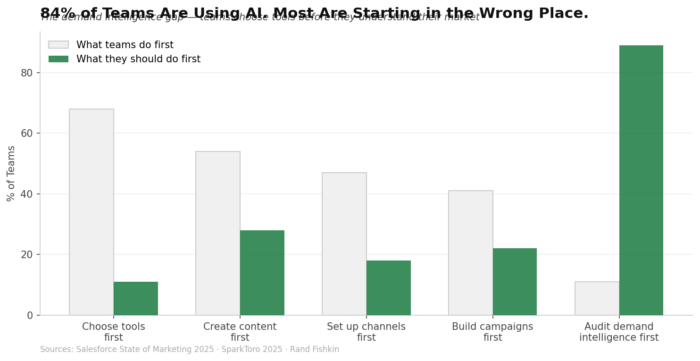
Rand Fishkin has built a career on challenging conventional marketing wisdom. His core argument is that much marketing investment is misallocated due to insufficient demand intelligence, leading teams to create content before truly understanding their audience’s needs or verifying genuine search intent. AI exacerbates this issue, allowing teams with weak demand intelligence to produce vast quantities of AI-generated content, distributed across AI-powered channels, targeted at the wrong audiences with inappropriate messaging—all at an accelerated pace.
The Demand-First Framework
The Demand-First Framework emphasizes understanding the audience’s language, identifying their preferred information sources, and verifying the existence of demand before investing in content creation or tool selection. This strategic prioritization ensures that AI-driven efficiencies are applied to the right objectives, rather than amplifying misdirected efforts.
REAL AI EXAMPLE: Demand-First Approach Enhances Lead Generation
SparkToro’s analysis of a fintech brand’s target audience revealed that buyers spent significantly more time reading niche accounting software review sites than on platforms like LinkedIn or Twitter. Despite the brand having invested 80% of its content budget on these latter platforms, a redirection of resources to sponsored content on the review sites led to a 140% increase in qualified inbound leads within 60 days, achieved without creating any new content—only optimizing distribution.
Chapter 3: Visibility is the New Traffic
LEAD EXPERT: Aleyda Solis, International SEO Consultant
Aleyda Solis has been instrumental in translating the abstract shift from traditional SEO to Generative Engine Optimization (GEO). She has developed actionable frameworks for structuring content to be cited by AI answer engines. While many SEO experts debated AI’s impact, Solis was already publishing systematic methodologies for brands to ensure their content was discoverable within AI-driven search. Her GEO framework distinguishes between the 40% of brands actively optimizing for AI citation and the 60% becoming progressively invisible to the ecosystem’s fastest-growing traffic source.
For two decades, SEO was primarily about earning clicks by ranking high on search engine results pages. AI answer engines have fundamentally altered this model. When users query platforms like ChatGPT or Perplexity, they receive synthesized answers, often without the need to click through to external sources. This has led to a critical decoupling of visibility and traffic.
From SEO to GEO: The Evolving Rules of Discoverability
The new rules of discoverability under GEO involve structuring content for AI citation, ensuring factual accuracy, providing clear attribution, and demonstrating genuine domain authority. Brands must move beyond simply optimizing for keywords to optimizing for the AI’s understanding and synthesis of information.
REAL AI EXAMPLE: GEO Audit Reveals AI Citation Gap
A marketing agency conducted a GEO audit for a cybersecurity client by posing the 20 most common buyer questions to ChatGPT, Perplexity, and Google AI Mode. Despite ranking on page one of Google for 14 of these terms, the client only appeared in 3 AI answers. The gap was attributed to competitors citing original research and specific data points. The agency revised three existing articles to include original survey data, clear headers, and attributed claims. Within six weeks, AI citation presence increased from 3 to 14 of the 20 prompts, resulting in a 340% surge in AI-referred sessions.
Chapter 4: Cultivate a Content Engine, Not a Prompt Habit
LEAD EXPERT: Ross Simmonds, Founder & CEO, Foundation Inc.
Ross Simmonds champions the philosophy of "create once, distribute forever," emphasizing the creation of content worthy of sustained distribution. In an era saturated with AI-generated, quickly forgotten content, Simmonds advocates for a structured content engine rather than a superficial "prompt habit." His framework distinguishes between genuinely strategic content creation and the reactive generation of individual pieces without an overarching editorial system, brand voice consistency, or a distribution strategy.
The Three Layers of a Content Engine
A robust content engine involves strategic ideation, efficient creation and repurposing, and consistent, targeted distribution. AI can dramatically accelerate the creation and repurposing of content, but the core ideas, judgment, and strategic direction must originate from human expertise.
REAL AI EXAMPLE: One Article Yields Seven Assets in 45 Minutes
A solo B2B consultant, adhering to the "create once, distribute forever" principle, writes one 1,800-word thought leadership article weekly. Using AI tools, she extracts a LinkedIn post from a contrarian data point, a five-slide carousel from a framework, a newsletter opening from a story hook, and a 60-second video script from a key insight. AI video tools then convert this script into short-form video clips for platforms like YouTube Shorts and TikTok. This entire repurposing process takes approximately 45 minutes, a significant reduction from the previous two hours per asset, all while maintaining her unique voice as the ideas and judgments remain hers.
Chapter 5: Capture Attention Where Audiences Reside
LEAD EXPERT: Gary Vaynerchuk, Chairman at VaynerX
Gary Vaynerchuk’s consistent foresight in identifying emerging platforms—from Twitter in 2007 to TikTok in 2017—underscores his understanding of where attention congregates. In the AI era, his core message remains profoundly relevant: attention is the scarcest resource, it thrives on specific platforms before widespread adoption, and most organizations are consistently late to these opportunities. Cross-posting content created for one platform across all others is a strategy that algorithmically suppresses reach.
Platform-Native Strategies
Success in the current attention economy demands platform-specific content creation. TikTok offers substantial organic reach for new entrants, LinkedIn provides high-quality organic reach for B2B professionals, and YouTube delivers long-term compounding returns on investment. Understanding and adhering to the unique rules and content styles of each platform is paramount.
REAL AI EXAMPLE: Rapid Creative Iteration Drives Down Acquisition Costs
A direct-to-consumer skincare brand, previously testing only three creative variants per paid social campaign with three-week turnaround times for statistical significance, transitioned to an AI-powered creative workflow. Utilizing tools like Midjourney for static visuals and CapCut AI for short videos, they began testing thirty variants simultaneously across TikTok and Instagram Reels. This rapid iteration, encompassing diverse hooks, visual treatments, and calls to action, identified the best-performing variant within 48 hours, establishing a new benchmark and generating fifteen new challenger concepts. This accelerated testing cycle reduced customer acquisition cost by 38% within the first month, achieved through workflow optimization rather than increased headcount.
Chapter 6: Leverage AI for Workflow Transformation
LEAD EXPERT: Kieran Flanagan, Former SVP Marketing, HubSpot
Kieran Flanagan is a rare executive who has systematically rebuilt marketing functions around AI from within a major organization. His distinction between "spot automation" and "workflow redesign" offers a crucial framework for understanding how to truly harness AI’s power. The most common pitfall, "spot automation," involves using AI to replace individual tasks within an unchanged workflow, yielding only marginal improvements. True transformation comes from redesigning entire workflows from first principles, systematically removing AI-identifiable friction points.
Key Areas for Workflow Redesign
The strategic integration of AI enables the redesign of numerous marketing workflows. This includes automating repetitive tasks, enhancing content creation and distribution pipelines, optimizing customer communication through AI-powered agents, and streamlining data analysis for faster insights.
The HubSpot Breeze Case Study: HubSpot’s 2025 Breeze AI update fundamentally rebuilt core workflows around autonomous agents. Seventh Sense, for instance, now analyzes individual contact engagement histories to deliver emails at peak subscriber receptivity, resulting in a 35% average email open rate increase within 90 days—a testament to workflow redesign rather than mere tool enhancement.
REAL AI EXAMPLE: A Seven-Step Pipeline Managed by Two Individuals
A growth-stage SaaS company transformed its content production process by replacing a four-person content team with a two-person editorial team augmented by an AI workflow stack. The pipeline involves AI drafting from briefs, SEO optimization, human editorial review, automated publishing and cross-posting, AI-driven video repurposing, and AI-personalized email nurturing sequences. This system reduced human intervention per article to 90 minutes of strategic editing, increasing output from four articles per month to sixteen and decreasing customer acquisition cost from organic channels by 44% within the subsequent quarter.
Chapter 7: Connect Marketing Directly to Revenue
LEAD EXPERT: Kipp Bodnar, CMO, HubSpot
Kipp Bodnar operates at the nexus of marketing and revenue, leveraging HubSpot’s extensive data on hundreds of thousands of B2B companies. His perspective on the disconnect between marketing activities and revenue outcomes is informed by daily observation of these patterns. He emphasizes that AI-powered marketing, while capable of increasing output, does not automatically bridge the gap between marketing efforts and tangible revenue. The challenge of linking marketing to revenue is a systemic issue, not merely a content problem.
The Revenue Connection Framework
This framework emphasizes AI-driven lead scoring that incorporates rich data signals, CRM enrichment for comprehensive customer profiles, and AI-powered personalization to optimize conversion pathways. By accurately identifying and nurturing high-potential leads, marketing efforts can be more effectively aligned with sales objectives, driving demonstrable revenue growth.
REAL AI EXAMPLE: Doubling Lead-to-Opportunity Conversion Rate
A B2B software company, facing a 12% lead-to-qualified-opportunity conversion rate and a 90-day sales cycle, implemented AI lead scoring. This system integrated website visit history, email engagement depth, firmographic fit, and intent data. Leads scoring above 75 were automatically routed to senior account executives with pre-populated context briefs, while those scoring between 40-75 entered an AI-personalized nurture sequence. Within one quarter, the lead-to-opportunity conversion rate surged to 27%, and the average sales cycle shortened to 62 days, all without additional sales hires.
Chapter 8: Onboarding is Integral to Marketing Success
LEAD EXPERT: Elena Verna, PLG Advisor, Former SVP Growth, Miro & SurveyMonkey
Elena Verna has been a leading proponent of product-led growth (PLG), reframing onboarding not as a product issue but as a critical marketing function. She argues that onboarding is the decisive moment where the acquisition promise is tested. For digital products, the onboarding experience is the crucible where initial user engagement determines long-term retention and value realization.
AI-Powered Onboarding Principles
AI enables hyper-personalization within the onboarding process. This includes segmenting new users based on their signup data, tailoring onboarding paths to specific roles and use cases, and delivering timely, relevant guidance that helps users achieve their "first value" milestone quickly.
REAL AI EXAMPLE: Enhancing Day-30 Retention Without Product Changes
A project management SaaS company observed a Day-30 retention rate of 31%, primarily attributed to a generic five-email welcome sequence. By implementing AI-driven segmentation at signup, three distinct onboarding paths were created: one for solo operators focusing on templates, another for team managers emphasizing collaboration features, and a third for agencies highlighting client reporting. This personalization led to a retention rate increase from 31% to 54% within eight weeks, achieved solely through optimized communication, not product modifications.
Chapter 9: Retention is the Ultimate Measure of Value
LEAD EXPERT: Elena Verna, PLG Advisor, Retention & Lifecycle
Elena Verna’s expertise extends to retention and lifecycle marketing, treating activation and retention as interconnected stages of a continuous system. Her core assertion is that AI enhances the speed of identifying at-risk customers and personalizing retention interventions. However, the fundamental driver of retention remains the delivery of genuine product value and customer fit. AI can expedite responses to churn indicators, but it cannot create value where it does not exist.
The Retention Framework
Effective retention strategies leverage AI for early churn prediction, identifying leading indicators such as decreased login frequency, underutilization of core features, and diminished engagement. Proactive, personalized interventions—including direct outreach, in-app guidance, and targeted feature highlights—can significantly mitigate churn.
The NIB Health Funds Case Study: NIB Health Funds implemented an AI customer service layer that reduced support costs by $22 million and decreased resolution times by 87%, while achieving 84% customer satisfaction. The capital savings were reinvested into previously under-resourced lifecycle marketing programs, demonstrating how service cost reductions can fuel growth investments.
REAL AI EXAMPLE: Predicting Churn Four Weeks in Advance
A subscription analytics company developed a churn prediction model trained on 18 months of customer data. The model identified three key leading indicators: login frequency below twice weekly, failure to use core features over a 14-day period, and zero email engagement for 21 days. When these signals converged, customers received a personalized retention sequence, including CSM outreach, an in-app session offer, and a feature highlight email tailored to their initial use case. Of customers triggering the model and receiving intervention, 61% did not churn, compared to a 78% churn rate in the untreated cohort.
Chapter 10: Measure Signals, Not Mere Activity
LEAD EXPERT: Christopher Penn, Co-Founder & Chief Data Scientist, Trust Insights
Christopher Penn is a leading voice at the intersection of marketing, data science, and AI. He argues that much of current marketing analytics focuses on easily quantifiable activities rather than true revenue-predictive signals. The proliferation of AI has exacerbated this issue by generating an overwhelming volume of reports and dashboards, often obscuring actionable insights.
The Signal Framework
This framework prioritizes identifying and tracking metrics that demonstrably correlate with business outcomes, such as pipeline growth and revenue. It advocates for a reduction in the number of tracked KPIs to focus on those that provide genuine predictive power, distinguishing between lagging indicators and leading signals that inform proactive strategy.
REAL AI EXAMPLE: Identifying Key Revenue Predictors
A content-led B2B company, tracking 23 weekly marketing KPIs with little correlation to pipeline, conducted a correlation analysis. The study identified two leading indicators that predicted qualified pipeline six weeks in advance with 78% accuracy: average scroll depth on pillar content pages exceeding 65%, and a newsletter reply rate above 3.2%. By dropping 19 extraneous KPIs and focusing on these two signals, the company dramatically improved pipeline predictability within 90 days.
Chapter 11: Tailoring Tool Stacks to Marketing Stages
LEAD EXPERT: Paul Roetzer, Marketing AI Institute
Paul Roetzer and his team at the Marketing AI Institute evaluate AI marketing tools based on their real-world application and integration within marketing systems, rather than solely on vendor claims. Their annual AI Marketing Benchmark Report provides critical data on tool adoption and effectiveness at scale. Roetzer emphasizes that the most appropriate tool is the simplest one that fulfills the required function for a given stage of growth.
| Stage | Beginner (Under $100/mo) | Intermediate ($300-$600/mo) | Advanced ($1,500+/mo) |
|---|---|---|---|
| Tool Stack | Claude/ChatGPT (content), Perplexity (research), Canva AI (visuals), Beehiiv/ConvertKit (email), Buffer/Later (scheduling) | Claude (copy/ideation), Surfer SEO/Frase (SEO/GEO), Midjourney (visuals), ActiveCampaign (email automation), Opus Clip (video repurposing), n8n/Make (workflow automation) | Claude/Jasper (content engine), HubSpot Breeze (CRM/agents), Goodie AI (GEO monitoring), Seventh Sense (email timing), Runway/Descript (video), n8n (agentic pipelines) |
| Focus | Master prompting before adding complexity. | Replicate five-year-ago three-person team capabilities. | Implement full agentic marketing stacks. |
Chapter 12: The Enduring Marketing Moat in the AI Era
LEAD EXPERT: Paul Roetzer, Marketing AI Institute
Paul Roetzer concludes that AI fundamentally alters the cost of execution but does not diminish the enduring value of genuine expertise, authentic audience relationships, distinctiveness, and sound judgment. In an AI-saturated market, durable competitive advantages will reside in these human-centric qualities, amplified by AI, rather than solely in technological sophistication.
Four Moats That Withstand the AI Era
The organizations building sustainable marketing advantages in 2026 are those that recognize AI’s role in augmenting, not replacing, core human capabilities. These moats include:
- Genuine Expertise: Deep, nuanced knowledge in a specific domain.
- Authentic Audience Relationships: Trust built through consistent value delivery and direct engagement.
- Distinctiveness: A unique brand voice, perspective, or offering that sets it apart.
- Human Judgment: The capacity for critical thinking, strategic decision-making, and ethical considerations.
REAL AI EXAMPLE: The Irreplaceable Value of Audience Trust
A 15-year-old industry newsletter with 30,000 subscribers and a 42% open rate was acquired for 11 times its revenue. The acquirer’s analysis identified the audience relationship as the primary asset, noting that no AI tool could replicate the trust built over 15 years of consistent, valuable content delivery. This relationship was valued more highly than the content archive, domain authority, or existing advertiser relationships, underscoring that trust, not technology, forms the most robust competitive moat.