WhatsApp Marketing Emerges as a Critical Growth Engine for Small Businesses Amidst Shifting Digital Landscape

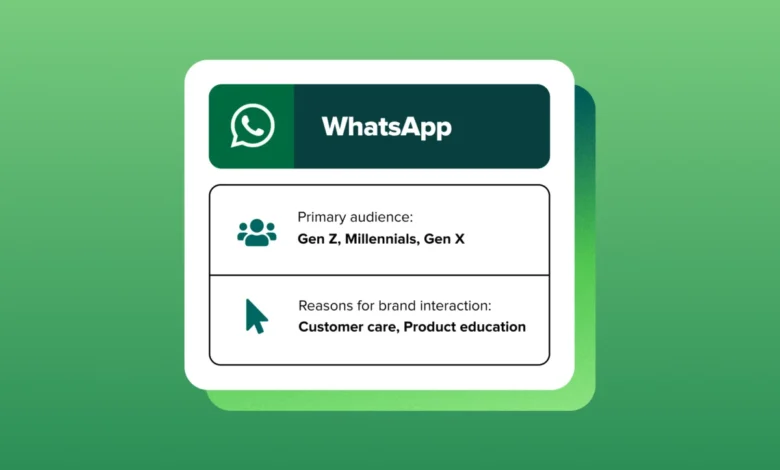
In an increasingly fragmented digital environment, WhatsApp marketing has solidified its position as an indispensable tool for small businesses seeking to establish a direct and trusted connection with their clientele. This strategic shift is underscored by robust industry data, with The 2026 Social Media Content Strategy Report revealing that a significant 46% of marketers are escalating their investment in WhatsApp this year, specifically targeting high-intent users. While many small and medium-sized enterprises (SMEs) traditionally view the platform primarily as a customer service conduit, leading brands are now leveraging its capabilities across the entire customer journey—from initial product discovery and engagement to facilitating final sales and fostering long-term loyalty. This comprehensive guide delves into the strategic imperatives and practical applications necessary to transform WhatsApp into a high-impact marketing channel, detailing everything from foundational business profile setup to launching sophisticated campaigns designed to drive repeat purchases and generate measurable return on investment (ROI).
The Rise of Conversational Commerce: A Strategic Imperative for Small Businesses
WhatsApp marketing, at its core, involves the strategic deployment of the WhatsApp Business app or Platform to promote products, provide customer support, and streamline sales processes through direct, personalized messaging. This approach represents a significant evolution in digital marketing, aligning with the broader trend of conversational commerce, where businesses interact with customers in real-time, often within familiar messaging interfaces. As a text-first powerhouse, WhatsApp stands out as the second most popular network for text-driven social media, accounting for 26% of such interactions globally. This makes it an exceptionally fertile ground for the conversational marketing formats that demonstrably influence purchasing decisions. By skillfully integrating one-on-one chats, targeted broadcast lists, and intelligent automated responses, small businesses can deliver a premium, personalized customer experience that effectively scales with their growth.
The platform offers two distinct solutions tailored to different business needs: the free WhatsApp Business app, designed for individual entrepreneurs and very small teams, and the more robust WhatsApp Business Platform (API), which caters to larger operations requiring multi-agent access, advanced automation, and seamless integration with existing customer relationship management (CRM) systems.
Unlocking Direct Engagement: Why WhatsApp Marketing is a Game-Changer
WhatsApp fundamentally redefines standard business communication, transforming it into a high-trust, conversion-ready channel by engaging customers in their most personal digital space. For resource-constrained small teams, the platform’s primary strategic advantage lies in its unparalleled ability to bypass the pervasive noise of crowded social media feeds and overflowing email inboxes. It delivers messages directly to a mobile device, virtually guaranteeing visibility and immediate attention.
-
Unrivaled Reach and Open Rates: WhatsApp’s global footprint is immense, ranking as the fourth most used social platform worldwide with over 2 billion users across more than 180 countries. Its dominance is even more pronounced in specific regional markets. The Q2 2025 Consumer Pulse Survey Analysis highlights its status as the undisputed number one social platform in the United Kingdom, boasting an impressive 81% usage rate. Furthermore, The 2026 Social Media Content Strategy Report underscores this ubiquity, revealing that 52% of all social media users already possess WhatsApp accounts. This presents a massive, low-friction opportunity for small businesses to connect with customers precisely where they are already active.
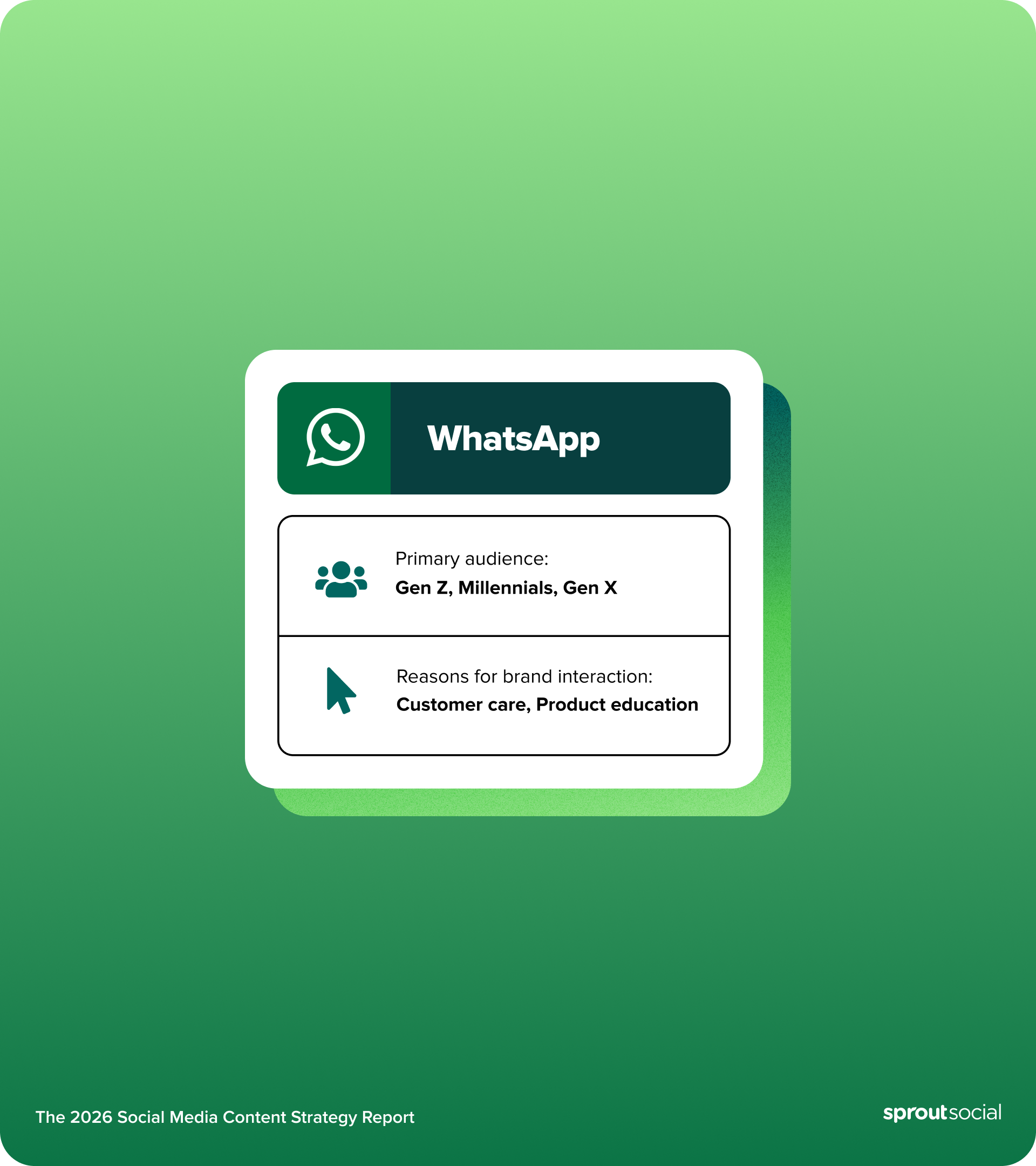
Market Usage Rate Weekly Interaction Key Insight United Kingdom 81% 60% Ranked #1 social platform in the UK. United States 52% 85% Highest weekly brand interaction frequency. Australia N/A 36% Emerging market for brand engagement. Global 2B+ Users 49% 4th most used social platform worldwide. To effectively capitalize on this vast reach, brands must possess a granular understanding of their target audience and confirm their presence on the WhatsApp platform. According to The 2026 Social Media Content Strategy Report, WhatsApp’s primary demographic consists of Gen Z, Millennials, and Gen X, demonstrating the platform’s broad appeal across the most active and digitally native consumer segments. Crucially, WhatsApp messages consistently achieve significantly higher open rates compared to traditional email campaigns, with a substantial majority of messages being read almost immediately upon delivery. This immediacy is a critical differentiator, as no other digital channel offers such rapid and direct access to customer attention.
-
High-Frequency, "Sticky" Engagement: Engagement on WhatsApp is not merely high; it is remarkably "sticky." Data from The 2026 Social Media Content Strategy Report indicates that 49% of users interact with brands on the network multiple times per week. This level of sustained interaction is even more pronounced in regions like the UK, where a striking 31% of consumers engage with brands on the app multiple times daily. This constant interaction fosters a deeper relationship between businesses and their customers, moving beyond transactional exchanges to ongoing dialogue.
-
Unparalleled Customer Convenience: Modern consumers not only tolerate but actively expect businesses to be present on WhatsApp. The 2026 Social Media Content Strategy Report reveals that 40% of users specifically desire companies to utilize the platform for customer service and support. This expectation spans the entire customer journey: consumers are most inclined to use WhatsApp for order-related queries, closely followed by seeking information about a company’s products or services. The inherent convenience of WhatsApp lies in its ubiquity; customers already use it daily, eliminating the need to download new applications, create additional accounts, or remember new passwords. They can engage with a brand as effortlessly as they message a friend. Furthermore, WhatsApp’s rich multimedia capabilities empower customers to share product photos, send voice messages, and receive critical documents like PDF invoices or catalogs, accommodating a diverse range of communication preferences.
-
Personalization at Scale: WhatsApp empowers businesses to deliver personalized conversations, even as their customer base expands significantly. Features like customer labels enable precise audience segmentation, while message templates ensure consistent brand communication. Quick replies maintain the personal touch customers value, even amidst high message volumes. For teams managing a multitude of conversations across various campaigns, integrated platforms like Sprout Social’s Smart Inbox unify WhatsApp conversations with messages from other social media platforms, providing a holistic customer context in a single, streamlined interface.
-
Cost Efficiency: The WhatsApp Business app is entirely free, making it an accessible entry point for any small business. For larger operations, the WhatsApp Business Platform (API) operates on a usage-based pricing model, with costs varying based on the volume and type of messages exchanged. Beyond direct costs, WhatsApp significantly enhances operational efficiency. A single agent can simultaneously manage multiple conversations, while automated responses efficiently handle common inquiries, freeing human agents to focus on complex issues and thereby elevating the overall social media customer experience. This translates into reduced customer service costs and improved resource allocation.
Beyond Messaging: Key Features for Business Growth
Small businesses can leverage WhatsApp’s diverse features to bridge the critical gap between initial product discovery and ongoing personalized customer care. Essential functionalities like automated greeting messages, quick replies, and integrated catalogs transform a standard messaging application into a powerful digital storefront, driving meaningful engagement and tangible business outcomes.
-
Quick Replies: These are pre-saved responses, triggered by a simple forward slash (/) and a keyword. For instance, typing "/hours" instantly deploys a complete message detailing business hours. This feature saves small teams countless hours weekly by standardizing responses without sacrificing the conversational tone customers expect. They are ideal for frequently asked questions, product specifications, or service details.
-
Away Messages: Away messages automatically inform customers when a business is unavailable, providing an estimated response time. These can be customized for after-hours, weekends, or holidays and can include alternative contact information for urgent matters. This transparency manages customer expectations and maintains a professional brand image around the clock.
-
Labels and Tags: Labels provide a visual and efficient method for organizing conversations by status (e.g., new, pending, resolved), customer type (e.g., VIP, wholesale, retail), or inquiry category (e.g., support, sales, feedback). Color-coded labels streamline inbox management, allowing for quick identification of priorities or recurring issues, such as "shipping delay" messages, which can highlight operational bottlenecks.
-
Catalog and Collections: WhatsApp’s integrated catalog allows businesses to showcase a comprehensive range of products with images, detailed descriptions, prices, and direct links. Products can be organized into intuitive collections like "New Arrivals" or "Best Sellers." Customers can browse the catalog directly within WhatsApp, and businesses can share individual products or entire collections mid-conversation, making recommendations feel natural and timely.
-
Broadcast Lists: This feature enables businesses to send a single message to multiple contacts, with each recipient perceiving it as an individual chat. Unlike group messages, recipients cannot see who else received the broadcast. Broadcast lists are ideal for sharing promotions, event invitations, or important updates. Crucially, messages can only be sent to customers who have explicitly opted in and saved the business’s number, adhering to WhatsApp’s strict privacy policies and preventing spam.
-
WhatsApp Ads: A highly effective strategy for generating high-intent leads involves directly linking social media advertising campaigns to WhatsApp. These "click-to-WhatsApp" ads appear on platforms like Facebook and Instagram, featuring a "Message on WhatsApp" button. This seamlessly transitions customers from social media discovery directly into a private, personalized conversation with the brand. Ads can be targeted based on demographics, interests, and behaviors, with pre-filled opening messages guiding the conversation and qualifying leads from the very first interaction.
Scaling Operations: WhatsApp Business App vs. API
The choice between the WhatsApp Business app and the WhatsApp Business Platform (API) hinges on a business’s current size, operational complexity, and projected growth. The free WhatsApp Business app is an ideal starting point for local businesses, freelancers, and startups, supporting up to five devices without requiring any technical setup. It provides essential features like catalogs, labels, and automated messages.
However, as a business scales, the WhatsApp Business Platform (API) becomes necessary. This robust solution unlocks multi-user access, sophisticated chatbot automation, and seamless integration with CRM systems. Businesses should consider upgrading when they encounter any of the following: a need for more than five team members to manage WhatsApp conversations, the requirement for advanced automation to handle high message volumes, the desire for integration with existing CRM or e-commerce platforms, or the need to manage customer interactions across multiple geographic locations. A significant advantage is that the transition from the app to the API does not necessitate starting anew; existing WhatsApp Business numbers and conversation histories can be migrated seamlessly.
Laying the Groundwork: Essential Steps Before Launch
Before initiating any WhatsApp marketing campaign, small teams must establish a robust foundation that balances professional branding with stringent compliance. The focus should be on cultivating a high-trust environment by securing explicit customer permissions and organizing essential brand assets, ensuring every customer interaction is seamless, professional, and intentional.
-
Comprehensive Business Profile and Brand Assets: A fully completed WhatsApp Business profile is paramount. This includes a clear business description, industry category, email address, website, and physical address. A professional profile photo, legible even at small sizes, is also crucial. The business description, despite its limited character count, must succinctly convey the brand’s core offering and unique selling propositions, as it often serves as the customer’s first impression. Key assets to prepare include a high-resolution logo, product images, compelling promotional videos, and any relevant legal disclaimers or privacy policies.
-
Explicit Opt-in Collection Flow: WhatsApp mandates explicit customer consent for promotional messages. Businesses must integrate clear opt-in touchpoints across all customer interaction channels. This can include website forms, physical storefront sign-ups, interactive voice response (IVR) systems, email campaigns, and during direct customer service interactions. Crucially, every opt-in must be meticulously documented, recording the date, method of consent, and the specific types of messages the customer agreed to receive. This protects the business and ensures compliance with WhatsApp’s stringent policies.
-
Strategic Audience Segmentation Plan: Segmenting contacts is critical to ensuring messages are perceived as valuable services rather than intrusive interruptions. Segments should be built based on where customers are in their journey (e.g., new leads, existing customers, repeat buyers), their purchase history, and product preferences. Data from The 2026 Social Media Content Strategy Report indicates significant regional variations in brand interaction frequency. For instance, 85% of users in the UK interact with brands weekly, compared to 60% in Australia and 36% in the US. These benchmarks are vital for tailoring broadcast frequency and content to meet the unique engagement expectations of each market.
-
Clear Campaign Goals and Key Performance Indicators (KPIs): Defining what success looks like before launching a campaign is fundamental. This involves selecting specific, measurable metrics aligned with overarching business objectives.
- Sales Goals: Examples include increasing average order value (AOV), driving new customer acquisition, boosting repeat purchases, and reducing abandoned cart rates.
- Service Goals: Focus on improving customer satisfaction (CSAT), reducing response times, and increasing first-contact resolution rates.
- Engagement Goals: Track metrics such as message open rates, click-through rates (CTR), and reply rates. Establishing baseline metrics initially and tracking progress weekly allows for continuous optimization.
Crafting a High-Impact Strategy: A Step-by-Step Guide
Transitioning from reactive messaging to a proactive, strategic marketing engine requires a well-documented approach to engaging diverse customer groups. This plan facilitates the automation of repetitive touchpoints while preserving the personal touch that renders WhatsApp such a high-conversion channel for small businesses.
-
Segment Your Audience: Begin by consolidating customer data from point-of-sale systems, CRM, or email platforms. Analyze patterns in purchase frequency, order value, and product preferences. Build segments using frameworks such as demographic profiles, psychographic insights (e.g., interests, values), and behavioral data (e.g., browsing history, past purchases). Apply WhatsApp labels to each contact upon opt-in and review/update segments monthly to maintain relevance.
-
Draft Message Templates: Message templates are pre-approved messages essential for communication outside the 24-hour customer service window. WhatsApp Business Platform users must submit these templates for approval prior to use. Key templates to develop include:
- Welcome Message: "Hi [Name]! Thanks for connecting with [Business Name] on WhatsApp. You’ll receive exclusive offers, order updates, and quick support here. Reply STOP anytime to unsubscribe."
- Order Confirmation: "Your order #[Number] is confirmed! We’ll prepare it for [delivery/pickup] on [Date]. Track progress here: [Link]"
- Abandoned Cart Reminder: "Hi [Name], you left [Product] in your cart. Complete your purchase in the next 2 hours for 10% off with code SAVE10: [Link]"
- Feedback Request: "How was your recent experience with [Product/Service]? Rate us 1–5 stars or share your thoughts."
-
Automate Customer Journeys: Automation handles repetitive workflows, allowing human teams to focus on complex conversations. Map out core customer journeys for automation:
Journey Stage Timeline Goal & Content Welcome Journey Days 1–7 Introduce the brand and incentivize the first purchase with a discount. Post-Purchase Immediate – Day 14 Build trust with tracking updates and gather reviews or feedback. Abandoned Cart 2 – 72 Hours Recover lost sales through urgency, discounts, and scarcity alerts. Re-engagement Weeks 1–4 Win back inactive customers with "miss you" offers and product updates. - Welcome Journey (Days 1–7): Send a personalized greeting, offer a first-purchase discount, and introduce popular products or services.
- Post-Purchase Journey: Provide immediate order confirmation and shipping updates. Follow up with a request for product reviews or feedback after delivery.
- Re-engagement Journey: Target inactive customers with "we miss you" offers, showcase new products, or share valuable content.
-
Connect Sales and Service: Train all team members to seamlessly handle both sales inquiries and support issues within the same conversation thread. Customers should never have to repeat themselves when switching topics. Establish clear handoff protocols between different functions (e.g., sales to support, support to product specialists). When managing WhatsApp alongside other social media platforms, integrated tools like Sprout Social’s Smart Inbox ensure all conversations are visible in a single view, preventing messages from being overlooked.
-
Measure and Iterate: Consistent tracking and analysis are crucial for optimization. Monitor key metrics weekly, including message delivery rates, read rates, reply rates, click-through rates, and conversion rates. Conduct monthly analyses on revenue attribution, customer lifetime value (CLV), and segment performance. Implement A/B testing, focusing on one variable at a time—such as message timing, content format, or call-to-action (CTA) wording—and meticulously document all learnings to inform future strategies.
Mastering Communication: Best Practices for WhatsApp Engagement
Successful brands prioritize high-value interactions over indiscriminate broadcasting, utilizing WhatsApp for critical moments like addressing order inquiries or providing expert product education. The communication tone should be casual yet authoritative, fostering authentic, human-centric trust within the community.
-
Write Clear Calls to Action (CTAs): Every message must feature one specific, unambiguous next step. Replace vague language with direct instructions, such as "Shop Now," "Track Your Order," or "Chat with an Expert." Position the CTA at the end of the message, after providing necessary context. Multiple CTAs in a single message can lead to customer hesitation.
-
Personalize with Data: Leverage existing customer data to personalize interactions. Use the customer’s name, reference their last purchase, and suggest products based on their historical behavior. Pull personalization data from CRM systems or previous WhatsApp conversations. Even basic name personalization significantly boosts reply rates compared to generic messages.
-
Time Sends for Optimal Response: Send messages when customers are most likely to read and respond. Analyze WhatsApp Business analytics to identify peak engagement windows for your specific audience. General timing guidelines suggest sending promotional messages for retail during lunch hours (12-2 PM) or evenings (7-9 PM), and for service-based businesses, during standard business hours (9 AM-5 PM). Tools like Sprout Social’s ViralPost® can provide data-driven insights into optimal send times across various social channels, guiding WhatsApp scheduling.
-
Utilize Media and Quick Replies: Rich media conveys information more rapidly and engagingly than text alone. Match the media format to the message: use images for product showcases, short videos for tutorials or behind-the-scenes glimpses, and voice notes for personalized customer service. Combine media with quick reply buttons (an API feature) to create interactive experiences. For example, a product image paired with "Order Now" and "See More Options" buttons transforms passive viewing into an active decision-making process.
Campaign Playbook: Driving Conversions and Loyalty
The most effective WhatsApp campaigns transcend simple announcements, offering timely, high-value solutions to customer needs. By strategically employing automation for scenarios like cart recovery or VIP promotions, businesses can transform private conversations into a consistent source of measurable revenue and enduring customer loyalty.
-
Recover Abandoned Carts: Send the initial cart recovery message within two to four hours of abandonment, while purchase intent remains high. Implement a three-message sequence:
- A gentle reminder of items left in the cart.
- An offer of a small incentive (e.g., discount, free shipping).
- A final urgency message (e.g., "offer expires soon"). Include a product image in each message. Most recoveries occur within 24 hours, emphasizing the importance of timely follow-ups.
-
Trigger Post-Purchase Upsells: Suggest complementary products immediately after a purchase, based on the customer’s bought items. Time recommendations to align with natural usage patterns:
- For a new camera, suggest lenses or accessories a few days later.
- For skincare, recommend complementary products after a week.
- For a coffee machine, suggest premium beans or cleaning kits. Frame every upsell as a helpful suggestion rather than a direct sales push.
-
Send Back-in-Stock Alerts: Collect opt-ins on product pages with a "Notify me when available" prompt. Dispatch the alert the moment inventory is replenished. The alert message should clearly confirm the product’s availability, remind the customer of their request, include a direct purchase link, and honestly mention limited availability if applicable. Timeliness and clarity are paramount, as many back-in-stock purchases happen shortly after notification.
-
Run VIP and Loyalty Drops: Create exclusive VIP broadcast lists based on purchase frequency or total spend. Provide these top-tier customers with privileged access to:
- Early access to sales or new product launches.
- Exclusive discounts or bundles.
- Limited-edition items.
- Behind-the-scenes content or direct feedback opportunities. Build anticipation with teaser messages before the drop. Making VIP customers feel genuinely valued, beyond mere discounts, strengthens long-term loyalty.
Measuring Success: Quantifying WhatsApp Marketing ROI
To truly assess the value of WhatsApp marketing, businesses must move beyond anecdotal evidence and establish a rigorous framework for measuring ROI.
-
Track Delivery and Read Rates: WhatsApp’s blue checkmarks confirm individual message delivery, but aggregated data is essential for campaign evaluation. Aim for a delivery rate above 95% and a read rate exceeding 90%. A consistent drop below 85% in read rates signals potential message fatigue or irrelevance, prompting a review of frequency and content strategy.
-
Monitor Replies and Click-Through Rates (CTR): Response rates are a direct indicator of message relevance and engagement. While varying by industry, audience, and message type, higher engagement consistently signifies strong relevance and optimal timing. For messages containing links, tracking CTR is critical. Product links typically yield 20–30% CTR. If performance falls below this benchmark, test more specific questions, heighten urgency, or refine instructions.
-
Attribute Conversions and Revenue: Connecting WhatsApp conversations to actual sales is vital. Employ attribution methods such as unique discount codes, custom landing page URLs, or CRM integration that tracks the origin of leads and sales. Track revenue per conversation, average order value, and cost per acquisition. It’s important to account for "influenced sales," where customers research on WhatsApp but complete their purchase through other channels (e.g., in-store, website).
-
Report Sentiment and Care Impact: Sales metrics offer only a partial view of success. Customer satisfaction and support efficiency complete the ROI narrative. Track customer satisfaction (CSAT) scores post-support interactions, monitor escalation rates to alternative support channels (e.g., phone), and measure first-contact resolution rates. Calculate the cost per WhatsApp support interaction and compare it to traditional channels like phone or email. Reductions in support costs, increased customer retention, and stronger brand reviews all contribute significantly to the overall WhatsApp ROI.
The Future of Small Business Engagement
WhatsApp marketing provides small businesses with an unprecedented direct conduit to their customers, leveraging a platform where billions already spend their time, and delivering open rates that consistently outperform virtually every other digital channel. To embark on this journey, businesses should begin by completing a comprehensive Business profile, diligently building an opted-in contact list, and crafting efficient message templates for frequently encountered scenarios. The strategic imperative then shifts to segmenting audiences, defining clear Key Performance Indicators (KPIs), and embracing an iterative approach by testing one variable at a time. The most successful brands on WhatsApp understand that every conversation is an opportunity to cultivate a relationship, not merely to execute a transaction. By prioritizing genuine engagement and personalized service, small businesses can transform WhatsApp into their most valuable and reliable marketing channel for sustainable growth and unparalleled customer loyalty.
WhatsApp for Small Businesses FAQs
What are the best WhatsApp tools for small business customer support?
The most effective support relies on integrated social management platforms that centralize messages. These WhatsApp tools allow teams to manage high volumes efficiently, ensuring you meet the 40% of users who expect direct, white-glove service through the platform.
What is the 24-hour messaging window on WhatsApp?
The 24-hour messaging window is the period after a customer’s last message during which you can send any free-form reply. Once this window closes, you must use a pre-approved message template or wait for the customer to initiate a new message.
Do small businesses need the WhatsApp Business app or the API?
Most small businesses should begin with the free WhatsApp Business app, which supports up to five devices and includes essential features like catalogs, labels, and automated messages. Upgrade to the WhatsApp Business Platform (API) when you require multi-agent access, CRM integration, or more advanced automation capabilities.
How do small teams send bulk messages without getting flagged as spam?
Utilize WhatsApp’s broadcast list feature, which sends individual-looking messages to multiple opted-in contacts simultaneously. To avoid being flagged, space out your sends, focus on delivering valuable content over overt promotions, and only message contacts who have explicitly saved your number.
Which metrics best prove WhatsApp marketing ROI for a small team?
For small teams, the most indicative metrics for proving WhatsApp marketing ROI include the conversion rate from WhatsApp conversations, average order value (AOV), cost per acquisition (CPA), and reductions in support ticket volume. Supplement these hard revenue metrics with customer satisfaction scores to demonstrate the comprehensive business impact.
Related posts: