Alphabet Reports Strong Q2 2026 Earnings Amidst Deceleration in Core Search Growth Rate


Mountain View, CA – Alphabet, the parent company of Google, announced its second-quarter 2026 financial results, revealing a robust overall performance with total revenues reaching $119.8 billion, a significant 24% increase year-over-year, or 23% in constant currency. This marks the company’s twelfth consecutive quarter of double-digit revenue growth, underscoring its sustained market leadership and diversified business model. However, a key highlight of the report was the slight deceleration in the growth rate of Google Search & Other revenue, which climbed 17% year-over-year to $63.27 billion. This figure, while substantial, represents a moderation from the 19% growth observed in Q1 2026, marking the first decline in the growth acceleration trend after four consecutive quarters of increasing momentum.
The financial disclosure, made available through Alphabet’s investor relations portal, detailed an impressive rise in operating income by 30%, pushing the operating margin to a healthy 34%. Beyond the headline financial figures, Alphabet also provided updates on its burgeoning artificial intelligence (AI) initiatives, most notably its Gemini application. The company reported that the Gemini app now boasts 950 million monthly active users (MAU), a considerable leap from the more than 750 million reported in Q4 2025. Furthermore, Google highlighted the scale of its AI infrastructure, stating that its models currently process an astonishing 22 billion API tokens per minute, demonstrating the massive operational capacity underpinning its AI services.
A Detailed Look at Search Revenue Dynamics
The trajectory of Google Search and Other revenue growth has been a focal point for investors and market analysts alike, given its status as Alphabet’s foundational and most lucrative segment. The period leading up to Q2 2026 had been characterized by a consistent acceleration in year-over-year growth rates, signaling strong demand and effective monetization strategies, particularly through the integration of AI.
The chronology of this acceleration is crucial to understanding the Q2 2026 results:
- Q1 2025: Google Search & Other revenue grew by 10% year-over-year, reaching $50.7 billion.
- Q2 2025: Growth accelerated to 12%, with revenues hitting $54.2 billion.
- Q3 2025: The upward trend continued, with growth at 15% and revenues of $56.6 billion.
- Q4 2025: The growth rate further increased to 17%, bringing revenues to $63.1 billion.
- Q1 2026: Google Search & Other revenue peaked its acceleration, reporting 19% year-over-year growth and $60.4 billion in revenue.
- Q2 2026: The current quarter saw a 17% growth rate, generating $63.3 billion, a two-percentage-point decrease from the previous quarter’s peak.
While the 17% growth rate in Q2 2026 represents a slowdown in the rate of acceleration, it is imperative to contextualize that it still signifies robust positive growth. The segment added a substantial $9.08 billion in revenue compared to the $54.19 billion reported a year earlier, underscoring the segment’s continued expansion and resilience. The shift from 19% to 17% growth, while minor in absolute terms, warrants attention as it concludes a powerful five-quarter period of increasing momentum. Market observers will be closely analyzing whether this represents a natural stabilization after rapid expansion or the onset of a more moderate growth phase for Google’s core advertising business.
Driving Factors Behind Alphabet’s Overall Success
Beyond the Search segment, Alphabet’s diversified portfolio continued to deliver. The Cloud division, though not detailed in the provided snippet, has consistently contributed to overall revenue growth in recent quarters, leveraging its infrastructure and AI capabilities to attract enterprise clients. Other Bets, Alphabet’s collection of speculative ventures, while often operating at a loss, represent long-term strategic investments that occasionally contribute to the overall narrative of innovation. The overarching 24% total revenue growth underscores the company’s ability to capitalize on various market opportunities and maintain its competitive edge across multiple technological fronts.
The strong operating income and margin figures reflect not only revenue growth but also effective cost management and operational efficiencies. In an era where technological innovation often demands significant investment, Alphabet’s ability to expand profitability alongside revenue speaks to its mature operational strategies and judicious allocation of resources, particularly within its AI research and development efforts.
The AI Imperative: Gemini’s Ascendancy and Strategic Integration
Central to Alphabet’s narrative of growth and innovation is its unwavering commitment to artificial intelligence. CEO Sundar Pichai, in the earnings release, emphatically reiterated the symbiotic relationship between Search and AI, stating that the company’s "popular AI features are driving Search query growth." This statement is critical, as it directly links Google’s substantial investments in AI to the performance of its flagship product, demonstrating a clear return on innovation.
The rapid user adoption of the Gemini app is a testament to this strategy. A jump from over 750 million MAU in Q4 2025 to 950 million MAU in Q2 2026 signifies an almost 27% increase in just two quarters. This surge indicates widespread user engagement with Google’s conversational AI assistant, positioning Gemini as a formidable player in the evolving AI landscape. The 22 billion API tokens processed per minute further illustrates the immense computational demands and the vast scale at which Google’s AI models are operating. This processing power is not just for user-facing applications but also for underlying infrastructure, enabling everything from enhanced search capabilities to sophisticated advertising algorithms.
The strategic integration of Gemini extends deeply into Google’s advertising ecosystem, a point emphasized by Chief Business Officer Philipp Schindler during the earnings call. This integration is crucial for maintaining the relevance and effectiveness of Google’s advertising platforms in an increasingly AI-driven digital economy. It allows for more precise targeting, dynamic ad generation, and optimized campaign performance, directly contributing to the Search & Other revenue growth.
Advertising Performance: Vertical Strengths and AI Max
Schindler elaborated on the factors contributing to the 17% increase in Search & Other revenue, citing robust performance across diverse industry verticals and the deep integration of Gemini within Google’s advertising systems. Retail once again led the gains, signifying strong consumer spending and advertisers’ continued reliance on Google for reaching customers. Following retail were strong contributions from finance, technology, and media & entertainment sectors. This composition differs slightly from the Q1 2026 report, which highlighted retail and finance as primary drivers alongside health. While Google did not disclose specific contributions from individual verticals for either quarter, the consistent strength across these key sectors underscores the broad-based demand for Google’s advertising solutions.
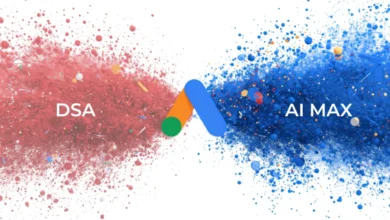
A significant innovation highlighted by Schindler was "AI Max," Google’s advanced AI-driven targeting and creative tool designed specifically for Search campaigns. AI Max is engineered to empower advertisers by enabling them to target searches that were historically challenging to monetize effectively. This capability potentially unlocks new revenue streams and enhances the efficiency of existing campaigns, driving higher returns on investment for advertisers. While the specific revenue contribution of AI Max to the quarter’s results was not quantified, its mention in the earnings call underscores its strategic importance. This development directly links Google’s cutting-edge AI efforts to its core ad revenue, building upon the narrative established in Q4 2025 when the company first detailed its AI Mode ad tests. This continuous evolution of ad technology, powered by AI, is critical for Google to maintain its dominance in the digital advertising market.
Market Reaction and Analyst Perspectives
Following the earnings release, initial market reactions were largely positive, with investors acknowledging Alphabet’s strong overall revenue growth and impressive profitability. The significant user growth for Gemini and the scale of AI operations were particularly well-received, signaling Google’s strong position in the AI race. However, the slight deceleration in the core Search revenue growth rate prompted nuanced discussions among financial analysts.
Some analysts, like those at [Fictional Investment Bank Name 1], viewed the 17% Search growth as a natural and healthy stabilization after an exceptionally strong period of acceleration. They argued that maintaining such high rates of acceleration indefinitely is unsustainable for a business of Google Search’s scale and maturity. Instead, they focused on the absolute revenue gains and the underlying strength of AI integration. Others, from firms like [Fictional Investment Bank Name 2], adopted a more cautious stance, suggesting that the slowdown warrants closer monitoring in the coming quarters. They raised questions about potential market saturation, increased competition in digital advertising, or the long-term impact of AI-driven search experiences on traditional ad formats. However, there was a consensus that Alphabet’s financial health remains robust, underpinned by its diverse revenue streams and strategic investments in future technologies.
Broader Implications and the Road Ahead
The Q2 2026 results carry several important implications for Google, advertisers, and the broader digital ecosystem. For Google, the central question emerging from this quarter is whether the deceleration in Search growth was a temporary blip, perhaps due to seasonal factors or market recalibration, or if it marks the beginning of a more moderate growth phase. If Q1 2026 indeed proves to be the peak of this recent acceleration cycle, then previous forecasts based on continuous upward momentum might require reevaluation. Google’s ongoing success will heavily rely on its ability to further monetize its AI advancements, ensuring that innovations like Gemini and AI Max translate directly into sustained revenue growth for its core business.
For advertisers, the narrative consistently put forth by Google — that AI features are driving Search query growth and enhancing ad performance — remains a critical takeaway. The advancements in AI Max offer powerful tools for more effective campaign management and targeting. However, it is crucial for advertisers to understand that Google’s strong revenue quarter does not automatically translate to increased organic visibility or traffic to individual websites. The reported figures reflect Google’s "Search & Other revenue," which is primarily advertising revenue. Website owners and marketers must continue to rely on their own analytics tools, such as Google Search Console, to monitor their site’s performance, traffic, and user engagement.
The introduction of the new Google generative AI report in Search Console is a significant development. While it currently displays impressions in AI Overviews and AI Mode, it does not yet provide data on clicks or click-through rates. This limitation means the report focuses more on the visibility of AI features rather than directly measuring their impact on organic traffic to external websites. As AI continues to reshape search results, advertisers and content creators will need to adapt their strategies to maximize visibility and engagement within these evolving formats.
Looking ahead, Alphabet’s strategy is clear: double down on AI. The staggering figures for Gemini MAU and API token processing are not merely vanity metrics; they represent a fundamental shift in how users interact with information and how businesses reach them. The company’s ability to seamlessly integrate AI into its most profitable segments, like Search advertising, will be the ultimate determinant of its sustained growth. The coming quarters will reveal whether the Q2 2026 growth rate slowdown was a minor fluctuation or a signal of a new equilibrium for one of the world’s most influential technology companies, as it continues to navigate and shape the AI-powered future.
Related posts: