The Definitive Guide to Metricool Alternatives: Comparing the Top Social Media Management Tools for 2026

As digital marketing continues to evolve, social media managers, creators, and enterprise agencies constantly reevaluate their software stacks to balance feature depth with escalating subscription costs. Metricool has long maintained a loyal user base due to its robust analytics, competitive tracking capabilities, and accessible entry-level pricing. However, as organizations scale, hidden costs often emerge. Essential features frequently sit behind gated add-ons or higher-tier pricing structures, compelling marketing professionals to seek out alternatives that offer greater transparency, comprehensive multi-channel publishing, and scalable team collaboration.
This comprehensive analysis examines seven of the leading social media management platforms currently available on the market, detailing their primary use cases, pricing mechanics, and unique institutional strengths.

Market Context and the Shift Away from Metricool
Metricool remains a favored platform for data-driven marketers who appreciate granular analytics, competitor tracking, and localized traffic sources. Yet, the platform’s pricing model can become restrictive for growing teams. Add-on fees for specific networks—such as X (formerly Twitter)—and tier-restricted analytics mean that an organization’s initial financial commitment can escalate rapidly.
Furthermore, modern social media management requires more than simple post scheduling. Contemporary marketing teams demand robust unified social inboxes, multi-tiered client approval workflows, white-labeled reporting capabilities, and seamless integrations with customer relationship management (CRM) software. Consequently, industry professionals are actively exploring alternative software ecosystems that provide predictable billing alongside advanced operational capabilities.
Comparative Overview of Leading Metricool Alternatives
To assist organizations in selecting the appropriate platform, the following table compares the top seven Metricool alternatives by their optimal use cases and starting price points.
| Tool | Best For | Starting Price |
|---|---|---|
| Buffer | Creators, small businesses, and growing agencies seeking flexible, affordable management. | Free (Paid plans from $6/channel/month) |
| Hootsuite | Marketing teams requiring extensive competitor benchmarking alongside brand analytics. | 14-day free trial, then $149/user/month |
| Sprout Social | Enterprise teams managing high volumes of comments and direct messages across networks. | 30-day free trial, then $99/seat/month |
| Agorapulse | Organizations requiring in-depth return on investment (ROI) reporting and BI integrations. | 30-day free trial, then $99/user/month |
| SocialPilot | Agencies desiring fully white-labeled platforms and client-facing dashboards. | 14-day free trial, then $30/month |
| Later | Brands prioritizing visual grid planning, particularly for Instagram and Pinterest. | Free (Paid plans from $25/month) |
| Planable | Teams and agencies executing multi-step internal and external client content approvals. | Free (Paid plans from $39/workspace/month) |
1. Buffer: Best for Flexibility and Cost-Efficiency
Buffer is a cornerstone tool for individual creators, small businesses, and scaling agencies looking for a reliable, no-nonsense interface. Unlike platforms that penalize users for connecting specific networks, Buffer includes major platforms like LinkedIn and X on all tiers—including the Free plan—without additional fees.
Pricing Structure
- Free Plan: Available with baseline features.
- Paid Plans: Starting at $6 per channel, per month (billed monthly).
- Annual Commitment: Generates a 20 percent discount across all paid tiers.
- Trial Period: 14-day free trial available for evaluation.
Buffer excels in day-to-day content generation, publishing, and foundational performance tracking. The Essentials plan expands capabilities to include unlimited scheduled posts, AI reply suggestions, and extended analytics history. For collaborative environments, the Team plan—starting at $12 per channel, per month—introduces unlimited team members at no extra charge, role-based channel permissions, and formal approval workflows to ensure editorial oversight before publication.
2. Hootsuite: Best for Enterprise Competitor Benchmarking
For organizations where competitor tracking is a non-negotiable requirement, Hootsuite provides an enterprise-grade ecosystem. Built explicitly for mid-market and large marketing teams with substantial software budgets, Hootsuite delivers deep competitive intelligence.

Pricing Structure
- Free Plan: Not available.
- Paid Plans: Starting at $149 per user, per month.
- Annual Commitment: Tiered discounts ranging from 20 to 34 percent.
- Trial Period: 14-day free trial.
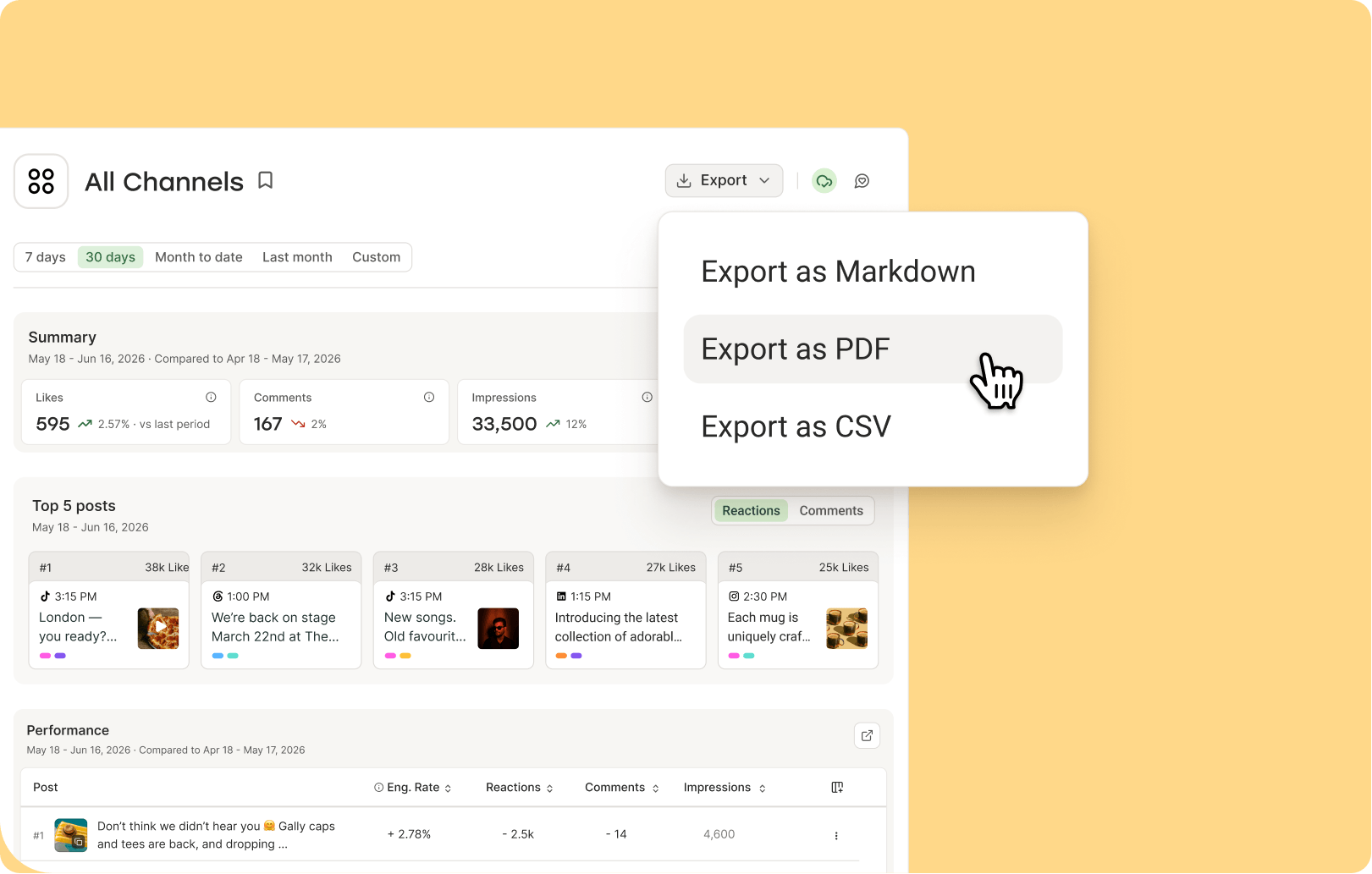
Hootsuite allows users to construct a private watchlist of competitor accounts to monitor publishing frequency, audience growth trajectories, and engagement benchmarks. This data enables brands to identify content gaps and establish realistic performance goals within their respective industries. Additionally, the platform supports bulk scheduling and features over 100 native integrations, connecting smoothly with enterprise solutions such as Canva, Salesforce, and Zendesk.
3. Sprout Social: Best for High-Volume Community Management
When customer support and social media intersect at scale, Sprout Social emerges as the premier option. The platform is specifically engineered for brands that field high volumes of inbound comments, customer service inquiries, and direct messages across multiple platforms.
Pricing Structure
- Free Plan: Not available.
- Paid Plans: Starting at $99 per seat, per month (covering up to 5 social profiles).
- Annual Commitment: 20 to 25 percent savings depending on the tier.
- Trial Period: Extended 30-day free trial.
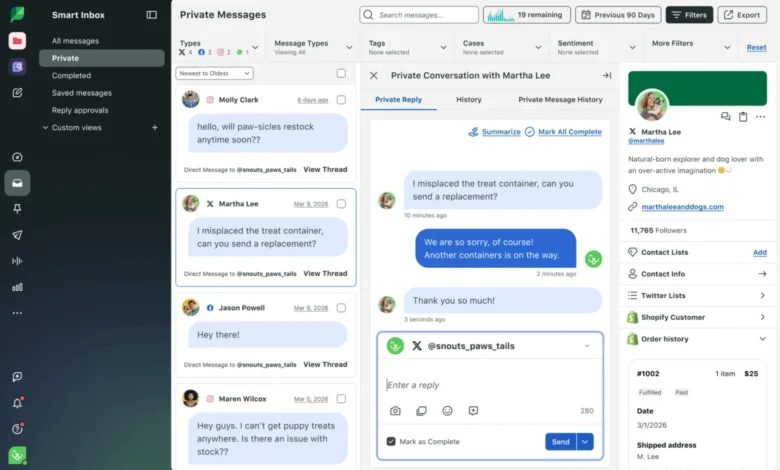
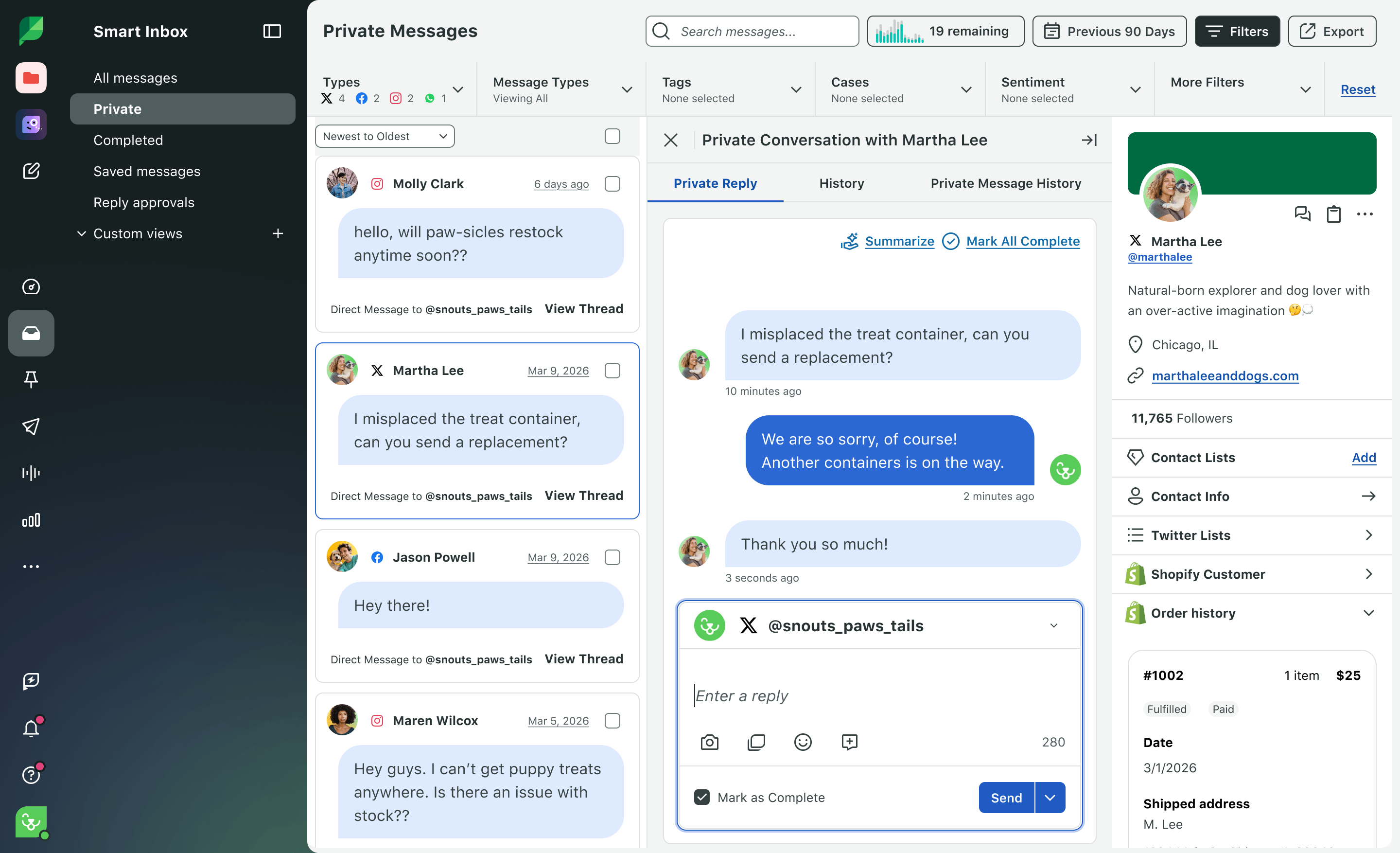
Sprout Social’s proprietary "Smart Inbox" centralizes incoming comments, mentions, private messages, and ad-specific feedback from Meta and TikTok into a single operational feed. Teams can assign conversations internally, apply sentiment tags, and establish automated rules to trigger spike alerts during PR crises or viral moments. By integrating directly with enterprise helpdesks like Zendesk and HubSpot, Sprout Social transforms social media interactions into formal customer support tickets.
4. Agorapulse: Best for In-Depth Analytics and ROI Reporting
Organizations tasked with proving the financial impact of social media initiatives often turn to Agorapulse. The platform focuses heavily on rigorous data analysis, return on investment tracking, and seamless business intelligence integrations.
Pricing Structure
- Free Plan: Not available.
- Paid Plans: Starting at $99 per user, per month (supporting up to 10 profiles).
- Annual Commitment: 20 percent discount.
- Trial Period: 30-day free trial.
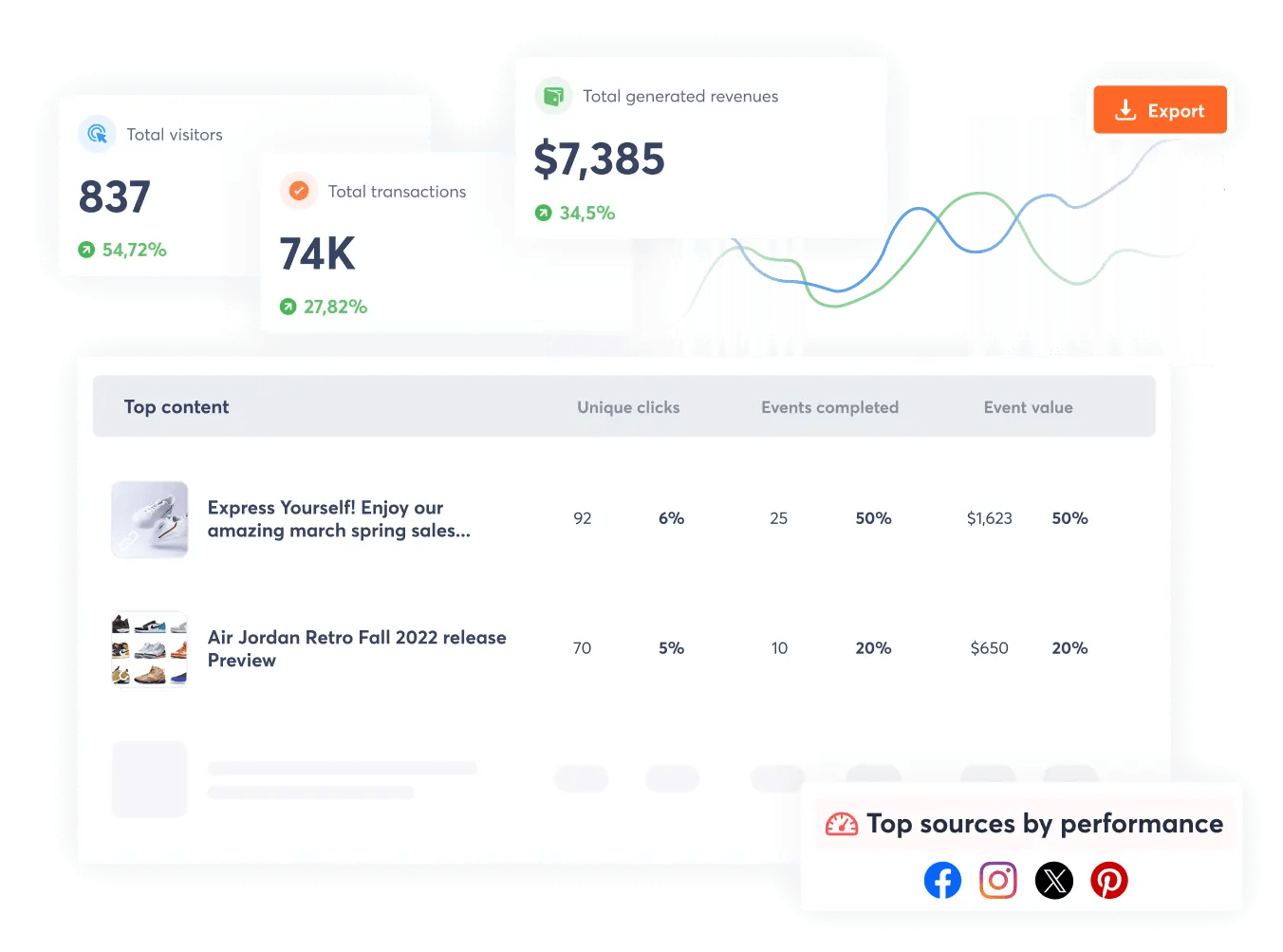
Agorapulse bridges the gap between social engagement and bottom-line revenue by connecting social activity directly to business outcomes. This capability allows marketing teams to present concrete ROI data to executive leadership. Furthermore, the platform supports advanced custom reporting, read-only API access for external business intelligence tools, and Looker Studio integrations for unified corporate dashboards. Built-in AI features, such as the Archie content studio, also assist teams in repurposing long-form assets into platform-specific social posts.
5. SocialPilot: Best for Agency White-Labeling
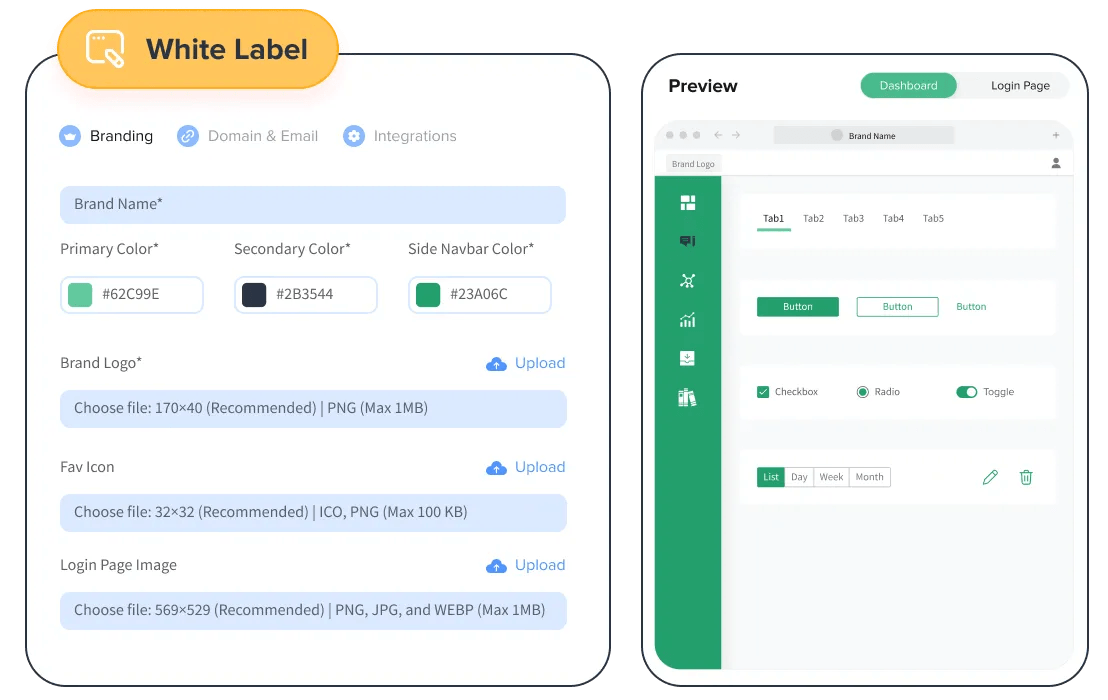
Agencies managing multiple external clients frequently require solutions that project independent brand identity. SocialPilot addresses this need by providing comprehensive white-label capabilities tailored to agency environments.
Pricing Structure
- Free Plan: Not available.
- Paid Plans: Starting at $30 per month (1 user, 7 social accounts).
- Annual Commitment: 15 percent discount.
- Trial Period: 14-day free trial (credit card not required).
SocialPilot allows agencies to operate the platform on custom domains featuring branded login pages, custom dashboards, and tailored client email notifications. Analytics reports can be fully customized with agency logos and brand colors. Beyond white-labeling, SocialPilot offers bulk CSV scheduling, granular team permission hierarchies, and centralized digital asset libraries for efficient campaign management.
6. Later: Best for Visual Grid Planning and Instagram
Brands operating within visually driven industries—where feed aesthetics dictate consumer perception—frequently utilize Later. The platform is purposefully designed for aesthetic curation, making it particularly effective for Instagram-first strategies.
Pricing Structure
- Free Plan: Limited free tier available.
- Paid Plans: Starting at $25 per month (1 user, 1 social set up to 8 profiles).
- Annual Commitment: 25 percent discount.
- Trial Period: 14-day free trial.
Later’s drag-and-drop calendar interface and visual grid preview allow social media managers to curate their feeds prior to publication. Beyond aesthetic planning, Later supports advanced Instagram functionalities, including product tagging, collaborative post scheduling, and access to creator marketplaces. While optimized for visual networks like Instagram, Pinterest, and TikTok, the platform also accommodates mainstream networks such as LinkedIn, YouTube, and Snapchat.
7. Planable: Best for Multi-Step Client Approvals
Content governance and compliance are critical for regulated industries and large creative agencies. Planable eliminates the administrative friction associated with content sign-offs by providing structured, multi-tiered approval workflows.
Pricing Structure
- Free Plan: Capped at a lifetime total of 50 posts.
- Paid Plans: Starting at $39 per workspace, per month (unlimited users).
- Annual Commitment: Equivalent to two months free.
- Trial Period: None (the limited free plan functions as an evaluation tool).
Planable allows administrators to configure approval requirements ranging from optional reviews to strict multi-level sign-off chains where content cannot publish until all designated stakeholders grant approval. Internal team members can collaborate via private comments, while external clients can review and approve posts directly through a web link without requiring a dedicated platform login.
Strategic Guidance for Selecting the Right Tool
Choosing the optimal social media management tool requires an internal audit of current operational bottlenecks and future growth projections. Organizations should consider the following diagnostic questions when evaluating their software requirements:

- What is the primary function of the team? If publishing and analytics are paramount, solutions like Buffer or Agorapulse are appropriate. If community management dominates daily operations, Sprout Social is preferable.
- How complex are internal and external approval chains? Teams managing multiple client sign-offs will benefit significantly from Planable or SocialPilot.
- What are the true operational costs? Marketers must calculate the total cost of ownership, factoring in hidden fees for team seats, extra channels, and specialized add-ons like competitor tracking or X integration.
Frequently Asked Questions
Are there reliable free alternatives to Metricool?
Yes. Buffer offers a robust Free plan that includes three social channels, unlimited AI assistance, community inbox access, and API connectivity, with LinkedIn and X included at no additional cost. Planable and Later also offer limited free tiers constrained by monthly post volumes or total lifetime posts.
Does Metricool include X (Twitter) on its free tier?
No. Metricool treats X integration as a paid add-on on its standard plans and excludes it entirely from the free tier. In contrast, competitors like Buffer incorporate X support across all plans, including the free option, without supplementary charges.
Can historical data be migrated when switching from Metricool?
Because published posts and audience data reside natively on the respective social networks, migrating to a new management platform does not erase historical content. Most modern tools automatically sync recent post analytics upon initial account authorization, though the depth of historical data retrieval depends on platform-specific API limitations.