The Evolution of Search Marketing: From Gold Rush Entrepreneurialism to the Era of Algorithmic Automation

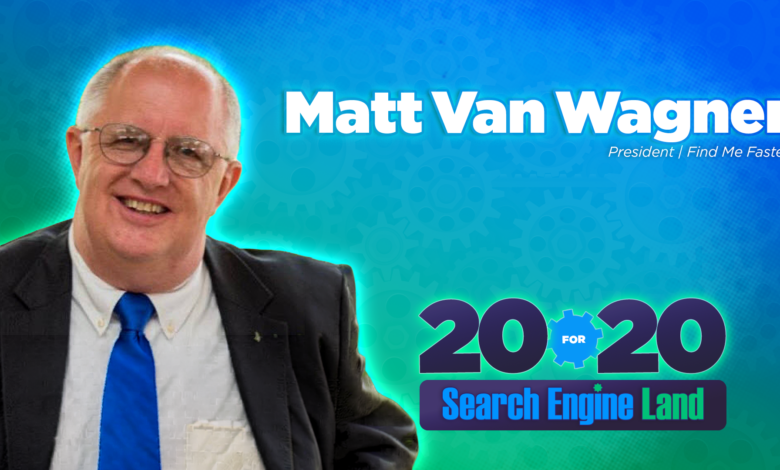
The search marketing industry has undergone a seismic shift over the past two decades, evolving from a wild-west environment of manual experimentation into a highly consolidated ecosystem governed by artificial intelligence and automated bidding systems. Reflecting on this transition, veteran search strategist Matt Van Wagner offers a perspective that bridges the gap between the industry’s nascent stages and its current automated state. This historical trajectory highlights not only the technical maturation of paid search but also the enduring tension between the commercial objectives of platform operators like Google and the performance requirements of individual advertisers.
The Dawn of Search: An Industry in Infancy
In the early 2000s, the marketing landscape was dominated by traditional, high-friction channels such as direct mail, trade publication advertising, and regional conference circuits. These methods were notoriously difficult to track, often requiring months to measure return on investment. The emergence of Google Ads—then known as AdWords—introduced a paradigm shift: the ability to reach users at the exact moment of intent.
For early practitioners, this was the equivalent of a digital gold rush. Unlike traditional media, where inventory was limited and pricing was opaque, search marketing offered a transparent, auction-based model. Van Wagner, who transitioned into the field during this period, recalls an atmosphere of intense collaboration. Because the market was expanding at an exponential rate, early agencies often functioned more as peers than competitors. Many firms, however, underestimated the value of their expertise, setting fees far below the actual revenue-generating impact they provided to clients.
Chronology of a Transforming Landscape
The professionalization of the industry did not happen in a vacuum. It was driven by a series of critical milestones:
- 2000–2003: The "Wild West" era. Advertisers began testing the efficacy of keyword-based advertising, often utilizing manual bidding and simple keyword structures.
- 2003: The Google Florida Update. This landmark algorithm shift decimated organic rankings for many sites overnight, forcing businesses to acknowledge that organic search was not a static asset. This event served as a catalyst for the adoption of paid search as an "insurance policy" against organic volatility.
- 2006: The launch of Search Engine Land. The platform provided a centralized, independent voice that moved beyond basic "how-to" guides, offering sophisticated analysis that helped the industry "grow up."
- 2010: The introduction of Google Instant. This feature demonstrated Google’s power to dominate the news cycle through product innovation, effectively overshadowing Microsoft’s costly attempts to promote the Bing search engine through conventional advertising.
- 2015–Present: The Automation Shift. Google began systematically moving toward automated bidding, broad-match defaults, and machine-learning-driven campaign structures, fundamentally reducing the granularity of manual control.
The Shift from Granularity to Automation
Early search marketing was defined by "sculpting" traffic. Practitioners employed techniques like Single Keyword Ad Groups (SKAGs) and intricate negative-keyword structures to exert surgical control over which queries triggered specific ads. These practices were considered the hallmark of a sophisticated search engine marketer (SEM).
Today, those methods are largely obsolete. Google’s transition to automated bidding—where algorithms ingest thousands of signals to predict conversion probability—has rendered manual, granular management redundant. However, this shift has introduced a new layer of complexity. Advertisers are no longer managing keywords so much as they are managing the "inputs" for the machine, such as conversion data, target ROAS (Return on Ad Spend), and budget caps.
The Dual Objectives of the Search Engine
A central theme in Van Wagner’s analysis is the inherent misalignment between Google’s business model and that of the advertiser. While Google provides a powerful engine for growth, its primary fiduciary duty is to its shareholders, which necessitates the maximization of ad revenue.
This creates a conflict in "recommendations." When Google’s system suggests enabling broad match or expanding into Performance Max campaigns, it is often optimizing for the platform’s liquidity—ensuring as many auctions as possible are filled. For the advertiser, these same settings can lead to "learning" periods that consume significant budget with minimal return. Industry experts have long pointed out that while Google’s AI is undeniably capable, it often forces advertisers to pay for "discovery" on queries that the advertiser already knows to be irrelevant to their business model.
The Role of Advocacy and Transparency
Despite these tensions, there have been efforts to bridge the gap between platform and user. The creation of the "Google Ads Liaison" role, currently held by Ginny Marvin, is widely viewed by the industry as a constructive step. By appointing a representative who possesses deep, hands-on experience in the agency world, Google has created a feedback loop that allows for a more nuanced understanding of the frustrations experienced by the practitioner community.
However, the necessity of independent journalism remains critical. Platforms like Search Engine Land continue to serve as a check on platform-driven messaging. Without independent analysis, the risk is that the industry adopts a "black box" mentality, where advertisers lose the ability to question the logic behind automated decisions.
Implications for the Modern Marketer
The lessons of the last two decades underscore three fundamental truths for modern search marketing:
- Avoid the "Prestige" Trap: Early PPC marketers often fell victim to the vanity of the "No. 1 spot." Data-driven economics have largely replaced this, with successful marketers prioritizing profitable conversion over the visibility of the top rank.
- Acknowledge Human Error: As systems become more automated, the scope for human error—such as incorrect negative keyword implementation—remains. Transparency in reporting and the ability to admit and correct mistakes quickly is a sign of maturity in the agency-client relationship.
- Maintain Skepticism: Advertisers should view Google’s automated recommendations as suggestions rather than mandates. The most effective strategy involves combining the machine’s ability to process data at scale with the human’s ability to understand the unique business context, brand nuances, and market-specific constraints that the AI cannot perceive.
The Future of Search Marketing
As we move further into the era of AI-driven search, the barrier to entry for setting up a campaign has lowered, but the barrier to achieving true competitive advantage has risen. The value of a search marketer is shifting from "technical setup" to "strategic oversight."
The industry has moved from an era of manual, granular control to one of strategic orchestration. While the tools of the trade have changed—from the early days of manual bidding to today’s complex machine learning models—the fundamental challenge remains the same: balancing the platform’s commercial interests with the advertiser’s need for measurable, profitable growth. Those who thrive in the coming decade will be those who refuse to treat automation as an infallible authority, instead maintaining a rigorous, critical approach to the technology that powers their digital presence.
Related posts: