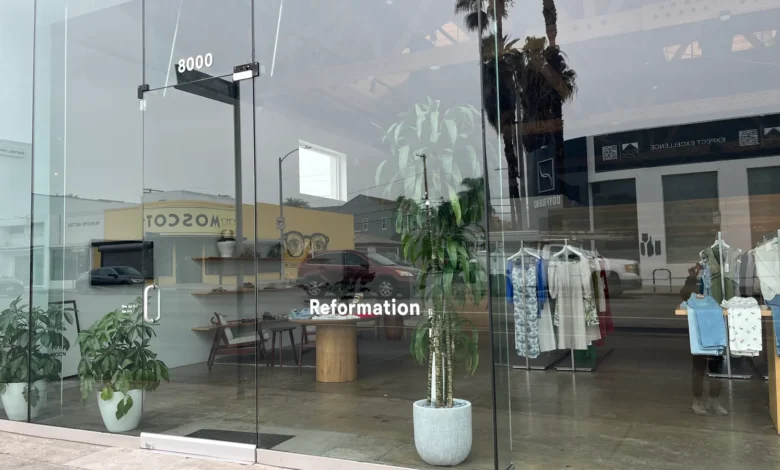
Sustainable direct-to-consumer fashion brand Reformation has posted a robust 24% year-over-year jump in net revenue for the second quarter of 2026, marking an encouraging start to its life as a publicly traded company. The strong financial performance comes just months after the brand made its highly anticipated initial public offering, navigating a cautious broader market environment for apparel retail.
The financial results, announced in September 2026, offer a reassuring sign to investors who had exercised caution during the company’s summer market debut. Despite initial trading opening at the lower end of its projected price range, Reformation’s Q2 metrics demonstrate enduring consumer demand for its sustainably produced apparel, validating the brand’s unique inventory model and ambitious retail expansion strategy.
The Path to the Public Market
Reformation’s journey to becoming a publicly traded company has been closely watched by retail analysts and industry observers alike. Founded with a mission to bring sustainability to contemporary fashion, the direct-to-consumer (DTC) label built a loyal following through its eco-friendly practices, trendy aesthetic, and celebrity endorsements. Over the years, the brand transitioned from a small boutique operation into a major omnichannel player, attracting private equity backing before setting its sights on the public markets.
In the lead-up to its IPO, Reformation targeted a valuation of approximately $1 billion. However, when the company officially went public in July 2026, prevailing market skepticism toward newly minted apparel stocks—compounded by macroeconomic pressures on discretionary consumer spending—pushed initial trading toward the lower threshold of its expected price range. Financial institutions and institutional investors voiced typical concerns associated with the apparel sector, including shifting consumer tastes, supply chain vulnerabilities, and the inherent volatility of fast-moving fashion trends.
Despite this initial Wall Street hesitation, Reformation’s management team remained focused on the brand’s fundamental strengths. The successful completion of the IPO provided the company with the capital necessary to accelerate its physical store footprint and invest further in its proprietary supply chain technology. The second-quarter earnings report serves as the first official progress report for public shareholders, offering a concrete look at how the brand is executing its post-IPO growth strategy.
Agile Supply Chain and Rapid Production Models
A cornerstone of Reformation’s business model—and a key point of discussion during the Q2 earnings call—is its highly responsive supply chain infrastructure. Traditional apparel retailers often rely on long-lead-time forecasting, placing massive inventory bets up to twelve months in advance of a season. This traditional approach frequently results in excess inventory, deep discounting, and margin compression if trends shift unexpectedly.
Reformation has bypassed this traditional paradigm by implementing a shortened lead-time production model. Speaking to analysts and investors during the earnings call, CEO Hali Borenstein emphasized the strategic advantages of this agile framework.
"Rather than making large inventory bets up to 12 months in advance like many brands, we respond to what customers actually tell us they want," Borenstein stated. "Our supply chain is built for speed, sustainability, and quality. We produce more than 50% of our products in 60 days or less, and approximately 90% of DTC revenue comes from styles with proven performance behind it."
This data-driven, reactive manufacturing process significantly reduces the risk of unsold stock and aligns closely with the brand’s overarching commitment to sustainability. By producing smaller batches initially and scaling up production rapidly based on real-time customer data, Reformation minimizes textile waste—a major environmental critique of the modern fashion industry—while maximizing full-price sell-through rates.
Financial Health and Analyst Perspectives
The 24% surge in second-quarter net revenue has prompted a reassessment from financial analysts who previously held reservations about the stock. In a note published following the earnings release, equity research analysts at William Blair expressed renewed confidence in Reformation’s long-term trajectory, pointing to the brand’s category extensions and physical store growth potential as primary catalysts.

"While we understand some skepticism around any newly public apparel retailer, between these drivers and the clear visibility in the model, we have deeper conviction in out-year estimates, and the compelling opportunity for shares at these levels," the William Blair analysts wrote.
At the same time, analysts maintain a clear-eyed view of potential risks. The William Blair note identified supply chain volatility and short lead times as the primary risk factors for the business. Because Reformation relies on rapid, reactionary manufacturing cycles, any sudden disruptions in raw material availability, manufacturing capacity, or logistics could create operational bottlenecks.
CFO Joshua Moore provided further financial context during the earnings call, outlining the company’s fiscal discipline and capital allocation plans. Moore noted that the brand’s disciplined inventory management has protected profit margins, allowing Reformation to fund its expansion initiatives while maintaining a healthy balance sheet.
Aggressive Brick-and-Mortar Expansion Strategy
While Reformation originated as a digital-first, direct-to-consumer brand, its current growth playbook relies heavily on a targeted brick-and-mortar expansion strategy. Physical retail stores serve not only as revenue-generating assets but also as powerful marketing and customer acquisition hubs that drive high-margin local traffic and boost digital sales in surrounding zip codes.
At the close of the second quarter of 2026, Reformation operated a total of 70 retail locations. According to CEO Hali Borenstein, the company has mapped out a strategic real estate pipeline that will allow it to double its physical fleet over the next five years.
The expansion is proceeding at a steady pace. CFO Joshua Moore reported that the company plans to open nine to ten new stores during the second half of the year, bringing the total number of new store openings for full-year 2026 to 15 or 16 locations. These real estate additions will target high-performing urban markets, affluent suburban shopping districts, and select international destinations where the brand already commands a strong digital following.

Real estate selection for Reformation centers on prime foot-traffic locations that align with its core demographic of millennial and Generation Z shoppers. Each new store is designed to reflect the brand’s aesthetic and sustainability ethos, featuring vintage furnishings, energy-efficient lighting, and recycling drop-off points for consumers to responsibly dispose of old clothing.
Broader Implications for the Sustainable Fashion Sector
Reformation’s successful public debut and subsequent financial outperformance hold broader implications for the wider sustainable fashion industry. For years, critics argued that sustainable apparel brands could not achieve the scale, profitability, or operational efficiency required to succeed on public equity markets. Many eco-conscious startups remained niche players, hampered by higher production costs and limited capital access.
By proving that a sustainability-driven DTC brand can scale its manufacturing footprint, post double-digit revenue growth, and navigate the rigorous reporting requirements of a public company, Reformation is charting a new course for the industry. Its ability to maintain eco-friendly practices—such as utilizing deadstock fabrics, organic fibers, and traceable supply chains—while delivering strong financial returns challenges the false dichotomy between ecological responsibility and corporate profitability.
Furthermore, Reformation’s model highlights the evolving expectations of modern consumers. Today’s shoppers increasingly demand transparency, ethical manufacturing, and environmental accountability, but they are rarely willing to compromise on style, quality, or convenience. By successfully marrying trend-forward design with sustainable production and rapid fulfillment, Reformation has secured a resilient position in the competitive apparel landscape.
Looking ahead to the remainder of 2026 and beyond, executive leadership remains focused on executing the foundational pillars of the post-IPO strategy: scaling the retail footprint, expanding product categories, and leveraging its agile supply chain to capture shifting consumer preferences. As the company prepares to open its remaining slated stores for the year, investors and industry watchers will be closely monitoring whether Reformation can maintain its impressive growth momentum in a dynamic economic climate.