Microsoft Azure Secures Top Industry Rankings as Enterprise AI Transition Shifts to Production Systems

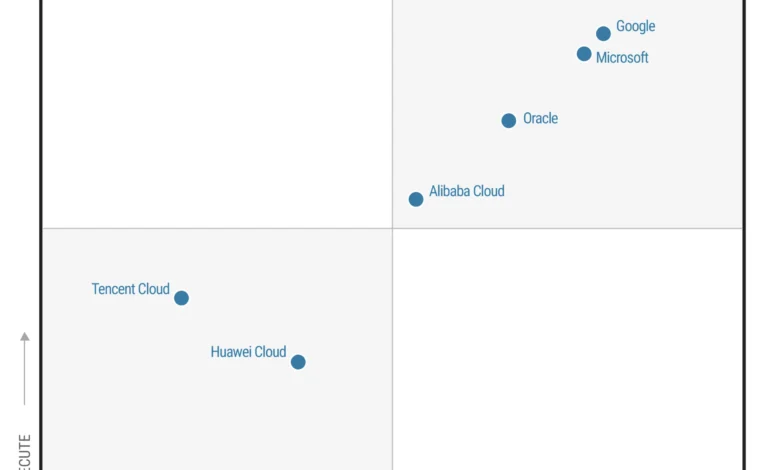
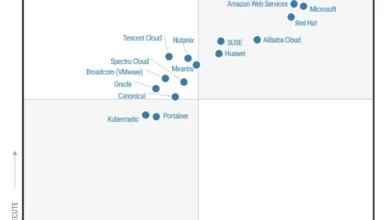
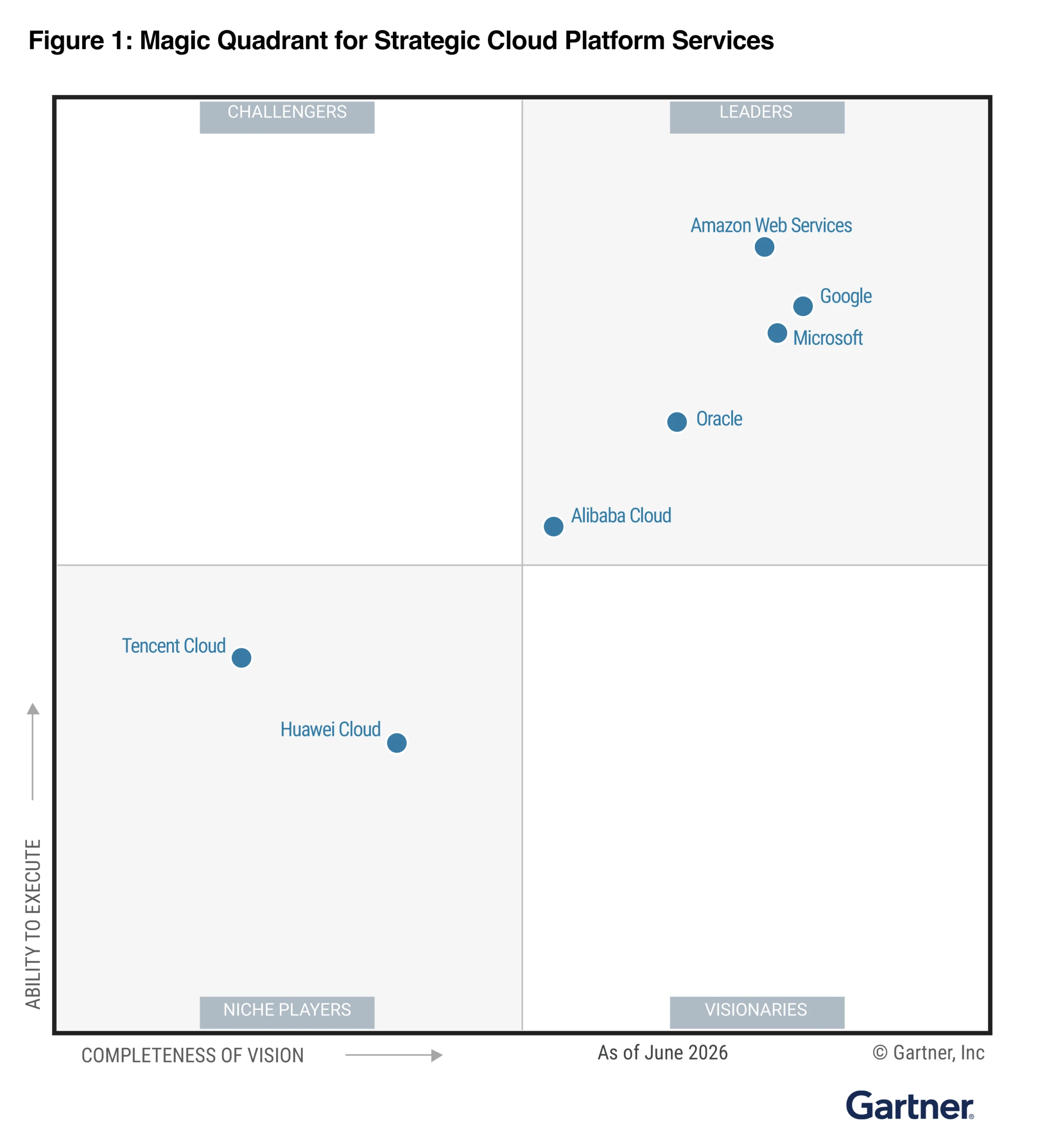
The landscape of enterprise artificial intelligence has reached a critical inflection point, moving from the experimental phase of individual model testing to the complex, large-scale implementation of production-ready systems. In this maturing market, Microsoft Azure has solidified its position as a dominant force, recently being named a Leader in both the 2026 Gartner Magic Quadrant for Strategic Cloud Platform Services and The Forrester Wave: Public Cloud Platforms, Q3 2026. These dual accolades underscore a strategic pivot in the industry: the recognition that the true value of AI lies not in the performance of a single model, but in the seamless integration of infrastructure, data, and developer tools.
The Evolution of the Cloud Platform Strategy
The recognition of Microsoft by major analyst firms serves as a reflection of how the cloud provider has architected its platform over the past several years. While the initial wave of generative AI was characterized by a "model-first" mentality, the current market reality demands a "system-first" approach. Organizations are increasingly adopting multi-model strategies, utilizing massive frontier models for high-complexity tasks while simultaneously deploying smaller, open-weight, or specialized models for cost-sensitive, specific use cases.
This shift has forced cloud providers to move beyond simple compute-and-storage offerings. Customers now require a unified environment where they can orchestrate disparate models without the burden of manually stitching together layers of security, governance, and infrastructure. Microsoft’s strategy, as highlighted by the 2026 analyst reports, focuses on this "silicon-to-agent" integration, where the platform manages the underlying compute complexity, allowing enterprises to focus on application logic and business outcomes.
A Chronology of Strategic Growth
Microsoft’s climb to the top of these specific industry evaluations is not a recent development but rather the result of a multi-year, consistent investment strategy.
- 2023–2024 (The Foundation Phase): Microsoft focused on scaling its AI infrastructure, heavily integrating OpenAI capabilities into its core offerings and launching early iterations of its AI-focused developer tools. During this period, the company established its reputation as a first-mover in the enterprise AI space.
- 2025 (The Integration Phase): As enterprises began to grapple with the complexities of managing AI at scale, Microsoft emphasized "Foundry" services and unified data architectures. This phase was marked by the consolidation of analytics through Microsoft Fabric, ensuring that data—the critical fuel for AI—remained governed and accessible.
- 2026 (The Production Phase): The current year represents the transition to widespread production. Analyst reports in Q3 2026 have shifted their criteria to prioritize reliability, operational efficiency, and the ability to modernize legacy applications, reflecting a market that is no longer satisfied with "cool demos" but requires robust, mission-critical systems.
Data Gravity and the Infrastructure Mandate
A central theme in the 2026 industry evaluations is the concept of "data gravity." As Forrester aptly noted, models come and go, but data remains the permanent anchor of enterprise value. Organizations are hesitant to migrate massive, sensitive datasets to new environments simply to train a model. Instead, they prefer to bring the AI to the data.
Microsoft’s ecosystem addresses this by bridging the gap between transactional databases—such as Azure SQL and Cosmos DB—and the intelligence layer provided by Microsoft IQ. By keeping the analytical and operational data within a single, governed perimeter, Microsoft enables organizations like UNC Health to modernize their research and patient care operations. This approach reduces the "seams" between systems, a critical factor for highly regulated industries where compliance, security, and identity management are non-negotiable.
Modernization as the Gateway to AI
For many global enterprises, the barrier to AI adoption is not the lack of models, but the presence of technical debt. Modernizing legacy infrastructure has become the de facto prerequisite for AI-readiness. The recent reports highlight Microsoft’s pragmatic approach to this challenge: rather than demanding that companies "rip and replace" their existing software, Microsoft has provided tools that allow for incremental modernization.
The case of Levi Strauss & Co. serves as a primary example of this trajectory. By utilizing Azure to migrate legacy workloads, the company created a stable, cloud-native foundation upon which it could layer agentic AI. These agents now assist in simplifying workflows and accelerating decision-making, demonstrating that heritage firms can leverage AI without abandoning the business logic that defines their success. This capability, supported by tools like GitHub Copilot for agentic modernization, allows IT departments to maintain control over their architecture while simultaneously accelerating their digital transformation.
Fact-Based Analysis of Industry Implications
The implications of these rankings extend beyond corporate marketing. For the technology industry, they indicate that the "Cloud Wars" have entered a new theater. Success is no longer measured by who has the most powerful GPU cluster, but by who provides the most efficient "glue" between disparate AI components.
- Complexity Reduction: Enterprises are increasingly opting for "platform-as-a-service" models that reduce the overhead of multi-model management. The ability to switch models based on performance or cost without re-engineering the underlying data architecture is becoming a competitive necessity.
- The Rise of Agentic Workflows: The industry is moving from simple chatbots to autonomous agents that can interact with applications and data. Microsoft’s focus on the software developer lifecycle—ensuring that agents can test code, plan upgrades, and support migrations—positions the company well for the next stage of enterprise automation.
- Governance as a Differentiator: With the increasing scrutiny of AI safety and data privacy, platforms that bake governance directly into the infrastructure (via tools like Microsoft Purview) are seeing higher adoption rates than those that treat security as an optional "add-on."
Official Stance and Future Outlook
In response to the analyst rankings, leadership within the Microsoft Azure division has emphasized that the goal is to "power every AI ambition" while maintaining the flexibility customers demand. The company maintains that the next generation of cloud will be defined by the ability to harmonize infrastructure, data, models, and developer tools into a single, cohesive fabric.
While Gartner and Forrester provide independent validation of this strategy, the real-world test remains the scalability and reliability of these systems in production environments. The industry is currently observing a shift where "best-of-breed" may no longer mean picking the best individual tool, but rather selecting the most integrated platform.
Looking Toward 2027 and Beyond
As organizations look toward the future, the primary challenge will be sustaining performance as models grow in complexity. The infrastructure that supports these models must become more energy-efficient, more resilient, and easier to operate. The 2026 reports suggest that the cloud platform of the future must function less like a collection of utilities and more like an intelligent, self-optimizing system.
For Microsoft, the focus for the coming year appears to be twofold: continuing to bridge the gap between legacy IT environments and modern AI agent systems, and maintaining the openness of its platform to ensure that enterprises are never locked into a single technological dead-end. As the market matures, the success of Azure will likely be measured by how many enterprises can transition from the "hype" of AI to the "utility" of AI, delivering measurable business value in an increasingly competitive global economy. The validation from Gartner and Forrester confirms that Microsoft has correctly identified the trajectory of this shift, positioning itself as a central nervous system for the next generation of industrial and enterprise computing.