Deckers Brands, the parent company behind popular footwear labels like Ugg and Hoka, has announced robust first-quarter financial results that surpassed analyst predictions. However, this positive performance is tempered by underlying questions regarding the sustained demand for its rapidly growing sneaker brand, Hoka. While the company reported significant revenue increases across its portfolio, particularly driven by direct-to-consumer (DTC) channels, some market observers are cautiously assessing the long-term trajectory of Hoka’s popularity.
Deckers Brands Reports Strong Q1 Performance Driven by Ugg and Hoka
The Santa Barbara, California-based company revealed its first-quarter fiscal year 2027 earnings on July 24, 2026, showcasing a financial period characterized by resilience and strategic growth. Deckers Brands reported that its overall net sales for the quarter exceeded market expectations, a testament to the enduring appeal of its established brands and the explosive growth of newer ventures. The company’s diversified brand portfolio, anchored by the iconic Ugg and the performance-driven Hoka, has proven to be a formidable asset in the dynamic retail landscape.
The financial report highlighted that Hoka was the primary revenue driver for the quarter, contributing over $703 million in net sales. This significantly outpaced the $278 million generated by Ugg, underscoring Hoka’s ascendancy within the Deckers Brands umbrella. This shift in contribution reflects Hoka’s impressive market penetration and its ability to capture a substantial share of the athletic and lifestyle footwear market.
Hoka’s Direct-to-Consumer Surge and Wholesale Momentum
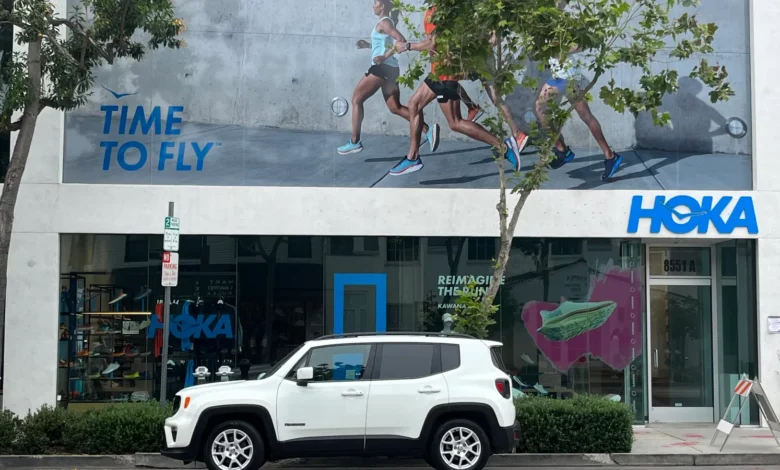
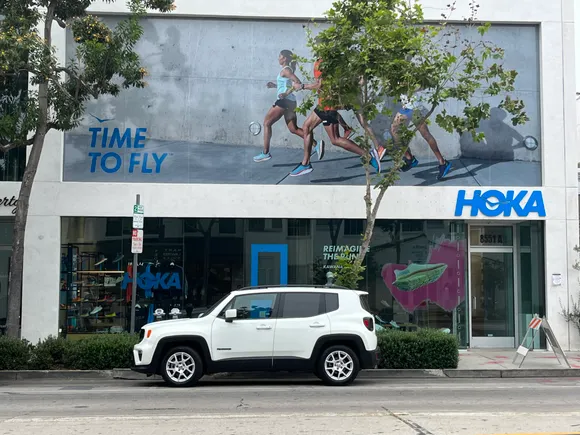
A key factor in Hoka’s stellar performance has been the remarkable expansion of its direct-to-consumer (DTC) sales channels. The company reported a substantial 17% increase in DTC revenue for the first quarter. This growth trajectory indicates a successful strategy of engaging directly with consumers, whether through Hoka’s own e-commerce platforms or its growing network of physical retail locations, such as the prominent storefront observed in Los Angeles. This DTC focus not only allows for greater control over brand messaging and customer experience but also often leads to higher profit margins.
In contrast, Hoka’s wholesale business experienced a more modest growth of 3% in the same period. This segment was primarily driven by performance within the U.S. market, suggesting that while wholesale partnerships remain important, the company’s strategic emphasis is increasingly on building direct relationships with its customer base. This divergence in growth rates between DTC and wholesale highlights a conscious effort by Deckers Brands to leverage its owned channels for maximum impact and profitability.
Analyst Perspectives: Optimism Tempered by Future Demand Concerns
Despite the overwhelmingly positive financial report, a segment of financial analysts has voiced a degree of caution regarding the long-term sustainability of Hoka’s rapid growth. While acknowledging the brand’s current success, some are scrutinizing whether the current demand levels can be maintained, particularly as the market for performance footwear becomes increasingly competitive.
Needham & Company, led by analyst Tom Nikic, expressed a generally optimistic outlook, characterizing the growth of both Hoka and Ugg as "growing nicely (even if the growth isn’t as exceptional as it once was)." Nikic’s client note from Friday highlighted favorable underlying trends, stating, "DTC trends are solid, inventory/margin dynamics are favorable, and valuation is compelling to us." This perspective suggests that while the explosive growth rates of the past may be normalizing, the foundational health of the business and its brands remains strong.
Conversely, Wells Fargo analysts, under the guidance of Ike Boruchow, have raised more pointed questions about Hoka’s future performance. Boruchow’s client note from Thursday indicated that the company’s full-year expectations for Hoka’s net sales, projected to increase by a low-double-digit percentage compared to the previous year, fall below some market expectations. He further elaborated that "near-term, some investors may view this ‘as a visible deterioration in Hoka demand.’" This sentiment points to a concern that the market might be anticipating a slowdown in Hoka’s growth trajectory, even as the company itself projects continued expansion.
Hoka’s Product Diversification and Market Share Gains
Adding another layer to the analyst discourse, UBS analysts, including Jay Sole, believe that the market may be "undervaluing the progress Hoka is making in diversifying its product assortment." Sole’s research note from Friday emphasized that this diversification is a critical strategy for expanding Hoka’s total addressable market (TAM) and driving further market share gains. He specifically cited Deckers’ report that new styles such as the Clifton 11 and Clifton Pro have been well-received by customers.

Of particular interest is the Clifton Pro, which Sole noted is "helping Hoka attract a younger, male consumer." This insight is significant as it suggests Hoka is not only broadening its appeal across different age demographics but also successfully penetrating new consumer segments. By offering a more differentiated product portfolio, Hoka is aiming to move beyond its initial core audience and capture a wider slice of the global footwear market. This strategy is crucial for long-term brand health and for mitigating the risks associated with relying too heavily on a single product category or consumer group.
Deckers Brands’ Strategic Outlook for Hoka and Ugg
Deckers Brands CEO Stefano Caroti articulated a clear vision for both Hoka and Ugg during the company’s investor call. He emphasized Hoka’s ongoing expansion of "consumer participation through a more differentiated product portfolio, growing international reach and building an innovation pipeline that continues to elevate the brand." This statement underscores a multi-pronged approach to sustained growth, focusing on product innovation, global market penetration, and a deeper understanding of consumer needs.
Looking ahead, Caroti indicated that Hoka is poised for accelerated growth in the second half of the fiscal year. This acceleration is expected to be supported by new strategic partnerships with what he described as "elevated, quality retailers." These collaborations are anticipated to further enhance Hoka’s brand presence and accessibility in key markets. While the company expects Hoka to maintain its high-single-digit percentage growth, some analysts, like those at Wells Fargo, perceive this projection as potentially less ambitious than initially anticipated, fueling the debate about future demand.
For the Ugg brand, Caroti outlined a strategy focused on "broadening relevance across seasons, categories and consumer segments, creating new avenues for long-term growth." This suggests a concerted effort to revitalize and expand the appeal of Ugg beyond its traditional winter footwear identity, exploring new product lines and marketing strategies to engage a wider consumer base throughout the year. The company expects Ugg to maintain its mid-single-digit growth rate, indicating a stable yet consistent performance for this heritage brand.
The Impact of New Retail Partnerships and Product Innovation
The introduction of new, high-quality retail partners in the latter half of the year is a critical element of Deckers Brands’ strategy to further solidify Hoka’s market position. These partnerships are not merely about increasing distribution points; they are about aligning Hoka with retailers that can effectively communicate the brand’s performance-oriented ethos and premium quality. This approach aims to reinforce Hoka’s image as a leader in athletic footwear, distinct from mass-market offerings.

Furthermore, the continuous innovation pipeline mentioned by Caroti is paramount. The success of new models like the Clifton 11 and Clifton Pro demonstrates Hoka’s commitment to research and development. This focus on product evolution is essential for staying ahead of trends, meeting the evolving demands of athletes and active consumers, and attracting new demographics. The ability to consistently introduce compelling new products is a key indicator of a brand’s long-term viability and its capacity to sustain growth in a competitive market.
Broader Implications for the Footwear Industry
The financial performance of Deckers Brands and the accompanying analyst discussions offer valuable insights into the broader dynamics of the footwear industry. The sustained success of DTC channels underscores a fundamental shift in consumer purchasing behavior, where brands are increasingly prioritizing direct engagement to foster loyalty and control their narrative. This trend puts pressure on traditional wholesale models and necessitates a strategic re-evaluation by retailers and brands alike.
Hoka’s rapid ascent also highlights the growing demand for specialized performance footwear that seamlessly transitions into everyday lifestyle wear. The blurring lines between athletic performance and casual fashion have created significant opportunities for brands that can deliver both functionality and aesthetic appeal. The success of Hoka, with its distinct design and comfort-focused technology, exemplifies this trend.
However, the concerns raised by some analysts about Hoka’s future demand also serve as a reminder of the inherent cyclicality and competitive pressures within the fashion and footwear sectors. Rapid growth can sometimes lead to market saturation or a cooling of consumer enthusiasm if not managed strategically. Brands must continuously innovate, adapt to changing consumer preferences, and maintain a strong connection with their core audience to ensure enduring success. The case of Deckers Brands and Hoka illustrates the delicate balance between celebrating current achievements and proactively addressing potential future challenges.
Related posts: