Microsoft Azure Databricks Delivers 331 Percent Return on Investment and Accelerated Time to Value According to New Total Economic Impact Study

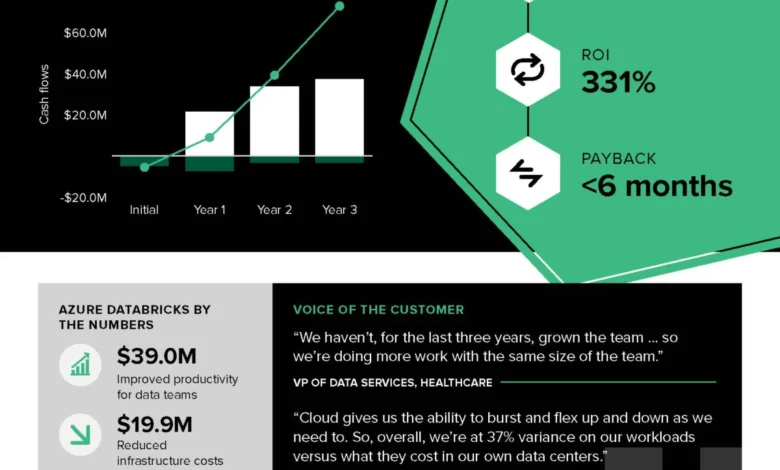
The strategic alliance between Microsoft and Databricks has reached a significant milestone with the release of a comprehensive economic analysis, revealing that their co-engineered platform provides enterprise customers with a 331 percent return on investment (ROI) over a three-year period. The study, conducted by Forrester Consulting on behalf of Microsoft, highlights the measurable financial and operational advantages of the "first-party" integration of Databricks within the Azure ecosystem. As organizations increasingly pivot toward data-driven decision-making and generative artificial intelligence, the findings underscore a critical shift in how cloud-native data platforms are evaluated, moving beyond simple performance metrics to holistic business value and rapid capital recovery.
The Evolution of a Strategic Partnership
The relationship between Microsoft and Databricks is unique in the cloud industry. Unlike other third-party software offerings that are merely hosted on a cloud provider’s infrastructure, Azure Databricks is a first-party service. This means the platform is co-engineered by both companies, resulting in a native integration that allows it to function as a core component of the Azure stack. This collaboration began years ago with the goal of simplifying the complexities of big data and analytics, but it has recently accelerated to meet the demands of the "AI era."
By sharing a unified integration roadmap, Microsoft and Databricks have ensured that the service aligns perfectly with Azure’s identity management, security protocols, and governance frameworks. For enterprise customers, this translates into a "one motion" experience: a single bill from Microsoft, a single support path for troubleshooting, and a seamless connection to the broader Microsoft data and AI stack, including Azure Data Factory, Power BI, and Microsoft Purview. This level of integration is designed to eliminate the "bolted-on" feel of traditional third-party integrations, reducing the friction typically associated with deploying large-scale data estates.
Quantifying the Economic Impact
To provide a concrete assessment of the platform’s value, Forrester Consulting interviewed several long-term Azure Databricks customers to develop a composite organization model. This model represents a typical large-scale enterprise: a company with $6 billion in annual revenue, operating within a regulated industry, and managing a data estate of approximately 10 petabytes.
The findings were stark. Before adopting Azure Databricks, the interviewed organizations reported fragmented data environments that were expensive to maintain and difficult to scale. Governance was often a manual, error-prone process, and the time required to extract actionable insights from data was a significant bottleneck for business operations. Following the implementation of the platform, the composite organization realized $75.6 million in total benefits against $17.5 million in costs over three years. This resulted in a net present value (NPV) of $58.1 million.
Perhaps most significantly for Chief Financial Officers (CFOs) and IT decision-makers, the study found a payback period of less than six months. In an era where technology investments are scrutinized for immediate impact, a sub-six-month recovery of initial capital is a powerful indicator of the platform’s efficiency.
Key Drivers of Business Value
The Forrester study identified four primary areas where Azure Databricks generates financial returns. These go beyond simple IT savings and touch upon the core productivity of the enterprise.
First, the platform significantly reduces the "cost of data." By utilizing the Lakehouse architecture, which combines the best elements of data lakes and data warehouses, organizations can eliminate the need for redundant data copies and siloed storage systems. This architectural efficiency reduces storage costs and minimizes the egress fees often associated with moving data between disparate environments.
Second, there is a marked improvement in developer and data scientist productivity. The native integration with Azure tools means that technical teams spend less time on configuration and integration work and more time on high-value tasks like model building and advanced analytics. The study noted that the "first-party advantage" allows teams to leverage existing Azure skills, reducing the learning curve and accelerating project timelines.
Third, the platform enhances business agility. Faster time-to-insight allows companies to respond more quickly to market changes or internal operational needs. In the composite model, this agility was a major contributor to the $58.1 million NPV, as business units were able to deploy AI-driven solutions and automated reporting much faster than previously possible.
Finally, the study highlighted the importance of risk mitigation and governance. With the inclusion of Unity Catalog, Azure Databricks provides a unified governance layer for all data and AI assets. This is particularly crucial for organizations in regulated industries, such as finance or healthcare, where data lineage and access control are mandatory. The ability to manage permissions and audit trails from a single interface reduces the likelihood of costly compliance failures.
Technological Synergy: The Role of Generative AI and Copilot
A major factor in the continued growth of Azure Databricks is its integration with Microsoft’s generative AI ecosystem. The platform now features Azure Databricks Genie, which integrates directly with Microsoft Copilot Cowork. This allows non-technical users to query the data lakehouse using natural language within familiar tools like Microsoft Teams and Microsoft 365 Copilot.
This "democratization of data" is a significant value add that Forrester noted but did not explicitly price into the primary ROI figure. By grounding AI tasks in trusted enterprise data through the Genie Ontology, organizations can ensure that the answers provided by AI assistants are accurate and contextually relevant. Because these interactions are governed by Unity Catalog, the system ensures that users only see the data they are permitted to access, maintaining strict security even as intelligence is distributed across the workforce.
The technical depth of the platform extends to other Azure services as well. Azure Databricks is integrated with Azure Machine Learning, allowing for seamless transitions between data preparation and model deployment. It also connects natively with Azure DevOps for streamlined CI/CD pipelines and utilizes Azure’s global network of data centers for high availability and disaster recovery.
Independent Benchmarks: Speed as a Competitive Advantage
Value in the data world is inextricably linked to performance. To validate the speed claims of the platform, Principled Technologies, an independent testing firm, conducted a decision-support benchmark based on the industry-standard TPC-DS. The testing involved a 10-terabyte dataset and compared Azure Databricks against Databricks running on Amazon Web Services (AWS).
The results showed that Azure Databricks completed a single query stream in up to 21.1 percent less time than the AWS counterpart when certain autoscaling features were disabled for a controlled comparison. Furthermore, in tests involving four concurrent query streams, the Azure-based service completed the tasks more than nine minutes faster. This speed advantage is not just a technical win; it directly impacts the bottom line. Faster queries mean lower compute costs and quicker delivery of data to end-users, further supporting the ROI findings of the Forrester study.
Industry Context and Strategic Implications
The findings of this report come at a time of intense competition in the cloud data market. Competitors like Snowflake and Google Cloud’s BigQuery are also vying for the role of the central data hub for the enterprise. However, Microsoft’s strategy with Azure Databricks appears to be focused on "frictionless enterprise adoption." By removing the barriers between the data platform and the rest of the corporate IT environment, Microsoft is positioning Azure Databricks as the path of least resistance for large organizations.
Industry analysts suggest that the "first-party" designation is the most potent weapon in Microsoft’s arsenal. It allows for a level of security integration—such as private link support and Microsoft Entra ID (formerly Azure AD) authentication—that third-party providers often struggle to match with the same degree of native simplicity. For the $6 billion composite organization mentioned in the study, these security features are not optional; they are the prerequisite for moving any data to the cloud.
Conclusion: A Foundation for Long-Term Growth
The conclusion of the Forrester Total Economic Impact study is clear: Azure Databricks is more than a tool for data scientists; it is a strategic investment that yields substantial financial returns for the entire business. The 331 percent ROI and the sub-six-month payback period provide a compelling case for organizations that are currently managing fragmented or underperforming data estates.
As the partnership between Microsoft and Databricks continues to evolve, the focus is expected to remain on deepening the integration between data processing and AI application development. For decision-makers, the choice of a data platform is a long-term commitment. The data presented in these recent reports suggests that the co-engineered approach of Azure Databricks offers a unique combination of performance, security, and economic value that is increasingly difficult for enterprises to ignore. With the foundation of a 2026 roadmap already in motion, the platform is positioned to remain a central pillar of the modern enterprise data strategy for years to come.