The process of selecting a cohesive color palette remains one of the most persistent hurdles in digital design and user interface development. While the theory behind color harmony is well-established, translating aesthetic principles into functional hexadecimal codes often results in protracted trial-and-error phases. Modern web designers frequently find themselves spending disproportionate amounts of time adjusting saturation sliders, testing contrast ratios, and second-guessing color combinations rather than focusing on core architectural and layout tasks.
To mitigate these workflow inefficiencies, a growing ecosystem of specialized web-based utilities has emerged. These platforms aim to streamline palette generation, gradient creation, and accessibility testing. Understanding the foundational elements of color theory provides a necessary anchor, but practical implementation requires tools that bridge the gap between abstract inspiration and production-ready code. An examination of five prominent color generation and gradient platforms reveals how contemporary designers optimize their workflows.
The Evolution of Digital Color Selection Tools
In the early periods of web development, designers relied heavily on native operating system color pickers, rudimentary HTML color charts, and manual hexadecimal entry. As web standards evolved and aesthetic expectations shifted toward complex gradients, responsive layouts, and rigorous accessibility compliance, these manual methods proved increasingly unsustainable.
The introduction of dedicated web-based color generators transformed the design landscape by automating the mathematical relationships of color harmony—such as complementary, analogous, and triadic schemes. Furthermore, the rising emphasis on Web Content Accessibility Guidelines (WCAG) necessitated integrated contrast checkers to ensure that foreground text remains legible against background fills. Consequently, modern color tools have expanded from simple palette generators into comprehensive design suites that incorporate image sampling, UI preview environments, and direct framework integrations such as Tailwind CSS.
1. Coolors: Comprehensive Ecosystem for Rapid Iteration
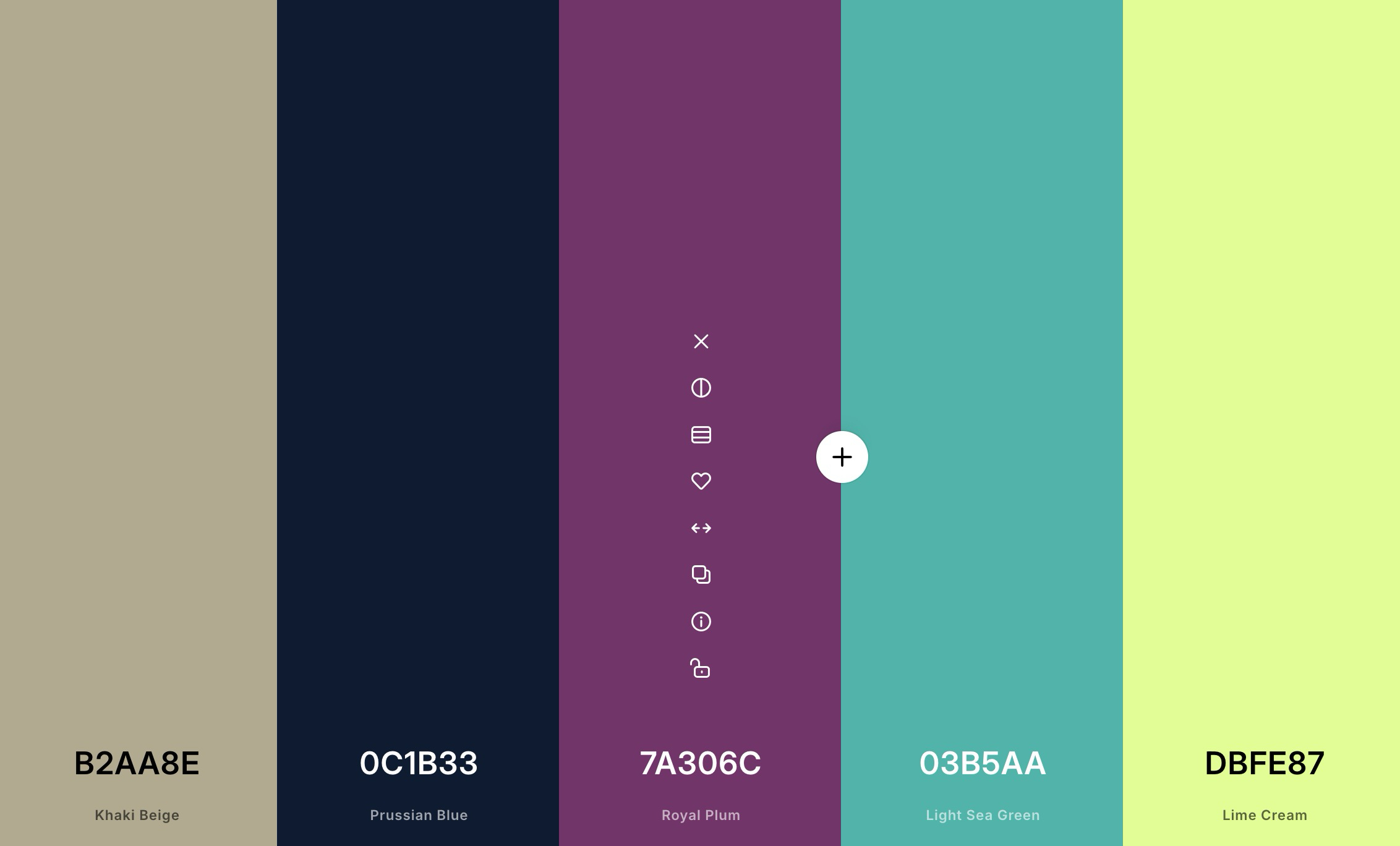
Coolors has established itself as an industry standard for rapid palette generation. The platform’s primary mechanism revolves around an intuitive, spacebar-triggered generator that instantly cycles through mathematically harmonious color combinations. This core feature addresses the immediate need for quick inspiration when initiating a visual project.
Beyond basic palette generation, Coolors offers a robust suite of auxiliary features. Users can upload reference imagery to extract dominant color profiles, utilize an integrated contrast checker to evaluate text readability, and preview palettes across simulated user interface elements. Additionally, the platform provides specialized support for modern utility-first CSS frameworks like Tailwind CSS, making it a versatile asset throughout the lifecycle of a web project—from initial mood board creation to front-end implementation.
2. Grabient: Precision Control for CSS Gradients
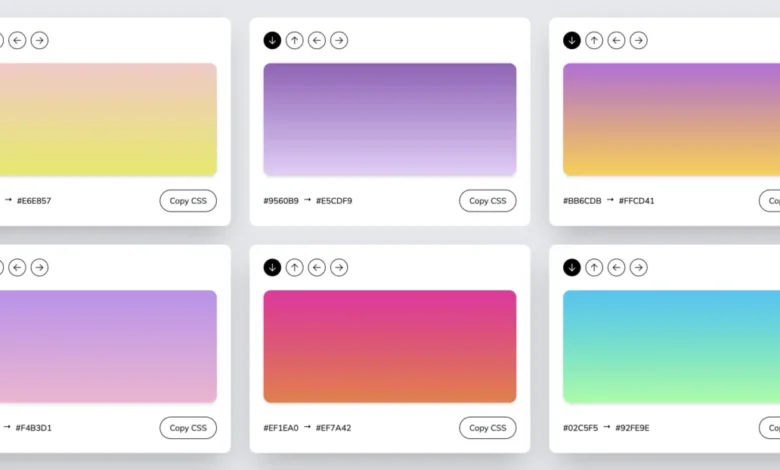
While flat color palettes dominate many design systems, gradients remain a fundamental technique for adding depth, visual interest, and modern polish to landing pages and hero sections. Grabient caters specifically to this design requirement by offering a specialized environment for creating and exporting CSS gradients.
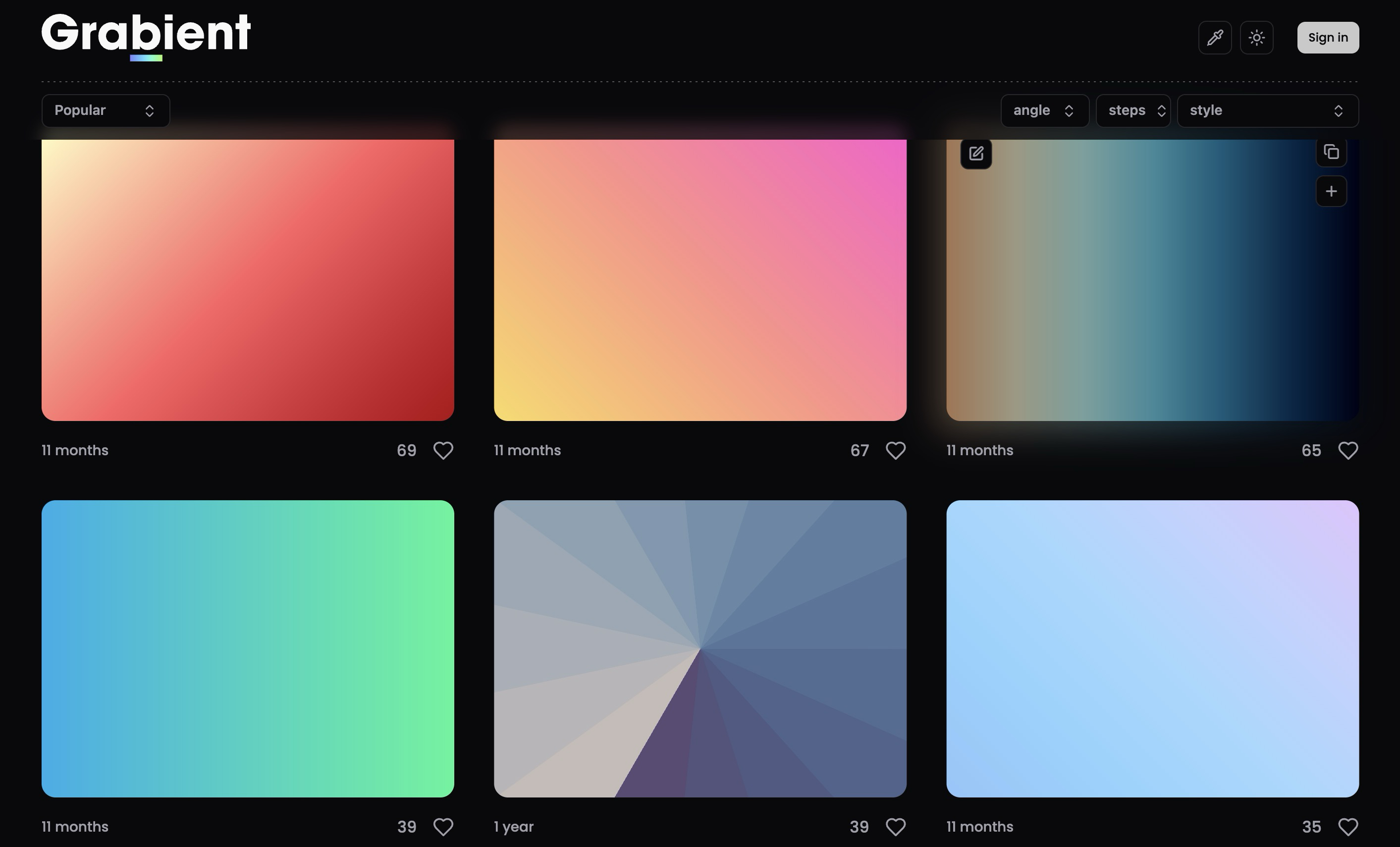
The platform distinguishes itself through a clean, distraction-free interface that allows designers to manipulate gradient angles, color stops, and opacity without manually writing or debugging complex CSS syntax. In addition to its gradient capabilities, Grabient functions as a supplementary palette finder, enabling practitioners to transition seamlessly between blended backgrounds and solid color schemes. This dual functionality reduces friction when developing marketing assets and modern web interfaces that rely heavily on atmospheric lighting effects.
3. ColorHub: Contextual Prototyping and Layout Previews
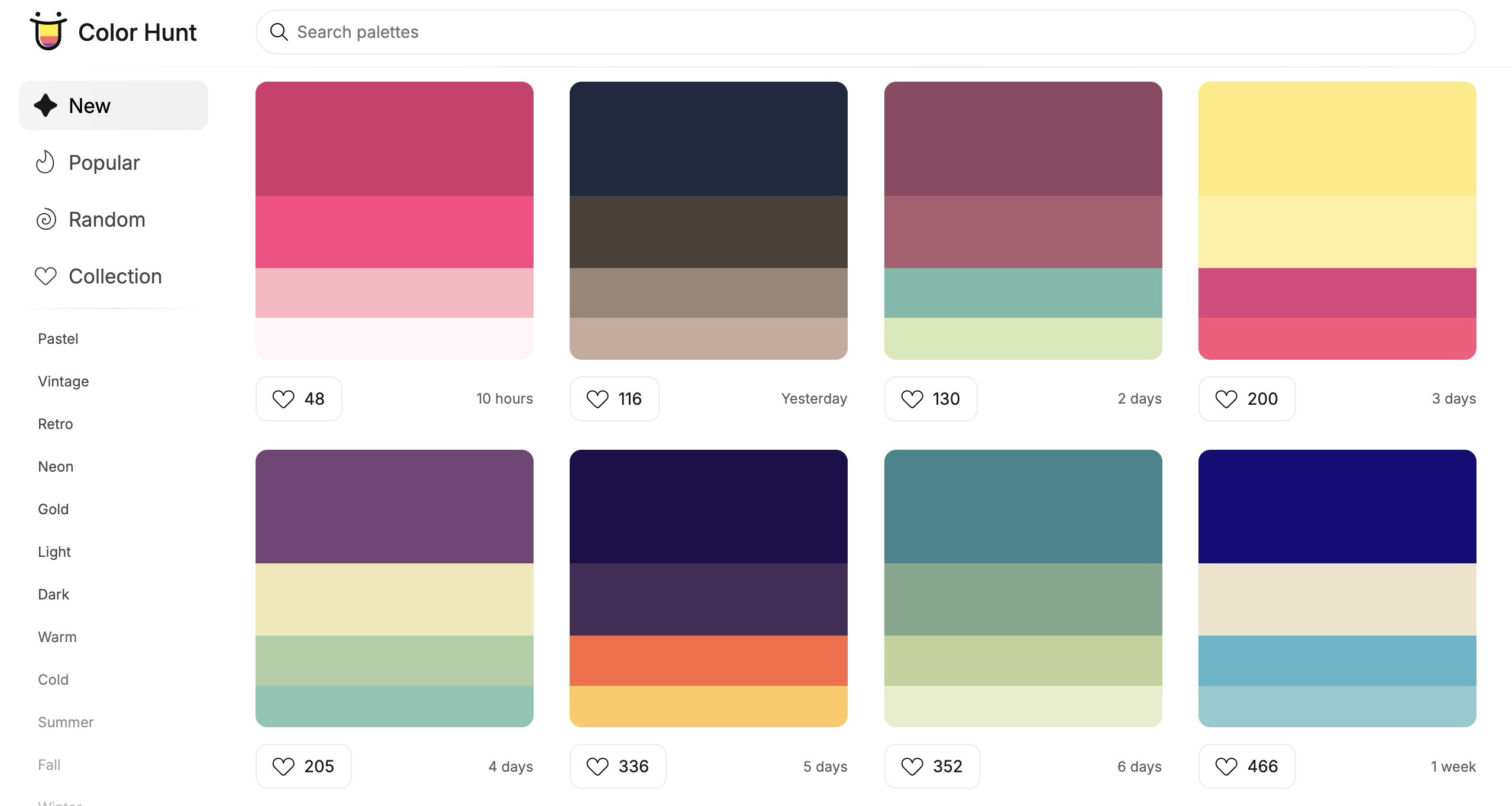
A persistent challenge in color selection is the disconnect between how a palette appears in isolation and how it functions within a complex layout. ColorHub addresses this limitation by emphasizing product-minded design and contextual visualization.
Rather than presenting colors as isolated swatches, ColorHub allows users to preview generated palettes across simulated landing-page templates and starter kits. This contextual approach enables designers to evaluate how primary, secondary, and accent colors interact within real-world UI constraints. Supported by curated palette libraries, a contrast checker, and a favorites system, ColorHub serves as a critical bridge between aesthetic choice and functional interface design.
4. Color Hunt: Curated Inspiration and Trend Analysis
For projects that require rapid aesthetic alignment without the need for granular parameter adjustment, curated resource libraries offer an efficient alternative. Color Hunt operates as an extensive, community-driven collection of hand-picked color palettes categorized by mood, theme, and seasonal trends—including pastel, retro, dark mode, wedding, and neon motifs.
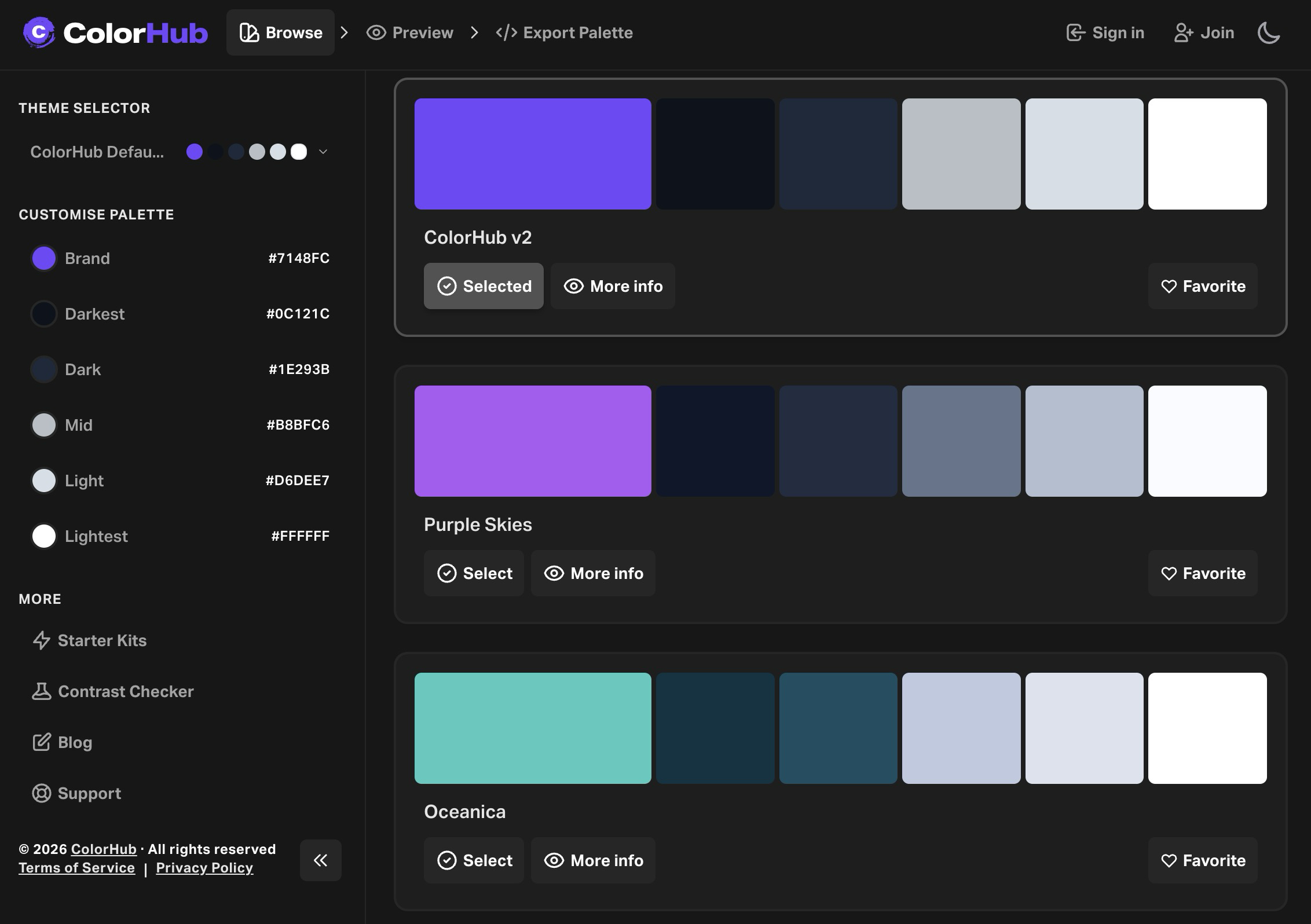
The platform’s utility lies in its simplicity. By eliminating complex controls and algorithmic generators in favor of a browsable gallery, Color Hunt allows designers to absorb prevailing color trends and identify cohesive combinations at a glance. This streamlined approach proves particularly beneficial during the early brainstorming phases of a project, where rapid visual exploration takes precedence over technical parameter tuning.
5. Gradients by Colorion: Direct and Frictionless CSS Export
When a project calls for a subtle background gradient or an engaging callout section without the overhead of a full design suite, specialized utility sites provide immediate solutions. Gradients by Colorion focuses strictly on delivering a curated selection of background gradients paired with instant CSS code generation.
The workflow is intentionally streamlined: users browse pre-compiled gradient combinations, adjust directional properties as needed, and copy the corresponding CSS output directly to their clipboards. By eliminating setup time and administrative friction, Colorion serves as a pragmatic resource for developers and designers seeking quick, polished background treatments for web applications.
Implications for Design Workflows and Industry Standards
The proliferation of advanced color tools reflects a broader shift in digital design toward workflow optimization and cross-disciplinary collaboration. Industry analysts note that as web development timelines compress and expectations for visual polish increase, the ability to rapidly prototype and test design tokens becomes a competitive advantage.
Furthermore, the integration of accessibility metrics directly into color generation platforms underscores the growing regulatory and ethical importance of inclusive design. By automating contrast verification alongside aesthetic selection, modern tools help mitigate compliance risks associated with inaccessible web content.
Ultimately, while automated generators and curated libraries cannot replace fundamental design intuition, they effectively eliminate mechanical friction from the creative process. By streamlining exploration, validation, and code export, these platforms allow designers to focus on strategic execution and user experience. Maintaining access to a diverse toolkit ensures that professionals can navigate the complexities of color
selection efficiently, regardless of project scale or stylistic requirements.
Related posts: